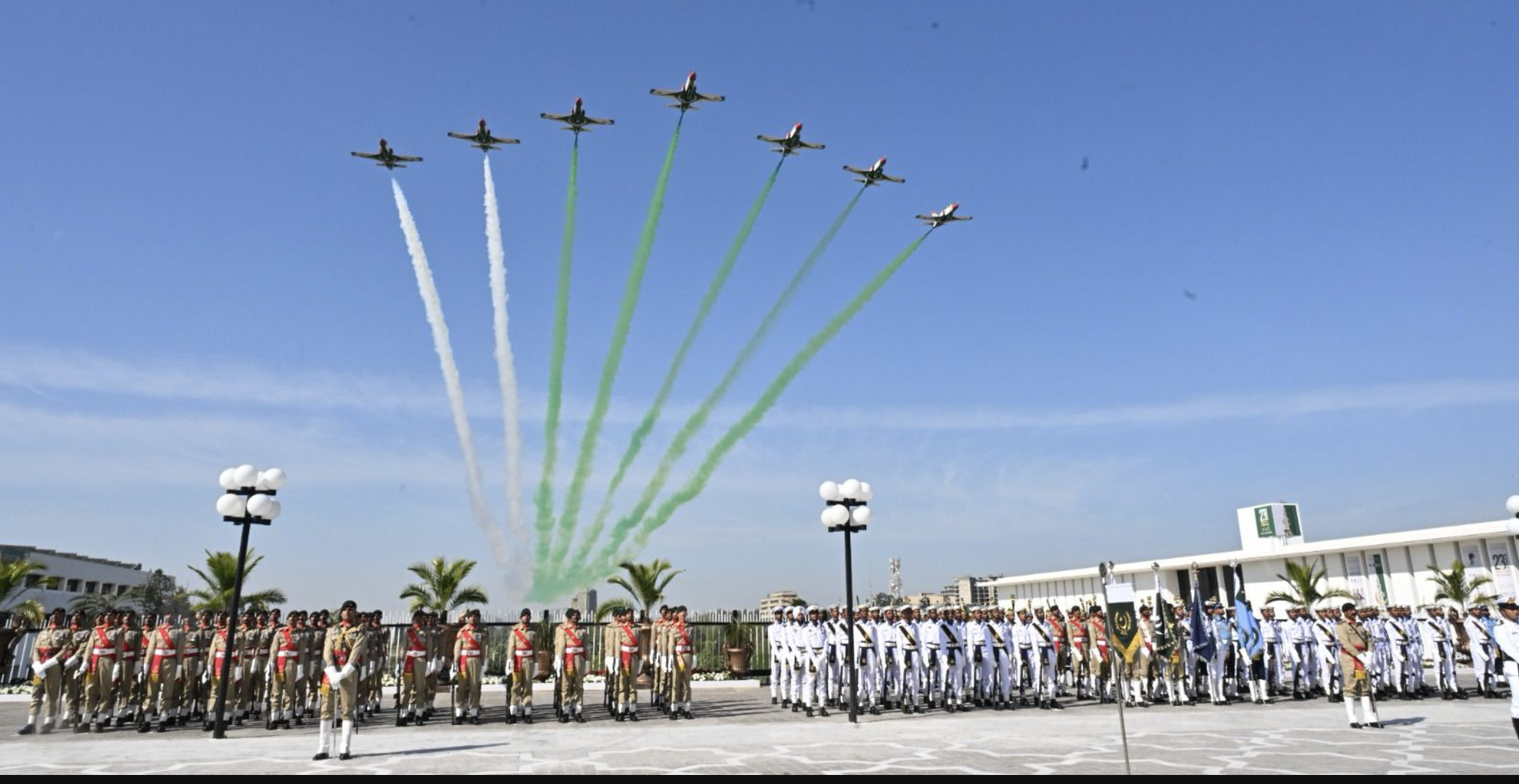
Pakistan ranks 14 out of 145 countries in the 2026 Global Firepower (GFP) index, with a PwrIndx score of 0.2626.
This force structure has been shaped by nearly eight decades of regional security imperatives, four major wars with India, sustained counter-terrorism campaigns, and the lessons of the May 2025 conflict with India - which accelerated a doctrinal shift towards intelligence, surveillance, target acquisition, and reconnaissance (ISTAR)-led precision strike across all three services.
Pakistan's armed forces now operate under the Chief of Defence Forces (CDF) - a position established by the 27th Constitutional Amendment in November 2025, replacing the former Chairman Joint Chiefs of Staff Committee (CJCSC). The CDF serves as the principal military adviser to the government and, for the first time, exercises a unified coordinating authority over all three service branches.
Pakistan is also one of the largest contributors to United Nations peacekeeping operations, with approximately 8,230 personnel deployed across multiple mission areas as of 2025. Beyond UN deployments, approximately 13,000 Pakistani military personnel serve in Saudi Arabia under the Strategic Mutual Defence Agreement (SMDA) signed in September 2025.
Additional advisory and training missions operate in Qatar, the UAE, and other Gulf states.
This guide provides a detailed overview of Pakistan's military history, organizational structure, the capabilities of each service branch, the country's missile program, its growing defence industry, nuclear deterrent, international deployments, and the strategic factors shaping its force modernization trajectory. For ongoing developments, see Quwa's Pakistan Defence News coverage.
Strength
Pakistan's Military Strength and Global Standing
Pakistan ranks 14 out of 145 countries in the 2026 GFP index - placing it among the top fifteen military powers globally by composite strength. The country fields approximately 685,000 active-duty military personnel, with an additional 550,000 in reserve formations and over 400,000 paramilitary troops under the Ministry of Interior and provincial governments.
Defence spending has risen steadily over the past decade. Pakistan's official military budget for fiscal year 2025-2026 stands at approximately PKR 2.1 trillion - roughly USD 7.5 billion at prevailing exchange rates.
However, some international estimates place total defence-related spending closer to USD 11 billion when factoring in military pensions, nuclear program allocations, and paramilitary expenditures that sit outside the formal defence budget.
As a share of GDP, Pakistan's defence expenditure has hovered between 2.5% and 3.5% over the past two decades - lower than India's in absolute terms but comparable as a proportion of national output.
The post-May 2025 procurement surge - spanning the ARFC precision-strike build-up, Hangor-class submarine program, and air defence modernization - is expected to push these figures higher over the coming fiscal years.
Pakistan Military Strength by the Numbers
Pakistan's military strength is best understood through a combination of personnel counts, platform inventories, and strategic capabilities. The country's active-duty force of approximately 685,000 is supplemented by 550,000 reservists and over 400,000 paramilitary personnel - giving Pakistan a total security force exceeding 1.6 million.
In terms of conventional platforms, the Pakistan military operates approximately 2,800 main battle tanks (MBTs), over 450 combat aircraft, nine principal surface combatants, and five submarines - with eight more under construction. These numbers place Pakistan among the most heavily armed states in South and Central Asia.
In this vein, Pakistan's military strength is not solely a function of budget or personnel size. The country's nuclear deterrent, its operational experience from decades of counter-insurgency and counter-terrorism operations, and its deepening defence industrial partnerships - particularly with China and Turkiye - give Pakistan capabilities that extend well beyond what raw spending figures suggest.
However, Pakistan's military modernization faces persistent constraints. Fiscal pressures, currency depreciation, and competing development priorities have forced the armed forces to prioritize selectively, often favouring a smaller number of high-capability platforms over broad fleet renewal.
Pakistan Defence NewsBreaking coverage of procurement, policy, and operational developments.History
Pakistan's Military History and Major Conflicts
Pakistan's armed forces have been forged through nearly eight decades of conflict, ranging from full-scale conventional wars against India to prolonged counter-insurgency campaigns along the western frontier. This operational history has shaped the military's doctrine, equipment choices, institutional culture, and strategic outlook in ways that distinguish it from armed forces that have modernized primarily through peacetime investment.
The Indo-Pakistani Wars
The first Indo-Pakistani war erupted in 1947-1948, barely months after both countries gained independence from Britain. The conflict centred on the princely state of Jammu and Kashmir, with Pakistani tribal fighters and, later, regular forces engaging Indian troops.
The war ended with a UN-brokered ceasefire on 1 January 1949, leaving Kashmir divided along what would become the Line of Control (LoC) - a status that persists to this day.
The second Indo-Pakistani war of 1965 began with Pakistan's Operation Gibraltar - an attempt to incite an uprising in Indian-administered Kashmir through infiltrators. The operation failed, and India responded by crossing the international border on 6 September 1965.
The resulting seventeen-day war saw large-scale armoured engagements in the Punjab sector, including the Battle of Chawinda - one of the largest tank battles since the Second World War. A UN-mandated ceasefire and the subsequent Tashkent Declaration ended the conflict without territorial changes.
The 1971 war proved the most consequential. A civil war between West Pakistan and East Pakistan, fuelled by political grievances and a humanitarian crisis, drew Indian military intervention on the side of East Pakistan. The resulting conflict ended with the surrender of approximately 93,000 Pakistani troops in Dhaka on 16 December 1971 and the creation of Bangladesh.
The 1971 defeat reshaped the Pakistan military profoundly - accelerating the nuclear weapons program, triggering a strategic reorientation towards China, and instilling an institutional emphasis on defensive depth that persists to this day.
Between the major wars, the nuclear overhang generated its own crises. During the Brasstacks crisis of 1986-87, India's Exercise Brasstacks - involving two armoured divisions, two mechanized divisions, and full air force participation in Rajasthan - brought both countries to the brink. Pakistan countermobilized, deploying strategic reserves in a pincer formation that threatened to cut off India's access to Kashmir.
The crisis was defused through quiet diplomacy and unpublicized American intervention. In 1990, escalation over Kashmir prompted Pakistan to visibly move nuclear devices to loading positions - movements deliberately made visible to American satellites as a deterrent signal. President Bush dispatched Deputy National Security Adviser Robert Gates to the region - the first direct American crisis intervention in South Asia.
The Kargil conflict of 1999 - a limited war fought at altitudes exceeding 5,000 metres in the Kargil sector of Kashmir - ended with Pakistani withdrawal under intense diplomatic pressure.
The Kargil experience reinforced the limits of limited conventional action under the nuclear overhang and influenced Pakistan's subsequent investment in sub-conventional and asymmetric capabilities. It also triggered a military coup in October 1999, when General Pervez Musharraf deposed the civilian government - underscoring the close relationship between military operations and domestic politics in Pakistan.
The May 2025 Conflict and Its Aftermath
The May 2025 conflict with India - known in Pakistan as Operation Bunyan-un-Marsoos - represented the first major military exchange between the two nuclear-armed states since Kargil.
On the night of 6-7 May, approximately 125 aircraft were involved in the air battle - of which 80-85 were Indian. PAF J-10C fighters from No. 15 Squadron shot down eight Indian aircraft before the Air Chief ordered the pilots to stand down to prevent further escalation.
India absorbed the air-to-air losses and escalated with BrahMos cruise missile strikes against PAF airbases on 9-10 May. Pakistan responded at dawn on 10 May with Fatah-1 GMLRS launches against Indian air force stations, ammunition depots, and forward operating bases.
Lt. Col. Mirza Jahantab - commanding one of the most decorated Fatah-1 units, which received 16 bravery awards - stated that not a single Fatah-1 was intercepted and that no Indian S-400 system was able to engage them.
The operational lessons from May 2025 reshaped Pakistan's strike doctrine fundamentally. Pakistan shifted from a denial-centric deterrence model - which had worked at Balakot in 2019 - to a deprecation-centric model focused on degrading India's warfighting infrastructure so rapidly that sustaining a campaign becomes materially untenable.
One year after the conflict, the Pakistan military's modernization trajectory - from the ARFC formation to the CDF command reform to the air defence overhaul - is being shaped directly by these lessons.
Counter-Insurgency and the Western Frontier
Beyond its wars with India, the Pakistan military has fought a sustained and costly counter-insurgency campaign along its western frontier since the mid-2000s. Operations Zarb-e-Azb (2014-2017) and Radd-ul-Fasaad (2017-present) targeted Tehrik-i-Taliban Pakistan (TTP) and affiliated militant networks across the former FATA, Balochistan, and urban centres.
These campaigns cost thousands of military casualties, displaced millions of civilians, and consumed a significant portion of the defence budget over more than a decade. They also transformed the Army's force structure - expanding the role of special operations forces, light infantry, rotary-wing aviation, and intelligence-driven targeting.
In this vein, the Pakistan military's operational experience is distinctive in combining large-scale conventional force posturing against a nuclear-armed neighbour with sustained irregular warfare operations domestically. Few armed forces globally face this dual-use demand to the same degree.
Pakistan Army
Pakistan Army
The Pakistan Army is the largest and most influential branch of the Pakistan armed forces, with approximately 560,000 active-duty soldiers organized into nine corps, two army-level reserves, and a strategic command. It is the country's principal land warfare force and has historically played a dominant role in national security policy.
The Army's force structure centres on a mix of armoured, mechanized infantry, and light infantry divisions, organized into nine corps and two army-level strategic reserves. I Corps (Mangla), II Corps (Multan), IV Corps (Lahore), and XXX Corps (Gujranwala) form the eastern defensive line against India.
V Corps (Karachi) covers the southern sector, while XI Corps (Peshawar), XII Corps (Quetta), and XXXI Corps (Bahawalpur) address the western and southwestern fronts. X Corps (Rawalpindi) serves as the strategic reserve.
These formations are optimized for operations across Pakistan's diverse terrain - from the mountains of the northern areas and western frontier to the deserts of Sindh and southern Punjab.
The Army also maintains specialized formations, including the Force Command Northern Areas (FCNA) for high-altitude warfare along the LoC and Siachen Glacier, and the Special Services Group (SSG) headquartered at Cherat for special operations.
Following the May 2025 conflict with India, the Army established the Army Reorganization for Future Conflicts (ARFC) formation. The ARFC represents a doctrinal pivot towards conventional deterrence through precision strike - moving the Army from a primarily holding-force concept to one that can deliver deep, accurate fires against high-value targets at operational depth.
Armour and Mechanized Forces
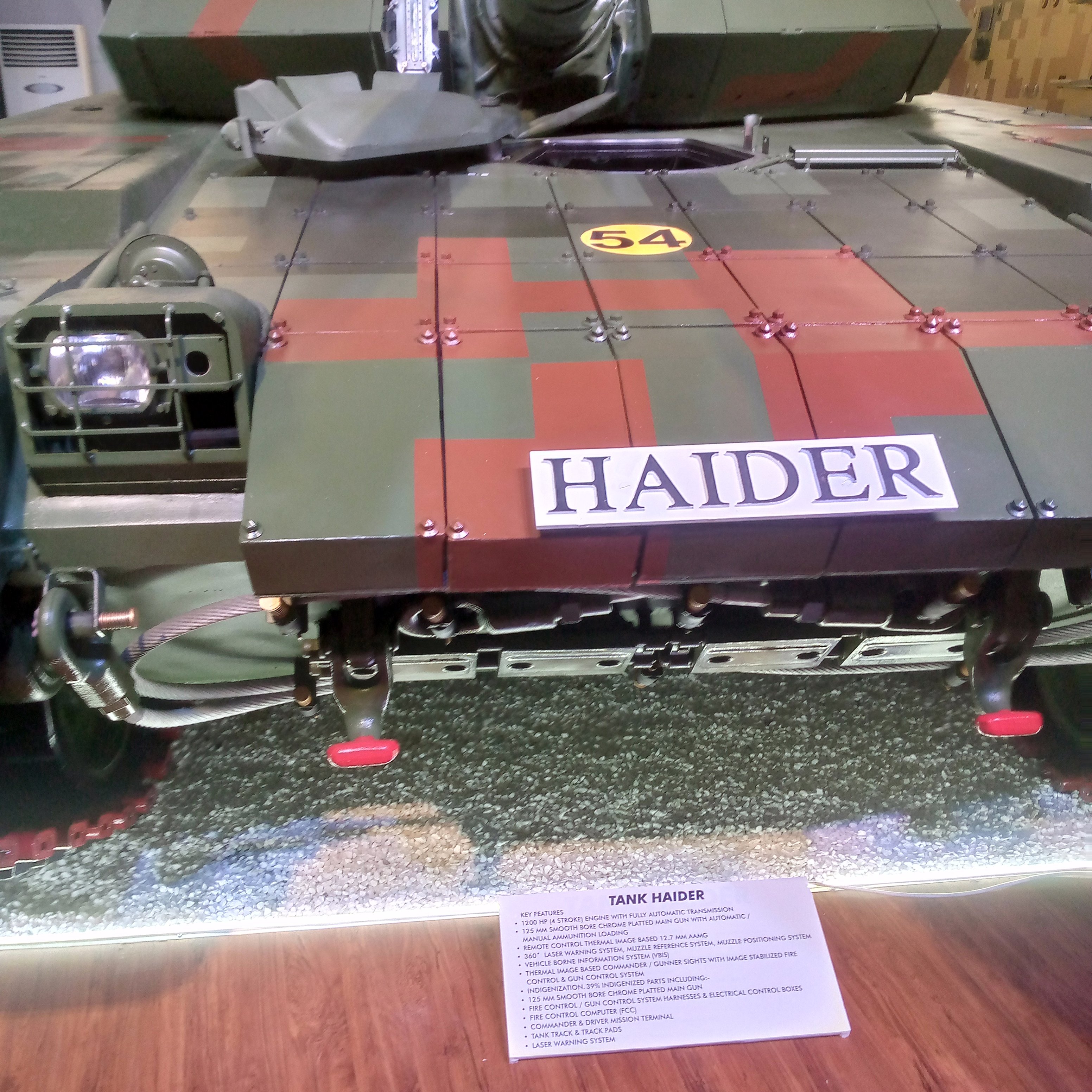
The Army operates approximately 2,800 MBTs, including the Al-Khalid (MBT-2000) and T-80UD as its primary modern platforms. Older Type 85-IIAP and Type 59 variants serve in reserve or secondary roles.
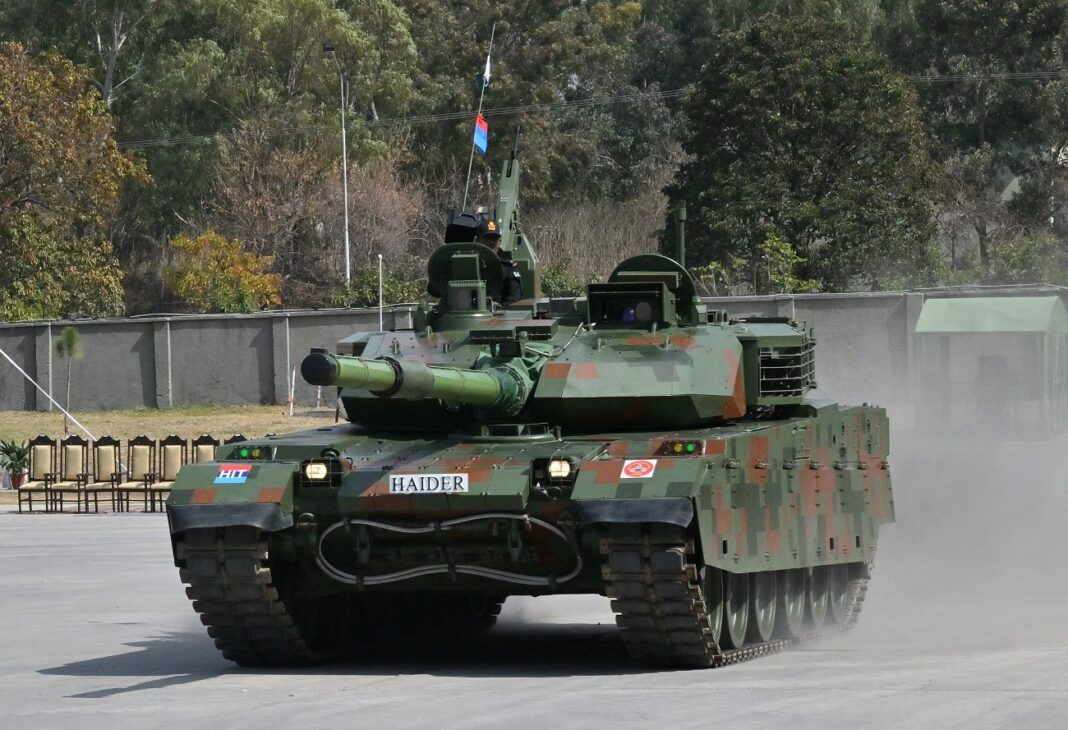
The VT4 - designated Haider in Pakistani service - is the newest addition to the armoured fleet. Procured from China's Norinco, the Haider features a 125mm smoothbore gun, composite armour with explosive reactive armour (ERA) modules, and an integrated battle management system (BMS) that links into the Army's broader command-and-control (C2) architecture.
Given that Pakistan's primary conventional threat axis lies along its eastern border, the Army has invested heavily in mechanized warfare capabilities, anti-tank guided missiles (ATGMs), and battlefield surveillance systems. However, the past two decades of counter-insurgency operations in the tribal areas and Balochistan have also shaped the Army's doctrine, equipment, and training towards irregular warfare.
Artillery and Precision Strike
The Army's artillery modernization has become one of its highest priorities in the post-May 2025 environment. The SH-15, a 155mm truck-mounted self-propelled howitzer (SPH) from China, has entered service - providing the Army with a mobile, shoot-and-scoot artillery platform that can rapidly reposition after firing.
In this vein, the Army has developed the PAKFIRE artillery command-and-control system, which integrates target acquisition data from unmanned aerial vehicles (UAVs), counter-battery radars, and forward observers into a single fire-control network. This system enables the kind of sensor-to-shooter integration that underpins the ARFC's precision-strike doctrine.
The Tipu - a 155mm precision-guided artillery shell - and the Nishana precision guidance kit (PGK) represent further steps towards converting conventional tube artillery into a precision-fire capability. These munitions allow standard 155mm rounds to achieve near-GPS-grade accuracy, reducing the number of rounds required per target.
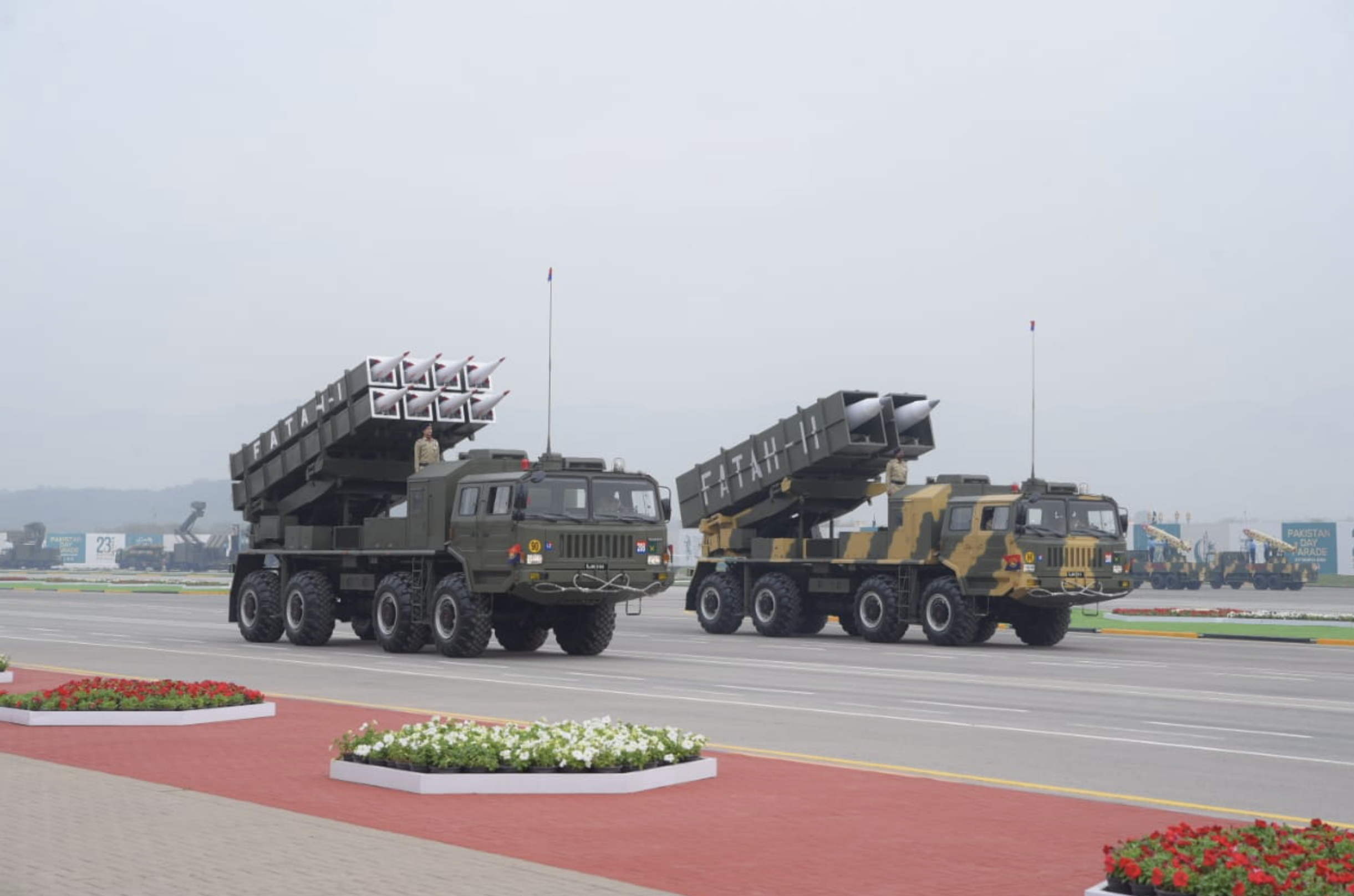
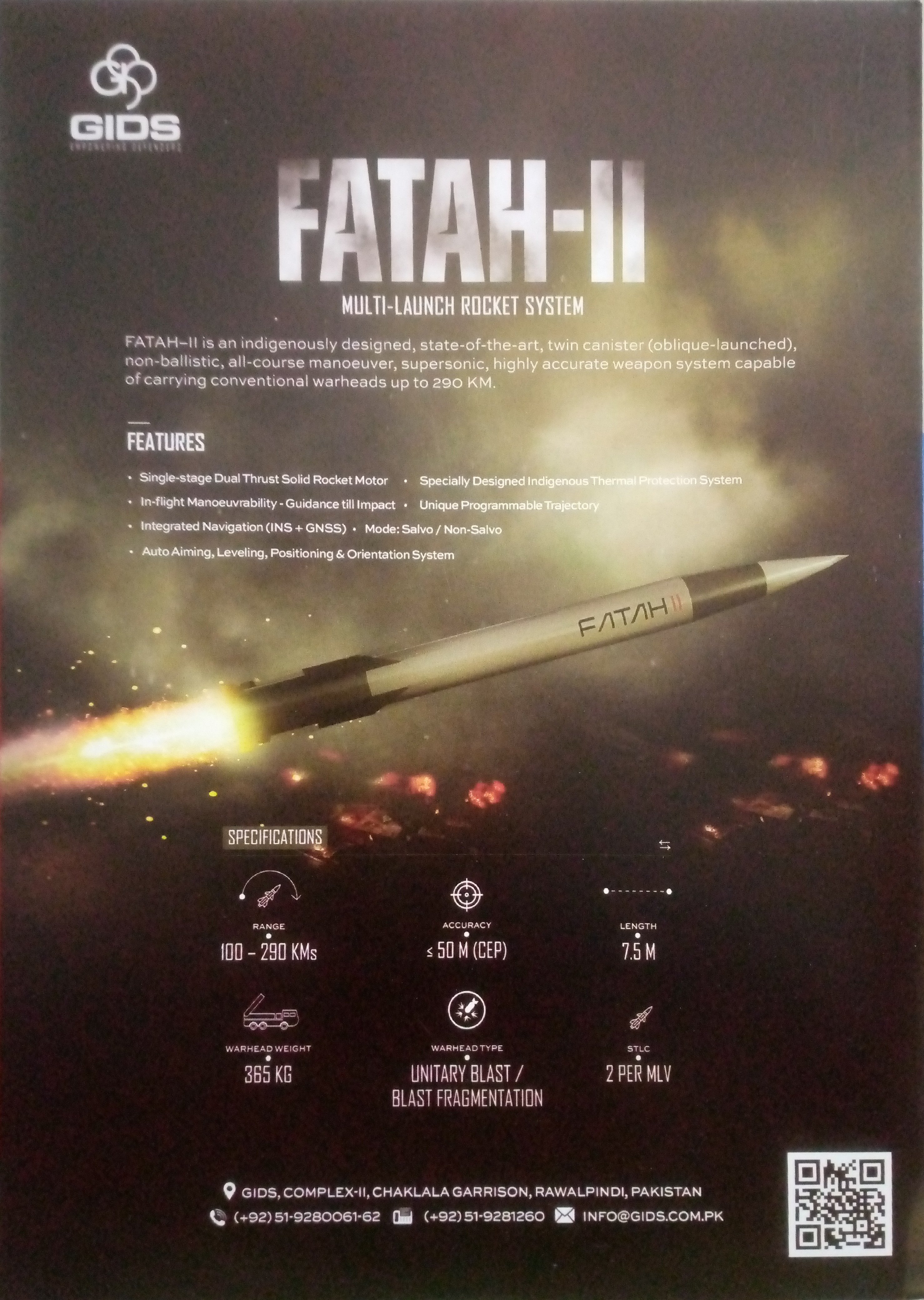
The Fatah-1, a 140 km guided multiple-launch rocket system (GMLRS), provides the Army with a tactical-depth precision strike capability that sits between tube artillery and short-range ballistic missiles. The Fatah-2, with a 400 km range, extends this reach to operational depth - enabling strikes against second-echelon formations, logistics nodes, and command centres.
One can see the Pakistan Army's artillery and rocket force evolving into a distributed, precision-fire network - where ISTAR assets feed target coordinates into a mix of guided shells, GMLRS rockets, and short-range ballistic missiles, creating overlapping engagement zones from the forward edge to operational depth.
Army Aviation
The Army's aviation wing operates a fleet of attack and utility helicopters, including AH-1F/S Cobras, the Z-10ME from China, and Mi-17 transport helicopters. The Z-10ME-02 variant - an upgraded version with enhanced avionics and weapons integration - has been inducted to replace ageing Cobras in the dedicated attack role.
Rotary-wing close air support and battlefield mobility have become central to the Army's operational approach, particularly in mountainous and semi-urban terrain. The Army has also invested in UAVs for surveillance and reconnaissance - assets that proved critical during counter-insurgency operations in the western tribal areas.
The Army Aviation School at Multan provides rotary-wing pilot training, while advanced tactical training is conducted at operational units. The expansion of the attack helicopter fleet - from the ageing AH-1 Cobra to the Z-10ME - has required a parallel expansion of pilot and maintainer training pipelines.
The Al-Murtajiz manned-unmanned teaming (MUM-T) program links attack helicopters with armed UAVs, allowing a manned platform to control and coordinate unmanned wingmen. This capability extends the reach and survivability of Army Aviation assets in contested airspace.
Battlefield Management and ISTAR
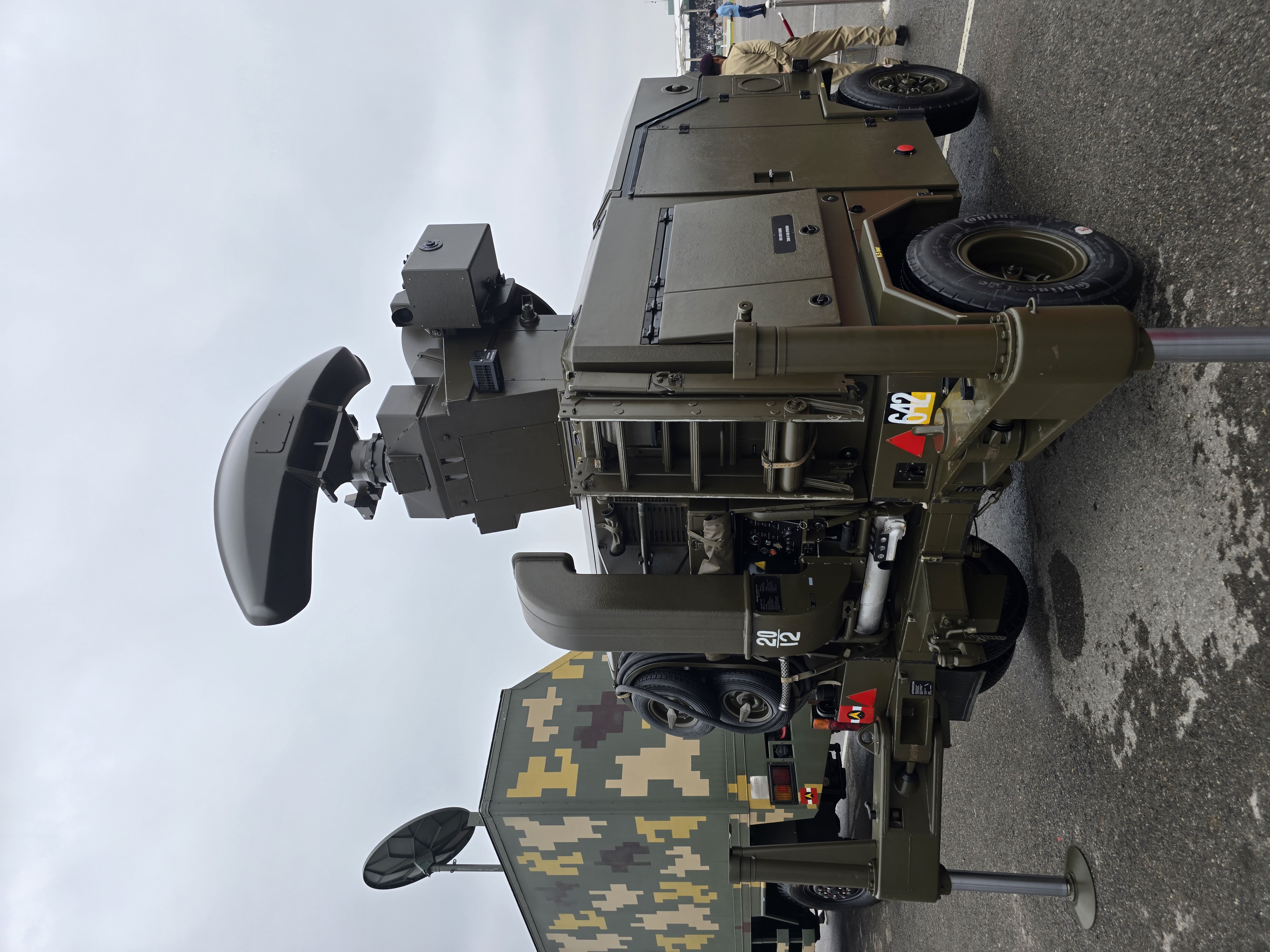
The PAK-IBMS - Pakistan's Integrated Battlefield Management System - is the Army's effort to create a digitized, networked force where every platform, sensor, and fire unit shares a common operational picture. The system links armour, artillery, air defence, and aviation through a single data architecture.
The ISTAR-led doctrine that underpins the ARFC depends on persistent surveillance from space, air, and ground-based sensors. The Pakistan Remote Sensing Constellation (PRSC) - comprising the PRSC-EO1, PRSC-EO2, and PRSC-EO3 electro-optical satellites - provides the Army with its own space-based imagery capability, independent of commercial providers.
The PRSC-S1 synthetic aperture radar (SAR) satellite adds all-weather, day-and-night imaging. The PRSC-HS-1 hyperspectral satellite enables the detection of camouflaged or concealed targets through spectral signature analysis.
In this vein, Pakistan signed a USD 406 million deal with China's PIESAT for an interferometric SAR (InSAR) constellation. This constellation will provide persistent, wide-area surveillance of terrain changes - enabling the detection of vehicle movements, engineering works, and troop concentrations across the border.
One can see the Pakistan Army's modernization trajectory focused on three imperatives: conventional deterrence through precision strike under the ARFC framework, sustained capacity for internal security operations, and the digitization of command-and-control through the PAK-IBMS network. For detailed coverage, see Quwa's Pakistan Army section.
Pakistan Army NewsForce structure, ARFC formation, armour, precision-strike doctrine, and operational developments.Pakistan Air Force
Pakistan Air Force
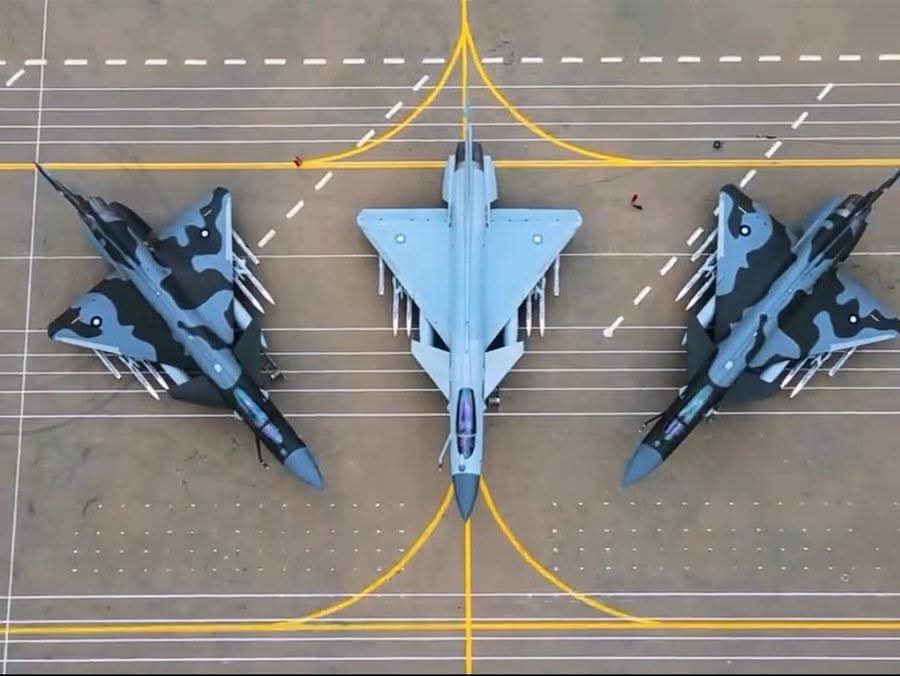
The Pakistan Air Force (PAF) is the aerial warfare branch of the Pakistan armed forces. It operates over 450 combat aircraft and has undergone significant modernization over the past fifteen years, anchored by the induction of the JF-17 Thunder multi-role fighter - a joint development program with China.
The PAF traces its origins to the Royal Pakistan Air Force, established in 1947 with British-origin piston-engined fighters - Tempest IIs and Fury FB.60s - that saw immediate action in the 1947-48 Kashmir war. The American Mutual Defence Assistance Program in the 1950s brought F-86 Sabres, B-57 bombers, and F-104 Starfighters.
The PAF performed well against the numerically superior Indian Air Force in the 1965 and 1971 wars, building an institutional culture of tactical ingenuity and aggressive air combat.
The PAF's strategic concept has since evolved into an ISTAR-led force that integrates manned fighters, UCAVs, stand-off precision munitions, and networked sensor architectures into a single kill chain.
This concept was validated during the May 2025 conflict - where J-10C pilots described operating as part of a multi-domain kill chain involving cyberspace, electronic warfare, long-range vectors, and unmanned systems - and has driven procurement priorities since.
Combat Aircraft Fleet
The PAF's frontline combat fleet currently comprises the JF-17 Thunder Block I, II, and III as the numerical backbone. The F-16A/B and F-16C/D Block 52+ serve as the qualitative edge - a role reinforced by the USD 686 million F-16 upgrade package approved by the United States in December 2025.
Approximately 20 J-10CE fighters from China's Chengdu Aerospace Corporation are currently in PAF service, with plans to induct a total of 80 to 90 aircraft. The J-10CE provides the PAF with a modern, fourth-generation platform featuring an active electronically scanned array (AESA) radar, infrared search-and-track (IRST), and compatibility with China's PL-15 beyond-visual-range (BVR) air-to-air missile.
However, the PAF faces a generational transition challenge. Its legacy Mirage III/V fleet is being progressively retired, and the service requires a fifth-generation fighter to maintain parity as India inducts the Rafale and develops the Advanced Medium Combat Aircraft (AMCA).
The J-35AE - the export variant of China's FC-31/J-35 stealth fighter - is the leading candidate. Pakistan and China have established an "initial collaborative mechanism" for the program, with delivery expected in the early 2030s. The J-35AE would give the PAF its first low-observable, fifth-generation combat aircraft.
The JF-17 Thunder Program
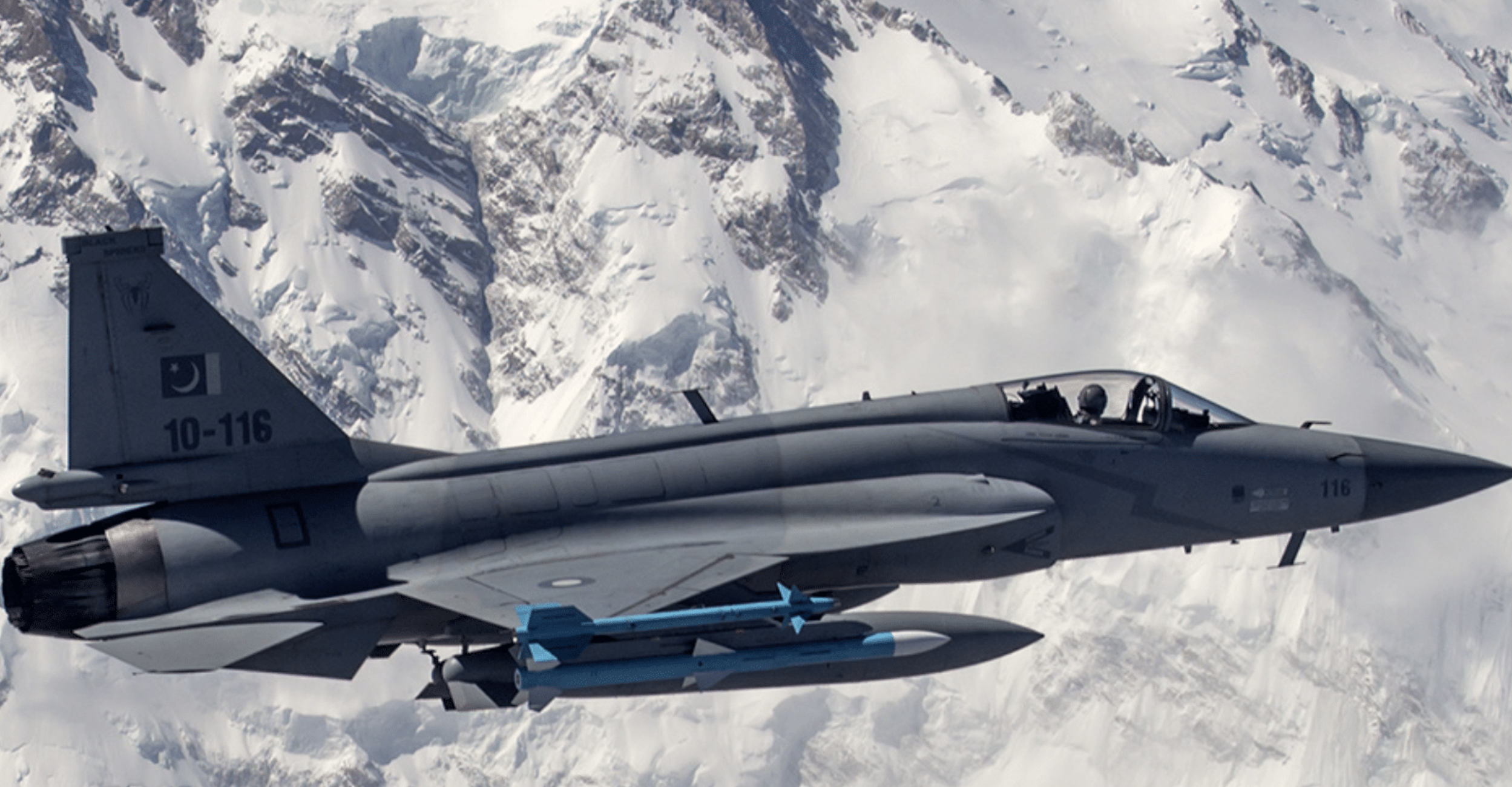
The JF-17 remains Pakistan's most significant aerospace program. The Block III variant, which entered service from 2022 onwards, introduced an AESA radar, a new glass cockpit, and enhanced BVR air combat capability.
The PFX Alpha - the next evolution of the JF-17 - is currently under development. It will feature a gallium nitride (GaN) AESA radar developed by the National Aerospace Science and Technology Park (NASTP), along with upgraded avionics, an enhanced electronic warfare (EW) suite, and expanded weapons integration.
The JF-17 has also become Pakistan's most significant defence export. A contract for 40 JF-17s to Azerbaijan - valued at approximately USD 4.6 billion including weapons, logistics, and training - represents one of the largest single defence export deals in Pakistan's history.
Myanmar has taken delivery of the type, and several other countries have evaluated it. The JF-17's export competitiveness rests on its combination of modern avionics, a relatively low unit cost, and the willingness of Pakistan and China to offer weapons packages and technology transfer arrangements that Western original equipment manufacturers (OEMs) typically do not.
Unmanned Combat Systems
The PAF has expanded its UCAV fleet significantly. The Bayraktar TB2 and Bayraktar Akinci from Turkiye, alongside Chinese-origin platforms, give the PAF a growing capacity for armed reconnaissance, signals intelligence (SIGINT), and precision strike without risking manned aircraft.
The Shahpar-II and Shahpar-III - developed by Global Industrial and Defence Solutions (GIDS) - represent the indigenous dimension of this capability. These medium-altitude, long-endurance (MALE) platforms are designed for persistent surveillance and can carry precision-guided munitions.
The Blaze, also from GIDS, is a loitering munition designed for time-sensitive targeting. One can see the PAF building a layered unmanned force that spans the spectrum from strategic MALE reconnaissance to tactical loitering munitions.
Airborne Early Warning and Electronic Warfare
The PAF's airborne early warning and control (AEW&C) fleet comprises ZDK-03 Karakoram Eagle and Saab 2000 Erieye platforms. These aircraft provide the PAF with the ability to manage the air battle from beyond the range of enemy sensors and weapons.
The PAF has also invested in passive detection systems and stand-off weapons, including the VERA-NG from Czechia's ERA. The VERA-NG detects and tracks aircraft through their electronic emissions - without emitting any signal of its own - providing a counter to adversary stealth and electronic attack.
The PAF's air defence mission extends beyond manned fighters. Pakistan's air defence architecture integrates a layered system of surface-to-air missiles (SAMs), including the HQ-9/P long-range SAM acquired from China, alongside LY-80 (HQ-16) medium-range systems and FM-90 short-range point-defence systems.
The PAF operates from a network of forward operating bases, main operating bases, and dispersal airfields across the country. Key installations include PAF Base Mushaf (Sargodha), PAF Base Minhas (Kamra), PAF Base Masroor (Karachi), PAF Base Shahbaz (Jacobabad), and PAF Base Nur Khan (Chaklala/Rawalpindi).
The May 2025 conflict - during which Indian strikes targeted PAF infrastructure - has driven investment in base hardening, aircraft shelters, and dispersal planning.
The PAF's pilot training pipeline runs through the PAF Academy at Risalpur, the College of Flying Training, and the Combat Commanders' School. Pakistan trains approximately 100 new fighter pilots annually - a rate that must accelerate as the fleet expands to include the J-10CE and, eventually, the J-35AE.
Overall, the PAF's strategic trajectory is focused on three priorities: completing the J-10CE induction to replace the Mirage fleet, developing the PFX Alpha as the next JF-17 evolution, and securing a fifth-generation fighter in the form of the J-35AE. For ongoing analysis, see Quwa's Pakistan Air Force coverage.
Pakistan Air Force NewsCombat aircraft, JF-17, J-10CE, J-35AE, UCAV expansion, and air operations.Pakistan Navy
Pakistan Navy
The Pakistan Navy (PN) is the maritime branch of Pakistan's armed forces, responsible for the defence of Pakistan's 1,046-kilometre coastline, its exclusive economic zone (EEZ), and its sea lines of communication (SLOCs). The PN has been the most active of the three services in terms of fleet modernization over the past decade.
The PN operates approximately 109 vessels, including nine principal surface combatants, five operational submarines (with eight Hangor-class under construction), and a fleet of patrol craft, mine countermeasure vessels, and auxiliaries. The PN's manpower stands at approximately 40,000 personnel, including the Pakistan Marines and the Naval Air Wing.
The PN's operational posture is shaped by the need to protect the Gwadar port complex, secure the approaches to Karachi - Pakistan's largest port and economic gateway - and maintain a credible anti-access/area denial (A2/AD) capability in the northern Arabian Sea.
Operation Muhafiz-ul-Bahr - the PN's escort mission for commercial shipping through the Strait of Hormuz, launched in March 2026 - demonstrates the Navy's expanding blue-water ambitions.
Surface Fleet Modernization
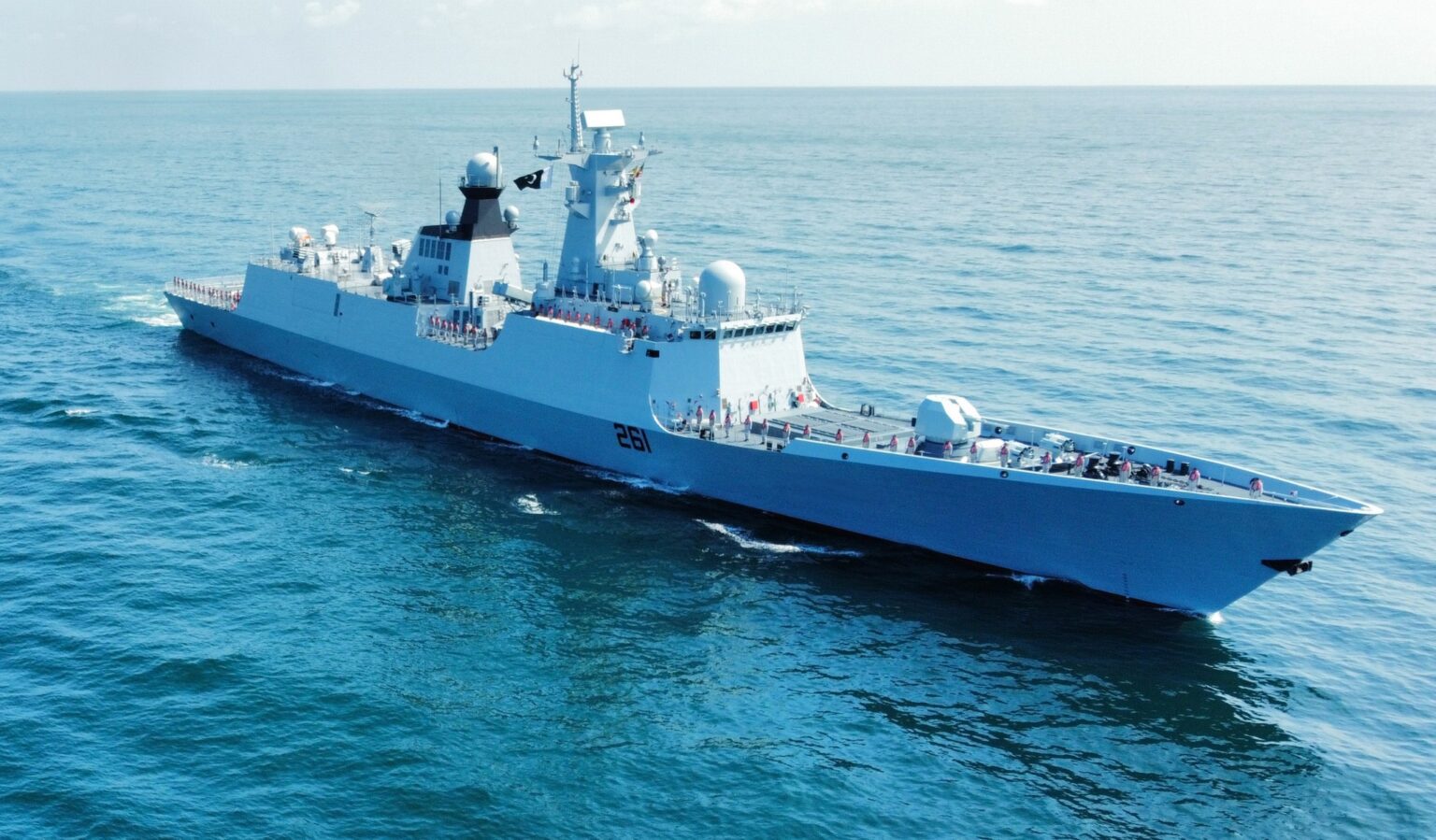
The PN's surface fleet is centred on a program of new-build frigates and corvettes from multiple supplier countries. The Tughril-class (Type 054A/P) frigates, built by China's Hudong-Zhonghua Shipbuilding, form the backbone of the fleet's blue-water capability. These 4,000-tonne frigates carry HQ-16 medium-range SAMs, CM-302 supersonic anti-ship cruise missiles (ASCMs), and a modern combat management system (CMS).
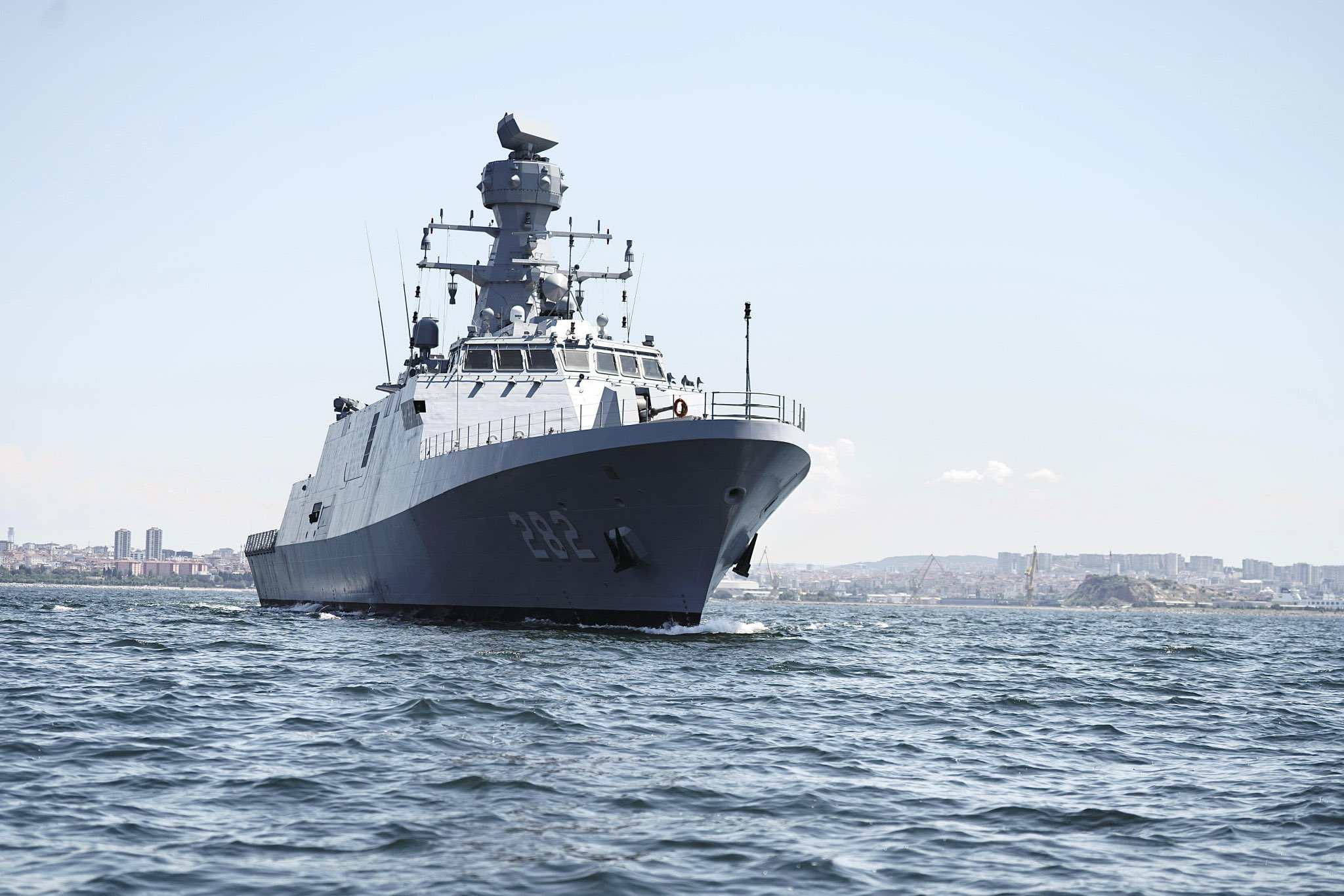
The PNS Babur - the lead ship of the Babur-class corvettes, designed by the Netherlands' CSOC and built with Turkish collaboration - was inducted into service in September 2024. The Babur-class provides the PN with a versatile, modular platform capable of anti-surface, anti-submarine, and air defence missions.
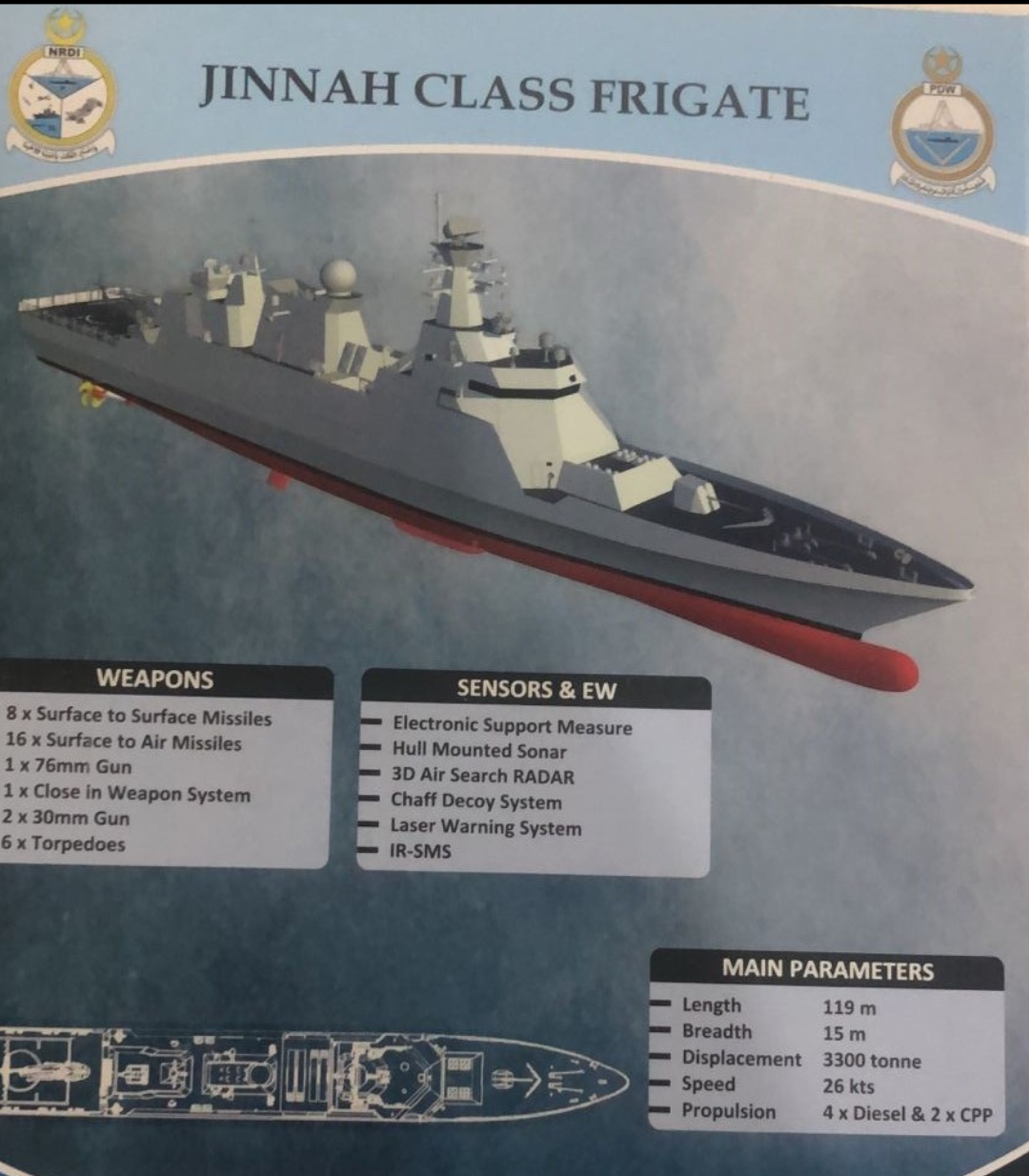
The Jinnah-class frigate program, contracted with Turkiye's ASFAT in November 2025, represents the PN's latest major surface combatant acquisition. These frigates will complement the Tughril-class and further diversify the PN's supplier base beyond its traditional reliance on Chinese platforms.
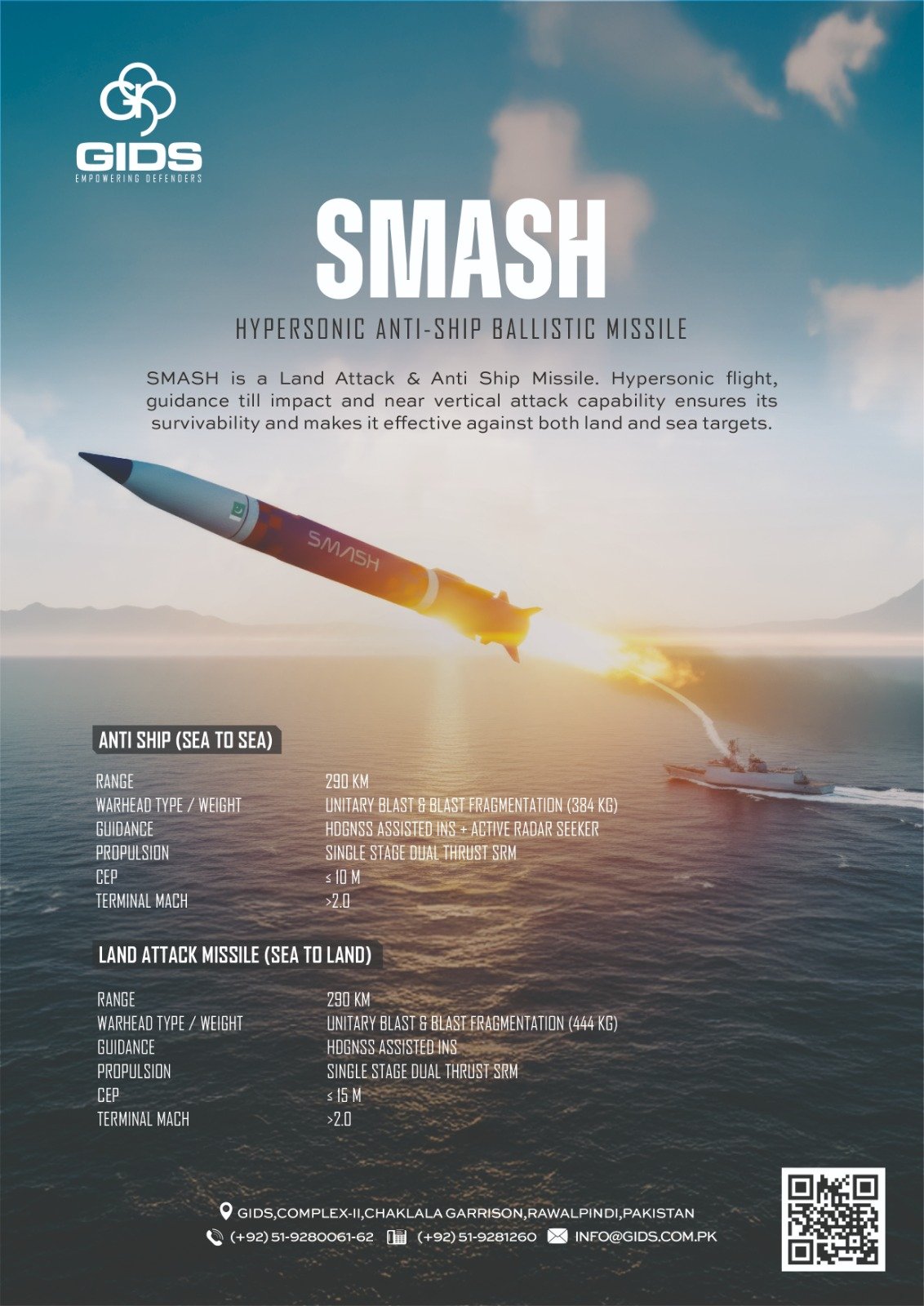
In April 2026, the PN successfully test-fired the SMASH anti-ship ballistic missile (ASBM) from a Babur-class corvette. The SMASH - developed by GIDS - gives the PN a ship-launched ballistic anti-ship capability, a weapon class that very few navies currently field.
Submarine Expansion
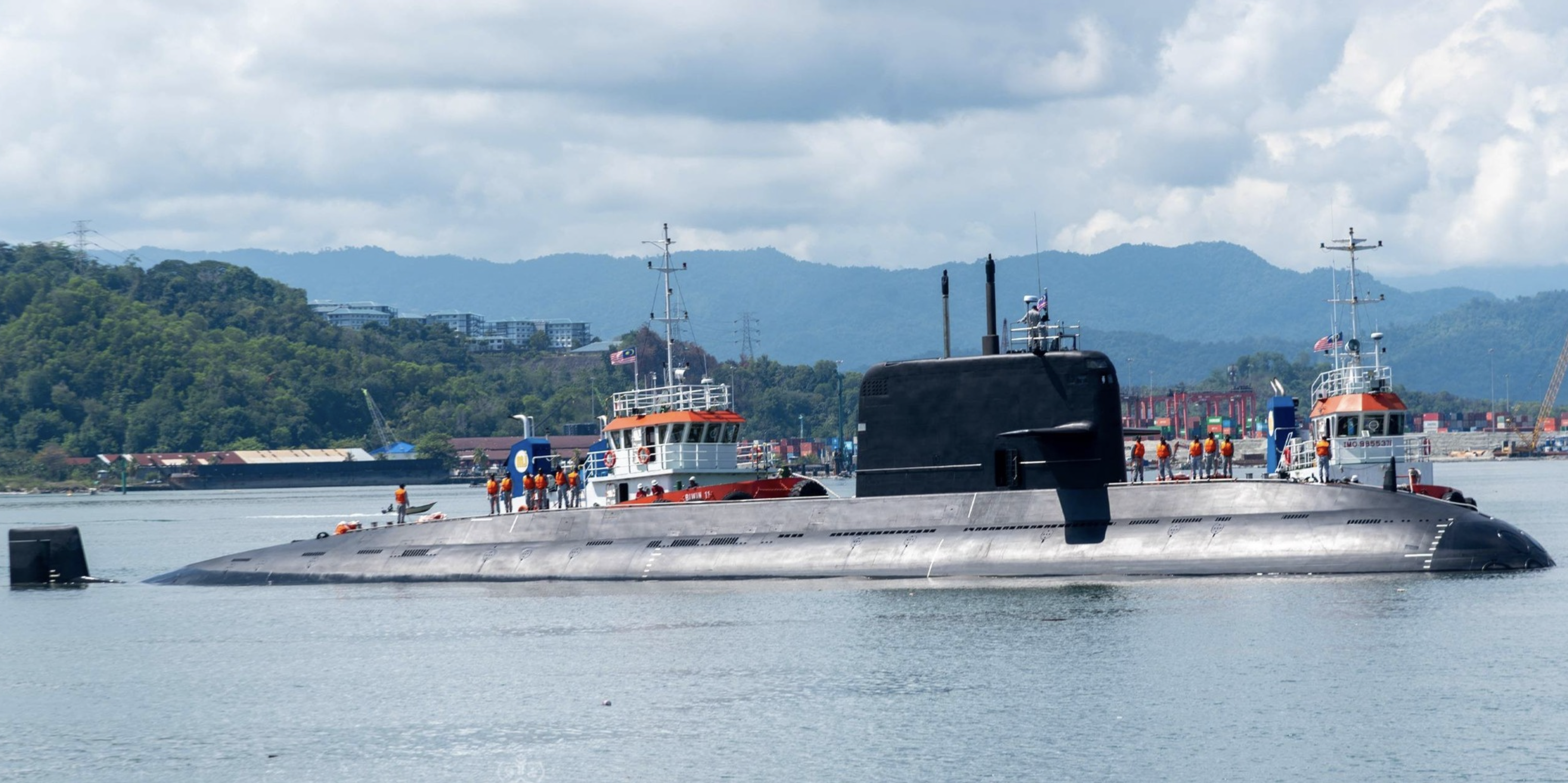
The PN's submarine arm is undergoing its most significant expansion in decades. Eight Hangor-class submarines are under construction - four at Wuhan's Wuchang Shipbuilding in China and four at Karachi Shipyard and Engineering Works (KSEW) in Pakistan.
The lead boat, PNS/M Hangor, was commissioned at Sanya, China, in May 2026. The Hangor-class displaces 2,800 tonnes, measures 76 metres in length, and is equipped with Stirling-cycle air-independent propulsion (AIP) that extends submerged endurance well beyond conventional diesel-electric boats.
The submarine carries six torpedo tubes and is designed to fire the Babur-3 submarine-launched cruise missile (SLCM) - giving the PN a sea-based nuclear second-strike capability. The total program cost is estimated at USD 4 to 5 billion, making it the single largest defence acquisition in Pakistan's history.
The Hangor-class program traces its origins to the collapse of a planned HDW Type 214 deal with Germany. When the German government declined to approve the transfer, Pakistan turned to China's CSOC, which offered a design derived from the Yuan-class (Type 039B).
The program survived a decade of setbacks - the collapse of the German deal, a subsequent German refusal to supply MTU diesel engines, and COVID-related construction delays.
The engine refusal forced a switch to China's CHD-620 diesel. Rear Admiral (Retd) Faisal Shah - a former submariner closely associated with the program - noted that the technology transfer arrangement gives Pakistan not just the eight boats but the blueprints, production know-how, and the ability to modify the design for future platforms.
Shah argued that China's submarine technology has been validated by the sheer pace of Chinese naval production - and, more tangibly, by the combat performance of Chinese-origin aircraft in Pakistani hands during Operation Bunyan-un-Marsoos. The downstream Pakistani industrial base must upgrade itself to meet the Hangor program's manufacturing tolerances, creating a broader uplift effect.
By late 2025, all four Chinese-built boats - PNS/M Hangor, Shushuk, Mangro, and Ghazi - were in final stages of handover. The four KSEW boats are expected in the early 2030s.
Once all eight boats are in service, the PN's AIP-capable submarine fleet will nearly quadruple from three Agosta 90Bs to eleven boats - potentially giving Pakistan one of Asia's largest sub-surface fleets.
The PN is also pursuing the Shallow Water Attack and Tactical Submarine (SWATS) program, which would provide a smaller, coastal-operations submarine for littoral warfare in the confined waters of the northern Arabian Sea. For detailed coverage, see Quwa's Pakistan Navy section.
Maritime Strike and Anti-Access Capabilities
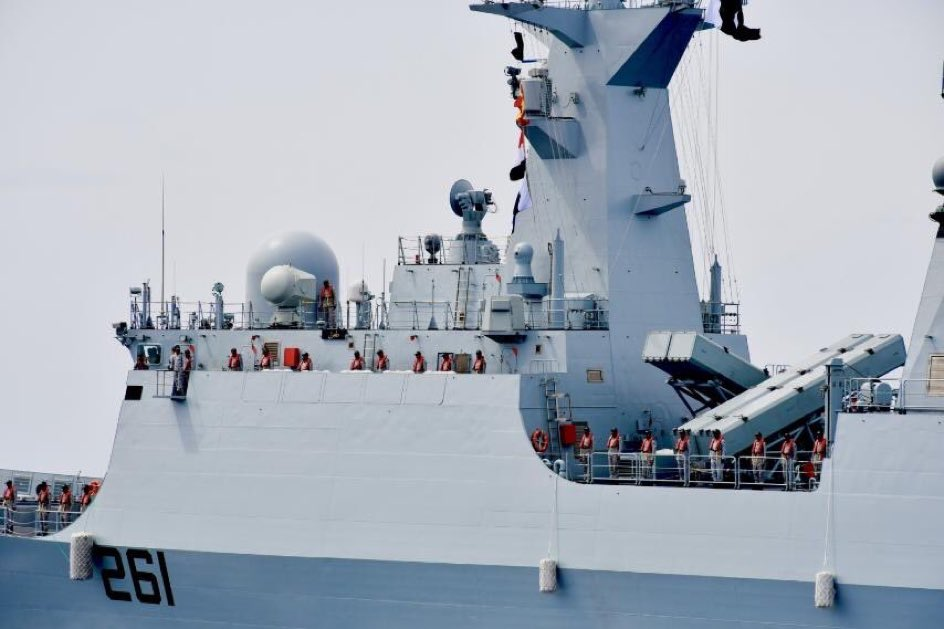
The PN's anti-ship warfare capability has expanded significantly. The CM-302 supersonic ASCM - carried by the Tughril-class frigates - provides a Mach 3-class sea-skimming strike capability against surface targets.
The Taimoor air-launched cruise missile (ALCM), with a range of 500 to 600 km, was test-fired by the PN in April 2026 from a maritime patrol aircraft. This gives the PN a long-range, stand-off anti-ship capability from its air wing.
The Sea Sultan long-range maritime patrol aircraft (LRMPA) program will provide the PN with a modern, multi-mission platform for anti-submarine warfare (ASW), maritime surveillance, and over-the-horizon targeting. One can see the PN building a layered anti-access architecture that combines submarines, surface-launched ASCMs, air-launched cruise missiles, and ASBMs to create overlapping engagement zones across the northern Arabian Sea.
Directed Energy and Emerging Technologies
The PN has issued a tender for two 10 kW shipborne high-energy laser (HEL) weapon systems, scalable to 30 kW. This represents the first concrete step by a Pakistani service towards directed energy weapons.
The HEL is designed for counter-UAS and counter-swarm defence, reflecting the lessons of recent conflicts where loitering munitions and drone swarms have emerged as serious threats to surface combatants. The scalability to 30 kW suggests the PN envisions a pathway to higher-power systems capable of engaging faster and more resilient targets.
The PN has also expanded its mine countermeasure capability and invested in autonomous underwater vehicles (AUVs) for port security and mine detection. The integration of these emerging technologies with the PN's conventional surface and subsurface fleet reflects a modernization philosophy that prioritizes layered, multi-domain defence.
For detailed analysis of the PN's fleet expansion and capability development, see Quwa's Pakistan Navy surface combatant retrospective.
Pakistan Navy NewsHangor-class submarines, surface combatants, maritime strike, and naval strategy.Missiles
Pakistan's Missile Program
Pakistan's missile capabilities represent one of the most significant dimensions of the Pakistan military's overall power. The country operates both conventional and nuclear-capable ballistic and cruise missiles, developed primarily through the National Defence Complex (NDC), the National Engineering and Scientific Commission (NESCOM), and the Space and Upper Atmosphere Research Commission (SUPARCO).
The missile program serves a dual function: strategic deterrence through nuclear-capable delivery systems, and conventional precision strike through a rapidly expanding family of guided weapons. The May 2025 conflict validated the operational utility of Pakistan's conventional missile capabilities and accelerated investment in the Fatah family and other precision-strike systems.
Pakistan's missile development infrastructure is distributed across multiple organizations, reflecting the strategic importance the country attaches to this capability. NDC handles solid-fuelled ballistic missiles, NESCOM develops cruise missiles and precision munitions, GIDS produces the Fatah family and the SMASH ASBM, and SUPARCO contributes propulsion and guidance subsystems.
Ballistic Missiles
Pakistan's strategic ballistic missile program grew from Chinese solid-fuel technology transferred in the early 1990s and a parallel liquid-fuel effort based on North Korean Nodong technology. The NDC began indigenous solid-fuel missile development with the Shaheen-1 in 1995, which provided the technical base for the entire Shaheen family.
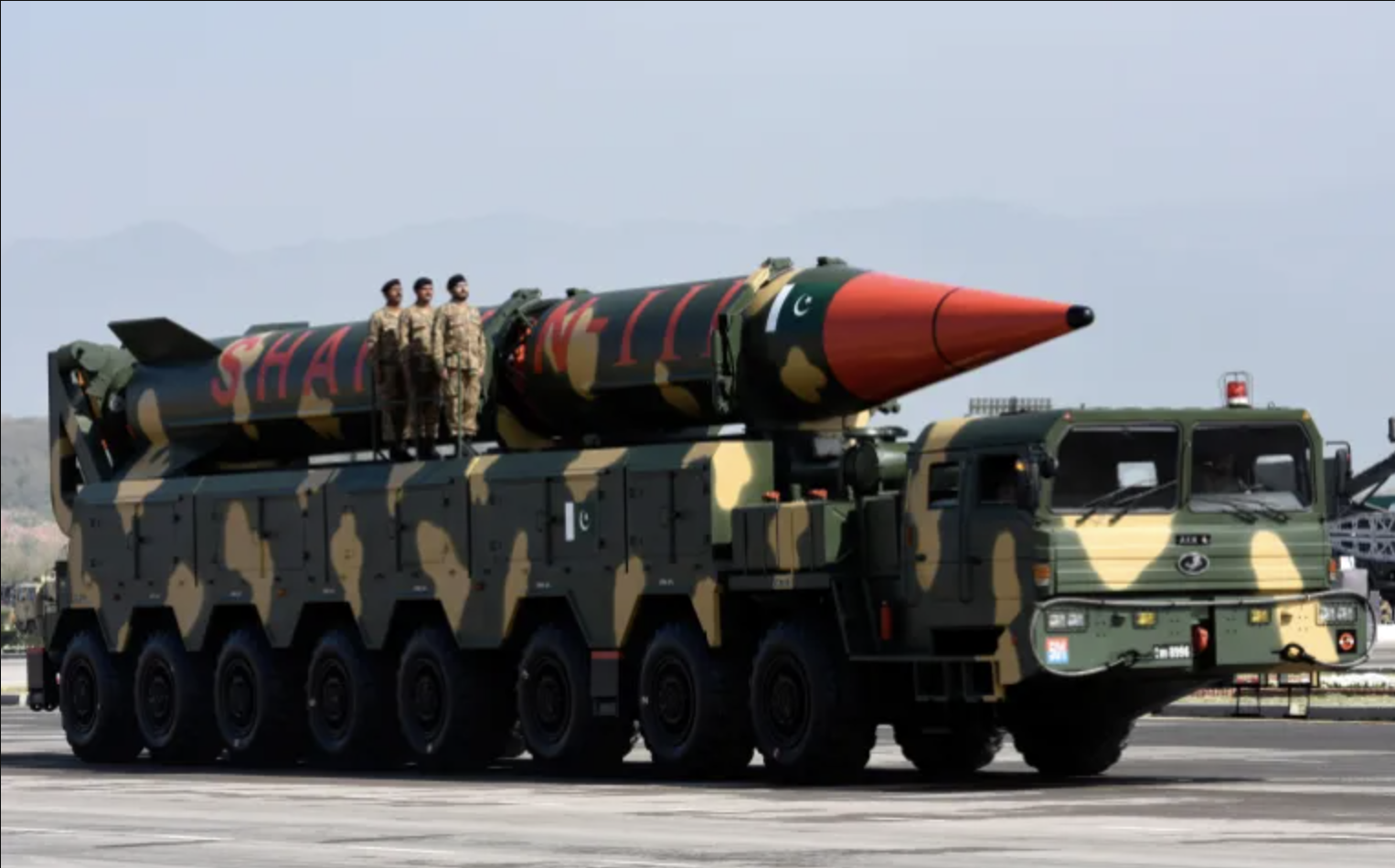
The Shaheen-I provides a 750 km range with a reported CEP as fine as 90 metres. The Shaheen-II extends to 1,500-2,000 km - its first test in March 2004 covered 1,880 km - and the Shaheen-III reaches 2,750 km, sufficient to cover all of India including the Andaman and Nicobar Islands.
These solid-fuelled ballistic missiles are operated by the ASFC, which was formally raised in June 1999 from an earlier 155th Composite Rocket Regiment established in 1991. The Ababeel missile - with a 2,200 km range - has demonstrated MIRV technology, enabling a single missile to deliver multiple warheads to separate targets.
The Abdali short-range ballistic missile (SRBM) system was tested during the May 2025 conflict, providing operational validation of the Army's tactical missile capability. The Abdali fills the gap between battlefield rocket artillery and the strategic Shaheen series.
Cruise Missiles
Pakistan has developed a family of cruise missiles that provide low-observable, terrain-hugging strike capability. The Babur series of ground-launched cruise missiles (GLCMs) offers ranges between 350 km and 700 km, with terrain contour matching (TERCOM) and digital scene matching area correlation (DSMAC) guidance.
The Ra'ad series of air-launched cruise missiles (ALCMs) provides the PAF with a nuclear-capable stand-off weapon. The Babur-3, a submarine-launched variant fired from the Hangor-class, extends this capability to the naval domain and completes Pakistan's nuclear triad.
The Fatah-4 - a 750 km ground-launched cruise missile (GLCM) - adds a conventional-role, long-range cruise missile to the Army's inventory. Unlike the nuclear-capable Babur, the Fatah-4 is designed primarily for conventional precision strike at operational depth.
Conventional Precision Strike: The Fatah Family
The Fatah family of guided weapons represents the Pakistan military's most significant investment in conventional precision-strike capability. The family spans the tactical-to-operational depth spectrum and reflects the ARFC doctrine's emphasis on sensor-to-shooter integration.
The Fatah-1 is a 140 km GMLRS that provides division-level precision fire - and saw its combat debut on the morning of 10 May 2025, striking Indian airbases and ammunition depots during Operation Bunyan-un-Marsoos.
The Fatah-2 is a 400 km TBM built on a single-stage solid-fuel core architecture that also underpins the Abdali Weapon System (450 km strategic variant) and the SMASH anti-ship ballistic missile with active radar homing. This shared core architecture enables cross-service production efficiencies - a design philosophy that mirrors Iran's Fateh-110 family.
The Fatah-3 is a supersonic surface-to-surface cruise missile (SSCM) derived from China's HD-1 platform. Powered by a ramjet engine, it achieves speeds between Mach 2.2 and Mach 3.5, weighs approximately 1,200 kg, and delivers a warhead with a circular error probable (CEP) of 10 to 20 metres. The Fatah-3's supersonic speed and terminal manoeuvrability make it extremely difficult to intercept.
Thus, the Fatah family creates a layered conventional precision-strike capability - ranging from 140 km tactical fires to 750 km operational-depth strikes.
Combined with the Taimoor ALCM and the SMASH ASBM, this family gives the Pakistan military the ability to prosecute high-value targets across the full depth of an adversary's order of battle. For ongoing reporting, see Quwa's Pakistan Missiles and Pakistan Missile News sections.
Pakistan MissilesFatah family, Shaheen series, cruise missiles, and conventional precision-strike programs.Air Defence
Pakistan's Air Defence Architecture
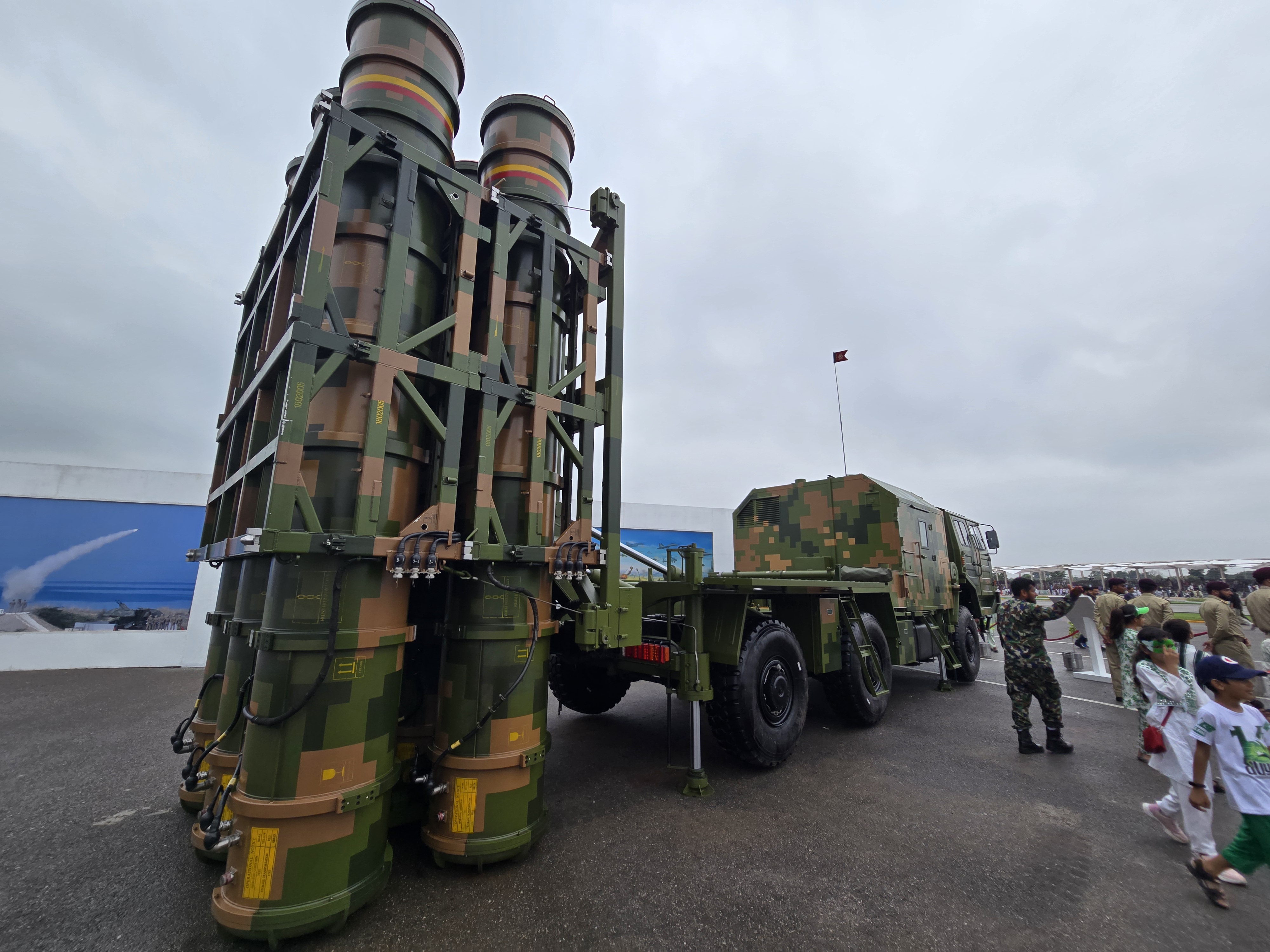
Pakistan's air defence network is a layered, multi-tiered system designed to protect strategic assets, military installations, and population centres against threats ranging from high-altitude aircraft to cruise missiles, drones, and loitering munitions.
The May 2025 conflict - during which Indian BrahMos cruise missiles and loitering munitions struck PAF bases - exposed gaps in Pakistan's air defence coverage and accelerated investment across all tiers.
Long-Range and Medium-Range Systems
Before the mid-2010s, the Pakistan Army's organic air defence was limited to short-range systems with sub-25 km reach - Anza-Mk2/Mk3 MANPADS, Saab RBS-70, and Chinese FN-6 shoulder-launched missiles. The Army had no medium or long-range SAM capability, with air defence beyond point-defence range handled exclusively by the PAF.
The transformation began with the acquisition of nine LY-80 (HQ-16) systems in two tranches between 2013 and 2015 - valued at a combined USD 599 million - and the induction of the FM-90 (HQ-7B) point-defence system in 2015.
The long-range tier now centres on the HQ-9/P SAM system, with an engagement range exceeding 125 km. This system provides Pakistan with its first true long-range, high-altitude air defence capability. Its induction transformed the Army from a force limited to MANPADS coverage to one operating a four-tier layered architecture.
The medium-range tier comprises the LY-80 - providing coverage to 40 km with semi-active radar-homing guidance - and the Spada 2000-Plus from Italy's MBDA. Eight IBIS-150 S-band surveillance radars, with a 150 km detection range, were also procured to feed the broader integrated air defence system (IADS).
Pakistan has expressed interest in the HQ-19, China's exoatmospheric anti-ballistic missile (ABM) system. If acquired, the HQ-19 would give Pakistan a limited ballistic missile defence (BMD) capability - a significant strategic addition given India's growing ballistic missile inventory.
The CAMM-ER - the extended-range variant of the Common Anti-Air Modular Missile, paired with the Albatros-NG fire control system from MBDA - is also under evaluation for naval and potentially land-based air defence roles.
Short-Range and Counter-UAS Systems
The short-range tier includes the FM-90 (HQ-7) point-defence SAM, the Anza series of man-portable air defence systems (MANPADS), and the Swedish RBS 70.
Given that the threat environment has evolved significantly - with UAS, loitering munitions, and swarm attacks emerging as operational realities rather than theoretical concerns - Pakistan is actively pursuing counter-UAS (C-UAS) solutions across all services.
The FAAZ-SL Electronic Short-Range Air Defence System (E-SHORADS) represents the indigenous response to the counter-drone challenge. The Low-to-Medium Air Defence System (LoMADS) fills the gap between MANPADS and medium-range SAMs.
One can see Pakistan's air defence modernization following a trajectory that prioritizes integration, sensor networking, directed energy for close-in defence, and the development of indigenous solutions for the short-range and C-UAS tiers. For coverage, see Quwa's Pakistan Air Defence section.
Pakistan Air DefenceLayered air defence architecture, SAM systems, C-UAS capabilities, and directed energy.Industry
Pakistan's Defence Industry
Pakistan's defence industry has undergone a significant transformation over the past decade - shifting from what was primarily a downstream assembly operation towards a midstream design-and-integration model. This shift represents a deliberate strategy to capture more value from defence programs and to build intellectual property (IP) ownership.
The principal defence production entities include Pakistan Aeronautical Complex (PAC) in Kamra, Heavy Industries Taxila (HIT), KSEW, Pakistan Ordnance Factories (POF), GIDS, NESCOM, and NASTP. The Defence Export Promotion Organization (DEPO) coordinates arms exports.
Aerospace and Aviation
PAC's most notable program remains the JF-17 Thunder, which is manufactured at PAC Kamra. The PFX Alpha development program - hosted at PAC - represents the next step, with PAC involved in airframe modifications and systems integration.
NASTP is emerging as the most significant new actor in Pakistan's aerospace sector. The organization runs approximately 160 programs, including the development of a GaN AESA radar for the PFX Alpha. This radar would be the first indigenously developed AESA in Pakistan's history.
NESCOM contributes flight control systems, electronic support measures (ESM) suites, and precision munitions - including the AZB-series of precision-guided bombs (PGBs) and the Rasoob 250 GPS/INS-guided glide weapon. These contributions make NESCOM a critical subsystems provider across multiple platforms.
Naval and Shipbuilding
KSEW has expanded from ship repair to new-build construction of complex warships. The yard is currently building four Hangor-class submarines under technology transfer from China - the most complex naval construction program ever undertaken in Pakistan.
KSEW will also build the Jinnah-class frigates under the contract signed with Turkiye's ASFAT. This dual submarine-and-frigate construction workload will test KSEW's capacity but, if successful, will establish the yard as a capable builder of frontline warships.
Land Systems and Munitions
HIT produces the Al-Khalid MBT and a range of armoured vehicles. However, HIT's most commercially significant recent achievement may be the P251 - a wheeled 155mm self-propelled howitzer designed by HIT for Saudi Arabia's SAMI. The P251 contract demonstrates that Pakistani defence firms can design platforms to meet foreign customer requirements, not merely assemble foreign designs under licence.
GIDS has emerged as Pakistan's most diversified defence company. Its product range spans the Shahpar-II and Shahpar-III UAVs, the Blaze loitering munition, the Taimoor ALCM, the AZB-series PGBs, the Fatah family of guided rockets and missiles, and the SMASH ASBM.
GIDS is actively promoting the SMASH for export - a move that would make Pakistan one of the few countries offering an ASBM on the international market.
Defence Exports
Pakistan's defence exports have grown, with the JF-17 leading the way. The USD 4.6 billion Azerbaijan deal - covering 40 JF-17s, weapons, training, and logistics - is the largest single defence export contract in Pakistan's history.
Pakistan's defence exports have historically been concentrated in small arms, ammunition, and basic military equipment. The JF-17 Azerbaijan deal represents a step-change in both the sophistication and the scale of what Pakistan can offer the international market.
Beyond the JF-17, Pakistan has identified the SMASH ASBM, Shahpar-series UAVs, Fatah-1 GMLRS, precision-guided munitions, and armoured vehicles as export priorities. The Middle East, North Africa, and Southeast Asia are the primary target markets - regions where Pakistan's combination of competitive pricing, willingness to transfer technology, and absence of end-user restrictions gives it advantages over Western competitors.
Pakistan's defence exports reached approximately USD 500 million in 2024-2025. However, the structural gap between Pakistan and its aspirational peers remains wide.
Turkiye's defence exports reached USD 7.45 billion by end of 2025, growing at nearly 30% annually since 2020. South Korea fulfilled a USD 6.5 billion contract for 180 K2 MBTs to Poland - the largest single defence export in Korean history.
Both Turkiye and South Korea export partnerships, not just products - offering technology transfer, local production rights, and industrial ownership to customers. Pakistan's offset requirements on major procurements have historically not been enforced, and the USD 12+ billion spent on arms imports over the prior decade did not meaningfully feed back into the domestic industrial base.
In this vein, PAC contributes 58% of JF-17 project value, but key alloy inputs still come from China rather than Pakistani industry - and no Pakistani-led original aircraft design has yet emerged from the program after more than two decades. Closing this gap is central to achieving the government's USD 1 billion annual defence export target.
Pakistan's growing defence footprint in the Middle East - spanning Saudi Arabia, the UAE, Libya, and other markets - is being driven by a combination of military-to-military relationships, competitive product offerings, and the strategic opening created by Gulf states' desire to diversify their supplier base beyond the United States and Europe.
Beyond the formal defence industry, the Pakistan military operates a substantial commercial economy through four principal welfare foundations - Fauji Foundation (Army), Askari (Army auxiliary), Shaheen Foundation (Air Force), and Bahria Foundation (Navy).
These foundations run enterprises spanning cement, fertilizer, banking, insurance, real estate, and other sectors - a phenomenon that scholar Ayesha Siddiqa termed "Milbus" (military business) in her study of the military's economic footprint.
One can see the defence industry's trajectory pointing towards a model where Pakistan designs and integrates complex systems using a mix of indigenous and imported subsystems, captures the IP, and then offers those systems on the export market. For detailed coverage, see Quwa's Pakistan Defence Industry section.
Pakistan Defence IndustryPAC, NASTP, HIT, KSEW, GIDS, defence exports, and the shift towards IP ownership.Nuclear Deterrent
Pakistan's Nuclear Deterrent
Pakistan's nuclear weapons program is a central pillar of its national security strategy. The country is estimated to possess approximately 170 nuclear warheads, making it the sixth-largest nuclear-armed state globally.
Pakistan's nuclear doctrine centres on minimum credible deterrence, with a declared policy of no-first-use ambiguity. Unlike India's stated no-first-use posture, Pakistan has not ruled out first use in extremis - a posture designed to deter large-scale conventional incursions by raising the spectre of nuclear escalation at an early stage.
Pakistan's nuclear program traces its institutional origins to the establishment of the Pakistan Atomic Energy Commission (PAEC) on 29 February 1956.
However, the weapons program began in earnest on 20 January 1972, when Prime Minister Zulfikar Ali Bhutto convened PAEC scientists at Multan and directed them to develop a nuclear deterrent - declaring that Pakistan would pursue this capability even if it had to "eat grass."
Bhutto appointed Munir Ahmad Khan - a nuclear engineer who had spent over a decade at the International Atomic Energy Agency (IAEA) in Vienna - as PAEC chairman. Munir Khan oversaw the weapons design, fuel cycle, and testing infrastructure for the next two decades.
India's May 1974 nuclear test - codenamed Smiling Buddha - accelerated the program. Within weeks, PAEC briefed the Defence Committee of the Cabinet and Bhutto directed a full-scale weapons push.
A parallel uranium enrichment effort began in 1975, initially under the PAEC and later as a separate entity - the Engineering Research Laboratories (ERL), renamed Khan Research Laboratories (KRL) in 1981 - under A.Q. Khan.
The PAEC's Theoretical Physics Group, led by Riazuddin, completed a conceptual implosion-based bomb design by 1978. The commission conducted its first successful cold test of a nuclear device at Kirana Hills on 11 March 1983 - and between 1983 and 1995, carried out 24 cold tests across multiple tunnel sites, validating four to five weapon designs.
In parallel, Pakistan developed its missile delivery capability. China transferred approximately 30 M-11 solid-fuelled ballistic missiles in the early 1990s and built a turnkey missile production facility at Fatehjung. The National Development Complex (NDC) began work on the Shaheen-1 in 1995, using these transfers as a technology base.
Pakistan conducted six nuclear tests across two sites - five devices at Ras Koh Hills (Chagai) on 28 May 1998 and one at the Kharan Desert on 30 May 1998.
The May 28 tests included a device of approximately 40 kilotons. The May 30 test yielded an estimated 18-20 kilotons from a miniaturized, boosted-fission design compact enough for the Shaheen-1 missile.
The NCA became functional in February 2000, with the SPD as its permanent secretariat under Lt. Gen. Khalid Kidwai. The NCA brought the PAEC, KRL, NESCOM, and SUPARCO under centralized supervision - ending three decades of institutional rivalry.
Under the 27th Constitutional Amendment, the newly created Commander of National Strategic Command (CNSC) now oversees operational planning and custodial arrangements - replacing the previous SPD structure.
Tactical Nuclear Weapons
The Nasr (Hatf-IX) short-range ballistic missile has introduced a battlefield nuclear capability intended specifically to deter large-scale conventional offensives under India's proactive strategy - often referred to as Cold Start.
By introducing a short-range, battlefield nuclear option, Pakistan has sought to close the gap between conventional conflict and strategic nuclear exchange. This makes any large-scale Indian conventional offensive carry nuclear escalation risk from the outset.
Second-Strike Survivability
Pakistan's nuclear triad comprises land-based ballistic missiles (Shaheen series), air-delivered weapons (Ra'ad ALCM and gravity bombs carried by F-16 and Mirage platforms), and the sea-based Babur-3 SLCM fired from the Hangor-class submarines.
The Babur-3 was first flight-tested on 9 January 2017 from a submerged platform in the Arabian Sea, with a stated range of 450 km. Pakistan established a Naval Strategic Forces Command in 2012 and commissioned a Very Low Frequency (VLF) communications array near Karachi in November 2016 to transmit launch orders to submerged submarines.
The Hangor-class submarine's Babur-3 capability is particularly significant for second-strike survivability. Lt. Gen. (Retd) Khalid Kidwai - who headed the SPD for fifteen years - stated publicly in 2015 that land-based survivability is "not assured" and that assured second-strike capability requires a sea-based leg.
With the Hangor-class program potentially expanding the PN's submarine fleet from five to thirteen boats, Pakistan's sea-based deterrent will gain substantially in operational availability and patrol coverage.
Pakistan's nuclear arsenal has grown steadily since the 1998 tests. International estimates place the stockpile at approximately 170 warheads, with fissile material sufficient for up to twice that number. The growth reflects Pakistan's assessment that a larger, more diversified arsenal is necessary to maintain credible deterrence as India's capabilities expand.
The fissile material production infrastructure centres on the Khushab nuclear complex, which operates four plutonium production reactors. The Khushab-1 reactor - a 40-50 MWth, natural-uranium-fuelled, heavy-water-moderated facility - was commissioned in April 1998, just weeks before the nuclear tests.
At 75% availability, each reactor can produce an estimated 10-15 kg of weapons-grade plutonium annually. Pakistan is not a signatory to the NPT or the CTBT, though it has maintained a unilateral moratorium on nuclear testing since 1998.
Overall, Pakistan's nuclear program continues to evolve, with investments in MIRV technology, longer-range delivery systems, and the diversification of launch platforms to ensure survivability. The 27th Constitutional Amendment's restructuring of nuclear command authority through the CNSC position adds a new institutional dimension that is still being operationalized.
Space and ISTAR
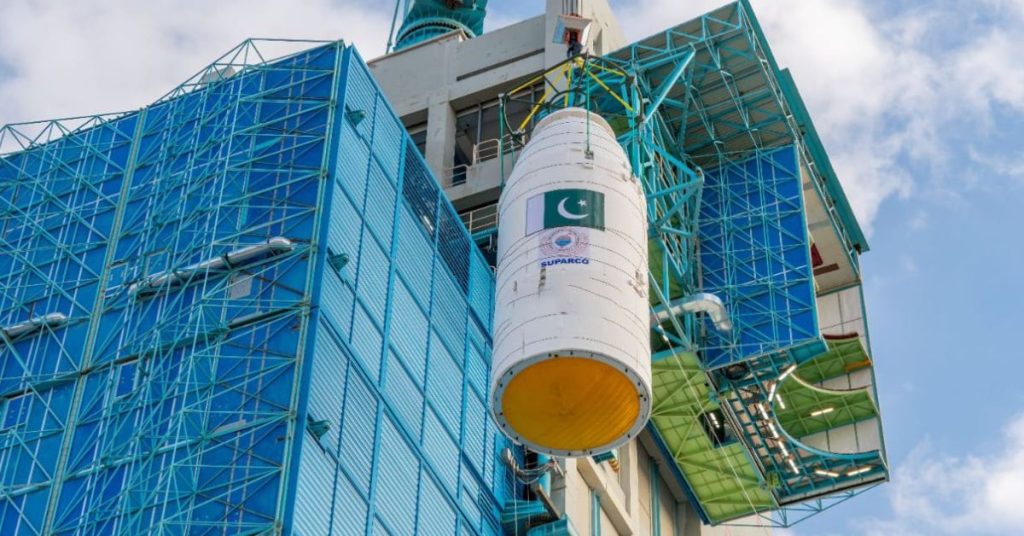
Pakistan's Space and ISTAR Architecture
The Pakistan military's investment in space-based assets has accelerated sharply since 2023 - with SUPARCO placing six satellites since May 2024 alone. The PRSC electro-optical constellation - PRSC-EO1, PRSC-EO2, and PRSC-EO3 - is now complete, providing Pakistan with persistent, indigenous satellite imagery.
The PRSC-EO3 is particularly significant as Pakistan's first satellite with onboard AI processing for real-time image analysis, reducing the latency between image capture and actionable intelligence.
The PRSC-S1 SAR satellite adds all-weather, day-and-night imaging capability - a critical gap-filler for the cloudy and nighttime conditions that limit electro-optical satellites. The PRSC-HS-1 hyperspectral satellite enables the detection of camouflaged or concealed targets that would be invisible to standard electro-optical or SAR sensors.
The USD 406 million PIESAT InSAR constellation deal with China will provide Pakistan with interferometric SAR data capable of detecting subtle terrain changes - vehicle tracks, earthworks, troop movements - over wide areas and at revisit rates measured in hours rather than days.
The PakSat-MM1 communications satellite supports secure military communications, linking forward-deployed units with command centres and providing the bandwidth necessary for real-time sensor data transmission.
Thus, Pakistan is building a space-based ISTAR architecture that integrates electro-optical, SAR, hyperspectral, and InSAR imagery with secure communications. This architecture is designed to feed the sensor-to-shooter kill chains that underpin the ARFC doctrine and the PAF's ISTAR-led force concept.
Pakistan's space program is managed through the Space and Upper Atmosphere Research Commission (SUPARCO) for civilian applications and through a dedicated military space directorate for defence-related assets. The rapid expansion of the constellation since 2023 represents a deliberate effort to reduce dependence on commercial satellite imagery providers - whose availability cannot be guaranteed during conflict.
The integration of space-based assets with airborne sensors - including AEW&C aircraft, MALE UAVs, and signals intelligence platforms - and ground-based radars creates a multi-layered ISTAR architecture.
This architecture is what enables the precision-strike doctrines of the ARFC and the PAF to function. Without persistent, real-time targeting data, the Fatah family, Taimoor ALCM, and SMASH ASBM would be reduced to area-fire weapons rather than precision instruments.
Partnerships
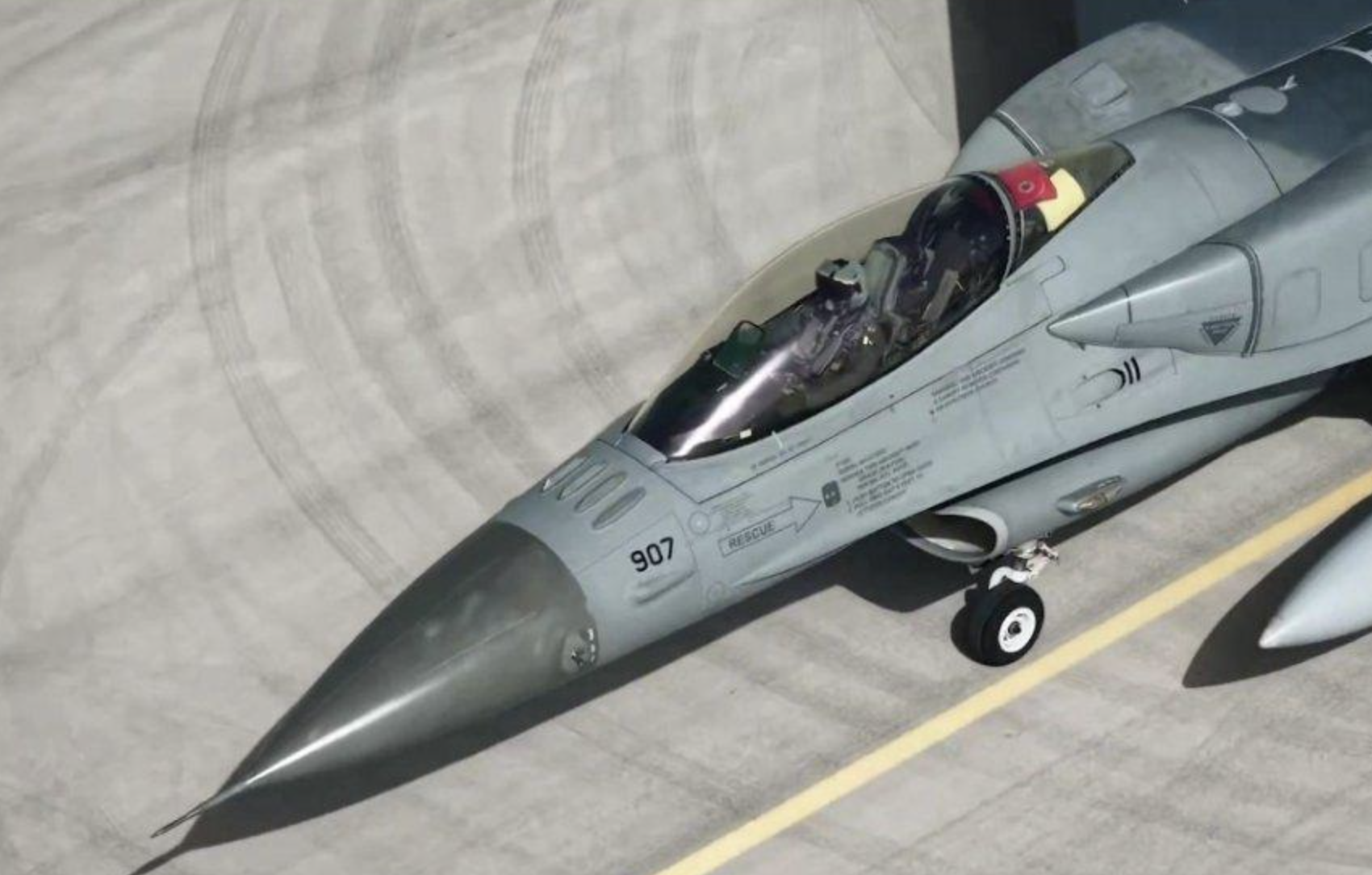
Pakistan's Strategic Partnerships and Defence Procurement
Pakistan's defence procurement is shaped by a network of strategic partnerships that have evolved significantly since the early 2000s. These partnerships define the Pakistan military's equipment inventory, technology access, and industrial development trajectory.
China: The Primary Defence Partner
China remains Pakistan's most important defence partner, supplying platforms across all three services. The list spans the JF-17 and J-10CE fighters, Type 054A/P frigates, Hangor-class submarines, HQ-9/P SAMs, VT4 MBTs, SH-15 SPHs, and a range of precision munitions.
The depth of the China-Pakistan defence relationship extends beyond platform sales. Co-production arrangements, technology transfer agreements, and joint development programs - particularly the JF-17 and the Hangor-class submarine - have given Pakistan's defence industry access to capabilities it could not develop independently within the same timeframe.
The relationship's origins extend to the early 1960s - when China provided F-6 (MiG-19) fighters to the PAF during a period of American arms embargoes - and deepened substantially in the nuclear domain.
In September 1972, Nobel laureate Abdus Salam visited China on behalf of Pakistan to seek nuclear cooperation from Premier Zhou Enlai. China subsequently provided a tested weapon design, supplied tritium, and built a turnkey solid-fuel missile production facility at Fatehjung. This partnership has survived multiple shifts in the global strategic environment.
The China-Pakistan Economic Corridor (CPEC) has added an infrastructure and economic dimension to the partnership, while the defence relationship has expanded into domains that were previously outside its scope.
The J-35AE collaboration and the PIESAT InSAR constellation deal signal that this partnership is deepening further into advanced aerospace and space-based surveillance. The KJ-500 AEW&C acquisition and the potential HQ-19 ABM system deal would further extend China's role as the supplier of Pakistan's most strategically significant defence systems.
Turkiye: An Expanding Partnership
Turkiye has emerged as Pakistan's second most important defence partner over the past decade - a relationship driven by both strategic alignment and Turkiye's emergence as a globally competitive defence exporter. The Babur-class corvette (MILGEM-derived), the Jinnah-class frigate, and the Bayraktar TB2 and Akinci UCAVs are all entering or planned for Pakistani service.
The Pakistan-Turkiye defence relationship extends beyond procurement to industrial collaboration. Both countries have signalled interest in co-developing future platforms, potentially including a MALE UCAV and naval systems. The Turkish defence industry's momentum - showcased at SAHA 2026 - has expanded the menu of possible collaborations.
Turkiye's defence export model is anchored by the Turkish Armed Forces Foundation (TSKGV), which holds stakes in 14 companies directly and 61 indirectly - including ASELSAN, TAI, and ROKETSAN. Approximately 3,500 SMEs constitute the Turkish supply chain, and the SSB coordinates through over 1,300 active projects with roughly USD 3 billion annually allocated to R&D.
From Pakistan's perspective, Turkiye offers both a diversification pathway and a development model. Turkish platforms carry fewer end-user restrictions than Western equivalents, while providing access to NATO-standard subsystems and design philosophies that complement Pakistan's Chinese-origin inventory.
Western and Other Suppliers
The USD 686 million F-16 upgrade approved in December 2025 demonstrates that the United States retains a limited but significant role in Pakistan's defence procurement - primarily in sustaining and upgrading legacy platforms.
European suppliers maintain a presence in subsystems and niche capabilities. Italy's Leonardo has supplied the Falco UAV and contributed to naval electronics, while the CSOC of the Netherlands designed the Babur-class corvette platform.
Given that access to American defence technology has been constrained since 2018 - when the United States suspended security assistance - Pakistan's procurement strategy has pivoted further towards Chinese and Turkish platforms. This shift has accelerated indigenous capability development, as both China and Turkiye have been more willing to facilitate technology transfer and co-production than Western suppliers historically were.
The multi-billion dollar cost of Western supply disruptions - from the Pressler Amendment sanctions of October 1990 (which froze nearly USD 600 million in military supplies and grounded Pakistan's F-16s at Davis-Monthan AFB in Arizona) to the German refusal to supply MTU engines for the Hangor-class - has shaped Pakistan's procurement philosophy fundamentally.
The lesson absorbed by the Pakistani defence establishment is that supply security matters as much as platform capability. Partnerships with countries willing to offer unrestricted technology transfer and co-production carry less long-term risk than relationships with suppliers that may impose sanctions or end-user restrictions based on political considerations.
Market IntelligenceDemand trackers, retrospectives, and procurement analysis for Pakistan's defence programs.Command
Pakistan Military Organization and Command Structure
The Pakistan military's command structure reflects both the country's British colonial heritage and the practical demands of managing a large, multi-service armed force. Each service branch is headed by a four-star chief - the Chief of Army Staff (COAS), the Chief of Air Staff (CAS), and the Chief of Naval Staff (CNS).
Until November 2025, the Joint Chiefs of Staff Committee (JCSC), chaired by a four-star Chairman, served as the highest military coordination body. However, the Chairman JCSC did not exercise operational command over the individual services - a structural feature that limited inter-service integration.
The 27th Constitutional Amendment and the CDF
The 27th Constitutional Amendment, passed on 13 November 2025, fundamentally restructured the Pakistan military's top-level command. The amendment abolished the CJCSC position and established the Chief of Defence Forces (CDF) - a new four-star role with expanded coordinating authority over all three services.
Under the amendment, the COAS also serves as CDF. Field Marshal Asim Munir was appointed as the first CDF on 5 December 2025, with a new five-year term.
The amendment also created the Commander of National Strategic Command (CNSC) - a new four-star post responsible for overseeing the country's nuclear arsenal and strategic forces. The CNSC is appointed on the CDF's recommendation by the Prime Minister, replacing the previous custodial arrangements under the Strategic Plans Division (SPD).
The CDF reform has generated significant debate. Proponents argue that unified command was long overdue - particularly after the May 2025 conflict exposed coordination gaps between the services during time-sensitive targeting and air-ground operations.
Critics contend that concentrating authority in the Army chief risks marginalizing the PAF and PN at a time when both services are undergoing rapid modernization and require institutional autonomy for effective capability development.
Given that the CDF position is still in its first year, the practical implications for inter-service procurement, joint doctrine, and nuclear command-and-control are still unfolding.
Pakistan Military Ranks
Pakistan military ranks follow a structure broadly derived from the British military system. The Army uses designations from Second Lieutenant through General, the PAF uses Pilot Officer through Air Chief Marshal, and the PN uses Sub-Lieutenant through Admiral.
The rank of Field Marshal - historically an honorary title - was conferred on the first CDF, Asim Munir, under the 27th Constitutional Amendment.
The commissioned officer ranks in the Pakistan Army are: Second Lieutenant, Lieutenant, Captain, Major, Lieutenant Colonel, Colonel, Brigadier, Major General, Lieutenant General, and General. The PAF equivalents run from Pilot Officer through Air Chief Marshal. The PN uses Sub-Lieutenant, Lieutenant, Lieutenant Commander, Commander, Captain, Commodore, Rear Admiral, Vice Admiral, and Admiral.
The Pakistan military's officer corps is drawn primarily from the Pakistan Military Academy (PMA) at Kakul, the PAF Academy at Risalpur, and the Pakistan Naval Academy at Manora. These institutions train approximately 2,000 officers annually across the three services.
The National Defence University (NDU) in Islamabad provides senior-level joint education, while the Command and Staff College at Quetta trains mid-career officers for brigade and divisional command. The military's professional military education (PME) pipeline is considered one of the more comprehensive in the developing world, with officers typically attending multiple institutions over a 25- to 30-year career.
Pakistan Military Size Compared
When comparing Pakistan military size to regional peers, the numbers are instructive. India fields approximately 1.45 million active-duty personnel - more than double Pakistan's 685,000. However, Pakistan's military-to-population ratio is higher, and its paramilitary forces add substantial depth.
India operates approximately 4,600 MBTs to Pakistan's 2,800, over 600 combat aircraft to Pakistan's 450, and a navy of 150 vessels including two aircraft carriers and 18 submarines. India's defence budget of approximately USD 75 billion dwarfs Pakistan's official allocation by a factor of ten.
However, raw comparisons obscure important qualitative factors. Pakistan's nuclear arsenal of approximately 170 warheads and its diversified triad delivery capability - spanning ballistic missiles, cruise missiles, and the Babur-3 SLCM - ensure that any quantitative conventional advantage India holds cannot be translated into decisive military outcomes without nuclear escalation risk.
In this vein, comparisons of India vs Pakistan military strength extend beyond personnel to platform inventories, nuclear capabilities, defence spending, and industrial capacity. Pakistan has historically offset India's quantitative advantages through selective technological investments, strategic depth via its nuclear deterrent, and asymmetric capabilities in areas such as missiles, special operations, and - increasingly - precision-strike systems under the ARFC framework.
Among Muslim-majority states, Pakistan fields the largest conventional armed force and is the only nuclear-armed power. Compared to Turkiye (355,000 active personnel, NATO member), Iran (610,000 active, large paramilitary IRGC), and Egypt (440,000 active), Pakistan's military is both larger and, in several capability areas, more technologically advanced - particularly in missile systems, submarine warfare, and fifth-generation fighter aspirations.
Internal Security
Counter-Terrorism and Internal Security Operations
Pakistan's armed forces have been engaged in large-scale counter-terrorism and counter-insurgency operations since the mid-2000s. The scale and duration of these campaigns is exceptional by global standards - few armed forces have sustained operations of this intensity across such difficult terrain for so long.
Operation Rah-e-Nijat (2009) targeted the TTP leadership in South Waziristan. Operation Zarb-e-Azb (2014-2017) expanded operations across North Waziristan, displacing over a million civilians and clearing entrenched militant positions.
Operation Radd-ul-Fasaad (2017-present) extended the counter-terrorism mandate nationwide, encompassing intelligence-based operations (IBOs) in urban centres, border fencing along the Afghanistan frontier, and the biometric registration of populations in formerly ungoverned areas.
The Army's Special Services Group (SSG) - Pakistan's premier special operations force - has played an outsized role in these campaigns, conducting direct-action raids, hostage rescues, and intelligence-driven targeting operations. The SSG's experience over the past two decades has made it one of the most operationally seasoned special forces in the region.
The Pakistan military's shift towards light armoured vehicles during this period reflected the operational demands of counter-insurgency - where mine-resistant ambush-protected (MRAP) vehicles and wheeled APCs proved more useful than tracked armour designed for conventional warfare on the eastern plains.
Pakistan Military Spending on Internal Security
A significant portion of the Pakistan military's operational budget has been directed towards internal security over the past two decades. The costs of sustained operations in FATA, Balochistan, and the borderlands - including troop deployments, infrastructure development, and the rehabilitation of over 3 million displaced civilians - have strained the defence budget.
Pakistan estimates that the war on terror has cost the national economy over USD 150 billion in direct and indirect losses since 2001. Military casualties from these operations exceed 8,000 killed and over 30,000 wounded - figures that are often overlooked in assessments of Pakistan's military posture.
Given that these operations are expected to continue in some form - particularly in Balochistan and the newly merged tribal districts - the Pakistan military's budget allocation reflects a permanent shift towards internal security as a core mission alongside conventional preparedness. The security situation in Balochistan continues to demand sustained military and paramilitary deployments.
International Roles
Foreign Deployments and International Security Roles
The Pakistan military maintains a significant international footprint beyond its borders - spanning bilateral defence partnerships in the Gulf, United Nations peacekeeping operations, and an expanding network of military training and advisory missions. These deployments serve both strategic and economic functions, providing Pakistan with diplomatic influence, foreign exchange earnings, and operational experience in diverse environments.
The Saudi Arabia Defence Partnership
Pakistan's military relationship with Saudi Arabia is one of the oldest and deepest bilateral defence ties in the Muslim world. Approximately 13,000 Pakistani military personnel are currently deployed across Saudi Arabia in advisory, training, and security capacities - making it the largest overseas deployment of Pakistan's armed forces.
The relationship was formalized at a new level through the Strategic Mutual Defence Agreement (SMDA), signed on 17 September 2025. Under the SMDA, Pakistan has deployed additional military personnel and equipment - including JF-17 Thunder fighters - to Saudi Arabia.
However, the SMDA has generated considerable debate within Pakistan. The pact's scope and obligations remain only partially disclosed, and critics have questioned whether the arrangement could draw Pakistan into Gulf conflicts - particularly amid the ongoing US-Iran tensions in the Strait of Hormuz.
That said, the Saudi partnership provides Pakistan with substantial economic benefits - including concessional oil supplies, financial support during balance-of-payments crises, and a platform for defence exports.
Gulf and Middle Eastern Deployments
Beyond Saudi Arabia, Pakistan maintains military advisory and training personnel in Qatar (approximately 650 personnel), the United Arab Emirates, Bahrain, and other Gulf states. These deployments are typically lower-visibility arrangements focused on training, interoperability, and security cooperation rather than frontline combat roles.
The Pakistan Navy's Operation Muhafiz-ul-Bahr - launched in March 2026 to escort commercial shipping through the Strait of Hormuz - represents the PN's most significant operational deployment in the Gulf since the Combined Maritime Forces (CMF) task force operations.
Pakistan's mediation efforts in the Iran-US crisis and the broader Islamabad talks of April 2026 have further elevated Pakistan's profile as a security actor in the Gulf.
Pakistan's defence industry has also targeted the Gulf as a primary export market. GIDS and HIT have actively promoted platforms such as the P251 self-propelled howitzer, SMASH ASBM, and Shahpar-series UAVs to Gulf clients - leveraging the military-to-military relationships established through personnel deployments.
United Nations Peacekeeping
Pakistan is one of the largest troop-contributing countries to United Nations peacekeeping operations. As of 2025, Pakistan ranked as the world's fifth-largest contributor, with approximately 8,230 peacekeepers deployed across multiple mission areas.
Pakistani peacekeepers have served in the UN Stabilization Mission in the Democratic Republic of the Congo (MONUSCO), the UN Mission in South Sudan (UNMISS), the UN Multidimensional Integrated Stabilization Mission in Mali (MINUSMA), the UN Peacekeeping Force in Cyprus (UNFICYP), and the UN Operation in Somalia (UNOSOM), among others.
This contribution comes at a significant cost. Over 181 Pakistani peacekeepers have been killed in the line of duty, and 97 have received the Dag Hammarskjold Medal - the UN's highest honour for peacekeeping sacrifice.
In April 2025, Pakistan co-hosted the UN Peacekeeping Ministerial Meeting in Islamabad, underscoring the country's institutional commitment to multilateral security operations.
One can see the Pakistan military's international deployments serving a dual purpose: they project influence and build partnerships in strategically important regions, while the UN peacekeeping contribution provides operational experience, institutional prestige, and a revenue stream that partially offsets the costs of maintaining a large standing military.
Paramilitary
Paramilitary and Internal Security Forces
Pakistan's security apparatus extends well beyond the three uniformed services. Over 400,000 paramilitary and civil armed force personnel operate under the Ministry of Interior and provincial governments, providing the country with a substantial internal security capacity that complements the regular military.
Pakistan Rangers
The Pakistan Rangers - comprising separate Sindh Rangers and Punjab Rangers formations - are the most prominent paramilitary force. The Rangers operate primarily in urban environments, with the Sindh Rangers playing a central role in security operations in Karachi since 2013. The Punjab Rangers are responsible for border security along the eastern frontier with India.
The Rangers are formally under the Ministry of Interior but are operationally commanded by seconded Army officers. They carry military-grade small arms, armoured personnel carriers, and surveillance equipment - making them a de facto light infantry force optimized for urban and border security.
Frontier Corps
The Frontier Corps (FC) operates in Balochistan and Khyber Pakhtunkhwa, providing security along Pakistan's western border with Afghanistan and Iran. The FC played a central role in the counter-insurgency campaigns of the 2010s and continues to conduct operations against militant groups and cross-border smuggling networks.
The FC is recruited primarily from local tribal populations and officered by seconded Army personnel. This structure provides the force with local knowledge and cultural familiarity - advantages that proved critical during operations in the former FATA.
Other Paramilitary and Civil Armed Forces
Additional paramilitary formations include the Pakistan Coast Guard, which patrols the Balochistan coastline, the Frontier Constabulary, the Northern Areas Scouts, the Gilgit-Baltistan Scouts, and the Azad Kashmir Regiment. Provincial police forces and the Levies - particularly in Balochistan - add further depth to the internal security architecture.
Given that Pakistan faces persistent internal security threats - from the TTP in the west to separatist movements in Balochistan to urban crime in Karachi and Lahore - the paramilitary forces serve an essential function. They free the regular military from permanent internal security commitments, allowing the Army, PAF, and PN to focus on conventional preparedness and external deterrence.
Geography
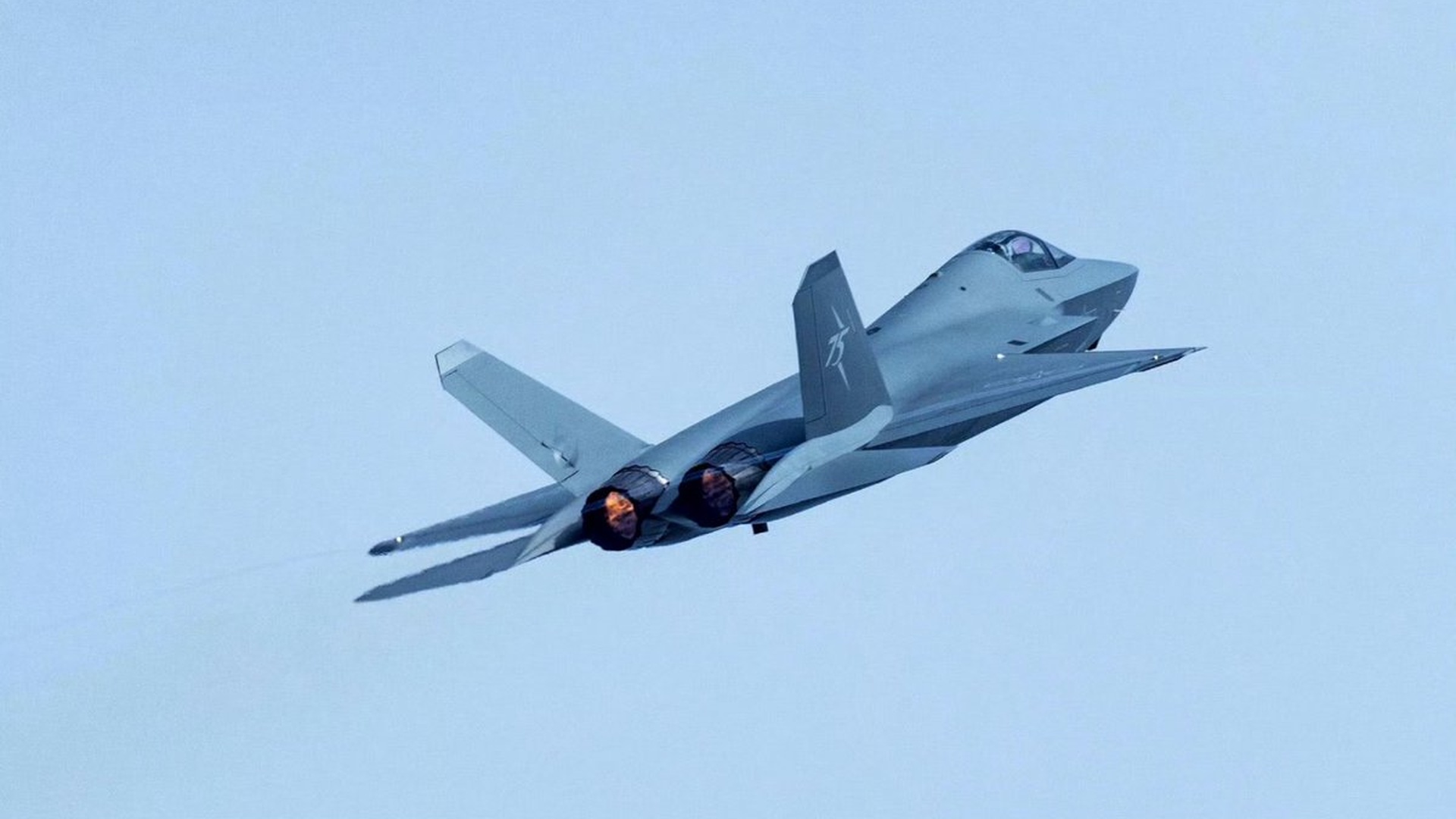
Pakistan's Strategic Geography
Pakistan's military posture cannot be understood without reference to the country's geography. Covering approximately 881,913 square kilometres, Pakistan occupies one of the most strategically consequential locations in South and Central Asia - bordered by India to the east, China to the northeast, Afghanistan to the west, and Iran to the southwest, with a 1,046-kilometre Arabian Sea coastline to the south.
The eastern border with India is the primary conventional threat axis. The terrain ranges from the deserts of Sindh and southern Punjab - tank country in the classical sense - to the fertile Punjab plains and the mountainous Line of Control (LoC) in Kashmir. The Pakistan Army's corps-level dispositions, armoured formations, and artillery deployments are optimized for this axis.
The western border with Afghanistan runs through some of the most rugged terrain on earth - the Hindu Kush mountains, Khyber Pass, and the tribal belt. This frontier has been the operational focus of Pakistan's counter-insurgency campaigns for over two decades and requires a very different force structure from the eastern conventional posture.
The northern areas - Gilgit-Baltistan and Azad Kashmir - include some of the world's highest militarized terrain, including the Siachen Glacier. The extreme altitude and weather conditions demand specialized mountain warfare capabilities.
The Arabian Sea coastline, anchored by the ports of Karachi and Gwadar, provides Pakistan with access to global sea lanes and the Strait of Hormuz. The PN's fleet expansion and maritime strike investments are driven by the need to protect these approaches.
Thus, Pakistan's military must simultaneously prepare for high-intensity conventional warfare on the eastern plains, counter-insurgency operations in mountainous western terrain, mountain warfare in the northern areas, and maritime security along the southern coast. This geographic diversity imposes force structure demands that few countries of comparable economic size face.
News
Defence News and Ongoing Developments
Pakistan's defence sector generates a steady stream of procurement, operational, and policy developments. From new platform inductions and weapons tests to defence budget announcements and strategic partnership agreements, the pace of change in the Pakistan military is substantial.
Key areas of active development as of mid-2026 include the PAF's J-35AE fifth-generation fighter program, the PN's Hangor-class submarine inductions, the Army's ARFC formation and precision-strike capability build-up, the NASTP's 160-program portfolio, and the defence industry's push towards IP ownership and higher-value exports.
The PAF has laid out its next procurement steps for 2026-2030, including the KJ-500 AEW&C aircraft from China, a next-generation air training system, and the continued J-10CE induction. The PN commissioned PNS/M Hangor in May 2026, with the remaining Chinese-built boats expected to follow in rapid succession.
The US intelligence community's flagging of Pakistan's missile program - and the broader trajectory of Pakistan-US defence ties under renewed engagement - are shaping the diplomatic context in which Pakistan's military modernization unfolds.
Quwa's Pakistan Defence News section provides ongoing coverage of these developments, including analysis of program timelines, industrial offsets, and strategic implications.
Explore Pakistan's Armed Forces
This page serves as the gateway to Quwa's comprehensive coverage of Pakistan's military - the 14th most powerful armed force globally, one of six nuclear-armed states outside the P5, and a military undergoing its most intensive modernization in decades. Each branch, capability area, and thematic focus has dedicated coverage:
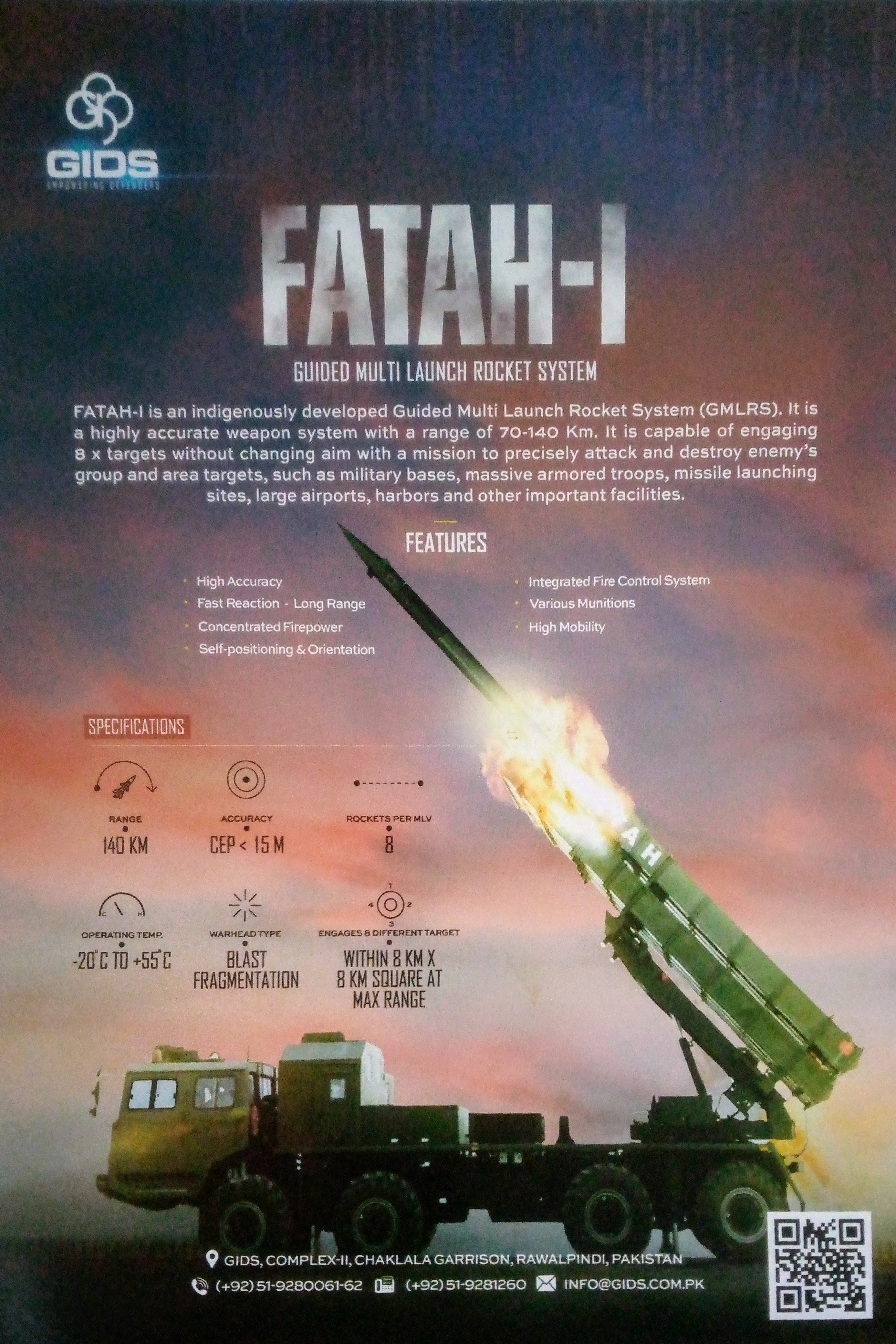
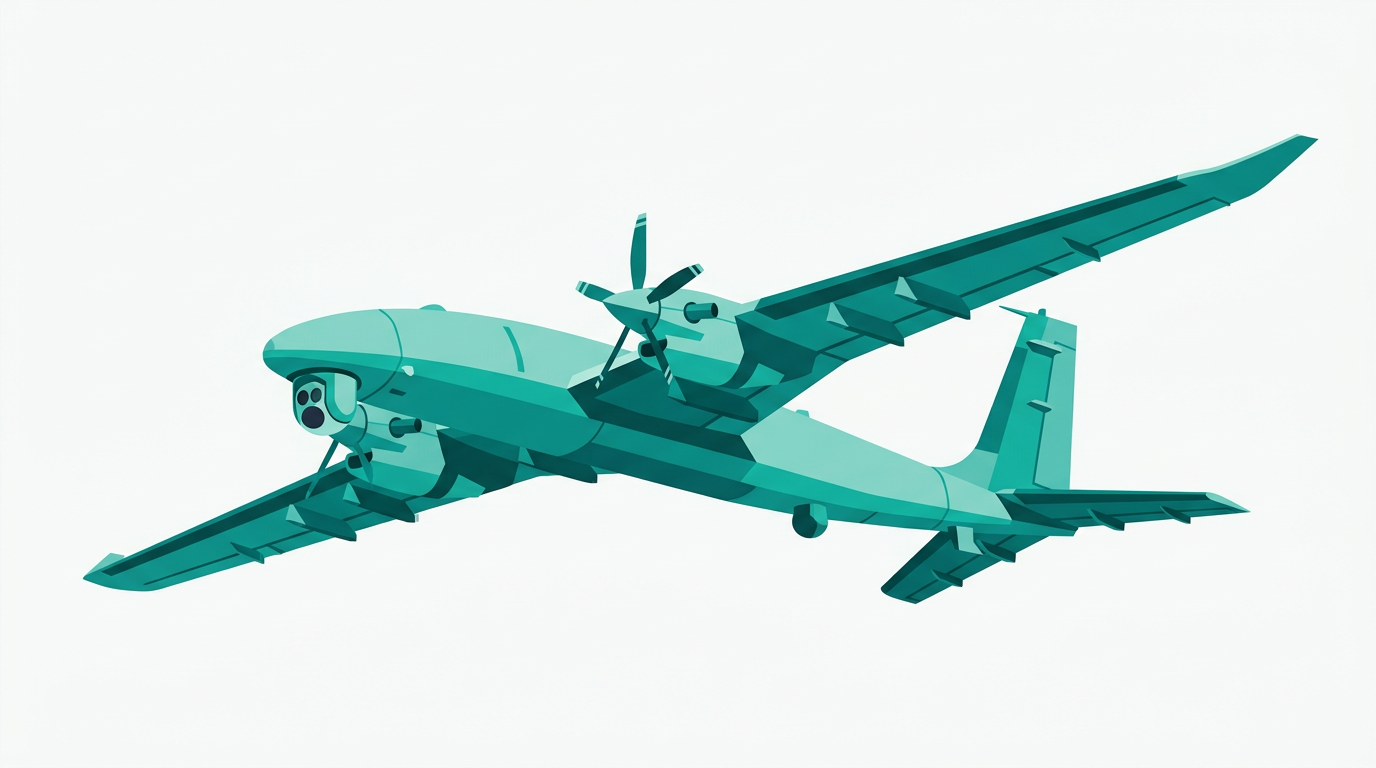
This page is maintained and updated by the Quwa editorial team as new developments emerge. For in-depth analysis of Pakistan's armed forces, defence industry, procurement, and strategic capabilities, see Quwa Premium.
Last Updated: May 2026
Go Deeper With Quwa
Follow Pakistan's military modernization beyond the public cycle.
Quwa Premium brings together Pakistan defence analysis, foreign policy context, economic security coverage, and market intelligence. Advertising and sponsorships give industry players direct visibility with readers in the armed forces, government, intelligentsia, and defence market.
Read By Defence Professionals