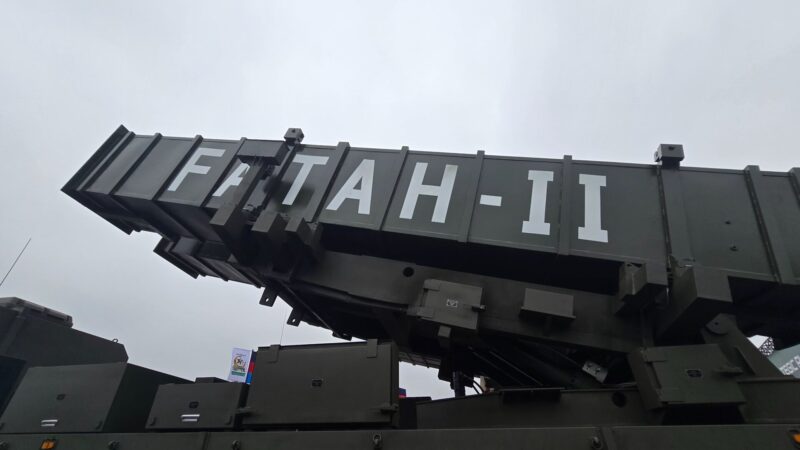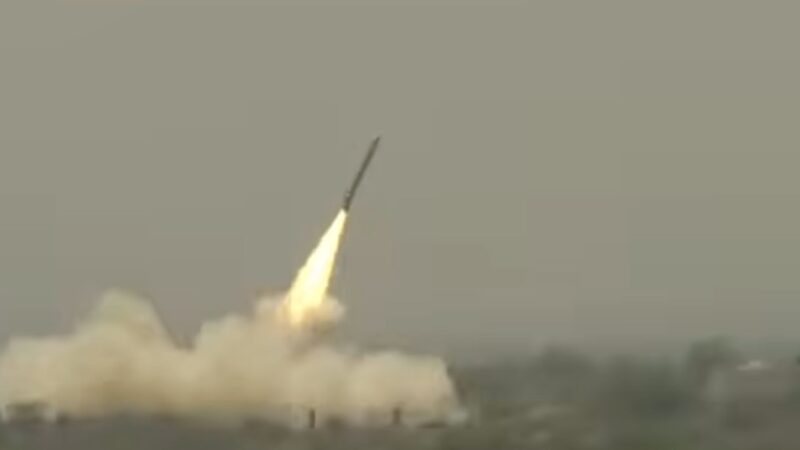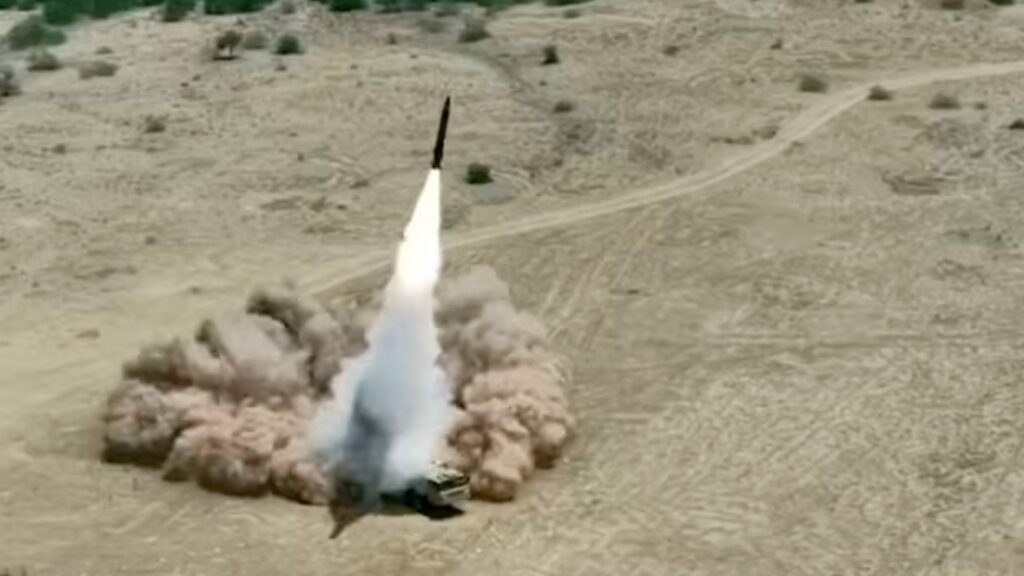
On 28 April 2026, Pakistan’s Inter Services Public Relations (ISPR) announced that the Army Rocket Force Command (ARFC) conducted a successful training launch of the Fatah-II (Fatah 2) surface-to-surface missile, a 400 km-range supersonic guided missile developed by the National Engineering and Scientific Commission (NESCOM) and marketed internationally by Global Industrial and Defence Solutions (GIDS).
According to the ISPR, the Fatah-II launch was aimed at training troops, validating key technical parameters, and evaluating the performance of sub-systems designed for improved accuracy and enhanced survivability. The ISPR did not disclose the location, evaluation parameters, or results of the test.
According to official GIDS marketing materials, the Fatah-II is described as a supersonic, non-ballistic missile with “all-course manoeuvre” capability – meaning it can execute evasive manoeuvres throughout its flight, not solely during the terminal phase. The ISPR’s description of a “unique trajectory” and manoeuvrability features designed to defeat missile defence systems is consistent with this profile.
The GIDS specification sheet lists the Fatah-II’s export-variant range at 100–290 km, with a warhead weight of 365 kg (unitary blast or blast fragmentation), a length of 7.5 m, and accuracy of 50 m circular error probable (CEP) or less.
However, the ISPR has consistently stated the Fatah-II’s range at 400 km – indicating that the domestic variant retains a significantly longer reach than the version offered for export, a common practice for missile programs subject to export control considerations.
The Fatah-II is a 600 mm-diameter missile – considerably larger than the 301 mm Fatah-I – and is powered by a single-stage dual-thrust solid rocket motor with an indigenous thermal protection system. Its guidance suite integrates inertial navigation (INS) with satellite navigation (GNSS), and the missile can fly a programmable trajectory.
Quwa Plus
Go Beyond the Headlines on Pakistan’s Defence and Security.
Quwa Plus gives you deeper reporting, briefings, and analysis on Pakistan’s defence programs, foreign policy, national security, and regional strategy. Follow the developments that matter to professionals, analysts, and serious readers tracking Pakistan’s security landscape.