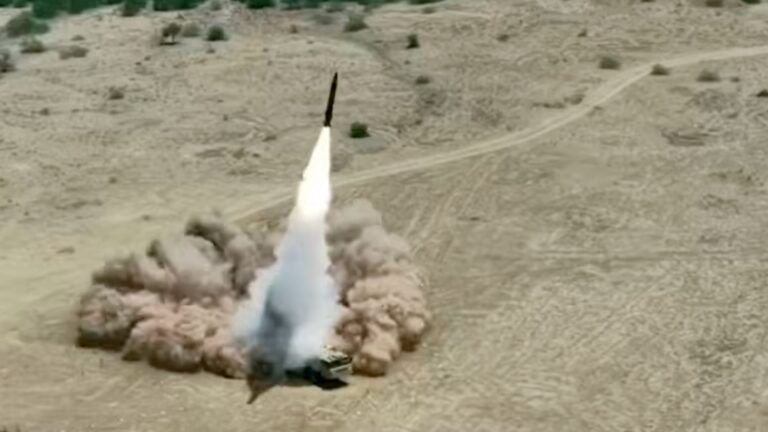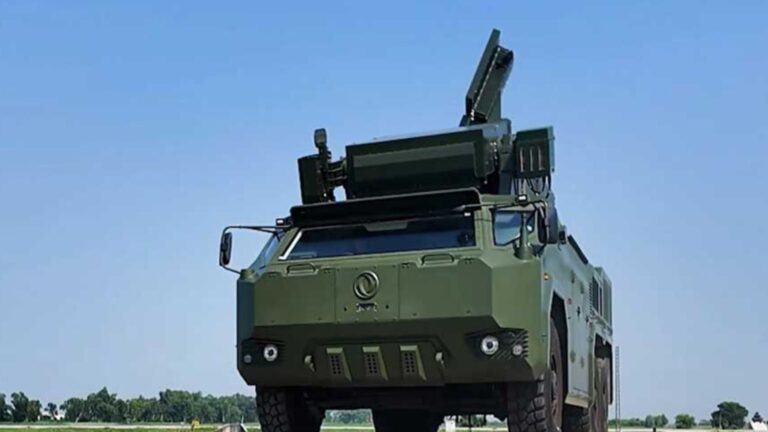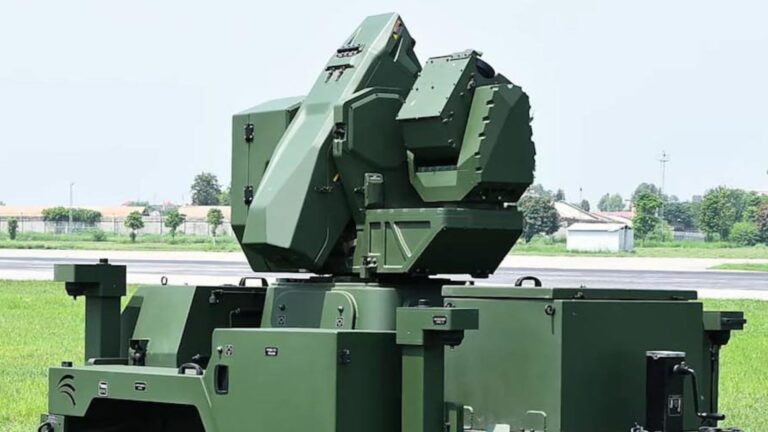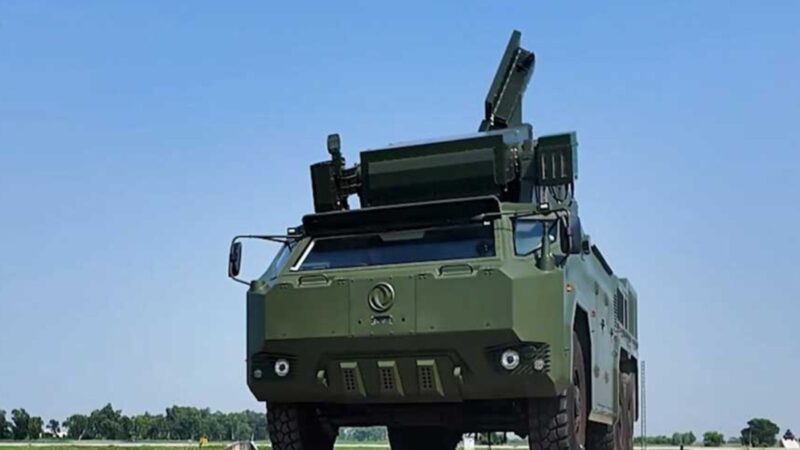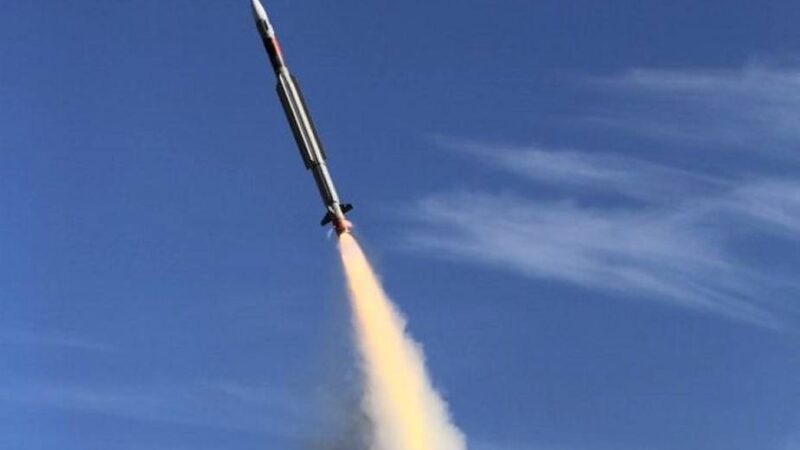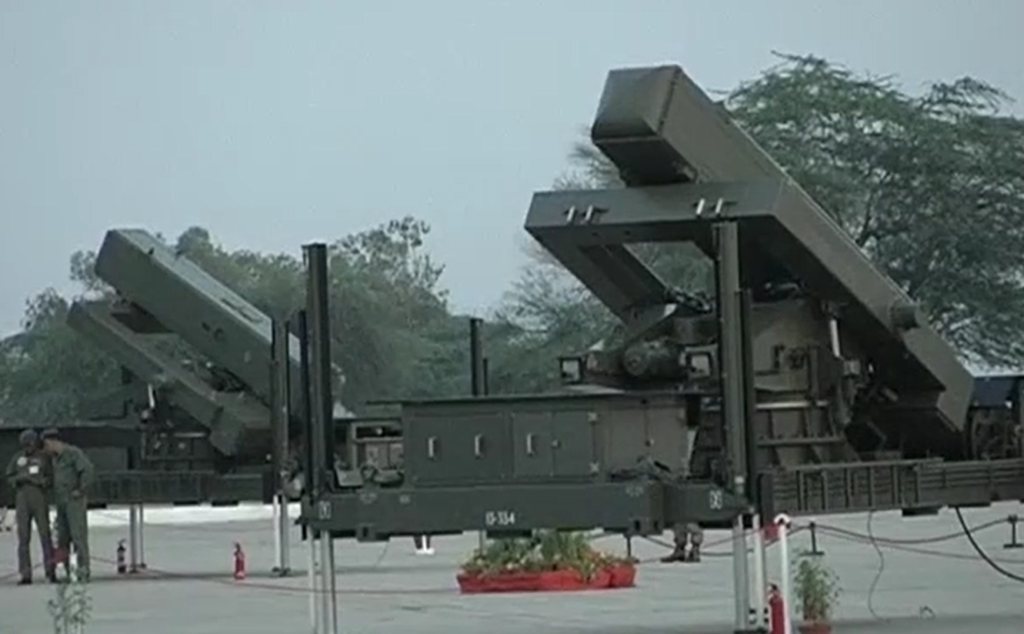
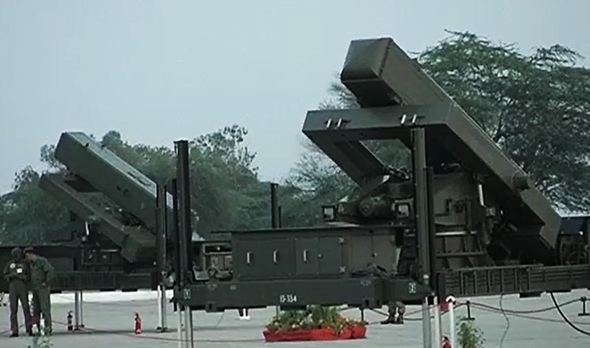
The Spada 2000-Plus is an Italian ground-based air defence system manufactured by MBDA, firing the Aspide 2000 semi-active radar-homing (SARH) missile. The Pakistan Air Force (PAF) operates 10 Spada 2000-Plus batteries — procured in a €415 million deal in 2007 and delivered between 2010 and 2013 — making it the only Western-origin SAM system in Pakistan’s current inventory.
The Spada 2000-Plus provides point-defence for PAF air bases, command-and-control nodes, and strategic installations. It sits at the lower tier of the PAF’s layered air defence architecture — below the HQ-9BE (260–280 km) and HQ-16FE (160 km) — within Pakistan’s integrated air defence system (IADS).
Know What Defence Buyers in Will Need Next
See emerging requirements, likely suppliers, and routes to market across Pakistan, MENA, and fast-moving defence technologies, before demand becomes obvious.
Spada 2000-Plus Specifications
| Parameter | Spada 2000-Plus (PAF) |
|---|---|
| Type | Short-to-medium-range ground-based SAM |
| Manufacturer | MBDA Italy (formerly Selenia / Alenia Marconi Systems) |
| Missile | Aspide 2000 |
| Range | >25 km |
| Altitude | ~5,000 m+ |
| Missile Speed | Mach 5 |
| Missile Length | 3.7 m |
| Missile Diameter | 234 mm |
| Missile Weight | 240 kg |
| Warhead | 35 kg |
| Guidance | Semi-active radar homing (SARH) |
| Radar | Thomson-CSF (Thales) RAC 3D |
| Launcher | 6-round launcher |
| Operator | Pakistan Air Force |
| Batteries | 10 |
| Status | Operational (2010–present) |
Development Heritage
The Spada system traces its lineage to the Aspide missile programme, developed by Italy’s Selenia in the 1970s as a replacement for the licence-built AIM-7 Sparrow. The Aspide shares the Sparrow’s general dimensions but features a more advanced inverse monopulse seeker that is significantly more accurate and less susceptible to electronic countermeasures (ECM). The Stockholm International Peace Research Institute (SIPRI) has tracked the Aspide’s extensive global proliferation, with sales to over 17 countries.
The original Spada system used the Selenia PLUTO 2D radar and the Aspide Mk.1 missile (15 km range). The Spada 2000 upgrade replaced the radar with the Thomson-CSF (now Thales) RAC 3D and introduced the Aspide 2000 missile with a 40% range improvement (exceeding 25 km). The ‘Plus’ suffix in Pakistan’s variant indicates further enhancements — likely to radar processing, C2 integration, or ECCM capabilities.
Notably, China imported Aspide Mk.1 missiles in the mid-1980s and subsequently reverse-engineered them into the HQ-6 SAM and PL-11 air-to-air missile after the EEC arms embargo following Tiananmen. The Aspide’s rocket engine is currently produced by Turkey’s Roketsan — an interesting supply-chain connection given Pakistan’s growing defence relationship with Turkey.
Aspide Missile Variant Tree
| Variant | Type | Key Feature | Range (SAM) |
|---|---|---|---|
| Aspide Mk.1 | Original | Sparrow-derived, inverse monopulse seeker | 15 km |
| Aspide Mk.2 | Cancelled | Active radar-homing (shelved for AMRAAM) | — |
| Aspide 2000 | Improved SAM | 40% range increase, larger diameter | >25 km |
| Aspide CITEDEF | Argentine upgrade | CITEDEF refurbishment | ~15 km |
Spada System Variants
| System | Radar | Missile | Key Operators |
|---|---|---|---|
| Spada (original) | Selenia PLUTO 2D | Aspide Mk.1 | Italian Air Force; Thailand |
| Spada 2000 | Thomson-CSF RAC 3D | Aspide 2000 | Spain |
| Spada 2000-Plus | Thales RAC 3D (enhanced) | Aspide 2000 | Pakistan Air Force |
| Skyguard | Oerlikon Contraves | Aspide Mk.1 / 2000 | Kuwait; Cyprus; multiple |
Spada 2000-Plus in Pakistan Air Force Service
The PAF ordered 10 Spada 2000-Plus batteries and 750 Aspide 2000 missiles in 2007, with deliveries completed between 2010 and 2013. The €415 million contract made Pakistan the largest single customer of Spada 2000. The system provides point defence for PAF air bases, serving as the final SAM layer that protects high-value airfield infrastructure — runways, hardened aircraft shelters, fuel and ammunition depots, and C2 facilities.
Each battery includes the Thales RAC 3D surveillance radar, a fire-control/illumination radar, a command post, and multiple six-round launchers. The RAC 3D is a 3D phased-array radar capable of simultaneously detecting and tracking multiple targets, providing the battery with a comprehensive air picture from which to prioritize engagements.
The Spada 2000-Plus is the PAF’s only Western-origin SAM system — all other PAF air defence assets (HQ-9BE, HQ-16FE) are Chinese. This creates a dual-source supply chain that, in theory, provides resilience against disruptions from either supplier. However, it also introduces interoperability and logistics challenges, as the Spada operates on different data standards, communication protocols, and spare parts pipelines from the Chinese systems.
Quwa Assessment: The Spada 2000-Plus in Pakistan’s Threat Environment
The Spada 2000-Plus was a sound procurement when ordered in 2007. At the time, Pakistan had no modern ground-based air defence capability — the PAF relied on legacy systems and fighter aircraft for air base defence. The Spada 2000-Plus introduced a modern, mobile, radar-guided SAM capability with a credible 25+ km envelope. However, as Quwa has analysed in its assessment of Pakistan’s air defence posture, the system faces growing obsolescence challenges.
The SARH Constraint
Like the LY-80, the Spada 2000-Plus uses semi-active radar-homing guidance — the same fundamental limitation that constrains simultaneous engagement capacity. Each missile requires continuous illumination from the battery’s fire-control radar throughout its flight, tying up the illumination channel for the duration of each engagement. In a saturation attack scenario, this limits the battery’s ability to engage multiple threats simultaneously.
The Aspide 2000 vs Modern Interceptors
The Aspide 2000’s 240 kg missile weight and 25+ km range place it in a generation older than current Western short- to medium-range SAMs. The MBDA CAMM-ER — already in Pakistan Navy service — weighs 160 kg, has a 45+ km range, uses active radar-homing guidance, and achieves thrust-vectoring manoeuvrability that the Aspide’s cropped-delta fins cannot match. The CAMM-ER represents what the Aspide’s successor looks like: lighter, longer-ranged, fire-and-forget, and far more agile.
Missile Inventory and Replenishment
Pakistan received 750 Aspide 2000 missiles — 75 per battery. This provides a reasonable initial war stock, but sustained high-intensity operations would rapidly deplete it. The question of missile replenishment is complicated by the Aspide 2000’s production status: MBDA has shifted its focus to the CAMM/CAMM-ER family, and the long-term viability of the Aspide 2000 production line is uncertain. If Italy follows the European trend of restricting arms exports to certain regions — as it did temporarily during the 2019 Yemen-related restrictions — Pakistan could face replenishment constraints.
Integration with the Chinese IADS
The Spada 2000-Plus operates alongside the PAF’s Chinese HQ-9BE and HQ-16FE within the national IADS. Integrating a NATO-standard Italian system with Chinese C2 architecture requires interface protocols — data-link bridging, track correlation, and IFF coordination — that add complexity to the PAF’s air defence management. Whether the PAF has achieved full real-time integration between the Spada and its Chinese systems is not publicly confirmed.
What Comes After the Spada?
As Quwa has argued in its air defence blueprint analysis, the Spada 2000-Plus will eventually need replacement. The most logical successor would be a CAMM-ER-based ground-launched system — building on the PAF’s existing relationship with MBDA through the Pakistan Navy’s CAMM-ER procurement for the Babur-class corvettes. A ground-launched CAMM-ER would offer 45+ km range, ARH fire-and-forget guidance, and commonality with the PN’s naval SAM inventory — enabling tri-service standardization that the current patchwork of Chinese and Italian systems cannot achieve.
Radar and Fire-Control Architecture
The Spada 2000-Plus uses the Thales RAC 3D as its primary surveillance radar — a 3D phased-array system that provides 360-degree coverage with simultaneous target detection and tracking. The RAC 3D can detect up to 100 targets simultaneously within a 60 km detection range and engage up to four targets at once. The fire-control radar provides continuous-wave illumination for the Aspide 2000’s SARH seeker throughout the missile’s flight.
The Spada 2000-Plus can also coordinate with up to 10 radar-led anti-aircraft artillery units — such as the Oerlikon GDF-005 35 mm guns already in Pakistan Army service — within a 10 km radius, providing integrated gun-and-missile point-defence. The ‘Plus’ designation may indicate enhancements to the RAC 3D’s processing capabilities, improved ECCM features, or upgraded command-and-control integration.
Global Context and the Aspide’s Legacy
The Aspide family has been one of the most commercially successful European missile programmes, with sales to over 17 countries across naval (Albatros Mk.2), ground-based (Spada, Skyguard), and air-to-air platforms. Kuwait is the largest overall Aspide customer by missile count, having ordered both Aspide Mk.1 and Aspide 2000 for its Skyguard Amoun system. Spain operated Spada 2000 batteries before donating Aspide 2000 missiles to Ukraine in 2022 for use in the Russo-Ukrainian war.
The Aspide’s influence extends beyond its direct operators. China’s reverse-engineering of the Aspide Mk.1 produced the HQ-6 SAM and PL-11 air-to-air missile — meaning the Aspide’s DNA indirectly contributed to the Chinese air defence systems that Pakistan now operates alongside the Spada itself. This creates an unusual circular technology genealogy: Italian Aspide → Chinese HQ-6/PL-11 → Chinese SAM development that eventually produced the HQ-9 and HQ-16 families now in Pakistani service.
Spada 2000-Plus vs Iron Dome
The Spada 2000-Plus and Israel’s Iron Dome are sometimes compared as point-defence systems, but they serve fundamentally different roles. Iron Dome is optimised for counter-rocket, artillery, and mortar (C-RAM) interception — engaging short-range ballistic threats at ranges of 4–70 km. The Spada 2000-Plus is designed for air defence — engaging aircraft, cruise missiles, and precision-guided munitions at ranges exceeding 25 km. Iron Dome’s Tamir interceptor (90 kg, ARH) is lighter and cheaper per shot, reflecting its C-RAM optimization. The Aspide 2000 (240 kg, SARH) is heavier and more expensive but carries a larger warhead suitable for destroying aircraft-sized targets. Pakistan’s air defence gap is not in C-RAM but in cruise missile and UAS defence — a gap that neither the Spada nor Iron Dome is optimally configured to fill.
Quwa Pro – Defence Market Intelligence
See Where Defence Demand and Technology Are Moving Next
Track procurement priorities across Pakistan, the Gulf and wider MENA, and Central Europe. Follow emerging vendors, drones, AI, C-UAS, and affordable precision weapons, and see how lessons from today’s conflicts are reshaping military requirements and market opportunities.
Featured & Trusted By







Frequently Asked Questions About the Spada 2000-Plus
What is the range of the Spada 2000?
The Spada 2000-Plus fires the Aspide 2000 missile with a range exceeding 25 km against aerial targets.
Does Pakistan have the Spada 2000?
The Pakistan Air Force operates 10 Spada 2000-Plus batteries, procured from MBDA Italy in 2007 for €415 million. The system was delivered with 750 Aspide 2000 missiles between 2010 and 2013.
What missile does the Spada 2000 use?
The Spada 2000-Plus uses the Aspide 2000 — an improved version of the original Aspide Mk.1 with a 40% range increase (exceeding 25 km), a 234 mm diameter, and SARH guidance. The Aspide was developed by Italy’s Selenia (now MBDA) as an improved derivative of the American AIM-7 Sparrow.
Is the Spada 2000 still in production?
MBDA has shifted focus to the CAMM/CAMM-ER family as the successor to Aspide-based systems. The Aspide 2000’s long-term production status is uncertain, which has implications for Pakistan’s missile replenishment capacity.
How does the Spada compare to the CAMM-ER?
The CAMM-ER — already in Pakistan Navy service — offers 45+ km range (vs Aspide’s 25+ km), active radar-homing guidance (vs SARH), thrust-vectoring control, and fire-and-forget capability. The CAMM-ER represents the generation after the Aspide and is the most likely long-term replacement for the Spada in PAF service.
Was the Spada 2000 used in the May 2025 conflict?
The Spada 2000-Plus was part of the PAF’s activated air defence posture during the May 2025 India-Pakistan conflict. Specific engagement details have not been publicly confirmed.
What will replace the Spada 2000-Plus in Pakistan?
Quwa assesses that a ground-launched CAMM-ER system is the most logical successor — providing ARH fire-and-forget guidance, 45+ km range, and commonality with the Pakistan Navy’s existing CAMM-ER inventory. This would enable tri-service SAM standardisation across the PAF, PA, and PN.
Related Profiles and Analysis
- Pakistan Air Defence System — Overview of Pakistan’s layered IADS architecture.
- HQ-9 Long-Range Air Defence System — Pakistan’s HIMADS tier.
- LY-80 / HQ-16 Medium-Range Air Defence System — Pakistan’s medium-range tier.
- HQ-7 / FM-90 Short-Range Air Defence System — The PA’s ESHORAD system.
- Reaction, Not Range: How Pakistan’s Air Defence Must Evolve — Quwa’s flagship IADS analysis.
- The Blueprint for Pakistan’s Future-Proof Air Defence System — Post-conflict IADS modernisation roadmap.
- 2025 India-Pakistan Conflict Notes — Operational context.