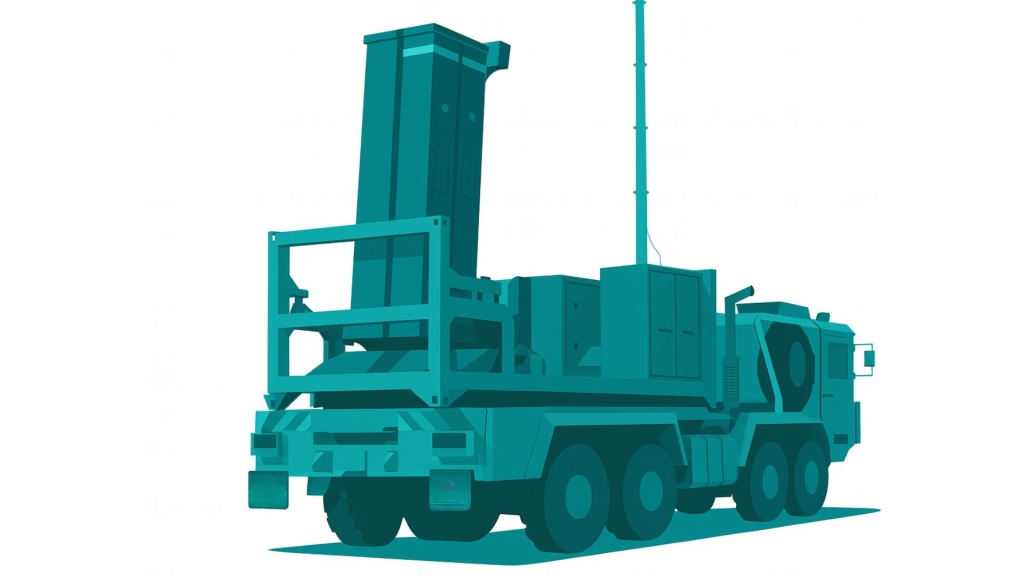
The May 2025 conflict was a brutal validation of a new reality in South Asian warfare. While the Pakistan Air Force (PAF) demonstrated tactical prowess in air-to-air engagements on the conflict’s opening night, the subsequent days revealed a key vulnerability.
India’s large-scale, coordinated use of supersonic-cruising BrahMos cruise missiles to strike targets deep within Pakistan, bypassing frontline defences to hit main operating bases, was not merely a tactical success; it represented a strategic shock. It proved that a determined adversary could hold Pakistan’s core military infrastructure at risk with conventional, standoff weapons, threatening Islamabad’s air power before it could even get airborne.
This reality has rendered Pakistan’s previous air defence posture insufficient. The challenge, however, is not simply about acquiring a new surface-to-air missile (SAM) system that can shoot down a supersonic missile. The actual threat is one of mass and saturation. Therefore, the solution must also be one of mass.
The central question for Pakistani strategic planners is no longer just “What missile should be bought?” but rather, “How can the nation acquire the sovereign industrial capability to field a dense, scalable, and technologically superior air defence shield?”
Get access to this article and all other Quwa content today.
Click Here
The Threat: Supersonic vs. Hypersonic Clarity
Before building a strategy, it is essential to precisely define the problem. The lexicon of advanced missiles is often conflated, but the distinction between “supersonic” and “hypersonic” threats is critical, as combat data from Ukraine makes clear.
- The Supersonic Threat: These are missiles, like the Russian Kh-22 and P-800 Oniks, that travel between Mach 1 and Mach 5. They are incredibly fast, often fly at low altitudes (sea-skimming), and can perform terminal maneuvers. This is the category the BrahMos squarely falls into.
The crucial takeaway from Ukraine is that modern Western SAM systems – specifically the Norwegian and American NASAMS and the German Diehl IRIS-T SLM – are exceptionally effective against this class of threat. NASAMS, for example, has demonstrated a high success rate against over 900 Russian missiles and drones, while the IRIS-T SLM has been credited by Ukrainian and German sources with intercepting over 110 targets with a success rate often cited as approaching 100% (United24).
- The Hypersonic Threat (The Kinzhal): These are weapons that travel above Mach 5 and, critically, are capable of maneuvering throughout their flight path. The data from Ukraine is just as clear here: standard SAM systems like NASAMS and IRIS-T have no operational capability against true maneuvering hypersonic or advanced ballistic missiles. That mission has fallen almost to the US Patriot PAC-3 system.
For Pakistani defence planners, this distinction provides a vital strategic clarity. The immediate, demonstrated, and most persistent threat is a saturation attack by supersonic BrahMos missiles. Neutralizing this threat is Priority One. While serious. the hypersonic missile is a future challenge that will require a different, more advanced class of interceptor. The strategy, therefore, must be two-tiered: solve the supersonic problem now, and use that solution to build a bridge to the hypersonic future.
Glimmers of a Sovereign Strategy
The recognition of the need for a scalable, domestic SAM solution is not entirely new within Pakistan’s defence establishment. For years, entities under the National Engineering and Scientific Commission (NESCOM) and Global Industrial & Defence Solutions (GIDS) have been working on indigenous programs, signaling a strategic foresight that has, until now, lacked the resources and high-level focus to come to full fruition.
The most notable of these efforts are the FAAZ-SL and LoMADS (Low-to-Medium Altitude Air Defence System). The FAAZ-SL represents a pragmatic, “good enough” approach born from necessity: it reportedly pairs the fire-control radar from legacy MBDA Spada systems with a surface-launched variant of the FAAZ air-to-air missile (AAM), itself likely a licensed variant of the Chinese SD-10 AAM. This creative repurposing of existing assets is a clever way to field a capability quickly and affordably.
The LoMADS, in contrast, appears to be a more ambitious, purpose-built program aimed at creating a dedicated medium-range interceptor. While details remain scarce, these programs collectively prove one thing: at a top policy level, there is an understanding that only domestic production can provide the mass required to counter a saturation threat. They offer a nascent, yet vital, ambition to break the cycle of foreign dependency.
However, ambition must be paired with a realistic assessment of technology. These efforts, while commendable, are likely built upon the technological foundations of existing Chinese systems like the SD-10 (or derivative systems like the Sky Dragon-series). While effective for its original role, the SD-10’s core design predates the latest advancements in propulsion and guidance by several decades. However, in fairness to Pakistani planners, Quwa was told from numerous sources that the Aspide 2000-based Spada SAM played an effective role in intercepting several BrahMos missiles. Thus, there is a valid argument for using the SD-10 (a comparatively more advanced missile than the Aspide 2000) as the basis for a SAM.
That said, building a national air defence shield on this foundation risks creating a more modern version of an already-aging system. It lacks the core technological inputs – like advanced thrust-vectoring and dual-mode seekers – to evolve into a credible system for countering the next generation of threats beyond BrahMos. Thus, elevating the underlying technology basis of these SAM projects would allow Pakistan to leverage a platform with more longevity and relevance against future threats.
Pakistan could take a dual short-and-long-term approach. For the urgent need of acquiring a capable short-range air defence system (SHORAD) with some measure of proven impact or defensibility against the BrahMos, it can prioritize the FAAZ SL. The logic of the FAAZ SL is that if the older Aspide 2000 could intercept the BrahMos at some level, then a FAAZ/SD-10 AAM-based solution with a newer seeker should offer more. It might even be the lowest cost option in terms of expediency and industry integration. Moreover, there could soon even be hundreds of SD-10s available for repurposing as the PAF’s JF-17s potentially pivot towards PL-15E. Thus, the FAAZ SL could offer a ‘quick-fix’ so to speak.
However, while the FAAZ SL is being produced, Pakistan should rework the LoMADS into a long-term, next-generation SAM platform analogous to the Israeli Barak, Turkish HİSAR and SİPER, MBDA CAMM, and German IRIS-T SL-series.
Quwa Plus
Finish the Story. Get the Full Picture.
Unlock independent journalism and deeper analysis that help you make sense of Pakistan’s key defence and policy developments without relying on shallow or foreign-framed coverage.
Join ($29.99/Year) Already a subscriber?Sign in