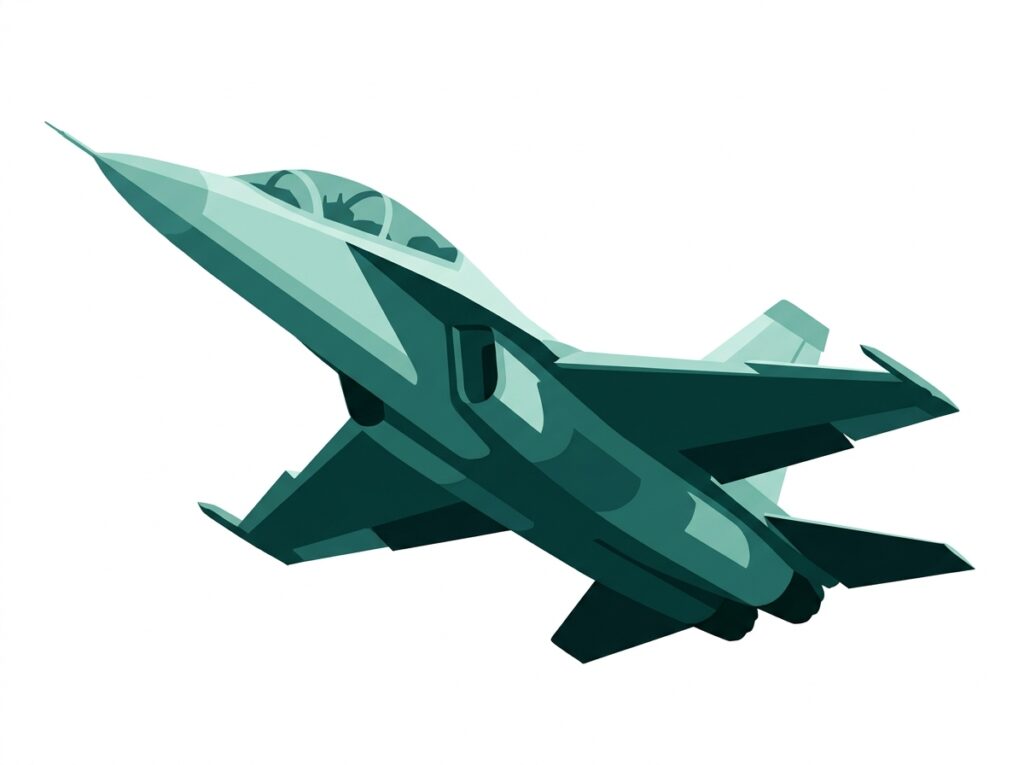
The Pakistan Air Force (PAF)’s training pipeline is increasingly misaligned with the needs of its rapidly modernizing frontline fleet. The PAF’s primary jet trainer – the Cessna T-37 Tweet – entered service in the 1960s, and its remaining airframes had gone through repeated service-life extension programs (SLEPs). Its intermediate trainer – the Hongdu K-8 Karakorum – dates to a joint Sino-Pakistani program launched in the 1980s, and while PAC has been developing a glass cockpit variant (K-8P) since at least 2010, open sources cannot confirm the program’s completion status. The platform cannot fully replicate the subsystem workflows of the PAF’s current-generation fighters. The PAF has no dedicated lead-in fighter trainer (LIFT). The interim solution – a “Shooter Squadron” at PAF Base M.M. Alam (Mianwali) using FT-7P/PG aircraft – is at least a generation behind the PAF’s current mainstay fighter fleet and, with time, will likely retire due to the age of the airframes.1 In effect, the training pipeline ends at the K-8, and the next step for a general duty pilot (GDP) is the operational conversion unit (OCU) of a 4th or 4.5th-generation fighter.
This gap has been the subject of sustained institutional attention within Air Headquarters (AHQ) since at least 2015, when the then-Chief of Air Staff (CAS) Air Chief Marshal (ACM) Sohail Aman evaluated the KAI T-50 and Hongdu L-15 as potential LIFT platforms before rejecting them on cost grounds.2 In the years since, the PAF raised an interim LIFT capability (Shooter Squadron), tested the L-15B in Pakistan (2023), and articulated a formal set of LIFT specifications including a multi-mode radar and tactical data-link (TDL).3 However, the PAF did not sign a final contract. The requirement remains active but fiscally deferred, competing for budget with higher-priority deterrence assets, most notably, air defence systems and new multirole fighter aircraft.
This demand tracker examines the PAF’s training requirements across all three tiers of the pipeline – primary/ab initio, basic-to-intermediate jet, and LIFT – and assesses the vendor opportunities, domestic industrial implications, and strategic rationale for each.
Training as the PAF’s Core Institutional Advantage
The case for training modernization starts with a deeply embedded aspect of the PAF’s institutional identity: the PAF has fought outnumbered in every major engagement in its history, and analysts consistently attribute its ability to produce results disproportionate to its material resources to pilot quality and training culture. In 1965, the PAF faced the Indian Air Force (IAF) at a numerical disadvantage of roughly 1:3 in combat aircraft. In 1971, the disparity was wider still. In both wars, analysts assessed that the PAF’s per-pilot and per-sortie effectiveness was disproportionately high relative to the size of the force.4
The PAF institutionalized its training-centric culture early. Air Marshal Asghar Khan, Pakistan’s first native Chief of Air Staff (CAS), established the Flight Leaders School – the predecessor to today’s Combat Commanders School (CCS) – specifically to create a system capable of producing commanders who could exploit qualitative advantages against a larger adversary. CCS remains a ruthless filtration mechanism: it summons, trains, and examines mid-career officers with 13–15 years of fighter flying experience, and those who fail to achieve the minimum passing grade face the effective end of their flying careers with the PAF.5 CCS has access to the full breadth of the PAF’s air warfare assets – i.e., J-10CE, F-16, JF-17, AEW&C, air-to-air refuelling (AAR) – and its training regimen encompasses advanced tactics, dissimilar air combat training (DACT), and the integration of network-centric warfare tools including TDL and AEW&C-backed beyond-visual-range (BVR) engagement procedures.6
The two most significant PAF operations of the modern era validated this training culture in real combat. Operation Swift Retort (February 2019) involved a composite package of 18–24 PAF fighters – JF-17, Mirage III/5, and F-16 – supported by Erieye AEW&C and Falcon 20-based electronic attack (EA) aircraft, retaliating against a larger IAF incursion. The PAF’s own assessment was that the operation’s success rested on planning, execution, and the quality of aircrews who could manage a complex, network-enabled, multi-type strike package under extreme time pressure.7 Operation Bunyan-un-Marsoos (May 2025) demanded an even more extensive and complex deployment setup, i.e., 42 PAF fighters against 72 IAF aircraft – including Dassault Rafales – in the largest BVR air engagement in modern history. According to Alan Warnes’ exclusive access reporting, the PAF achieved its results through an integrated multi-domain operations framework – fusing data from AEW&C, space-based imagery intelligence (IMINT), land-based electronic warfare/electronic support measures (EW/ESM), and ground-based radar – under ACM Zaheer Ahmed Baber Sidhu’s command philosophy. That framework largely produced results because the PAF had trained its personnel to manage fused information, coordinate across domains, and execute BVR tactics under the conditions of a real engagement.8
Given this history, allowing the training pipeline to atrophy, even gradually, represents a structural deviation from the doctrine that has made the PAF effective since its founding. The training infrastructure that produced Swift Retort and Bunyan-un-Marsoos is now decades behind the frontline fleet it serves.
The Current Training Fleet
The PAF’s training fleet comprises four platform types, each occupying a distinct tier in the pipeline.
The Super Mushshak serves as the PAF’s ab initio and primary trainer. Manufactured by Pakistan Aeronautical Complex (PAC) at Kamra, the Super Mushshak is a single-engine turboprop that remains in active production, with PAC having exported it to Nigeria, Saudi Arabia, Qatar, Turkiye, South Africa, and Oman – establishing it as Pakistan’s most successful export aviation platform, at least from a quantitative sense.9 The PAF has undertaken a glass cockpit modernization program on approximately 20 airframes using Dynon SkyView avionics, with Genesys Aerosystems also demonstrating an alternative glass cockpit environment on a Super Mushshak in March 2020.10 The Super Mushshak is not an urgent replacement candidate; however, a next-generation successor with a modern turboprop engine, full digital cockpit, hands-on throttle and stick (HOTAS), and embedded training capability is a long-term opportunity that the Pakistani industry should study.
Quwa Pro
See Where Emerging Defence Markets are Moving
Quwa Pro goes beyond tracking programs and equipment by explaining the policies, incentives, industry dynamics, and competitive pressures shaping South Asia's defence markets.
Subscribe Already a subscriber?Sign in