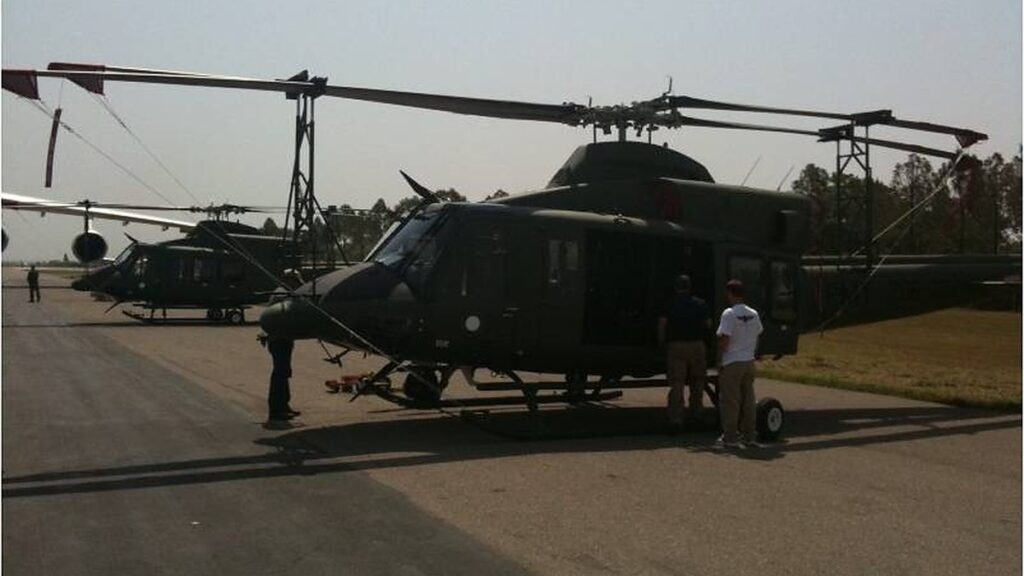
Operation Shaban, Pakistan’s renewed counterinsurgency (COIN) and counter-terrorism (CT) surge, has put the Pakistan Army Aviation Corps (PAA) back into sustained, large-scale combat employment for the first time in a decade – and, not least, with an open-ended timeline.
Inter-Services Public Relations (ISPR), the Pakistan Army’s press wing, describes the ongoing COIN/CT campaign in Balochistan as a “large-scale air and ground offensive” that will continue indefinitely.
Currently, the campaign operates across two theatres against two separate insurgencies – i.e., the Baloch Liberation Army (BLA) in the south, around Lasbela and Khuzdar, and Tehreek-e-Taliban Pakistan (TTP) in the north, around Ziarat.
Today’s events echo an observation Quwa had made in a recent Market Intelligence brief on the PAA – i.e., historically, General Headquarters (GHQ) only invested in new rotary attack and transport platforms when faced with an enduring COIN/CT challenge.
The caveat to Operation Shaban, despite maintaining an open-ended timeline, is that it is unclear if GHQ considers the COIN/CT to be of the same magnitude of importance as it had in the late 2000s (in the midst of the sequential operations, e.g., Rah-e-Rast, Rah-e-Nijat, etc.).
However, given the strong – and growing – economic importance of Balochistan (e.g., the growing use of the Gwadar port, mineral resources, and potentially a gas pipeline from Iran), the persistent insecurity and instability of the province, and pressure to resolve the volatility (both overt from foreign partners like China and implicit in the need for security to encourage investment), GHQ has major incentives to not only focus on COIN/CT along its western frontiers, but to maintain standing COIN/CT capabilities.
Pakistan has several potential pathways to build a standing COIN/CT posture (e.g., raising an integrated or combined arms group within the conventional army, enhancing the paramilitaries, or equipping police forces for the mission). But irrespective of the organizational approach, the Army will need to undertake a series of significant downstream acquisitions, from small arms and infantry gear to armoured vehicles, not least rotary attack and transport/utility capabilities.
Of these downstream capabilities, rotary attack and transport/utility (i.e., Army Aviation) are perceived as the near-term difference-makers. The BLA and TTP do not yet have the means to threaten attack helicopters, thereby providing Pakistani infantry with pivotal close air support (CAS) coverage. Likewise, a rotary transport capability would allow Pakistan to mobilize trained infantry, compressing response times to stop emerging or looming insurgent threats, especially in more remote areas. Finally, though transport and attack helicopters are principally COIN/CT assets, they can be refolded back into conventional operations, whereas COIN/CT-specialized assets like mine-resistant ambush-protected (MRAP) vehicles might be too role-specific for repurposing in state-to-state conflict scenarios.
Granted, Pakistan does have MRAP, light armoured vehicles (LAV), and infantry-focused programs all at play for supporting a stronger COIN/CT posture. However, the Army appears to have tasked each of these programs with state-owned enterprises (SOEs). Surge procurement for immediate or near-term needs will see the Army lean on imports, but the gradual, long-term play will be done through Heavy Industries Taxila (HIT), Pakistan Ordnance Factories (POF), and Wah Industries Limited (WIL).
However, the domestic pathway does not exist for helicopters, which GHQ perceives as the higher-impact, dual-COIN/CT-and-conventional asset. Therefore, as the Army manages COIN/CT as a permanent fixture of its general posture, the PAA should see sustained long-term investment – i.e., akin to armour or artillery.
Quwa Pro
See Where Emerging Defence Markets are Moving
Quwa Pro goes beyond tracking programs and equipment by explaining the policies, incentives, industry dynamics, and competitive pressures shaping South Asia's defence markets.

Subscribe Already a subscriber?Sign in