
Youtube
X-twitter
Linkedin
Spotify
Rss
Get access to this article and all other Quwa content today.
Click Here
What Value Do Attack Helicopters Provide?
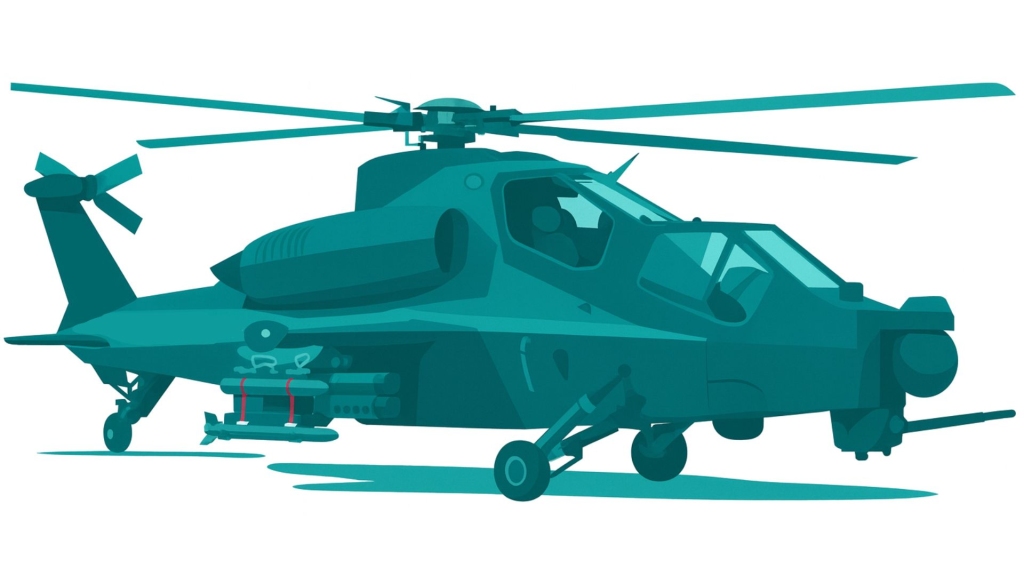
Thus far, the discussion centered on whether attack helicopters can survive in today’s threat environment. Yes, technically, as part of an integrated package, they could survive; but the more important question for military planners is whether they still serve a valuable role. Is there a net-benefit?
In July 2023, British intelligence reportedly assessed that while Russia’s attack helicopters were still suffering losses, they were playing a key role in mitigating Ukraine’s counter-offensives. The Ka-52, armed with SOWs, was giving Ukrainian armour difficulty in penetrating into Russia’s key positions. However, the Ka-52’s advantage in this context was conditional on the fact, at the time at least, of Ukraine maintaining limited airpower within those contested areas it was trying to breach. The War Zone’s (TWZ) assessments around that time offered a similar picture, but with an additional condition, i.e., Russia’s suppression and destruction of enemy air defence (SEAD/DEAD) strategies also improved. Thus, in addition to maintaining air control over its positions, the Russians were also deprecating Ukraine’s integrated air defence systems using fixed-wing fighters armed with SOWs. Thus, effective attack helicopter use is still conditional (like it was in the Cold War) on air control.
The recurring trend from Russia’s experience is that attack helicopters can be effective, but it is always conditional on a factor external to the helicopter. The main factors are, among others, interoperability with drones, connectivity to off-board sensors such as radars onboard other platforms, deployment of EW, and SEAD/DEAD through fixed-wing combat aircraft. So, the logical question from this is, ‘what unique value does an attack helicopter offer in this integrated system?’ In other words, what role does a modern attack helicopter play in this system that no other asset within it can replace it?
Expectedly, much of the attack helicopter’s unique value comes from its design. The ability to vertically take off and land from unprepared and relatively rough conditions, fly low and slow, hover, use terrain as cover, and use SOWs all-in-one enables them to fill a niche that cannot readily be fulfilled by any other asset in the chain, at least not individually. In theory, a rotary drone could achieve many of these goals, but until there is a robust autonomous flight agent, that drone would rely on long-range communications links. In today’s environment, such links will be under stress from EW and, as a result, at risk of failure. Thus, both the gunship and its crew play a sort of ad hoc, malleable role within the low-level air operations picture. Through real-time situational awareness, for example, the attack helicopter could rapidly identify and pick off a high-value target within a live combat setting (e.g., forward infantry or armour find an enemy counter-artillery fire control radar). They can act more responsively than loitering munitions swarms (as those may rely on pre-defined targeting information).
Quwa Plus
Go Beyond the Headlines on Pakistan’s Defence and Security.
Quwa Plus gives you deeper reporting, briefings, and analysis on Pakistan’s defence programs, foreign policy, national security, and regional strategy. Follow the developments that matter to professionals, analysts, and serious readers tracking Pakistan’s security landscape.