
The Pakistan Army (PA) is undertaking a widespread modernization program across its armour and artillery units, with new main battle tanks (MBTs), self-propelled howitzers (SPHs), and mine-resistant ambush-protected (MRAPs) vehicles in the procurement pipeline. Following the May 2025 conflict with India, the PA prioritized the acquisition of guided loitering munitions/one-way attack (OWA) drones and stand-off range weapons (SOW), with the latter organized under a dedicated arm within the Army via ARFC.1
However, amid these developments, the Pakistan Army Aviation Corps (PAA) has remained stagnant since the large-scale procurement drive that occurred both in the lead-up to and during Pakistan’s COIN/CT campaigns in FATA. In fact, in the years following the PAA’s modernization efforts, this author assesses that GHQ continues to table or defer the PAA’s requirements.
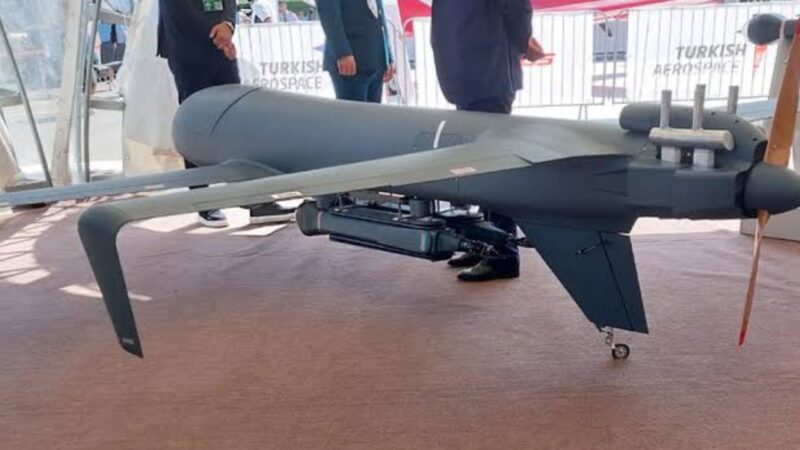
One might point to the USD $1.5 billion deal with Turkish Aerospace for 30 T129B/B2 ATAK attack helicopters as a counterpoint to the assessment. Indeed, while this was a big-ticket program (later scuttled by the United States’ refusal to issue export permits for the LHTEC CTS800 turboshaft engines), the project was extensively backed by Ankara, which provided a loan from its own fiscal budget, enabling Pakistan to avoid paying up front for the helicopters.2 Turkish Aerospace also told Quwa at IDEAS 2018 in Karachi that it was pushing to set up a regional service centre for its helicopters in Pakistan so that the latter could provide maintenance and training support to customers in South Asia and Central Asia. In other words, an offset offer was in play in addition to the installment package, making the T129 a relatively safe deal for the PAA.
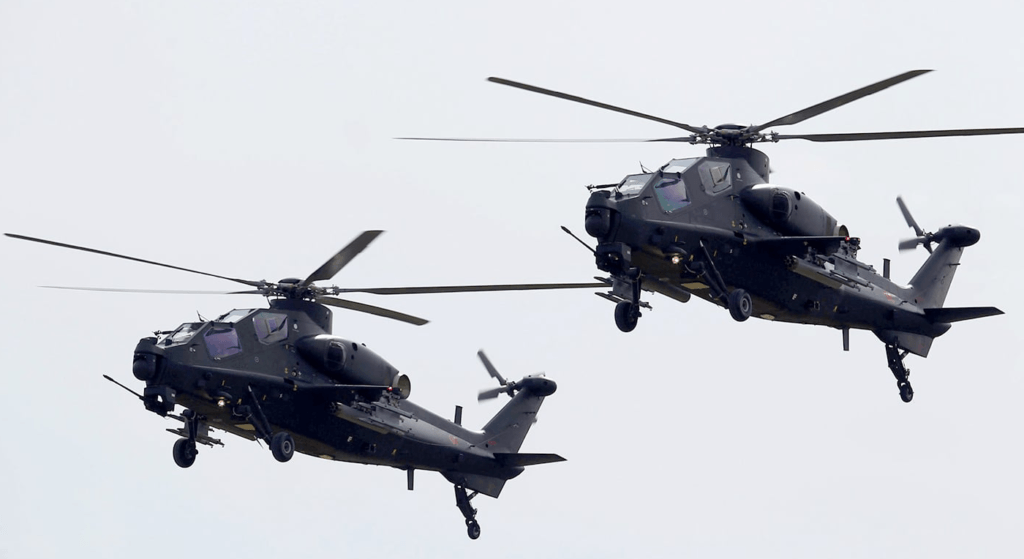
Even when the T129 program began to run into regulatory hurdles in the US, it should be noted that the PAA itself was holding on to the possibility of acquiring it. For example, it extended the timelines for Turkish Aerospace to deliver the first batch.3 And even when the PAA did decide to pivot to the Chinese Z-10ME, it has yet to induct the helicopter in meaningful numbers (to date, it only operates one unit).4 Likewise, the AH-1Z purchase from the US was contingent on FMF and CSF.5 This author had theorized that GHQ did not opt to buy the AH-1Z from the US out of concern about the US locking the funds, but it could also very well be that the PA leadership did not prioritize the PAA in general.
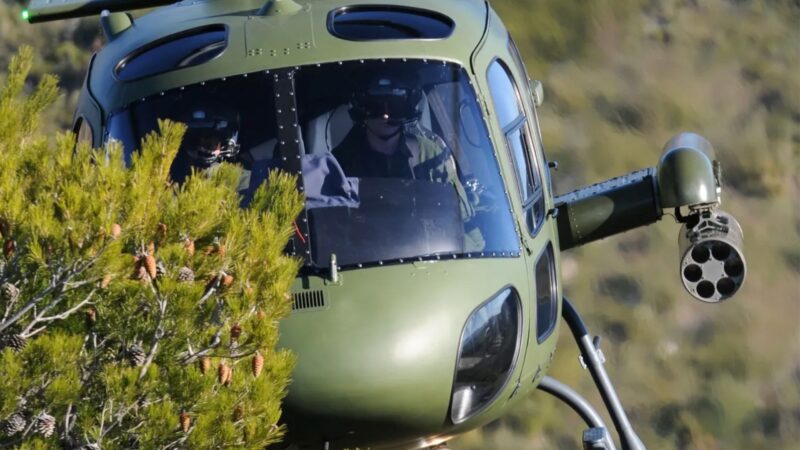
Finally, aside from the slow movement of attack helicopters, there has been no activity regarding transport and utility helicopters since the mid-2010s, even though every one of the PA’s mainstay platforms – i.e., the Puma, Mi-17/171, and Bell-412EP – have crossed or is approaching the 20-year mark in service use. The Puma, in particular, has reached 40-50 years of age, while the newest utility types thus far have been a handful of Mi-171 and AW139s acquired from Russia and the United Kingdom, respectively, around 2017.6
In this author’s assessment, the lack of movement in PAA procurement is a result of both limited fiscal means and, just as importantly, an unclear direction as to the future of the PAA in tomorrow’s battlefield.
Army Aviation at the Margins
The PA has traditionally kept the PAA on the margins, with it largely serving as a supporting arm rather than a central combat arm. Moreover, the PAA had experienced its most significant growth during the peak of Pakistan’s CT/COIN operations, albeit through the procurement of surplus AH-1F Cobras and new Bell-412EPs via US military aid. But the PA itself has yet to demonstrate initiative in growing the PAA independently of aid or external support – and its approach up to this point was understandable.
Rotary aircraft are expensive to operate, and the PAA never quite achieved the scale in its attack and transport/utility fleets to get the most out of the support overhead required to induct its platforms. For the PA, every net-new platform acquisition entails a significant upfront investment in support overhead that would generally be split across only several dozen aircraft units at most. In contrast, other PA programs – especially armour, artillery, and light-armoured vehicles – can drive hundreds of units, if not over a thousand.
Basically, procuring and operating helicopters is expensive for the PA because it would always operate a small number of them, relatively speaking. And any effort to make the PAA large enough to impact a conventional war would be cost-prohibitive and take away from more pressing and immediately impactful avenues, such as artillery and armour. In effect, the PAA is caught between being unable to scale enough to get the most out of its upfront overhead costs for inducting new platform types, and, as a result, is stuck with relatively higher per-unit operating costs due to only operating fewer numbers.
Quwa Pro
See Where Emerging Defence Markets are Moving
Quwa Pro goes beyond tracking programs and equipment by explaining the policies, incentives, industry dynamics, and competitive pressures shaping South Asia's defence markets.
Subscribe Already a subscriber?Sign in