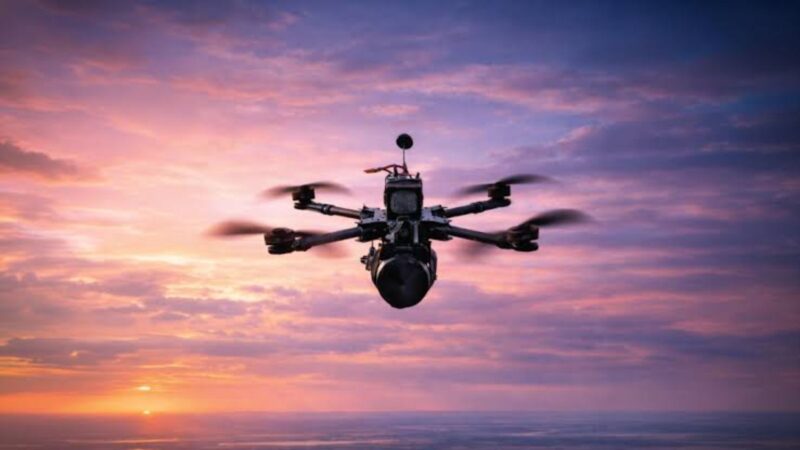

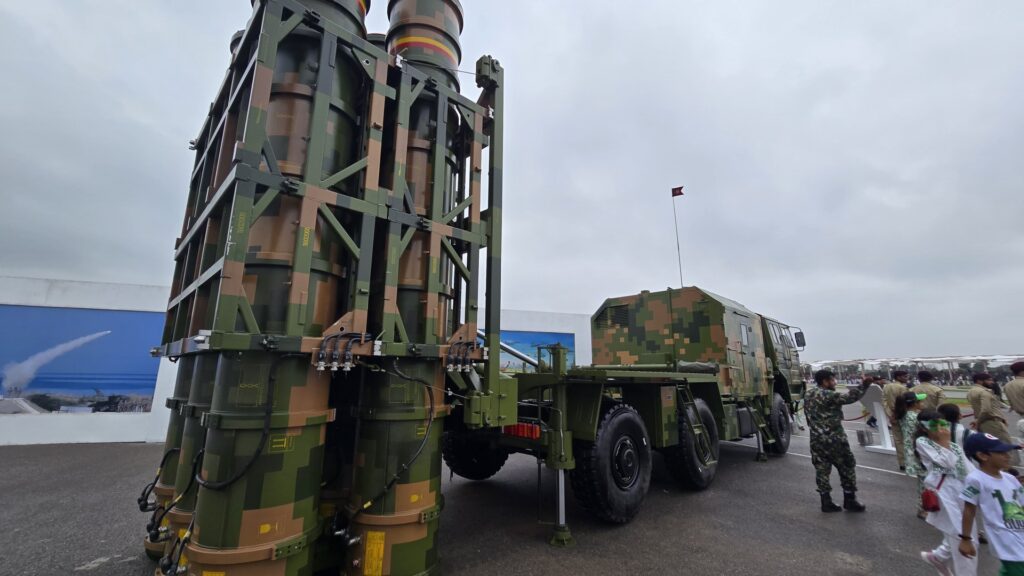
Between 2007 and 2026, the Pakistan Army (PA) transformed its air defence posture from a MANPADS-dependent force with sub-25 km reach into a multi-layered system spanning 125+ km in range, organized under a dedicated battle management architecture, and now contending with the emergent challenge of countering mass drone and loitering munition threats.
This retrospective maps every layer of that transformation, from the initial FM-90 and LY-80 acquisitions through the HQ-9/P induction and the current push into counter-unmanned aerial system (C-UAS) solutions, and identifies the gaps, industrial opportunities, and doctrinal shifts that will define the next phase.
Executive Summary
This retrospective provides an exhaustive, research-backed review of the Pakistan Army’s air defence procurements from 2007 to 2026. It draws on primary sources, including Inter-Services Public Relations (ISPR) announcements, Ministry of Defence Production (MoDP) Year Books, official procurement records, and Quwa’s reporting archive, to serve as a single reference for the PA’s ground-based air defence evolution.
Beyond the procurement record, this retrospective includes an analysis of why the PA pursued the programs it did, a critique of the choices made along the way, and an examination of the challenges that lie ahead.
The PA is transitioning from a deterrence-oriented integrated air defence system (IADS) to one that must absorb sustained, multi-axis aerial attack at scale. The closing Analysis section unpacks the institutional dynamics behind the PA’s procurement decisions, assesses the consequences of its technical choices, and outlines a path toward a tri-service IADS architecture.
The Pre-2007 Baseline: MANPADS and Limited Point Defence
Before the mid-2010s, the Pakistan Army’s air defence coverage was limited to short-range air defence (SHORAD). The bulk of Pakistan’s surface-to-air missiles (SAMs) did not offer more than 20–25 km in range.[1]
With the exception of a limited HQ-2 deployment in the 1980s, the Army had no medium- or long-range SAM capability. In contrast, India began building an arsenal of Russian-origin S-300s and Buk SAMs through the 1990s and 2000s.[2]
Air defence was the exclusive domain of the Pakistan Air Force (PAF), which operated the Air Defence Ground Environment (ADGE) with Crotale and Spada 2000-Plus SAMs.[3] The Army had no independent air defence identity, so it relied entirely on the PAF for aerial protection of ground formations.
The Army’s SHORAD inventory consisted of the Anza-Mk2 and Anza-Mk3 man-portable air defence systems (MANPADS) with a range of 5,000 m, the Swedish Saab RBS-70 laser beam-riding SAM with a range of 9,000 m, and the Chinese FN-6 with a range of 6,000 m.[4]
Quwa Pro
See Where Emerging Defence Markets are Moving
Quwa Pro goes beyond tracking programs and equipment by explaining the policies, incentives, industry dynamics, and competitive pressures shaping South Asia's defence markets.
Subscribe Already a subscriber?Sign in