Since Russia’s full-scale invasion of Ukraine in February 2022, one-way attack (OWA) drones or loitering munitions (LM) have come to shape modern warfighting in significant ways. The crux of the change stems from how OWAs/LMs provide militaries with long-range, precision-strike capabilities at scale – and that too without the need for the high-cost launch/deployment platforms that had bottlenecked precision-strike.
For example, in the past, a military would have generally needed a multirole fighter to carry and deploy guided bombs such as the Joint Direct Attack Munition (JDAM). One had to induct a platform, maintain or support it (regardless of whether there is a conflict), and when the time comes, send it out with the risk of possibly losing it to deploy several JDAMs, at best.
Basically, a single guided strike operation, especially one with a long-range mission, required mobilizing platforms, support systems, and, finally, the munition(s). The consequence was that precision-strike was, in some ways, a ‘luxury’ in that it had to be preserved for high-value targets of significant tactical or even strategic importance. Not only that, but the loss of the launch platform would result in the loss of the strike capacity because the means to deploy went down with the loss. And that same bottleneck had additional downstream effects where, for example, enemy air defences need only target the platform to mitigate the ongoing/current strike attempt and prevent the future one. Moreover, air defence systems could readily be scaled against the attacker’s availability of platforms – e.g., 1,000 surface-to-air missiles (SAM) against a fleet of 1,000 fighter aircraft – and, in effect, make strike missions high-risk.
Thus, long-range precision strikes were not scalable until OWAs/LMs entered the picture.
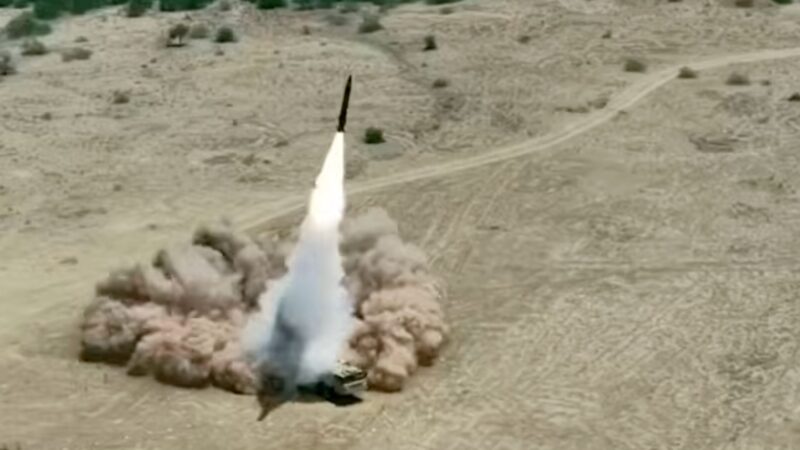
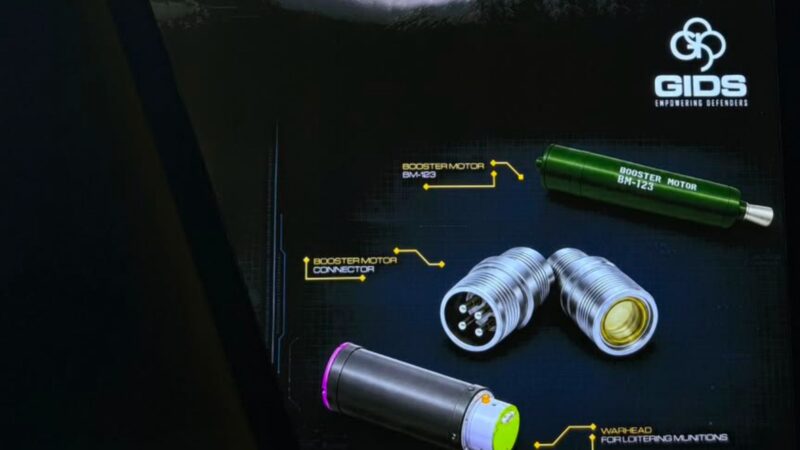
The advent of OWAs/LMs eliminated the layers of friction (e.g., high-cost platforms like fighters or special launch vehicles) from the equation, leaving only the end-user and the munition. That munition, on its own, could fly at long-range, from 50 km to 1,000+ km, and generally launch independently, albeit with support from a rocket-assisted take-off (RATO) booster or runway availability. Now, the cost of the guided strike is bolted down to the cost of the munition itself – i.e., eliminating the 50-million-dollar-plus combat aircraft or multi-million-dollar launcher and its inherent bottlenecks (with the latter now diffusing across the number of OWA/LMs on hand). That shift empowers and threatens large and small powers alike.
Returning to the Russia-Ukraine War, as recently on 18 June 2026, Ukraine launched hundreds of LMs at over a dozen regions, striking the Gazprom Neft Moscow Oil Refinery in the Kapotnya district, i.e., among Russia’s largest refineries and only a little over 14 km from the Kremlin and accounting for over a third of the capital region’s fuel market.1 This is nearly four years after Russia itself started using the Shahed-136 in large salvos on Ukraine, followed up by the domestically made Geran-2.
Basically, what matters for an effective OWA/LM strategy is scale, and scale is achieved by simplifying the design and lowering input costs as much as possible. With four years now passing since the deployment of the Shahed 136 over Ukraine, the OWA/LM space has begun to establish its own set of proven design and configuration requirements. These ‘rules’, so to speak, converge for long-range, guided strike needs, i.e., piston-powered delta designs for long-range, low-cost options and jet-powered delta designs for fast, long-range options. However, when it comes to the ‘tactical’ space, e.g., LMs for anti-armour operations, short-range loiter-and-strike missions, anti-infantry attack, etc., there is a significant diversity in design as well as configuration options. This analysis will examine why these OWA/LM spaces are developing upon these tracks (with convergence on the long-range strike end and diffusion on the tactical end).
The Tailless Delta: A Natural Long-Range Strike Option
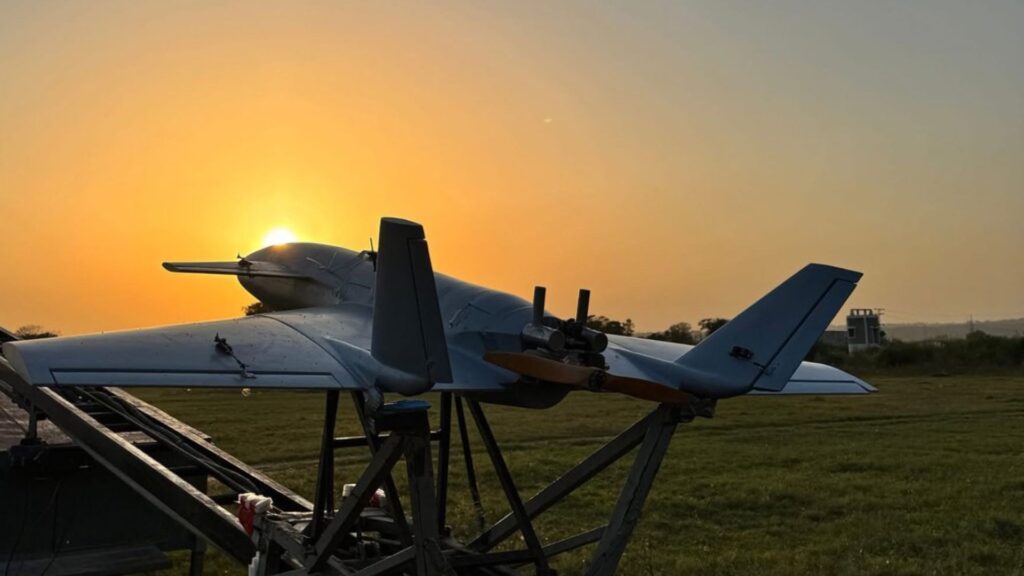
Starting from the Iranian Shahed-series and, ever since, emerging through the Russian Geran, America’s LUCAS (Low-cost Uncrewed Combat Attack System), China’s Sunflower-200, Pakistan’s Mudamir-LR/MR and HighMark-25, and others, the tailless delta is the preferred design for long-range OWA munitions.
Interestingly, the strongest analysis of the tailless delta was written in 2021 in a survey of LMs by Defence Technology’s Mark Voskuijl of the Netherlands Defence Academy.2
Quwa Pro
See Where Emerging Defence Markets are Moving
Quwa Pro goes beyond tracking programs and equipment by explaining the policies, incentives, industry dynamics, and competitive pressures shaping South Asia's defence markets.
Subscribe Already a subscriber?Sign in