
On 14 May 2026, the Ministry of Defence Production (MoDP) held a session on drone technology with several of Pakistan’s private-sector unmanned aerial systems (UAS) developers, chaired by the Secretary Defence Production, Lt Gen (Retd) Muhammad Chiragh Haider, at the ministry’s Directorate General Research and Development Establishment in Rawalpindi.
The official account describes the session’s purpose as strengthening coordination between the public and private sectors on drone warfare and surveillance, with the participating firms presenting their operational challenges and recommendations directly to the ministry.
The MoDP committed to providing the regulatory procedures, testing infrastructure, procurement mechanisms, and research support that a domestic drone ecosystem requires, and it described locally produced unmanned capability as a national priority.
That commitment is already observable in the field of loitering munitions (LM) and one-way attack (OWA) drones, where private firms have been supplying designs to the armed forces for the past two years.
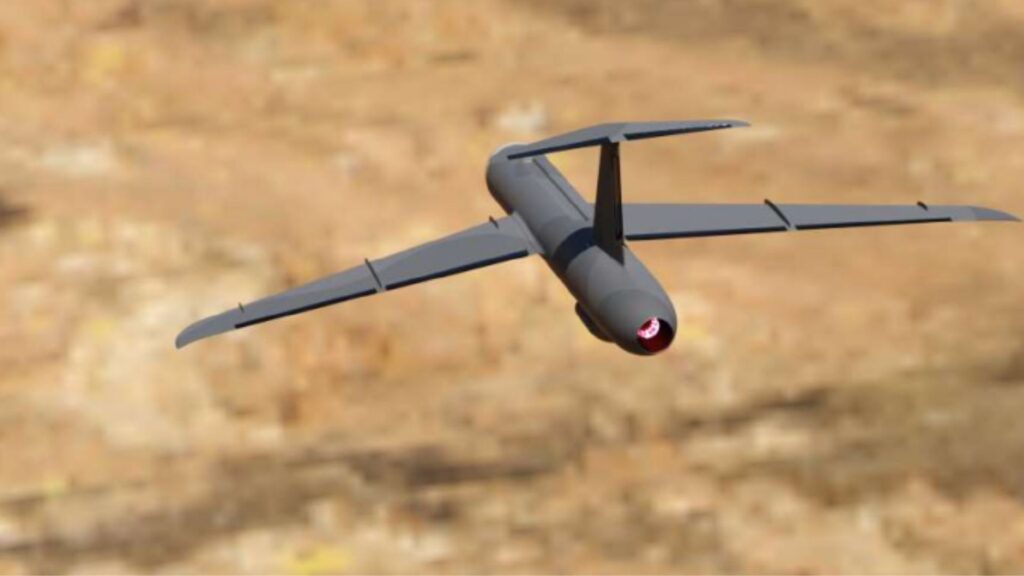
Quwa’s November 2025 review of the one-way effector (OWE) market and its May 2026 update listed at least a half-dozen new distinct loitering-munition (LM) designs in development or early production across Pakistan’s state-owned enterprises (SOEs) and private firms, with a meaningful share originating from the private sector.
Woot-Tech Aerospace is the most prominent of these private firms. Founded in 2021, it has moved from commercial vertical take-off-and-landing drones for agriculture and survey work into a defence catalogue that now covers target drones, the Juggernaut armed multirotor, piston-powered LMs, the HiMark-25 TJ turbojet OWA, the Nimbus 2K cruise missile, and the SHARDS drone-swarm system.
Quwa Pro
See Where Emerging Defence Markets are Moving
Quwa Pro goes beyond tracking programs and equipment by explaining the policies, incentives, industry dynamics, and competitive pressures shaping South Asia's defence markets.