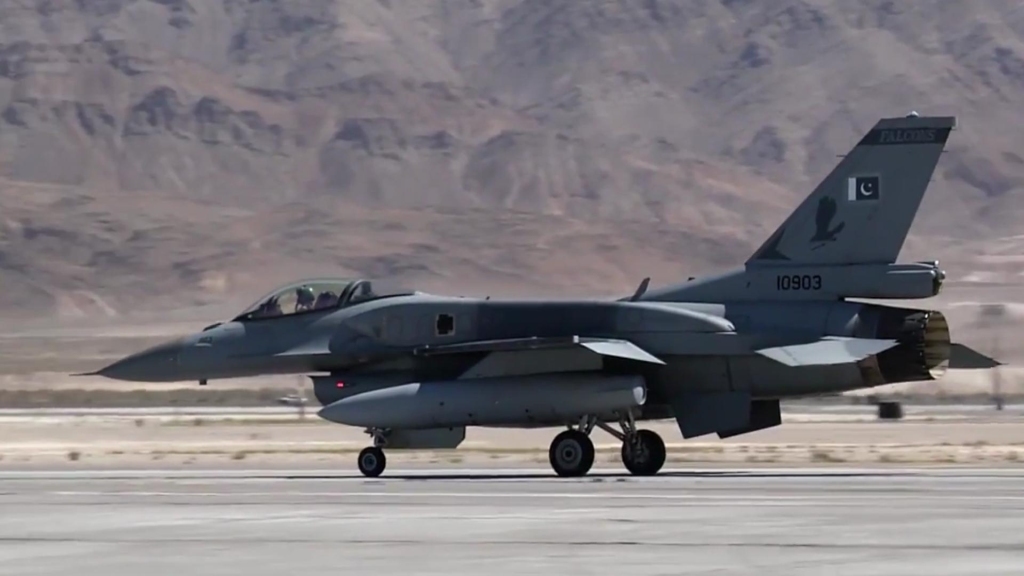
In a recent Defence Uncut podcast, this author had highlighted that the Pakistan Air Force (PAF) was due to enter another major procurement cycle at the end of this decade and through the 2030s.
This idea was drawn from two observations:
First, one of the PAF’s mainstay fighters – i.e., the three F-16A/B Block-15 Mid-Life Update (MLU) and Block-15 Air Defence Fighter (ADF) squadrons – is scheduled for retirement by 2040.
This point was confirmed by a USD $686 million support and upgrade deal signed with the United States in December 2025. Previous reporting and analysis by Quwa estimated that the PAF’s older F-16s would likely be retired through the 2030s as those airframes would begin reaching 50 years during that decade. Unlike the F-16C/Ds, there is no service life extension program (SLEP) available to push these F-16A/Bs past the 8,000 guaranteed hours. In effect, the PAF would be unlikely to safely support these F-16s past 2040, and it is now preparing to find the next-generation fighter aircraft to replace them.
Second, and this ties back to these F-16s, the next fighter will have a particular ‘size of shoes’ to fill, so to speak. To be clear, the question for the PAF is not necessarily about which fighter option is the best in all respects, such as specifications, technologies, maturity, or even cost. Rather, the PAF must assess which option best succeeds the F-16A/Bs in the specific roles those aircraft took on.
On paper, one might conclude that the replacement question is straightforward – i.e., the PAF would need to replace 50~55 F-16A/Bs with ~40 of a proper NGFA. Thus, on this basis, the reports of the PAF seeking the Shenyang J-35AE from the Aviation Industry Corporation of China (AVIC) align quite well. The J-35AE, at this time, represents the only true NGFA platform available to the PAF that would provide a generational leap over the F-16s and, understandably, set the PAF’s procurement trajectory for decades after 2030.
But (and this author’s contention) is that there are aspects to the F-16A/B’s role that do not necessarily render the J-35AE a given. The J-35AE is the leading option; however, the F-16’s (by virtue of its design and generation) high availability rates, relative ease of maintenance, maturity, interoperability with NATO as well as regional partners (e.g., the Gulf Arab States and Türkiye), and serving a bridge to the Western world are all key factors that will be accounted for in the final decision.
Admittedly, the latter two aspects – e.g., ‘bridge to the West’ and interoperability – might be ‘soft’ factors considering the broader trajectory of the PAF’s growing reliance, if not preference, for Chinese solutions.
That said, the ‘soft’ factors can matter in broader contexts. For example, Pakistan could try making the case to Saudi Arabia that operating a common fighter would allow the PAF to immediately integrate with and support the Royal Saudi Air Force (RSAF). The same support can be extended to Qatar, Oman and, not least, Türkiye. It can offer a substantive anchor to the defence agreements being signed and signal to the region that, at any point, the PAF can be an active supporter of its partners with no technical friction.
Quwa Pro
See Where Emerging Defence Markets are Moving
Quwa Pro goes beyond tracking programs and equipment by explaining the policies, incentives, industry dynamics, and competitive pressures shaping South Asia's defence markets.
Subscribe Already a subscriber?Sign in