In recent days, there has been buzz in the Indian news media of New Delhi potentially joining France’s next-generation fighter program, the Future Combat Air System (FCAS). Considering that India is France’s top importer of big-ticket defence solutions – flagshipped by the Dassault Rafale, of which Paris submitted a proposal to sell another 114 to the Indian Air Force (IAF) – this development should have been expected.
Indeed, even as far back as 2018, this author forecasted that (after India withdrew from the Russian Su-57, then known as PAK-FA) India could seek the Rafale M for the Indian Navy (IN) requirement, the 114-unit Multi-Role Fighter Aircraft (MRFA) program, and the FCAS:
Remarkably, the FCAS is well-positioned to takeover the FGFA. First, the FCAS intends to substantially improve upon the capabilities of the Typhoon and Rafale, thus justifying the expense of the program over existing solutions. Second, Dassault can leverage India’s potential scale to entice German approval, thus ensuring that a decline in orders in Europe do not make the FCAS unviable from a procurement standpoint. Third, Dassault can offer India the FCAS as a carrot to secure the current bid for 110 new multi-role fighters with the Rafale. Fourth, Dassault can even extend the FCAS to the Indian Navy – again, incentivizing India to procure additional Rafales while also guaranteeing scale for the naval FCAS variant. Fifth, leverage New Delhi’s fiscal strength to guard the program from potential fiscal lapses in Europe. Sixth, access to India’s scale and industry could make the FCAS more competitive in terms of cost, thus opening access to third-party markets in the Middle East and East Asia.
The full article is available to Quwa Plus and Pro customers. By March 2026, India’s Ministry of Defence (MoD) disclosed that the IAF is evaluating two consortium pathways: France’s FCAS and the UK-led Global Combat Air Programme (GCAP). Quwa’s more recent analysis spelled out why India emerged as the ideal target partner for both programs.
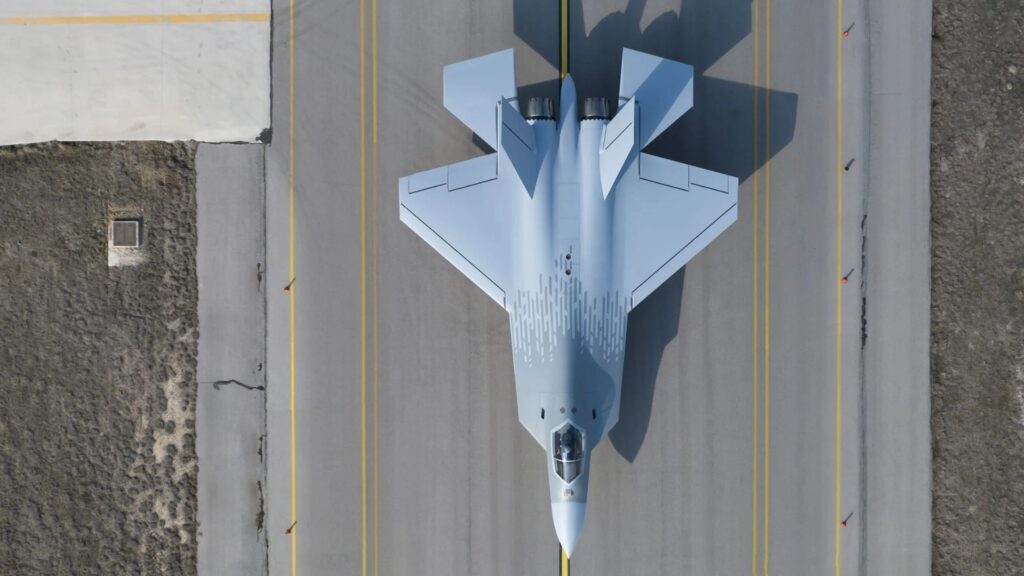
This analysis will discuss where both the IAF and its neighbour, the Pakistan Air Force (PAF), will likely head with their respective next-generation fighter aircraft (NGFA) programs. But the short of it is that when reviewing the corpus of statements, domestic industry trends, and the desired capabilities, both air arms essentially want an accessible NGFA platform. Basically, both air arms want a large aircraft that would form the nucleus of a wider system-of-systems architecture involving small and large drones, special mission aircraft, and other assets.
However, how each country gets to their respective NGFA platform will be different, and those differences really speak to the inherent qualities and limitations of each power.
India’s Pathway to its NGFA is via Rafale
India’s defence procurement, especially its combat aircraft programs, is often marred by delays resulting from protracted and, with the IAF Medium Multirole Combat Aircraft (MMRCA) project, on-and-off negotiations. However, when examining the why-factors behind these delays, which generally involve disagreements over offsets (i.e., substantial parts of the order value invested back into India’s aerospace sector), technology transfer, and local supply chain integration, it is easy to understand the causes. Essentially, New Delhi is generally negotiating for more than a ‘good deal’ from a fiscal standpoint, but a robust package involving partnerships and eventual export orders (e.g., via Indian companies supplying inputs for the OEM’s third-party orders). In other words, New Delhi is generally aiming to get much more than just fighter aircraft, and such expectations often merit complex, multi-step negotiations. Not only that, but many key domestic players, from public sector giants like Hindustan Aeronautics Limited (HAL) to emergent private sector leaders like Reliance and TATA.
Yes, in the end, the IAF does get inconvenienced due to the impasse, but India’s problems are not necessarily ‘bad’ problems. Rather, these problems emerged because of the advantages or strengths India had built for itself in its aerospace – and wider defence – industry. That said, the IAF is pressing on what it deems the most pragmatic course – i.e., an additional 112 Rafales to augment the units it already has – and the current FCAS news could indicate that New Delhi is trying to pursue its broader political mandate within IAF-led requirements.
Thus, in effect, the talks regarding the FCAS could be a surrogate to suggest that New Delhi will, in some shape or form, sign on to the current Rafale bid as the IAF requires. India would prefer involving its domestic industry at a deeper level, especially in terms of integrating local munitions (many of which the IAF would also prefer). However, expediency might win out for the Rafale and, instead, the more domestic industry-focused goals could be pushed forward across the FCAS and Indo-French industry collaboration on the Advanced Medium Combat Aircraft (AMCA), especially critical inputs such as the engine.
Quwa Pro
See Where Emerging Defence Markets are Moving
Quwa Pro goes beyond tracking programs and equipment by explaining the policies, incentives, industry dynamics, and competitive pressures shaping South Asia's defence markets.
Subscribe Already a subscriber?Sign in