
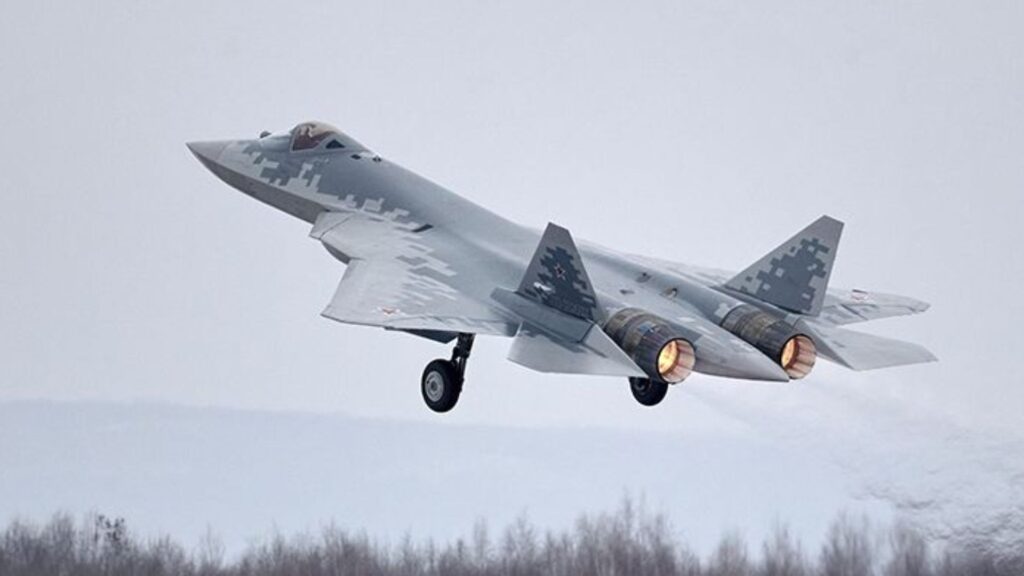
There are voices in India pushing the Indian Air Force (IAF) to consider acquiring several squadrons of Sukhoi Su-57 stealth fighters. The argument is ostensibly framed as a response to the possibility of the Pakistan Air Force (PAF) acquiring the Chinese J-35AE, and, above all, to the People’s Liberation Army Air Force’s accelerating adoption of next-generation fighter aircraft.
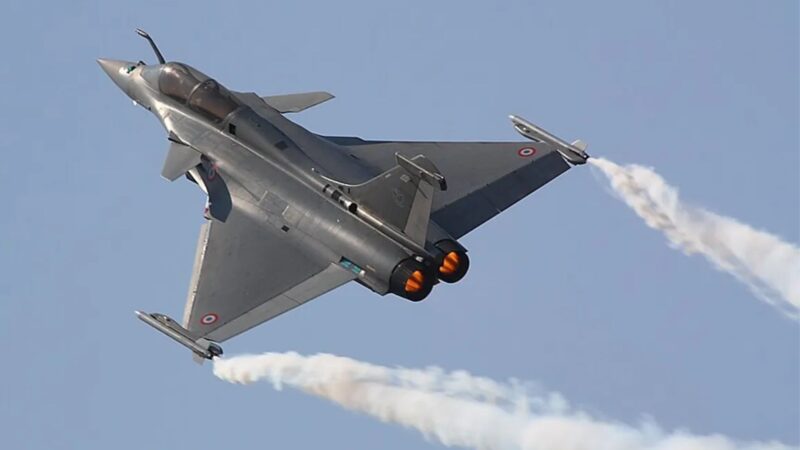
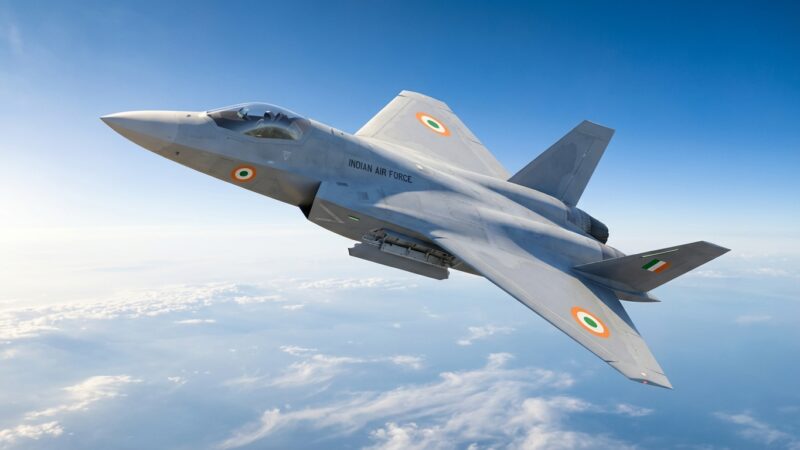
In Quwa’s assessment, however, the IAF itself would likely prefer to focus wholly on the Rafale as its next primary fighter acquisition. Whatever may come of the Su-57, the Advanced Medium Combat Aircraft (AMCA), future Tejas variants, and other options appears to be a secondary consideration.
At this stage, the IAF’s focus seems to be either procuring more of the fighters that already work, or upgrading the ones already in service – namely, the Rafale and the Su-30MKI through the Super Sukhoi program. That said, PAF Air Headquarters (AHQ) will be closely following the IAF’s direction.
Should India sign a deal with Russia for the Su-57, one might naturally ask how such a move would impact Pakistan. In Quwa’s assessment, it would not necessarily change anything for the PAF. In actuality, the PAF has already roadmapped a period for inducting a stealth fighter, such as the J-35AE.
The decision is not necessarily contingent on what India does with the Su-57, nor is it a simple case of Pakistan trying to match India fighter-for-fighter. In previous analyses, this author forecasted that the PAF’s acquisition of a next-generation fighter aircraft (NGFA) would coincide with the phasing out of the oldest F-16A/B Block-15s on one end, and, on the other end, support the PAF in building new offensive air groups or strike wings centred on a stealth fighter.
These formations would likely be supported by a broader system of unmanned combat aerial vehicles (UCAV), decoy drones, and special mission aircraft, such as new airborne early warning and control (AEW&C) platforms and airborne stand-off jamming (ASOJ) assets.
In fact, one could argue, as Quwa did, that the trajectory toward a stealth fighter-led strike doctrine had been in the works since the mid-2010s. In other words, the PAF’s requirements are not necessarily driven by trying to “one-up” India in terms of generations or technological sophistication per se.
Rather, the PAF is trying to acquire specific – and difficult to attain – capabilities. In terms of its NGFA needs, the PAF had repeatedly set the requirement for a twin-engine aircraft with sufficient internal capacity for high-powered electronics and, potentially, directed energy weapons.
To put it another way, the PAF wants a large twin-engine fighter that can drive its long-term offensive strike needs. It so happens that the fighters poised to become available to Pakistan – namely the J-35AE and, potentially, KAAN – are also stealth fighters. Of course, the stealth capability will be a significant gain in its own right. However, for the PAF, there is currently no other way to acquire the strike capability that has often been denied to it.
Quwa Pro
See Where Emerging Defence Markets are Moving
Quwa Pro goes beyond tracking programs and equipment by explaining the policies, incentives, industry dynamics, and competitive pressures shaping South Asia's defence markets.
Subscribe Already a subscriber?Sign in