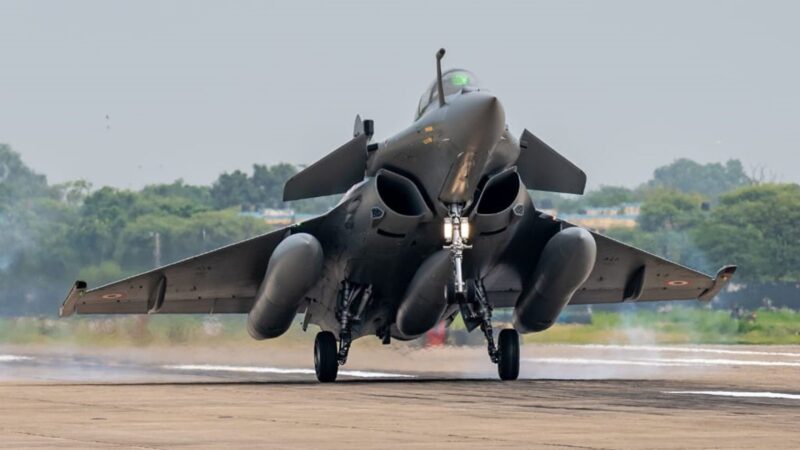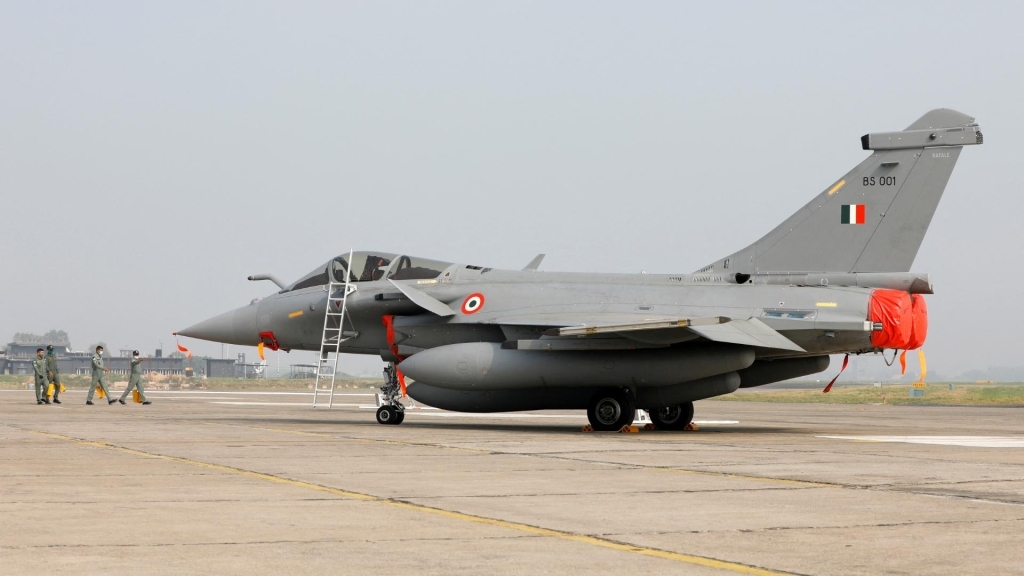
Discourse on India’s airpower efforts often default to the next platform, i.e., what is the next fighter the Indian Air Force (IAF) could induct, be it to accelerate legacy platform replacement or neutralize some emerging threat, e.g., Pakistan’s interest in the Chinese J-35AE.
First, most of the Rafale-M’s support base will already be in-country via the IAF program, and, second, New Delhi gains additional leverage in driving offsets and investment from Paris through deeper participation in the Rafale. Finally, the IN does not need to rebuild or invest in a maintenance system from scratch, simplifying planning and deployment.
With leading French vendors investing in India through the Rafale on one end, and the continued domestic investment in the Tejas platform on the other, building this hi/lo mix between these major platforms is, for the IAF, the more prudent decision. It will be interesting to see if the IAF lobbies to convert the entire MRFA program towards the Rafale. Indeed, the original tender that had led to the 2016 off-the-shelf buy originally called for a total of 126 aircraft. Basically, at one point, the IAF itself had envisioned procuring a large Rafale fleet; thus, aiming to reach that goal is to be expected.
While criticism can be leveraged against the comparatively higher costs of the Rafale and, even to an extent, the Tejas, there are several key caveats as well.
First, regarding the Tejas, a significant chunk of the costing will be spent within India in the country’s advanced industries. It would be both a major procurement line-item and an economic stimulus in a critical sector.
Second, regarding the Rafale, a portion of its costing will also be spent within India through French offsets and, like the Tejas, mostly involve the domestic defence industry.
Quwa Plus
Go Beyond the Headlines on Pakistan’s Defence and Security.
Quwa Plus gives you deeper reporting, briefings, and analysis on Pakistan’s defence programs, foreign policy, national security, and regional strategy. Follow the developments that matter to professionals, analysts, and serious readers tracking Pakistan’s security landscape.