Youtube
X-twitter
Linkedin
Spotify
Rss
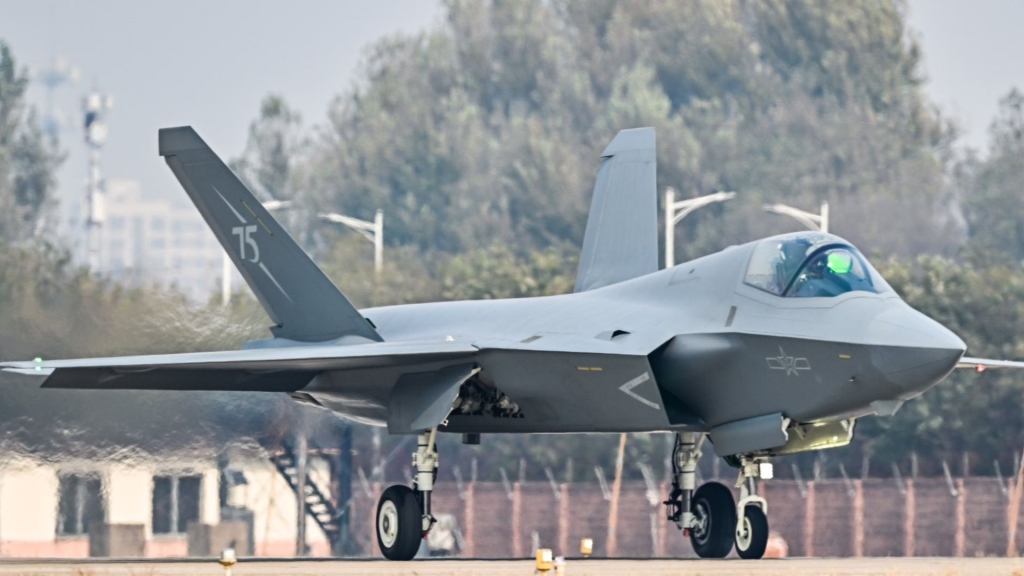
On 06 June, the Government of Pakistan announced (on the platform X) that China proposed an arms package consisting of 40 Shenyang J-35 next-generation fighter aircraft (NGFA), the HQ-19 theatre air defence system, and the KJ-500 airborne early warning and control system (AEW&C).
In addition, the government also revealed that Azerbaijan signed a landmark $4.6 billion defence deal with Pakistan that includes 40 JF-17 Thunder fighters from Pakistan Aeronautical Complex (PAC). This seems to be a major expansion of the deal Azerbaijan had signed earlier, which reportedly included 16 JF-17C Block-3 and JF-17B dual-seater aircraft.
The original tweet has been deleted, but the source material is available as a screenshot below:

However, in terms of the potential Pakistani purchases, this announcement sheds light on the country’s – and, in particular, the Pakistan Air Force’s (PAF) – emerging direction.
This direction seems to center on two core priorities: (1) building an edge in terms of offensive capabilities and (2) establishing a strategic air defence umbrella with anti-ballistic missile (ABM) capabilities.
Get access to this article and all other Quwa content today.
Click Here
Indian airspace is densely defended with a multi-layered ground-based air defence system (GBADS) consisting of sophisticated surface-to-air missiles (SAM) – not least the S-400 and Barak-8-based MRSAM – as well as a growing fleet of cutting-edge 4.5-generation fighters, notably the Rafale, Tejas, and Super Sukhoi.
For the PAF, this would be an excessively high-risk threat environment for crewed fighters, including the J-35AE. If defensively prepared, IAF fighters could mount a resistance to a PAF air operation that would be comparable, if not more extensive, than the PAF’s counter on 07 May.
The PAF likely recognized this reality and, in turn, will rework its core offensive strategy around unmanned combat aerial vehicles (UCAV) and high-speed decoys and loitering munitions.
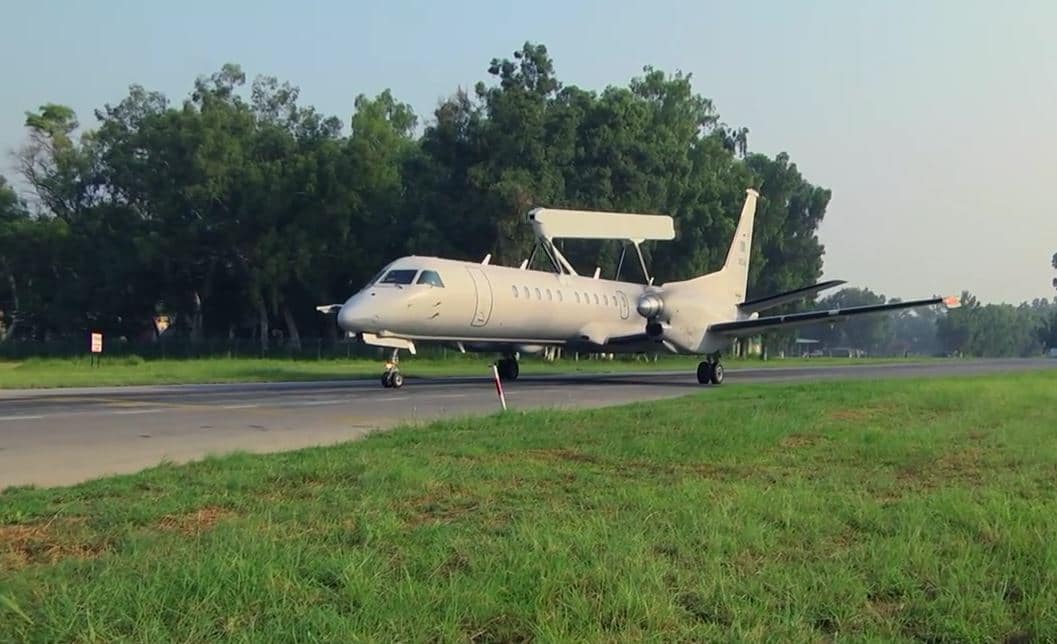
Regarding the KJ-500 AEW&C, Quwa forecasted that the PAF would seek a new AEW&C to complement the Erieye. The rationale behind such a move was straightforward; a higher-output radar with greater range and targeting capabilities was necessary to support offensive operations. This AEW&C would have to operate well behind enemy reach to sustainably drive operations.
The direct alternative to the KJ-500 would have been the Saab Erieye ER or GlobalEye platform. In fact, one could have expected the PAF to seek the GlobalEye instead of the KJ-500 due to its familiarity with the Saab 2000-based Erieye it already uses.
Overall, the most straightforward rationale for the KJ-500 is that it will readily work with the J-35AE and enable for Cooperative Engagement Capability (CEC) and, potentially, use a more capable tactical data-link (TDL) protocol ‘out-of-the-box’, so to speak.
Quwa Plus
Finish the Story. Get the Full Picture.
Unlock independent journalism and deeper analysis that help you make sense of Pakistan’s key defence and policy developments without relying on shallow or foreign-framed coverage.
Join ($29.99/Year) Already a subscriber?Sign in