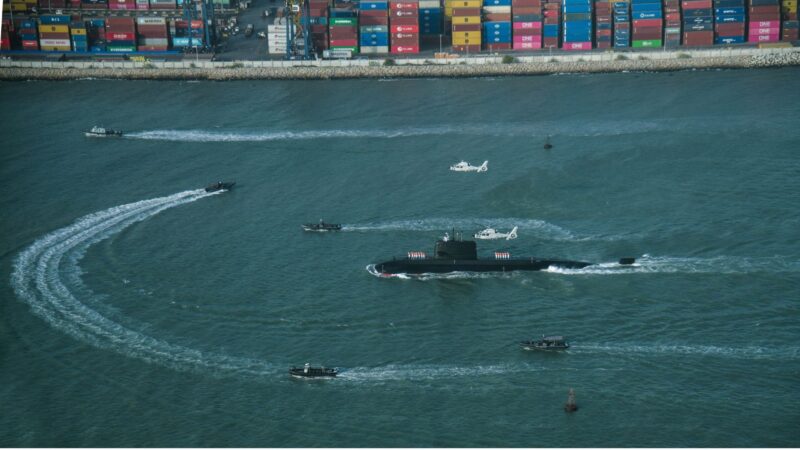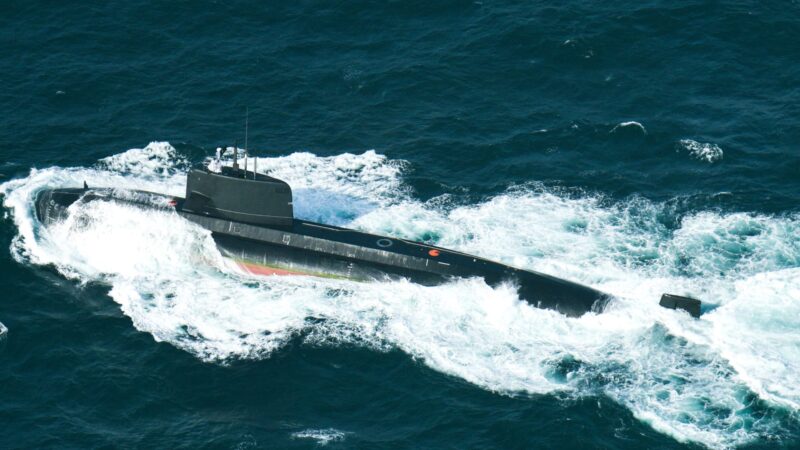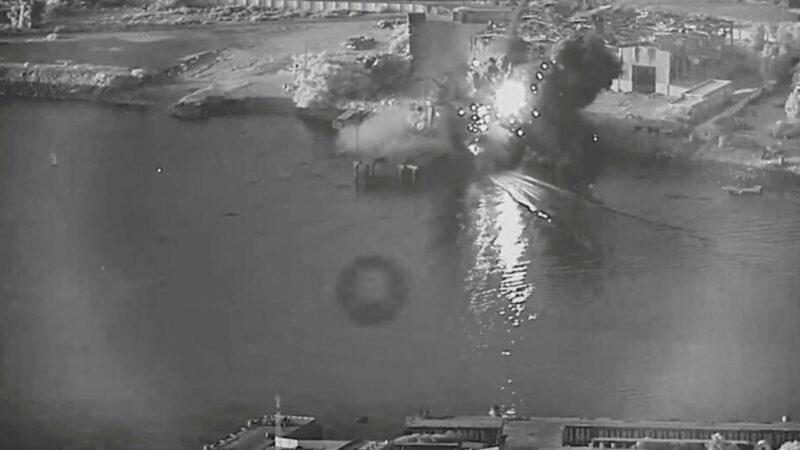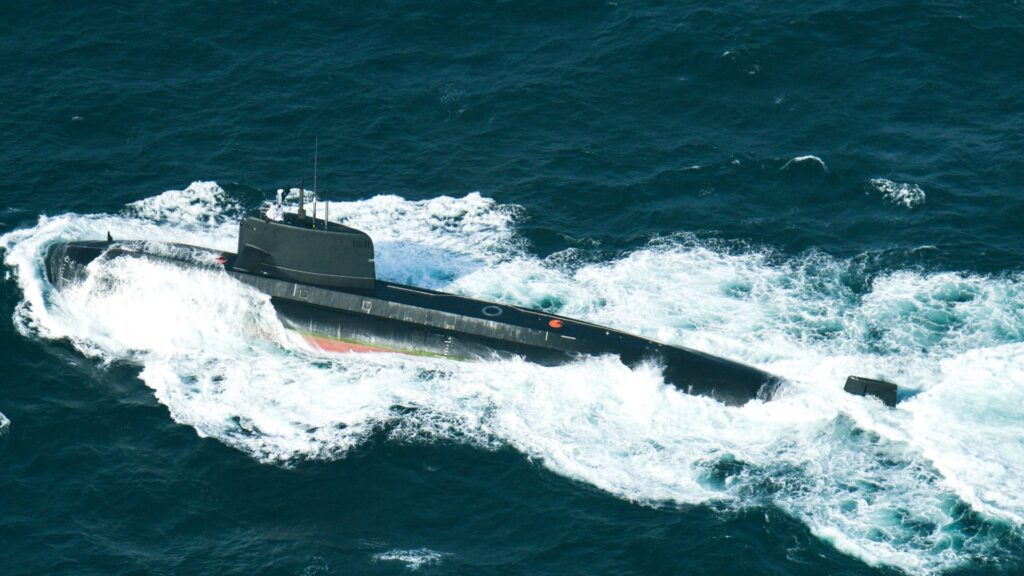
On 27 September, the Pakistan Navy (PN) announced that the lead boat of its new Hangor-class (Type 039B/S26) submarine, PNS/M Hangor, successfully test-fired an anti-ship cruise missile (ASCM) in the North Arabian Sea.
The PN’s Directorate General of Public Relations (DGPR) announced the tests through its social media channels.
Though the PN DGPR did not explicitly state the make or model of the ASCM, its own video footage shows that the PNS/M Hangor had test-fired a CM-708UNB, confirming that the PN procured an unspecified number of these munitions with the submarines.
Indeed, Quwa had inferred the PN could acquire the CM-708UNB in an earlier assessment dating back to 2016, stating:
Pakistan concluded a purchase of eight air independent propulsion (AIP) equipped submarines from China late last year, it is possible – if not almost certain – that the CM-708UNB will join the submarines.
Revealed in 2016 by the China Aerospace Science and Industry Corporation (CASIC), the CM-708UNB offers a stated range of 290 km.
CASIC designed the CM-708UNB to launch from a submarine’s torpedo tubes, providing those platforms the capability to target and engage ships while submerged. It is meant to supplement heavyweight torpedoes (HWT) for anti-ship warfare (AShW) operations.
In itself, the CM-708UNB provides the PN with a first-response, long-range precision-attack capability that its submarines can deploy while underwater.
One scenario of this being used, for example, could be when a different asset identifies an incoming surface vessel threat (be it through another PN surface asset or airborne platform).
Quwa Plus
Go Beyond the Headlines on Pakistan’s Defence and Security.
Quwa Plus gives you deeper reporting, briefings, and analysis on Pakistan’s defence programs, foreign policy, national security, and regional strategy. Follow the developments that matter to professionals, analysts, and serious readers tracking Pakistan’s security landscape.
Join ($29.99/Year) Already a subscriber?Sign in