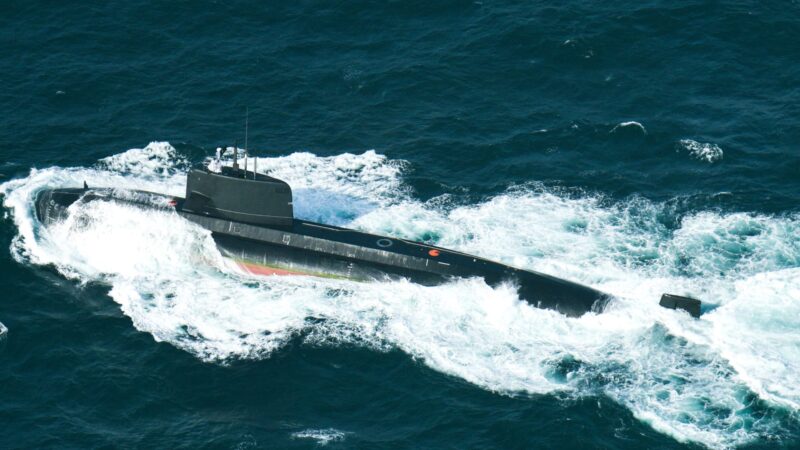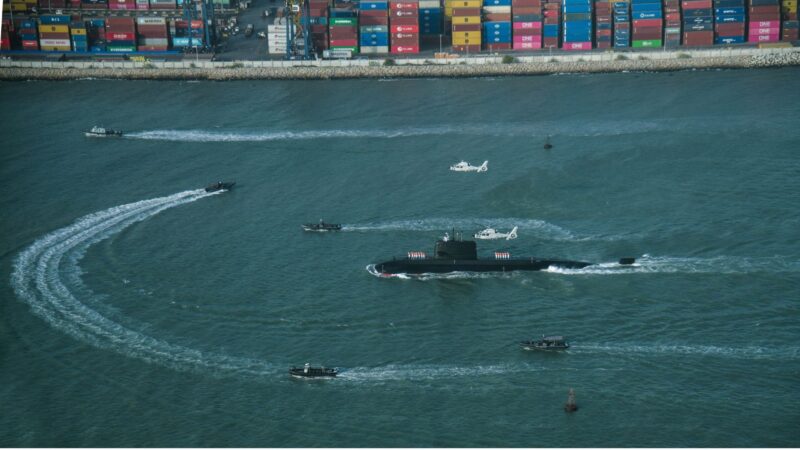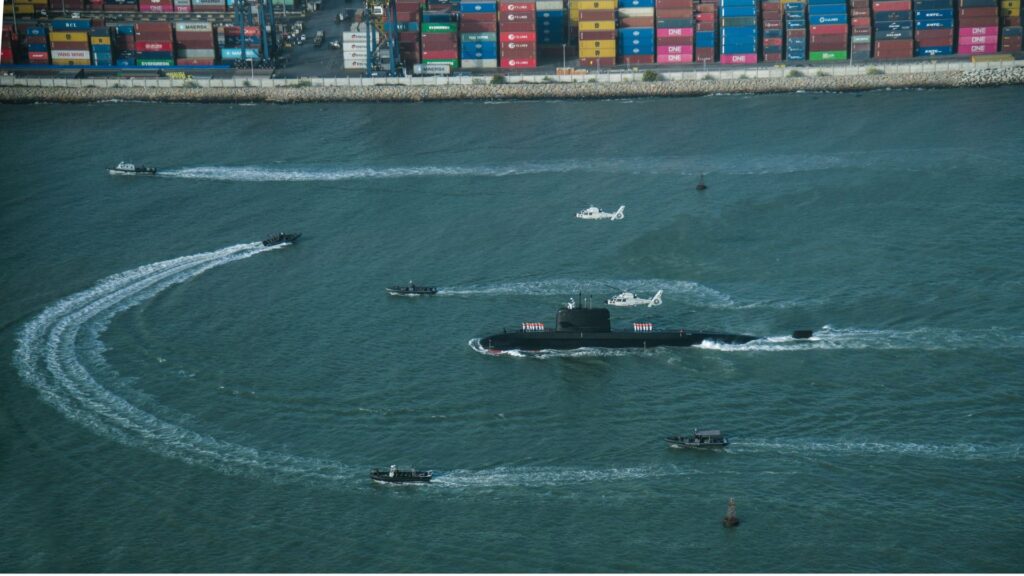
Last week, Indian analysts and officials alike highlighted how the Pakistan Navy’s (PN) growing submarine fleet presents significant challenges to the Indian Navy (IN) both operationally and strategically.
Araudra Singh of India’s World provided the strategic outlook. His examination covered how the PN’s Hangor-class (Type 039B) submarine and CM-302 supersonic-cruising anti-ship missile (AShM) each pose a distinct problem for India.
The former was framed as a potential nuclear attack risk via Babur-3 submarine-launched cruise missiles (SLCM). The latter was framed as an anti-access and area-denial (A2/AD) threat that the IN has not yet established it can defend against.
Operationally, retired IN Vice Admiral Sanjay Mahindru plainly stated that the PN’s eight Hangor-class submarines will pose a “massive headache” for the IN, alluding to the inherent difficulties of wide-scale anti-submarine warfare (ASW) operations.
Together, these perspectives showcase why the PN invested in expanding its sub-surface fleet with the Type 039Bs and why, as Quwa has posited in recent months, it will continue prioritizing the procurement of additional submarines.
In other words, Naval Headquarters (NHQ) would, if forced into a trade-off, prefer more submarines.
Quwa Plus
Go Beyond the Headlines on Pakistan’s Defence and Security.
Quwa Plus gives you deeper reporting, briefings, and analysis on Pakistan’s defence programs, foreign policy, national security, and regional strategy. Follow the developments that matter to professionals, analysts, and serious readers tracking Pakistan’s security landscape.