
According to a May 2026 investigation by Drop Site News, Pakistan reportedly asked China for assistance in acquiring a nuclear second-strike capability during bilateral talks over a potential Chinese military base at Gwadar. China declined the request, citing its own non-proliferation commitments and the strategic risk such a transfer would pose to Beijing.
The claim – which, to be clear, has not been officially confirmed by either government – does align with a trail of open-source evidence spanning about a decade.
From the 2017 test of the Babur-3 submarine-launched cruise missile (SLCM) to on-the-record remarks by retired Pakistan Navy (PN) officials in 2024, the trajectory has been evident for some time.
Moreover, with the advent of the Babur-3 SLCM, Pakistan technically had established a sea-based nuclear capability, but as what PN officials would term it, a ‘hybrid solution’ – i.e., where conventional platforms would deploy nuclear warheads.
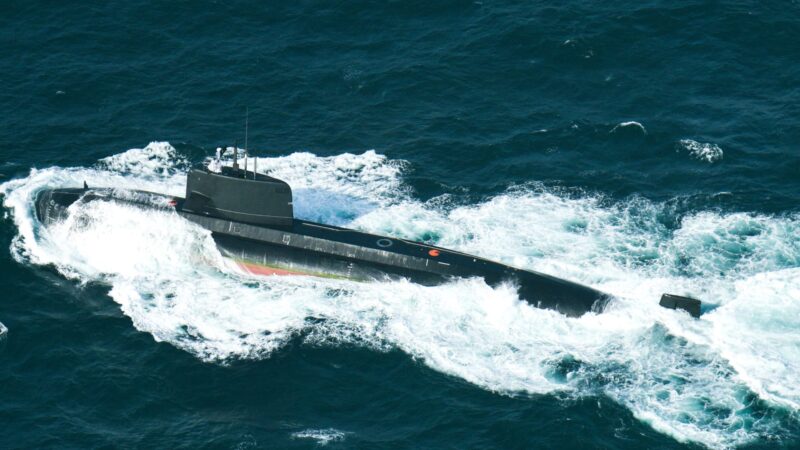
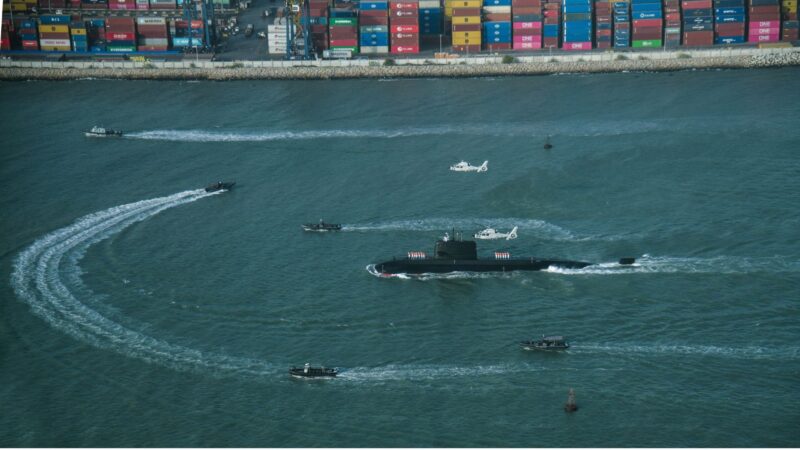
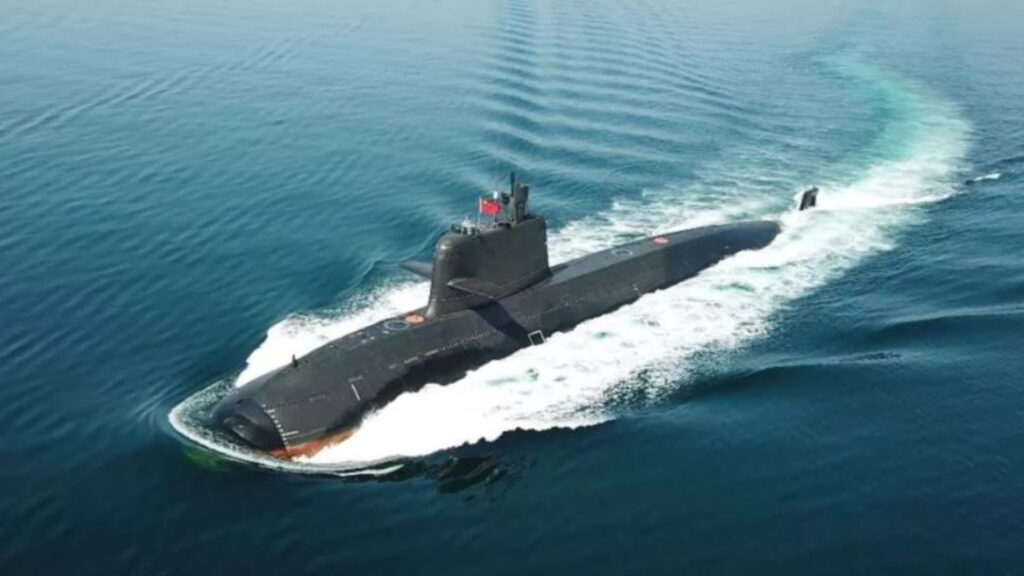
However, upon further investigation, one will find that the PN may have walked back on the so-called ‘hybrid model’ and, in its place, opted to clearly demarcate between dedicated nuclear deterrence and conventional programs. In other words, any genuine sea-based nuclear attack capability would solely come from a nuclear-powered platform, while conventional platforms – including the new Hangor-class submarines – will exclusively stick to anti-ship warfare (AShW) and anti-submarine warfare (ASW).
The Sea-Based Deterrence Gap
Pakistan’s nuclear deterrence posture has long been anchored to land-based ballistic missiles. The Shaheen-III, with a range of approximately 2,750 km, covers the entirety of Indian territory and forms the backbone of Pakistan’s strategic strike capability.
The air-based leg has also developed in recent years. The Ra’ad air-launched cruise missile (ALCM) gives the Pakistan Air Force (PAF) a nuclear delivery capability from aircraft, including the JF-17 Thunder, even though the operational range of these systems remains shorter than the land-based arsenal.
However, the sea-based leg of Pakistan’s deterrence posture remains its weakest.
A nuclear triad – i.e., the ability to deliver nuclear weapons from land, air, and sea – is the standard for assured second-strike capability, the principle that a state can absorb a nuclear first strike and retaliate.
Quwa Plus
Go Beyond the Headlines on Pakistan’s Defence and Security.
Quwa Plus gives you deeper reporting, briefings, and analysis on Pakistan’s defence programs, foreign policy, national security, and regional strategy. Follow the developments that matter to professionals, analysts, and serious readers tracking Pakistan’s security landscape.
Join ($29.99/Year) Already a subscriber?Sign in