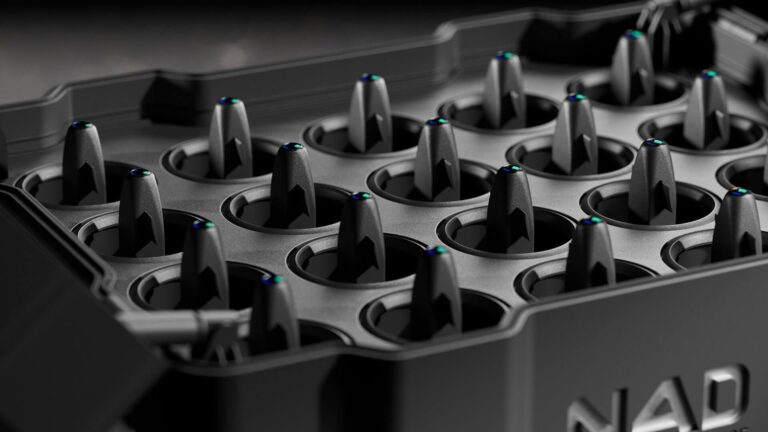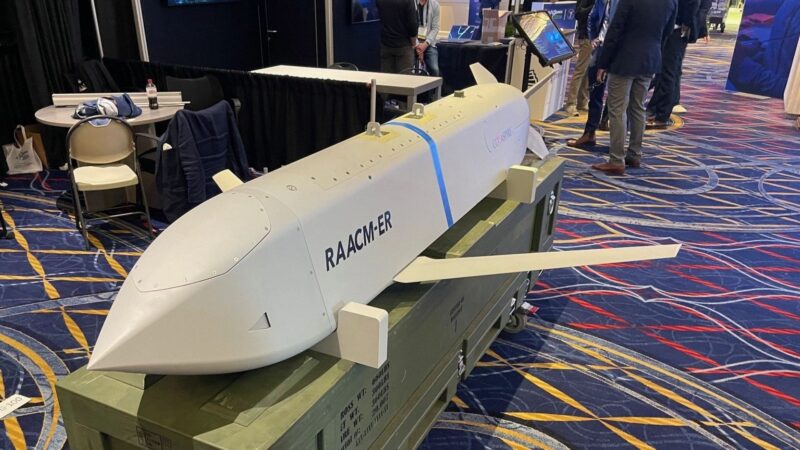
Details of a classified United States Navy seabed warfare program called Liberator have been reconstructed from the service’s FY2025 to FY2027 research and development budget documents, describing a stationary containerized launcher emplaced on the ocean floor.
The system is built to fire the Mk 48 ADCAP heavyweight torpedo and other payloads as a leave-behind autonomous weapon against surface ships and submarines, with the torpedo itself carrying a 650 lb warhead out to between 12 and 21 nautical miles.
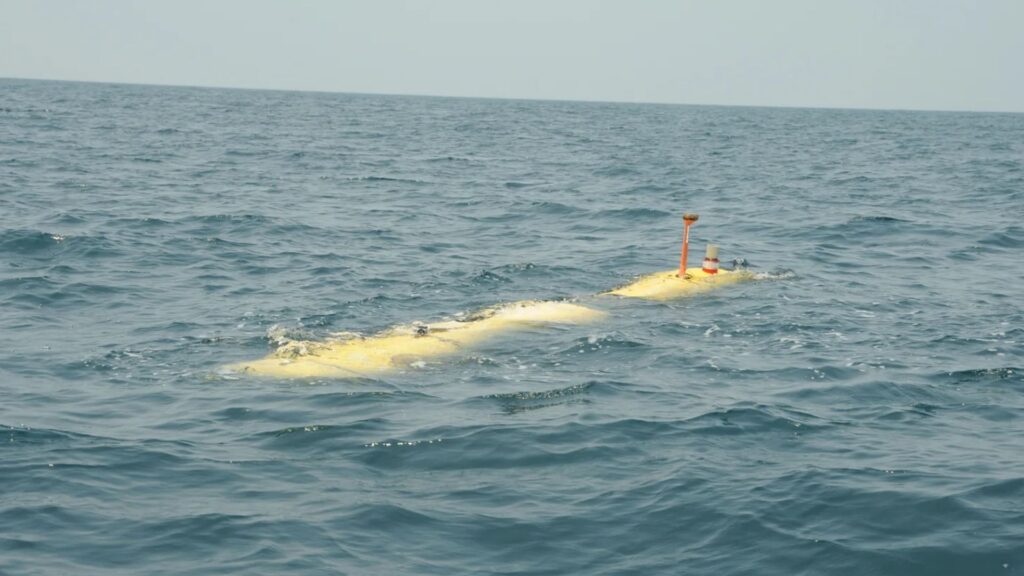
Liberator is sized to fit inside the Boeing Orca extra-large unmanned undersea vehicle’s (XLUUV) 10-metre multi-purpose payload module, which identifies Orca as the intended delivery vehicle.
Mk 54 lightweight torpedoes, one-way attack undersea vehicles and emerging torpedo variants are also flagged as possible future loads for the launcher.
Publicly discussed Orca payloads had previously centred on mine-laying and survey work, with the Hunter mining payload the more visible line item.
An XLUUV that emplaces heavyweight torpedo launchers in a contested strait is instead performing anti-surface warfare by proxy, placing ordnance on the seabed weeks or months before it is needed and withdrawing before the shooting starts.
The program sits with the Program Executive Office for Unmanned and Small Combatants, which let competitive Other Transaction Authority prototype contracts during FY2026 following a classified industry day held in October 2025.
The Navy declined to comment on the program and no contract values have been disclosed, which is consistent with a system whose operational value depends on adversaries not knowing where it has been placed.
The wider large-vehicle field gained a second low-cost entrant this month with the publication of full specifications for the Hadalus undersea vehicle, a 10-metre design offering 2,300 kg of payload capacity, 2,000 nautical miles of endurance and a 3,000-metre operating depth around a free-flooded carbon-fibre exoskeleton.
Its prototype has completed at-sea demonstrations with the US Navy including submerged launch, with cost claimed at between one-third and one-fifth that of comparable long-endurance systems.
The same handover of seabed tasks to uncrewed platforms is visible outside the United States. The Turkish Navy, Sefine Shipyard, Aselsan and partner firms completed trials in which the MARLIN unmanned surface vessel laid MALAMAN smart bottom mines in both remotely controlled and fully autonomous release modes.
MALAMAN operates at depths between 5 and 100 metres on combined pressure, magnetic and acoustic sensing, and is also launchable from the 533 mm torpedo tubes of Turkish submarines – which places the same weapon on crewed and uncrewed delivery paths at once.
Türkiye is building the autonomy layer to match. HAVELSAN used TEKNOFEST Mavi Vatan to unveil AVISTA, a self-funded project covering underwater positioning, three-dimensional mapping and low-signature autonomous operation, with sea trials planned shortly and operational readiness targeted for 2027.
For navies weighing whether extra-large undersea vehicles justify their cost, the American schedule now provides a reference point. Production and acquisition strategy decisions on Liberator are expected during FY2027, with an at-sea demonstration planned for late that year.
Quwa Pro – Defence Market Intelligence
See Where Defence Demand and Technology Are Moving Next
Track procurement priorities across Pakistan, the Gulf and wider MENA, and Central Europe. Follow emerging vendors, drones, AI, C-UAS, and affordable precision weapons, and see how lessons from today’s conflicts are reshaping military requirements and market opportunities.
Featured & Trusted By