The Pakistan Navy’s (PN) emerging anti-access and area-denial (A2/AD) posture will draw on the timely convergence of two developments: the operational experience coming from the wars in Ukraine and Iran, and Pakistan’s domestic industry increasingly leaning into uncrewed platforms, one-way attack (OWA) or loitering munitions, and conventional surface-to-surface missiles (SSM).
Essentially, there is no apparent ‘lag’ between the following emerging warfare trends and the Pakistani industry’s ability to provision solutions. Therefore, the PN can leverage existing and planned indigenous solutions to steer its A2/AD efforts to leverage the following:
- (1) uncrewed aerial, surface, and sub-surface platforms
- (2) loitering munitions and swarming drones
- (3) supersonic-cruising and hypersonic ballistic missiles
In tandem, the PN will extend the capabilities of both its data link and wider network-enabled warfare architecture, i.e., Link Green and the Naval Information Exchange System (NIXS), respectively.
Know What Defence Buyers in Will Need Next
See emerging requirements, likely suppliers, and routes to market across Pakistan, MENA, and fast-moving defence technologies, before demand becomes obvious.
More Lessons From Ukraine and Iran
The Russia-Ukraine War and the US-Iran War have both demonstrated the high efficacy of OWA loitering munitions and SSMs, particularly conventional ballistic SSMs.
In each of these examples, the primary use or end-user benefits of these solutions flow into two points:
First, these solutions are platform-independent in that the end-user can deploy them directly without the need for an underlying system, such as a warship or combat aircraft.
Second, they are scalable and low-cost, so the munitions are easier to expend in mass saturation salvos and lose to attrition in large numbers. However, they create multiple second-order effects. For example, an OWA costs significantly less than its target and the current interceptors meant to stop them. Not only that, but even if a mass-salvo attack were to lose the majority of its OWAs, then, by implication, the ‘lost’ OWAs themselves would have delivered on another benefit, i.e., depleting enemy kinetic interceptor stocks.
Conventional SSMs, while costlier than OWAs, are still less expensive than most platform-deployed strike options and, likewise, do not require costly aircraft or ships to launch them. Ukraine, Russia, and Iran have all been using SSMs in tandem with OWAs for their respective operations.
Russia had launched around 57,000 Shahed-type OWAs by March 2026, with individual weapons estimated to cost between USD $20,000 and $50,000. Ukraine’s reported interception rate has swung sharply under that volume. It peaked at 96–97% during the winter of 2024–2025, slid to around 80% by late 2025, recovered to roughly 95% by May 2026, and then fell back to 86.6% in July 2026. The trajectory is not a straight decline, but the ceiling is clearly no longer stable — and each dip is measured against a larger absolute volume of incoming munitions.
Ukraine, in turn, has used the reportedly USD $55,000 Fire Point FP-1 and comparable OWA systems against Russian energy infrastructure. By early July 2026, Ukraine’s General Staff assessed that these attacks had disabled 42.7% of Russia’s oil refining capacity — measured against design throughput — and generated losses of approximately USD $13.5 billion since August 2025. Independent analysis lands lower but in the same territory: the Financial Times, working from satellite and thermal imagery, assessed that the campaign had knocked out more than 30% of Russia’s actual refining capacity and 45% of its nominal capacity.
In terms of conventional SSMs, the Royal United Services Institute (RUSI) recorded 939 launches of Iskander-M and Kinzhal missiles up to 24 October 2025, against just 227 interceptions. That is a cumulative interception rate of approximately 24% across both missile types. The narrower picture is worse: across 1–24 October, Ukraine intercepted only 14 of 78 Iskander-M (9M723) launches, a rate of 17%. More recently, Iran launched more than 2,000 drones and 500 ballistic missiles in the first four days of its war with the US.
Now, the third emergent attack solution is that of kamikaze unmanned surface vessels (USVs). Quwa had already examined how Ukraine’s Magura V5 USVs, which reportedly cost USD $250,000-$300,000, were credited for destroying eight Russian naval vessels and damaging six others in their first deployment year, imposing total losses of over $500 million on Russia. In turn, Russia progressively transferred its combat vessels from Sevastopol to Novorossiysk during 2023 and 2024, reducing its exposure in Crimea.
Novorossiysk has since come under attack from Ukrainian uncrewed systems across all three domains — air, surface, and sub-surface. The port’s Sheskharis oil terminal, which moves roughly 650,000 barrels per day, or about one-fifth of Russia’s oil exports, suspended tanker loading on 21 July 2026. Earlier, in December 2025, Ukraine used an uncrewed underwater vehicle (UUV) — the SBU’s ‘Sub Sea Baby’ — to strike a Russian Project 636.3 submarine berthed at Novorossiysk, reportedly putting it out of action.
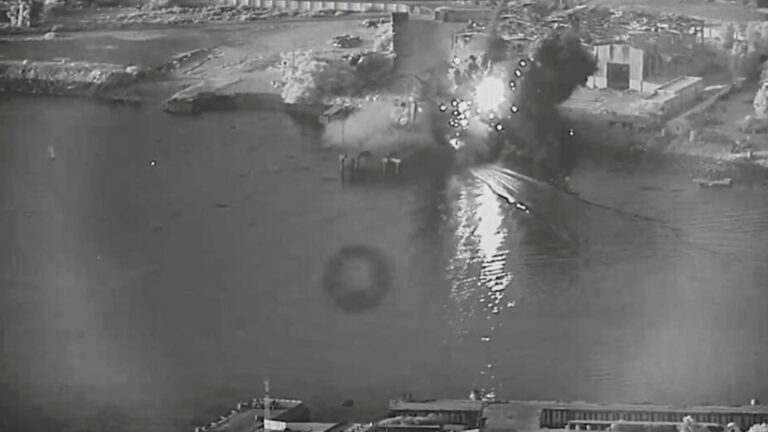
Finally, and most recently, the US used three Saronic Corsair USVs to strike Iran’s Bandar Abbas naval base. CENTCOM stated that the strike hit a submarine and ship maintenance facility, though the released video cut away before showing the extent of the damage.
The PN (and navies in general) are in the position of both leveraging these technology shifts to impose costs on one end and being at risk of incurring damage on the other. For the latter, Quwa will follow up with an analysis discussing the PN’s anti-air warfare (AAW) and counter-UAS efforts.
However, one strategy the PN will likely lean on is tuning its A2/AD posture to deny the space for OWA, USV, and UUV strikes upon Pakistan’s coastal infrastructure. Basically, the rationale at play is that for the PN to stop scalable threats, it must leverage scalable solutions to track, pursue, and neutralize threats.
In other words, it will take large numbers of interceptor drones to kinetically stop OWAs (further buffered by soft-kill electronic warfare or EW-based C-UAS techniques). Likewise, it will take large numbers of USV and UUV systems to find, track, and stop USV and UUV threats, respectively.
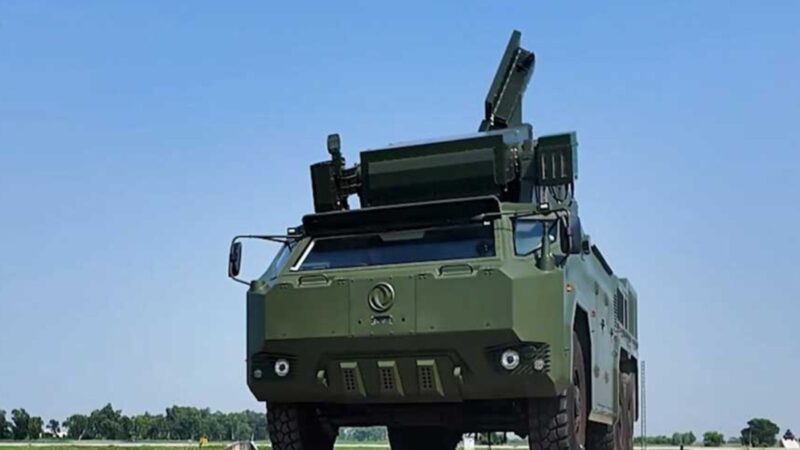
But those kinetic layers will matter when the A2/AD net is compromised, either through leakage (which will likely come from drones) or a successful adversary naval operation. To deter the latter, the PN will draw on the global industry shift towards SSMs and, in turn, densify its coastal-based anti-ship/anti-surface warfare (AShW/ASuW) presence. Hence, one should expect a heavier investment in land-based SMASH anti-ship ballistic missile (ASBM) and supersonic-cruising missiles (SSCM), such as the CM-302 or anti-ship Fatah 3 (which the Army recently revealed as an HD-1-derived or analogous system).
Quwa Pro – Defence Market Intelligence
See Where Defence Demand and Technology Are Moving Next
Track procurement priorities across Pakistan, the Gulf and wider MENA, and Central Europe. Follow emerging vendors, drones, AI, C-UAS, and affordable precision weapons, and see how lessons from today’s conflicts are reshaping military requirements and market opportunities.
Featured & Trusted By







Pakistan’s Three Fastest-Growing Defence Product Verticals
The PN is entering an interesting time because the lag between key real-world experiences and solutions on offer by the Pakistani industry has never been closer. In some respects, the Pakistani defence industry is moving in lock-step with the trends, and, as importantly, its solutions are tangible and prioritized for the necessary production scale to make these strategies work.
1. Loitering Munitions
The story for OWAs at this point is quite clear. Pakistan has evidently prioritized the development of many different solutions, from long-range, piston-powered Shahed-136-analogues to jet-powered Geran-3-type solutions to other designs. Likewise, through its collaboration with the private company Woot-Tech as well as state-owned enterprise (SOE)-based Sysverve, the PN itself is integrating OWAs.
Using the Pakistani industry’s broad OWA product portfolio, one can see the PN (alongside the Army and even the Air Force) inducting large numbers of OWAs. However, for the PN, the interesting question may be whether it configures its OWAs for AShW, which may necessitate a costlier seeker stack (to enable the tracking and engagement of moving targets). In theory, a Heavy Industries Taxila (HIT) D-248 OWA could allow for a reach of up to 3,000 km away from the Pakistani coastline. Thus, besides AShW, one can also see the PN employ such OWAs to mount strikes on Indian naval infrastructure.
However, from a purely A2/AD perspective, the long-range OWAs at least establish reach, and – albeit in theory – the risk of mass-salvo attacks at that reach. From there, the PN will reinforce the reach provided from piston-powered OWAs with jet-powered ones (e.g., HiMark-25TJ), which would be analogous to the Russian Geran-3 or Iranian Shahed-236. In effect, these OWAs would be small subsonic cruise missiles, balancing reach and speed with a lower unit price compared to larger cruise missiles.
2. Ballistic and Cruise Missiles
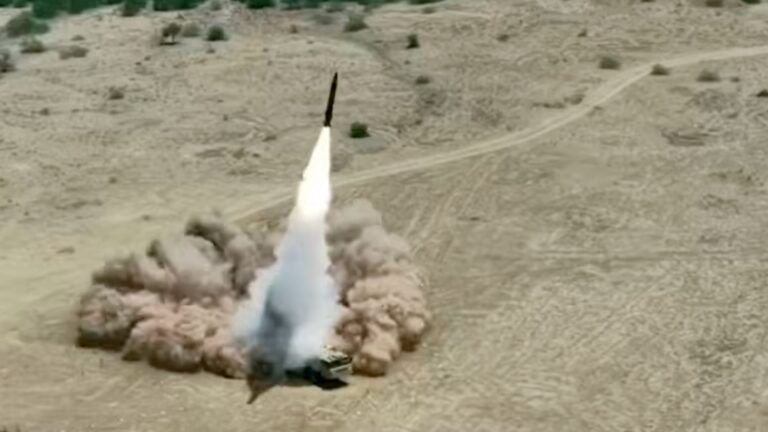
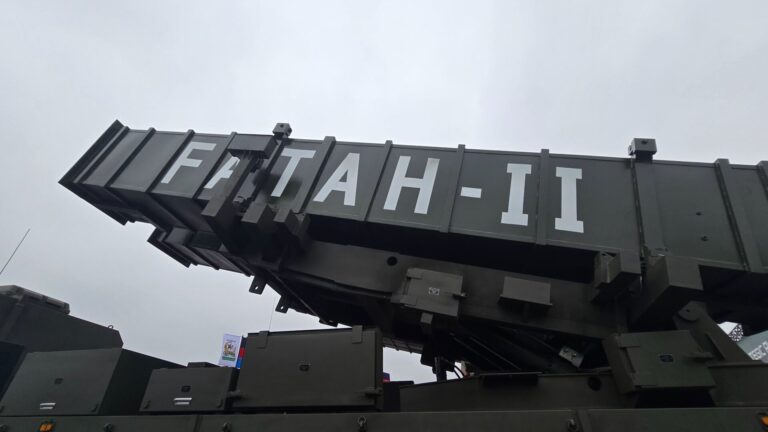
In concert with the OWA strategy, Quwa expects the PN will densify its coastal or land-based long-range strike capacity via large cruise missiles and ASBMs. To be clear, work on this front began with the Zarb, but Quwa anticipates that the PN will draw more on NESCOM’s work moving forward via the Harbah-NG AShM and SMASH ASBM. The Harbah-NG and SMASH are derived from NESCOM’s core platforms, i.e., Babur and Fatah-2, respectively. So, PN acquisitions would draw on a common basis and allow NESCOM to re-leverage the existing overhead to support those requirements.
Currently, both the Harbah-NG and SMASH are shown as shipborne, but the more optimal and scalable method to deploy them would be from land (eliminating the bottleneck of a finite number of warships). Yes, shipborne launching would allow the PN to extend the strike reach, but those same surface platforms are also vulnerable to adversary AShW. Moreover, in terms of A2/AD, the intrinsic improvements of the missile stacks themselves would help achieve the minimum viable range from the coastline.
While the following is an exercise of extrapolation from Türkiye, Iran and Ukraine – and not necessarily applicable to Pakistan – Pakistan has emulated lessons and methods from these countries in OWAs and drones. Pakistan could be emulating Türkiye’s Tayfun ballistic missile. For example, the Tayfun Block-1 is an 800 km missile with a diameter of 610 mm and a length of 6.5 m. Pakistan’s Fatah 2 has a reach of up to 400 km, with a diameter of 600 mm and a length of 7.5 m. Türkiye’s Tayfun Block-2 will have a range of 1,000 km to 1,500 km, but with a diameter of 938 mm and a length of 10 m.
So, it follows that Pakistan will likely build upon the Fatah 2 as a platform and develop a larger and longer missile and, therefore, achieve a range of over 1,000 km. Indeed, a Pakistan Army officer had remarked that a ‘Fatah 5’ had been tested. Quwa assesses that Pakistan will field a 1,000+ km conventional BM for both strikes on and extended-range AShW reach for A2/AD.
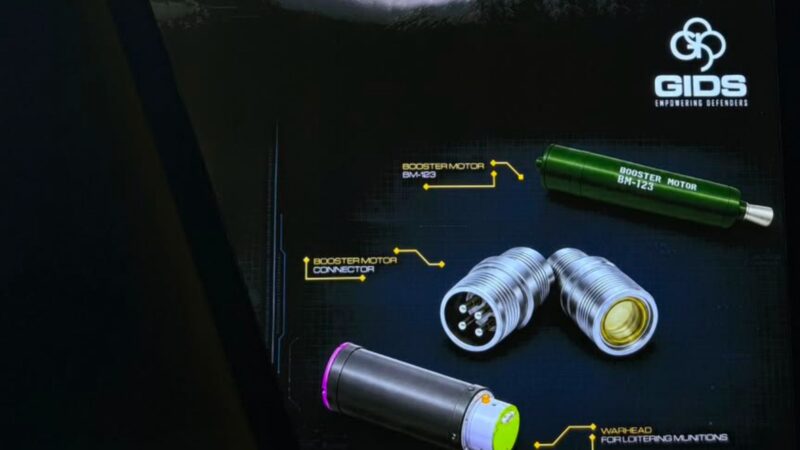
It is also worth noting that Global Industrial & Defence Solutions (GIDS) is labelling the Fatah 2 as a ‘hypersonic’ missile. It might be taking liberties with the label based on the Fatah 2’s terminal velocity. However, for Pakistan, conventional BMs offer the most realistic pathway for a sustained hypersonic attack capability, so, like Türkiye (which states that the Tayfun series is hypersonic), NESCOM is likely thinking – if not actively working – along these lines. Likewise, the PN leadership had once framed the SMASH (i.e., P282) as a hypersonic ASBM solution.
In any case, the point is that the PN will seek and leverage a longer-ranged (i.e., 1,000+ km) ASBM and, in turn, deploy them at scale from the coast. Likewise, if the Fatah-3 program involves producing the HD-1 under license or manufacturing a supersonic-cruising missile, then a naval version (or CM-302, which the PN already inducted) will also likely be inducted as a coastal asset. The advantage of coastal deployment is that it is much easier to use these heavyweight missiles and leverage their high-velocity benefits.
3. Uncrewed Platforms
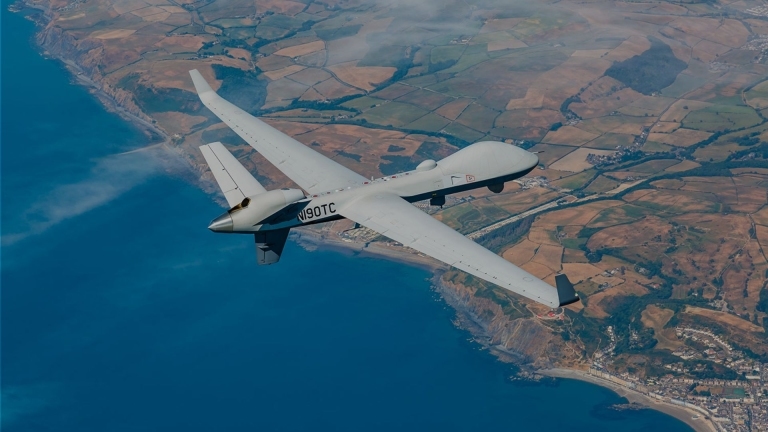
Though GIDS has made the Shahpar 3 unmanned aerial vehicle (UAV) its flagship platform, it has also entered the USV space via the Muhassir. Quwa is confident that the PN will adopt both and, potentially, leverage them at scale as opposed to niche applications.
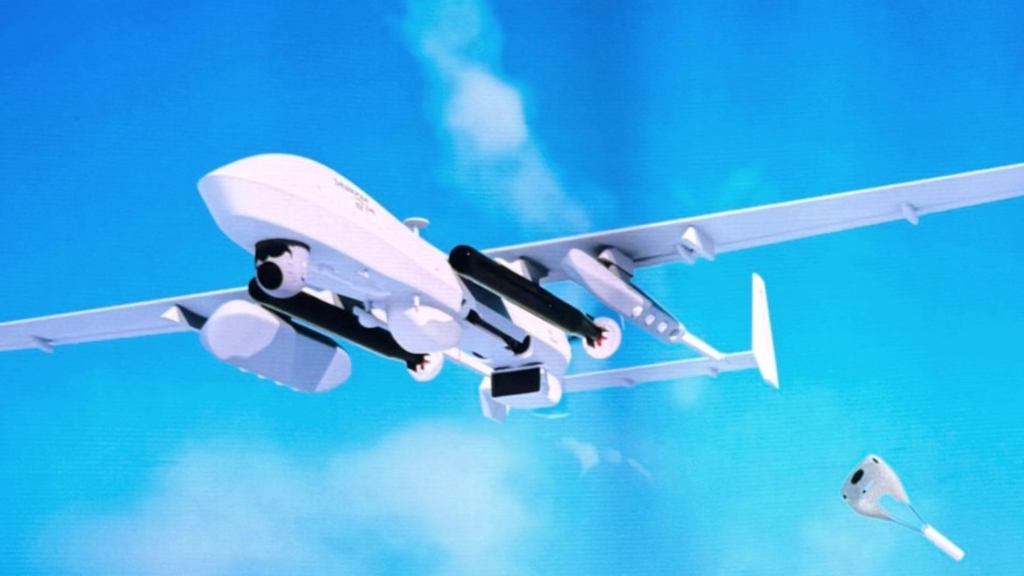
NESCOM has designed a naval configuration of the Shahpar-3 via dedicated sensors (i.e., KPM-6030 synthetic aperture radar and sonobouy-dispensing pod) and munitions (i.e., Eghraaq ultra-lightweight torpedo and Rasoob 250 air-launched cruise missile).
Seeing the extent of work NESCOM carried out through dedicated sensors and munitions, it is likely the Shahpar-3 maritime configuration was designed for the PN’s requirements. In fact, aside from a limited number of CH-4s, the PN has not acquired other medium-altitude long-endurance (MALE) UAS, though Türkiye and China have promoted their respective systems to Naval Headquarters (NHQ).
The Shahpar-3 could provide the PN a cost-effective means to build and maintain its air coverage for surveillance and first-response roles. Its current roadmap plans for 10 Sea Sultan long-range maritime patrol aircraft (LRMPA), which would join the 4 RAS-72 Sea Eagle MPAs. These aircraft map onto the PN’s existing P-3C LRMPA and past Fokker MPA aircraft on a near-1:1 basis quantitatively. They also leverage newer sensors and subsystems, so, at some level, these new aircraft could provide net gains once the legacy aircraft are replaced.
Therefore, the Shahpar-3 would add to this basis and enable the PN to extend its airborne coverage, densify presence, and bring more air-launched munition capacity. One could also see the PN pursue a manned-unmanned teaming (MUM-T) capability where its crewed platforms, like the Sea Sultan, could coordinate Shahpar-3 deployments as well. In this sense, the Shahpar-3s could serve as extensions to Sea Sultan LRMPAs whereby the latter can manage the former’s munition use. For example, Shahpar drones armed with Rasoob 250s might rely on the radar targeting support of the Sea Sultan and, at the same time, the Sea Sultan crew will decide if the drone launches its ALCM.
Additionally, NESCOM has also developed the Ranger and Super Ranger vertical take-off and landing (VTOL) UAV family. NESCOM is marketing both drones for sea roles and, considering they are VTOL, they are likely shipborne-capable as well. Thus, the PN can also use these specific drones for ISR and, potentially, build upon them via larger variants or other VTOL platforms in the future.
However, the Muhassir USV is among GIDS’ most interesting recent new products. In addition to the well-established ISR and ASuW (via 12.7 mm gun) roles, NESCOM has also designed the Muhassir for kamikaze roles analogous to the Ukrainian Magura or American Corsair.
It is unclear whether the Muhassir in particular will embody this idea, but by revealing that this USV can have a kamikaze role, GIDS/NESCOM have revealed that scalability and cost-control are priorities for their USVs. In other words, whether it is by adapting the Muhassir or, potentially, developing a cheaper, simpler design, the PN would likely want an attritable platform in the near future.
Interestingly, at least two additional USVs are in development in Pakistan; one by Woot-Tech (i.e., Corsair) and another by Stingray Technologies. Moreover, in contrast to the Muhassir, it also seems that both the Woot-Tech and Stingray programs are focused on shorter-ranged and lighter USVs. Therefore, these two USVs might be better suited for the dedicated kamikaze role, while the Muhassir is leveraged more as an asset to extend surface ISR reach at scale (complementing the Shahpar-3 in the air). Indeed, Woot-Tech itself states that its Corsair was designed primarily as a kamikaze USV.
Thus, one could see these USVs form the near-shore leg of the PN’s A2/AD strategy – i.e., adding to the strategic reach of the long-range OWAs, the long-range ASBMs and ASCMs, the medium-range (250 km) OWAs like HiMark-25TJ and ASCMs like Rasoob 250 (350 km), and, finally, high-velocity solutions such as the CM-302 and, potentially, a naval Fatah-3 variant. Collectively, these systems would form the PN’s scale-heavy A2/AD solutions (i.e., drawing on the lessons in Eastern Europe and the Middle East).
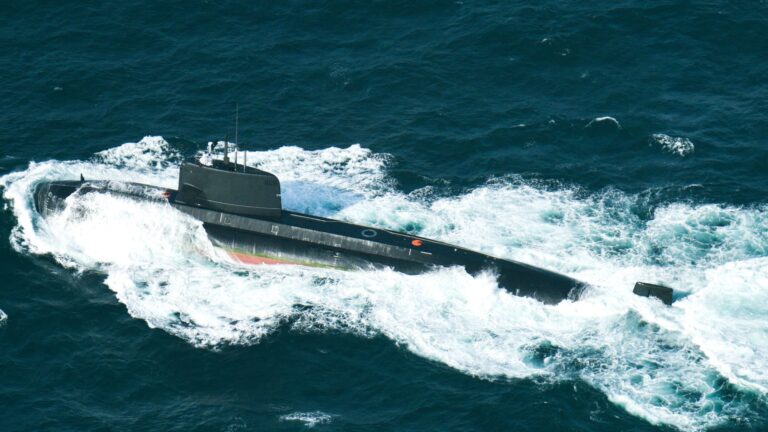
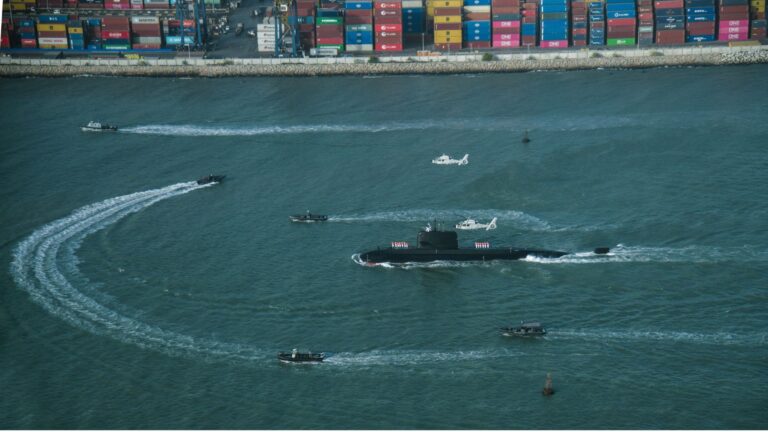
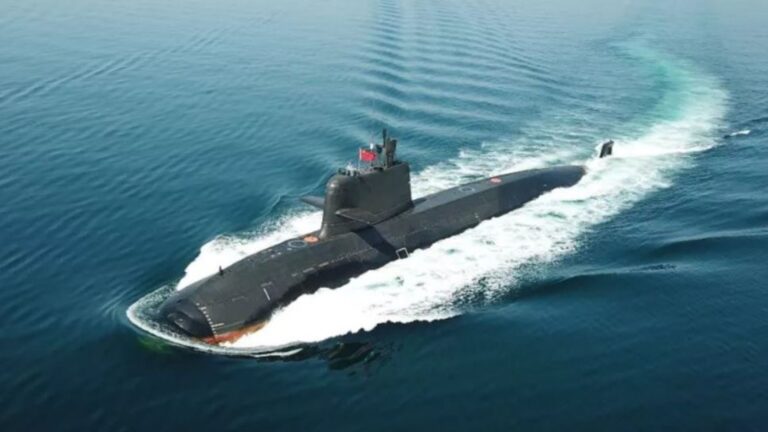
Finally, all of this would operate in tandem with the traditional A2/AD assets that the PN is procuring – i.e., submarines and crewed surface as well as aviation platforms. The uncrewed, distributed assets will take the pressure off these prized traditional assets and, in turn, make accessing Pakistan’s littoral waters and, potentially, the EEZ and SLOCs much more difficult and risky.
Know What Defence Buyers in Will Need Next
See emerging requirements, likely suppliers, and routes to market across Pakistan, MENA, and fast-moving defence technologies, before demand becomes obvious.