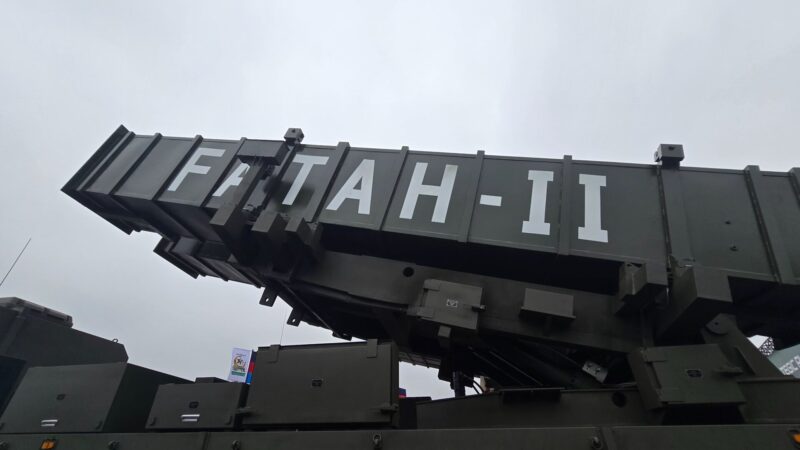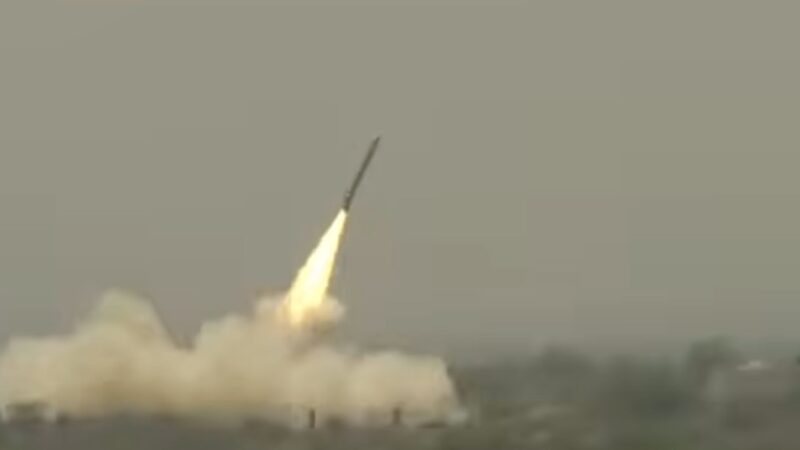


On 13 October, the Pakistan Army announced that it successfully test-fired an extended-range variant of the Fatah-2 surface-to-surface missile (SSM), officially designated as the “Fatah-2 ER.”
In its press statement, Inter-Services Public Relations (ISPR), the Pakistan Army’s media wing, termed this new Fatah-2 variant a “hypersonic ballistic missile” that is “capable of engaging targets with high precision and defeating … missile defence systems due to its unique trajectory and maneuverability features.”
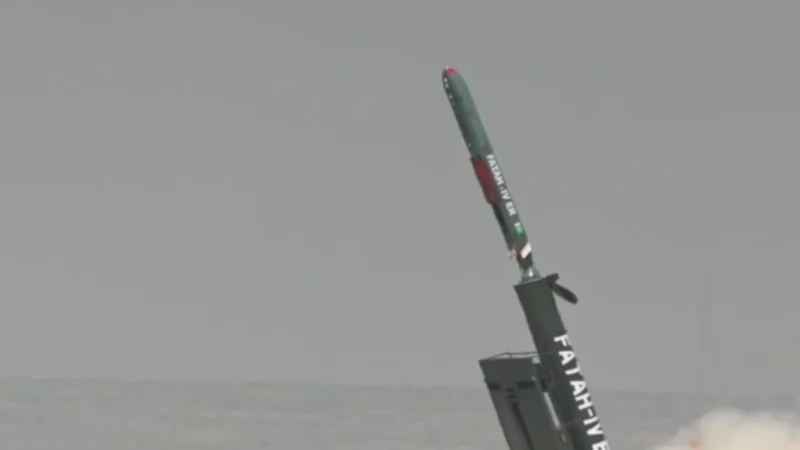
This is the Pakistan Army Rocket Force Command’s (ARFC) second missile test in October, following the test-fire of the Fatah-4 ER ground-launched cruise missile (GLCM) – and its fourth publicly announced missile test in 2026. Additionally, the ARFC had also conducted a series of unannounced tests, with Pakistan issuing at least seven overland NOTAM alerts this year.
ISPR did not disclose the range or dimensions of the Fatah-2 ER. The preceding variant, Fatah-2, has a range of 400 km (or 280 km for export), a length of 7.5 m, diameter of 600 mm, a warhead weight of 365 kg, and an accuracy of within 50 m circular error probable (CEP). That said, it should be noted that the SMASH – i.e., the anti-ship ballistic missile (ASBM) variant of the Fatah-2 – has an accuracy of within 10-15 m CEP (depending on its seeker configuration). Both missiles use a dual-thrust, single-stage rocket motor. The Fatah-2 was developed by Pakistan’s National Engineering & Scientific Commission (NESCOM).
Based on ISPR’s footage, the Fatah-2 ER appears longer than the initial Fatah-2 variant, though it seems to retain the same diameter as the Fatah-2 of 600 mm. If NESCOM’s goal was to strictly extend the range of the Fatah-2, then lengthening the missile would allow it to do so by increasing its internal fuel volume. It appears that the Fatah-4 ER had also involved a similar strategy, though in both cases, one should not dismiss the possibility of propulsion improvements. While increasing the size of either missile would allow for more fuel, it does cause to a weight penalty as well. Thus, some type of efficiency improvement in the rocket motor (and, in terms of the Fatah-4-series, the turbojet engine) could be involved. Specifically regarding the Fatah-2, Pakistan may have also improved the solid fuel composition.
Quwa Plus
Go Beyond the Headlines on Pakistan’s Defence and Security.
Quwa Plus gives you deeper reporting, briefings, and analysis on Pakistan’s defence programs, foreign policy, national security, and regional strategy. Follow the developments that matter to professionals, analysts, and serious readers tracking Pakistan’s security landscape.
Join ($29.99/Year) Already a subscriber?Sign in