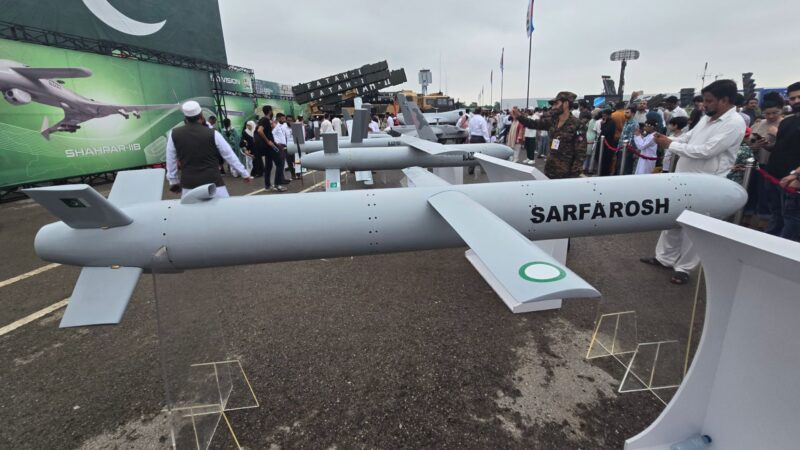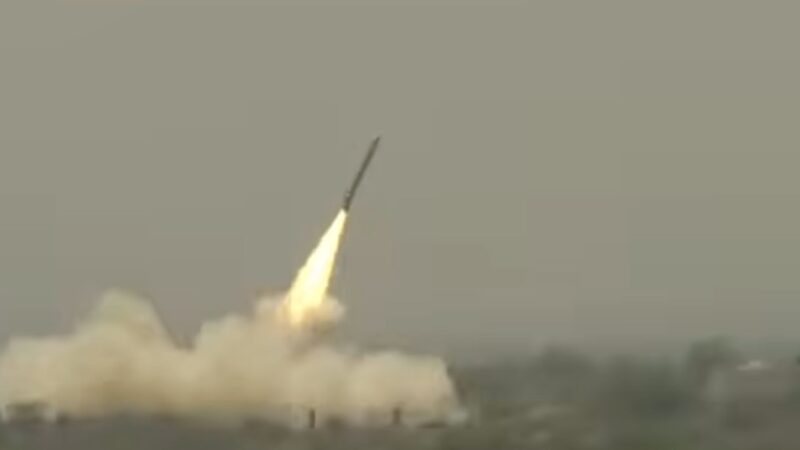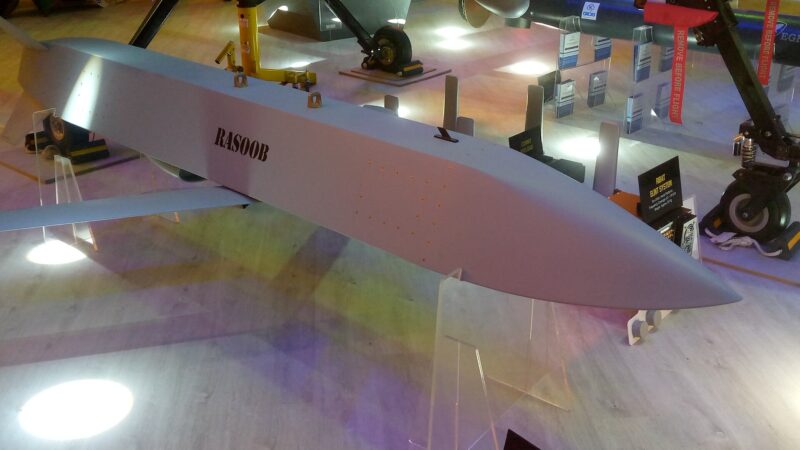

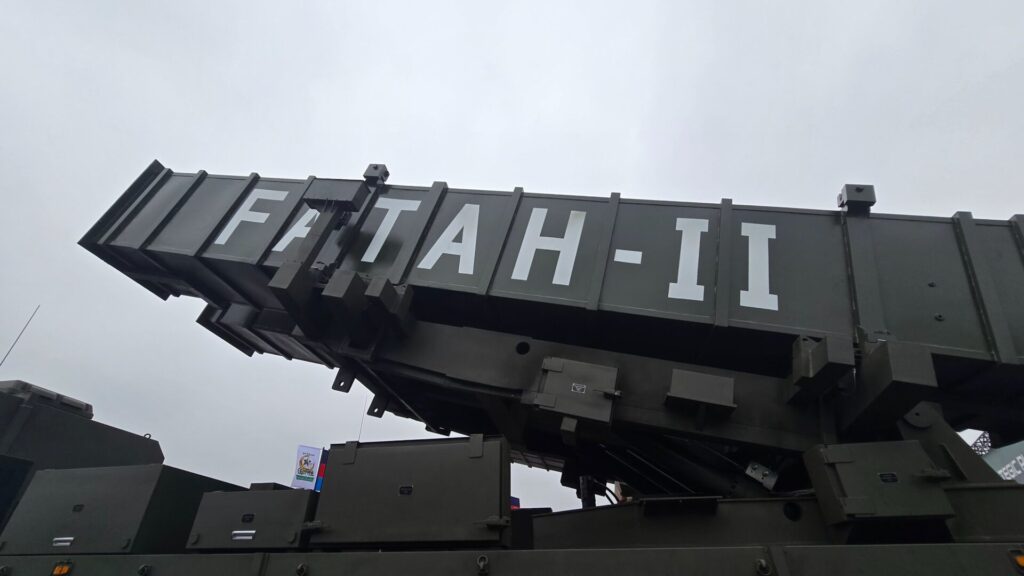
The Pakistan Army’s Rocket Force Command (ARFC) has emerged as the service arm to execute the military’s surface-based precision-strike capabilities. The ARFC uses multiple types of surface-to-surface missiles (SSM), including guided artillery (Fatah-1), quasi-ballistic missiles (Fatah-2), supersonic cruise missiles (Fatah-3), and subsonic cruise missiles (Fatah-4).
Of these, the ballistic missile sub-family – i.e., Fatah-2 and its anti-ship ballistic missile (ASBM) variant, the SMASH – may welcome another member through a “Fatah-5.”
The existence of the Fatah-5 was confirmed by a Pakistan Army officer who, when asked by Geo News about Fatah-3 and Fatah-5, stated that the latter had already been tested. To be clear, the details are not confirmed, and what follows is an analysis; however, there are indicators that Pakistan is working towards a conventional ballistic missile strategy built on scale and gradual, but continuous, range extension.
The first and primary sign is the Fatah-2 itself. Built on a 600 mm diameter 7.5 m airframe and armed with a 365 kg warhead, the Fatah-2 offers a range of 400 km. However, that same airframe was repurposed into the Pakistan Navy’s (PN) ‘SMASH’ (Supersonic Missile, Anti-Ship) ASBM. Right away, the use of a common platform to drive both the land-attack and anti-ship roles indicates a deliberate strategy to drive scale via standardized designs and core inputs.
The Fatah-2 and SMASH largely differ in terms of their respective guidance systems, with the SMASH leveraging a terminal-stage seeker for tracking moving targets – i.e., ships. But every other major input is almost certainly the same, which allows the National Engineering and Scientific Commission (NESCOM) to invest in a high-output production line, knowing that the one platform will draw significant domestic (and, potentially, foreign) demand to distribute the overhead cost across many units. That demand surge is now coming from the ARFC’s own mandate to ensure it maintains credible depth in its conventional munitions (Fatah-2 included), and the PN will likely follow with a shore-based ASBM strategy leveraging SMASH.
The explicit conventional use-case of the Fatah-2/SMASH line stands in sharp contrast to how Pakistan had traditionally deployed BMs. Before the Fatah-2, Pakistan had leaned on much larger, longer-range missiles like the Shaheen series, among others.
However, since the underlying assumption of the BMs was that they would be used for nuclear delivery, these missiles were not built in large numbers. What mattered was establishing that Pakistan had the delivery vehicles to deploy its nuclear warheads at the long ranges it needed to reach. And that assumption showed in the scarce number of tests, often once every several years for each mainstay missile (e.g., Shaheen-1) or very rarely in terms of marquee ones such as the Shaheen-3 or Ababeel.
Simply put, Pakistan did not have nor need many such missiles, and, as importantly, it was bottlenecked anyway by the number of nuclear warheads at its disposal.
However, since the advent of the Russia-Ukraine War in 2022, modern warfare has seen a significant shift where conventional long-range surface-to-surface strikes have become integral. And the recent conflict of May 2025 reinforced that observation with lived experience, both in terms of launching strikes (through the Fatah-1) and absorbing them (via the BrahMos).
Quwa Plus
Go Beyond the Headlines on Pakistan’s Defence and Security.
Quwa Plus gives you deeper reporting, briefings, and analysis on Pakistan’s defence programs, foreign policy, national security, and regional strategy. Follow the developments that matter to professionals, analysts, and serious readers tracking Pakistan’s security landscape.
Join ($29.99/Year) Already a subscriber?Sign in