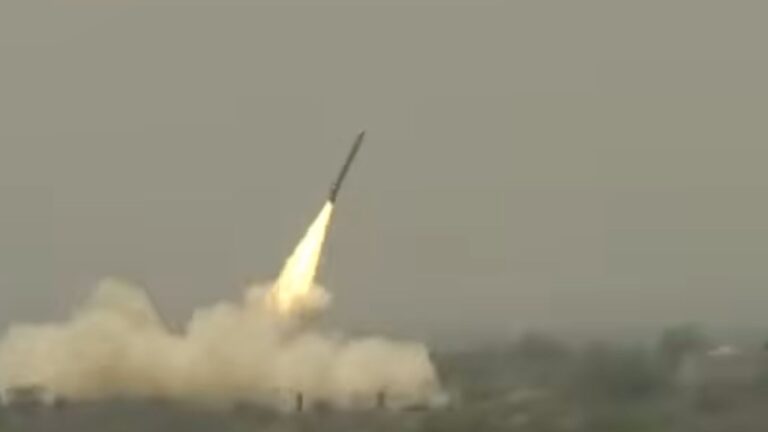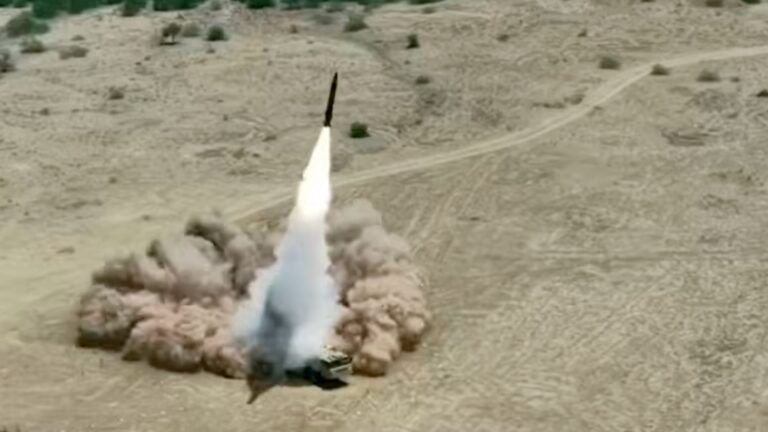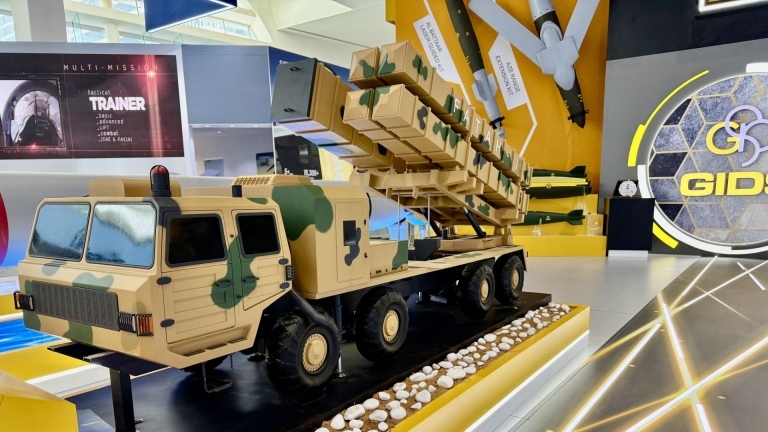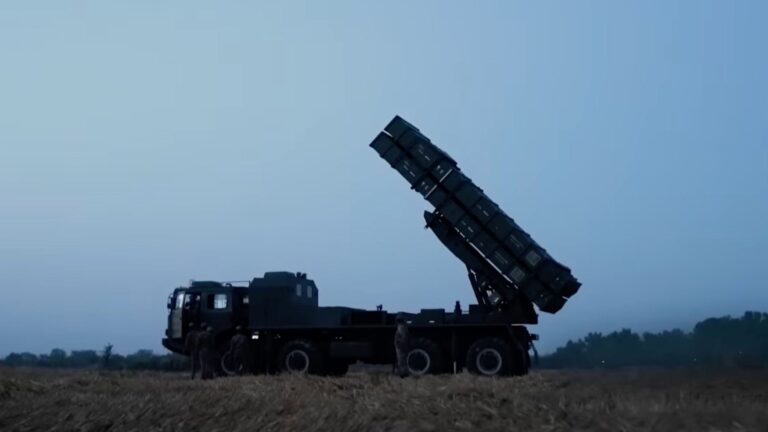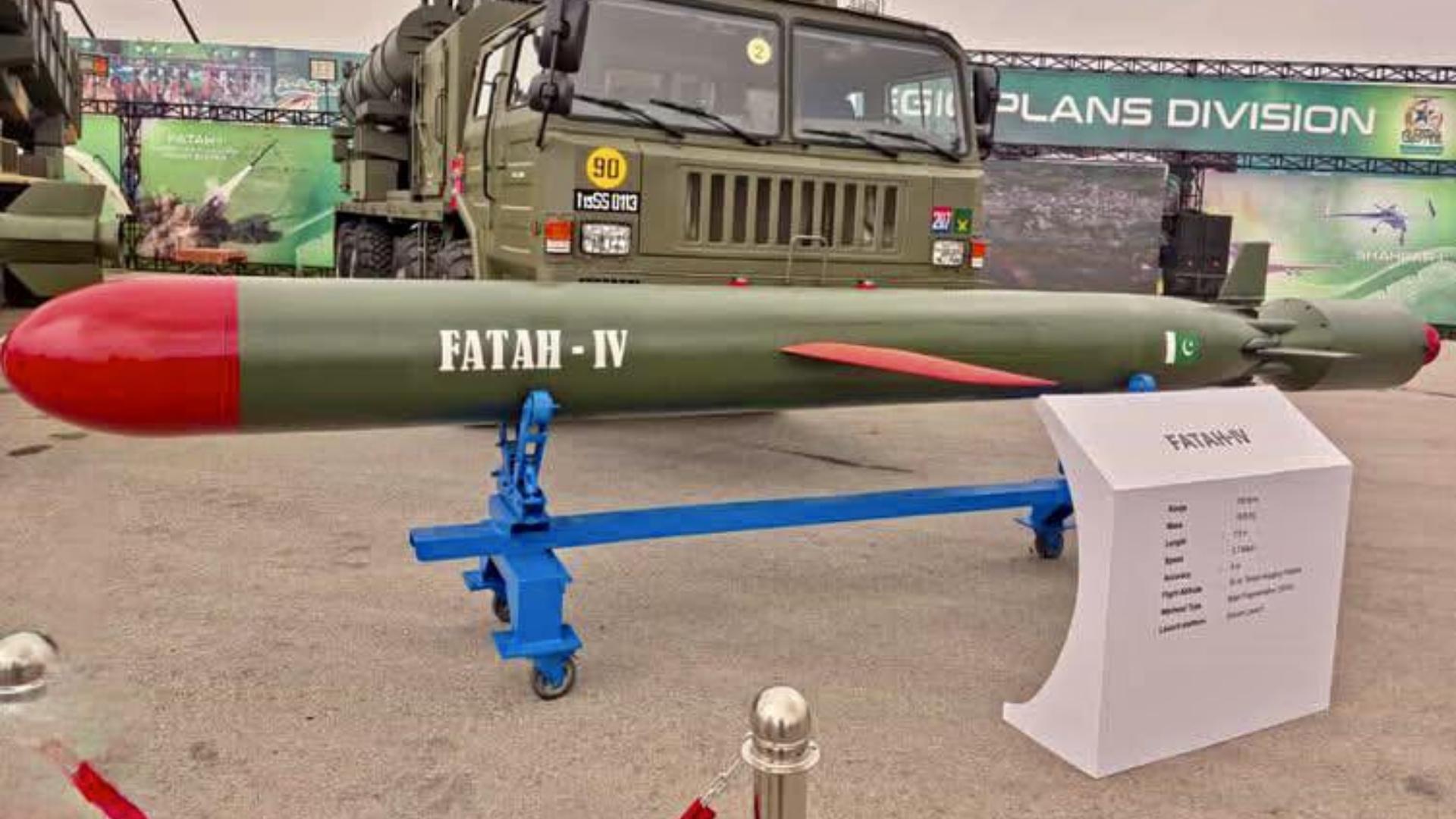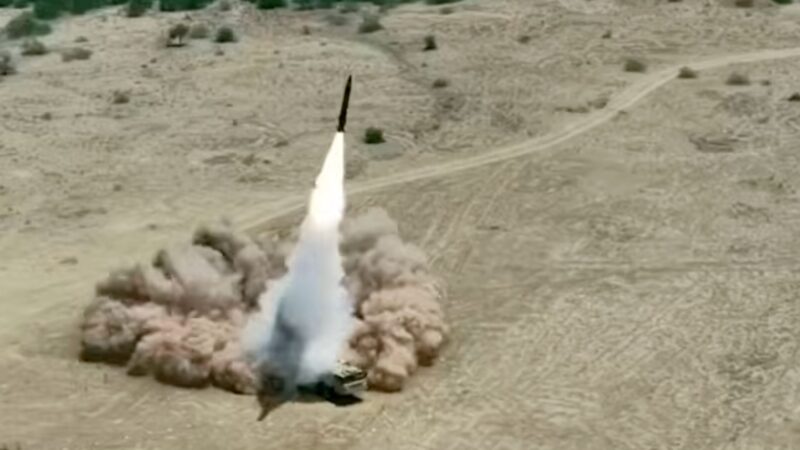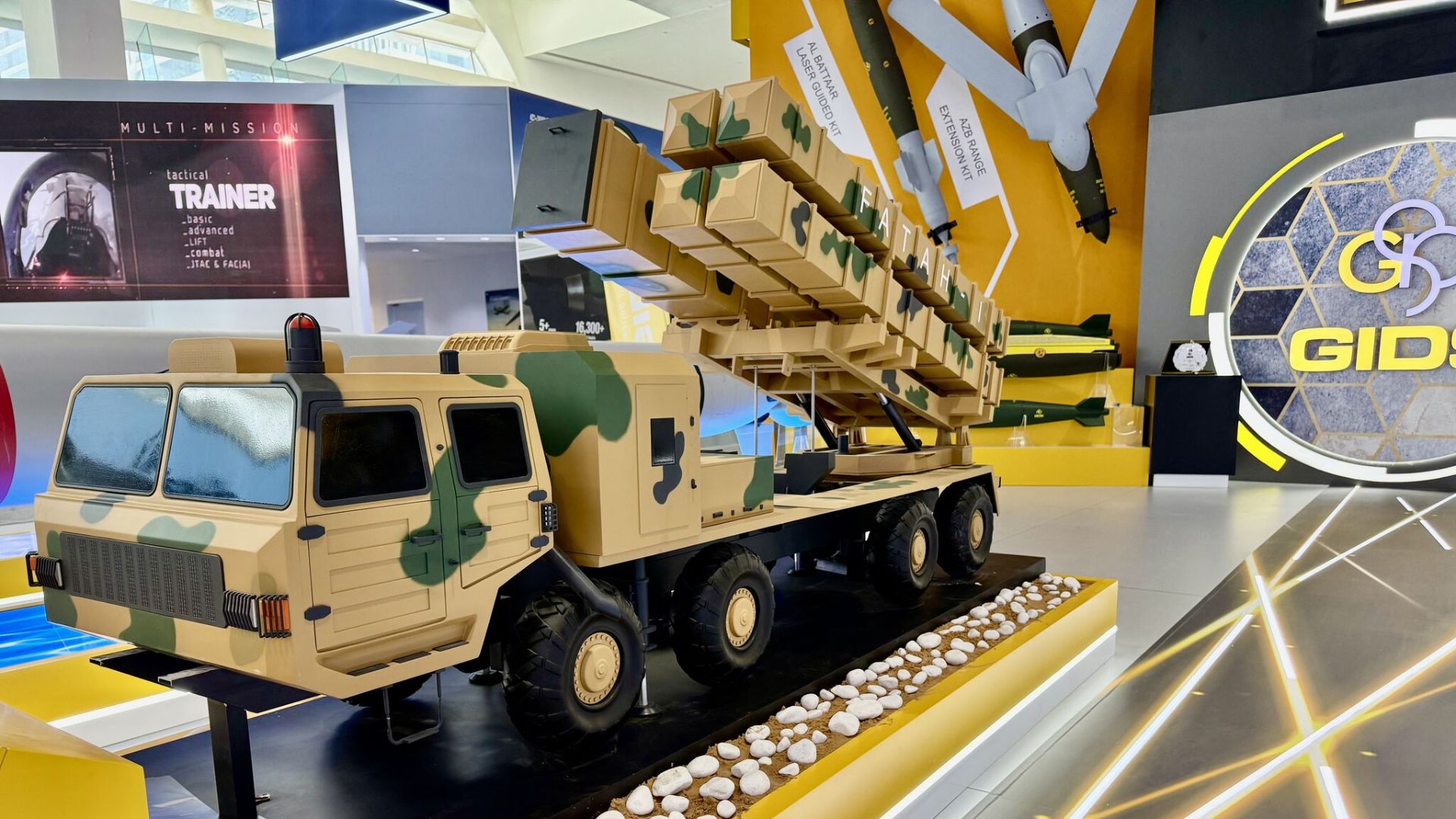
The Fatah-3 is Pakistan’s ramjet-powered supersonic cruise missile (SSCM) – a guided missile system capable of sustained Mach 2.2–3.5 cruise designed for land-attack and anti-ship missions. In a video released on 8 May 2026, Pakistan’s Inter-Services Public Relations (ISPR) revealed the Fatah-3 to be a ramjet-powered supersonic cruise missile.
The Fatah-3 is the third member of the broader Fatah missile family and sits within the Army Rocket Force Command’s (ARFC) expanding multi-modal strike portfolio.

Know What Defence Buyers in Will Need Next
See emerging requirements, likely suppliers, and routes to market across Pakistan, MENA, and fast-moving defence technologies, before demand becomes obvious.
Fatah-3 Specifications (Estimated)
| Parameter | Specification (estimated, based on HD-1A benchmark) |
|---|---|
| Type | Supersonic Cruising Missile (SSCM) – land-attack and anti-ship |
| Developer | NESCOM (likely with Chinese subsystem inputs) |
| Cruise Speed | Mach 2.2–3.5 (flight-profile dependent) |
| Total Mass | ~1,200 kg |
| Length | 6,000 mm |
| Diameter | 375 mm |
| Warhead Weight | 240 kg |
| Warhead Options | Unitary penetration; unitary fragmentation-blast; unitary blast; cluster |
| Range | 290 km (MTCR-capped export); domestic variant likely longer |
| Cruise Altitude | Up to 15 km; sea-skim at 5–10 m |
| Propulsion | Solid-fuel ramjet with solid-fuel rocket booster; four lateral intakes |
| Mid-Course Guidance | Fibre IMU + GPS / BeiDou GNSS |
| Terminal Guidance | Infrared (IR) or active radar-homing (ARH) seeker |
| Accuracy (CEP) | 10–20 m (guidance-mode dependent) |
| Platform Compatibility | Ground-based TEL (confirmed); air-launched and ship-launched variants possible |
| Status | In development; no observed test firings as of May 2026 |
HD-1 Heritage and Chinese Supply Chain
The Fatah-3 bears a physical resemblance to the HD-1 – a supersonic land-attack and anti-ship missile developed by China’s Guangdong Hongda Blasting Co., Ltd. The two systems share four lateral ramjet intakes, a solid-fuel rocket booster configuration, and overall airframe geometry.
As Quwa has analysed in detail, the National Engineering and Scientific Commission (NESCOM) may be drawing on the Chinese commercial defence supply chain – sourcing newer subsystems, potentially including active electronically scanned array (AESA) seekers – to produce an indigenous derivative rather than importing the HD-1 wholesale.
Ramjet Propulsion and Flight Profile
The Fatah-3’s defining characteristic is its integral solid-fuel ramjet – a propulsion system that sustains supersonic cruise throughout the mid-course phase rather than relying on ballistic momentum. The missile is boosted to ramjet ignition speed by a solid-fuel rocket, which is then jettisoned as the ramjet takes over.
The four lateral air intakes – visible in the ISPR imagery – feed compressed air to the ramjet combustion chamber, where the solid fuel grain provides sustained thrust. This design allows the missile to maintain Mach 2.2–3.5 cruise speed throughout its flight envelope.
At high altitude (up to 15 km), the Fatah-3 maximises range by reducing aerodynamic drag. For anti-ship or terminal land-attack engagements, the missile can descend to a sea-skimming altitude of 5–10 m – exploiting the radar horizon to delay detection.
Seeker Options and Terminal Guidance
Based on the HD-1A reference, the Fatah-3 likely supports multiple terminal seeker options depending on the mission profile. For anti-ship engagements, an active radar-homing (ARH) seeker would provide all-weather target acquisition. For precision land-attack, an infrared (IR) imaging seeker offers jam-resistant terminal guidance against fixed targets.
If NESCOM has secured access to AESA seeker technology – a possibility given the Chinese supply chain link – the Fatah-3 could offer a significant terminal guidance upgrade over the HD-1 baseline. AESA seekers provide superior resolution, electronic counter-countermeasures (ECCM) resistance, and the ability to discriminate between closely spaced targets.
Readiness Assessment
A degree of caution is warranted regarding the Fatah-3’s readiness. ISPR has previously used stock or repurposed footage in promotional videos, and no test firings have been publicly observed as of May 2026.
The reveal may thus be more about signalling strategic intent than near-term operational capability. However, the underlying technology is mature – the HD-1 has been tested and displayed by Guangdong Hongda since 2018 – and NESCOM’s engineering competence in missile integration is well-established.
Closing the ‘BrahMos Gap’
The Fatah-3 addresses what Quwa has called the ‘BrahMos gap’ – the absence of a comparable supersonic-cruising strike capability in Pakistan’s conventional arsenal. India’s BrahMos – a joint Indo-Russian missile – has been operational since the mid-2000s and is deployed across the Indian Army, Navy, and Air Force.
The Fatah-3 confirms that Pakistan has opted to close this gap from the emulation side – fielding a comparable supersonic cruiser rather than relying solely on air defence interceptors. It would be the second supersonic-cruising missile in Pakistan’s inventory, following the CM-302 aboard the Tughril-class (Type 054A/P) frigates.
The BrahMos comparison is imperfect in one important respect: the BrahMos uses a liquid-fuel ramjet, while the Fatah-3 likely uses a solid-fuel ramjet. Solid-fuel ramjets offer faster reaction times (no fuelling delays) and simpler logistics, but typically trade some performance flexibility relative to liquid-fuel designs.
Doctrinal Role Within the ARFC
Within the ARFC’s multi-modal strike architecture, the Fatah-3 fills a specific gap between the ballistic Fatah-2 and the subsonic Fatah-4 GLCM.
This makes the Fatah-3 suited to time-critical targets where the engagement window is measured in minutes rather than hours – such as mobile air defence batteries, command-and-control nodes, or relocating logistics convoys.
The dual land-attack/anti-ship capability of the Fatah-3 makes it uniquely versatile within the Fatah family. While the Fatah-1 and Fatah-2 are purely land-attack systems, the Fatah-3 could potentially be tasked against both land and maritime targets from the same launcher.
Quwa Pro – Defence Market Intelligence
See Where Defence Demand and Technology Are Moving Next
Track procurement priorities across Pakistan, the Gulf and wider MENA, and Central Europe. Follow emerging vendors, drones, AI, C-UAS, and affordable precision weapons, and see how lessons from today’s conflicts are reshaping military requirements and market opportunities.
Featured & Trusted By







Frequently Asked Questions About the Fatah-3
What is the speed of the Fatah-3?
Based on the HD-1A reference, the Fatah-3 likely cruises at Mach 2.2–3.5. Unlike the Fatah-2, it sustains supersonic speed throughout its flight via ramjet propulsion.
What is the range of the Fatah-3?
Not officially disclosed. Based on the HD-1A, the export variant would be capped at 290 km under MTCR guidelines.
How does the Fatah-3 compare to BrahMos?
Both are supersonic cruise missiles. BrahMos uses a liquid-fuel ramjet; the Fatah-3 likely uses a solid-fuel ramjet offering faster reaction times and simpler logistics.
Has the Fatah-3 been test-fired?
As of May 2026, no test firings have been publicly observed. The ISPR reveal may signal strategic intent. The HD-1 technology has been tested by China since 2018.
Is the Fatah-3 based on a Chinese missile?
It bears physical resemblance to the HD-1 by Guangdong Hongda. NESCOM may be sourcing Chinese subsystems while producing an indigenous derivative.
Related Profiles
- GIDS Fatah Missile Family – Overview of the full Fatah-series and ARFC integration.
- Fatah-1 GMLRS – The 140 km-range combat-proven guided rocket system.
- Fatah-2 Surface-to-Surface Missile – The 400 km-range tactical ballistic missile.
- Fatah-4 Ground-Launched Cruise Missile – The 750 km-range GLCM derived from the Babur platform.
- Pakistan Reveals Fatah-3 Supersonic Cruise Missile – Quwa’s analysis of the May 2026 ISPR reveal.