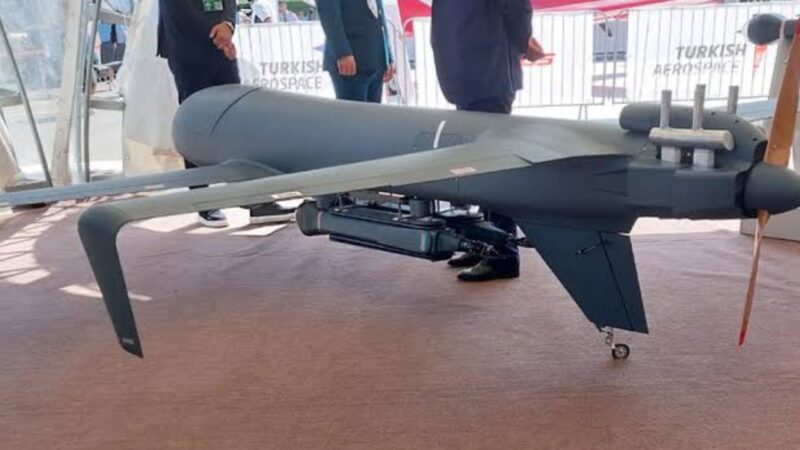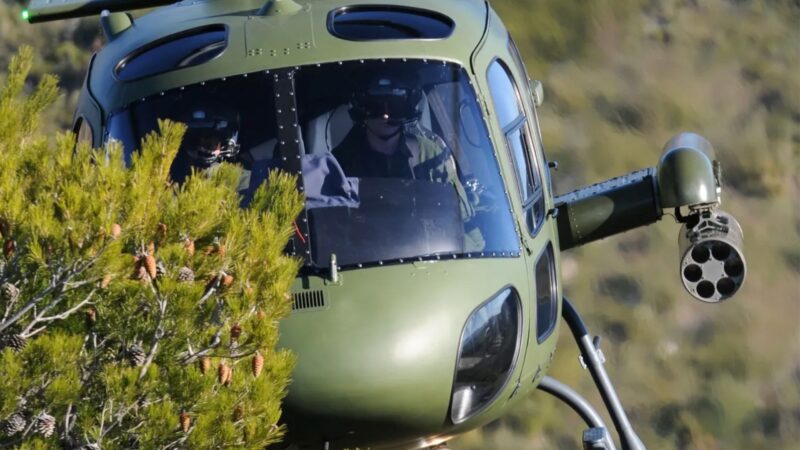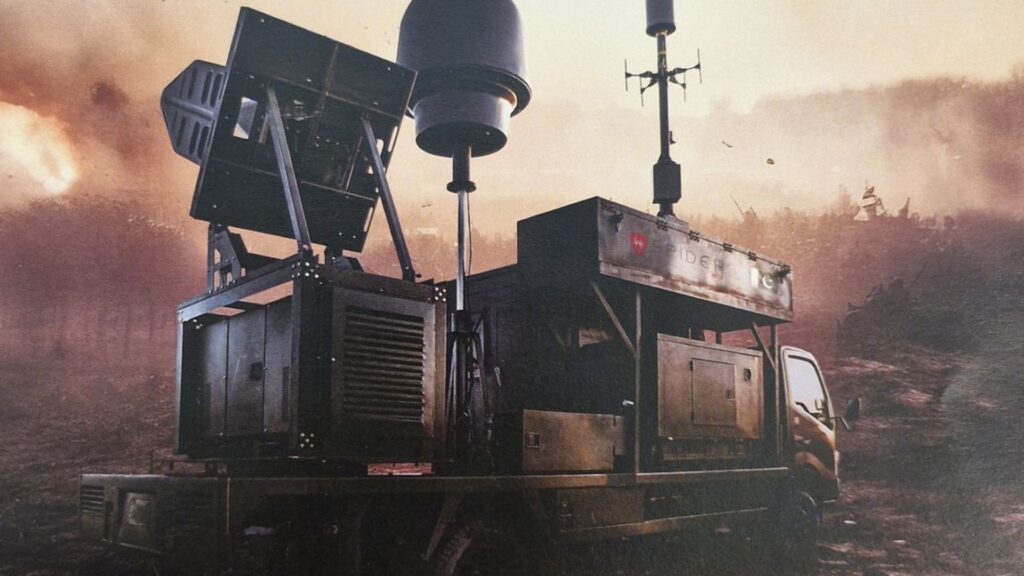
The development and proliferation of loitering munitions since 2020 have forced a significant rethink of anti-air warfare (AAW) planning and procurement.
In the conflicts that have occurred since 2020 (i.e., the Second Nagorno-Karabakh Conflict between Azerbaijan and Armenia, the ongoing Russia-Ukraine War, the most recent Indo-Pak Conflict, and the ongoing US-Iran War), loitering munitions have proven that the traditional cost barriers to conducting long-range, high-impact strikes at scale no longer stand.1
In addition, the cost of stopping loitering munitions and drone swarms with traditional AAW solutions – notably surface-to-air missiles (SAMs) – is now prohibitive relative to the scale and intensity that these emergent threats can impose. For example, the cost of a single Shahed-style loitering munition could be within $50,000, while the SAM interceptor could start at $500,000. Aside from SAM depletion, there is no feasible way of ensuring that there are enough traditional SAMs to stop every loitering/swarming drone; however, when the latter is launched at a scale of tens of thousands per volley, even marginal success rates of 5-10% can have devastating effects on the recipient. For example, it would only take one or two loitering munitions to neutralize a high-value air defence radar.
Thus, loitering munitions pose a threat that combines scale, reach, and cost-asymmetry risks, where even a dismal <10% hit rate can degrade the recipient’s warfighting. In effect, such threats necessitate specialized solutions capable of countering these drones on a comparable scale and cost.
To its credit, the Pakistan Air Force (PAF) had caught onto the risk of loitering munitions and swarming drone proliferation, leading to investments in electronic warfare (EW)-based counter-unmanned aerial system (C-UAS) solutions (documented in this Quwa Plus article from 2024). In addition, the PAF and the Pakistan Navy (PN) have each begun exploring high-powered microwave (HPM) and high-energy laser (HEL) C-UAS solutions for scalable, wide-area interception purposes.
However, this report contends that the loitering munition and swarming drone threat is developing at a pace that will force each of Pakistan’s service arms to accelerate C-UAS investments. In the east, not only is India investing in many new loitering munition designs – including jet-powered one-way effector (OWE) systems that offer cruise-missile-like range and speed at a much lower cost – but it is backing these purchases with public- and private-sector industrial initiatives to drive rapid stock replenishment. Put another way, India is preparing for a conflict where it will use loitering munitions at a scale and an intensity aimed at rapidly deprecating Pakistan’s warfighting. In the west, the Taliban and its branches have been working towards loitering munition and drone swarming tactics that, while not as intense as, say, an Indian-led one, could result in pervasive long-term attacks on key installations.
In addition to expanding EW and directed energy weapon (DEW)-based C-UAS coverages, this report also draws on the recent advent of Ukrainian interceptor drones as well as retrievable airborne C-UAS concepts that Pakistan can explore using the groundwork it already has. While Pakistan’s defence and national security decision-makers adapt to these shifts, both domestic and foreign vendors alike have an opportunity to advance these conversations by moving rapidly with solution offerings.
India’s Pursuit for Munitions Inventory Depth & Replenishment
As of 2026, India’s armed forces operate over 140 distinct unmanned aerial system (UAS) platforms across nine main categories, with loitering munitions (LM) driving the bulk of growth since the conflict in May 2025.2 During that conflict, both Pakistan and India had used LMs, with the latter employing a wide assortment of systems, including, but not limited to, Israel Aerospace Industries (IAI) Harop and Harpy anti-radiation LMs, WB Electronics Warmate LMs, Solar Industries Nagastra-1 man-portable LMs, QinetiQ Banshee Jet 40 decoys, and Elbit SkyStriker LMs.
India had utilized its LMs for several missions, including suppression of enemy air defences (SEAD) operations. One apparent SEAD tactic involved using QinetiQ Banshee Jet 40 decoys as a means to force the PAF to activate the surveillance and targeting radars of its HQ-9BE and HQ-16 SAMs, after which India intended to send Harop and Harpy LMs to strike the exposed emitters.3 On the defensive side, the PAF employed ‘soft-kill’ EW-based measures (e.g., jamming the communications and/or the satellite navigation/guidance links) of incoming drones. Open-source intelligence (OSINT) reports had also identified the use of Oerlikon 35 mm air-defence guns (AAGs) paired with Skyguard radars as a means of hard-kill defensibility.
Quwa Pro
See Where Emerging Defence Markets are Moving
Quwa Pro goes beyond tracking programs and equipment by explaining the policies, incentives, industry dynamics, and competitive pressures shaping South Asia's defence markets.
Subscribe Already a subscriber?Sign in