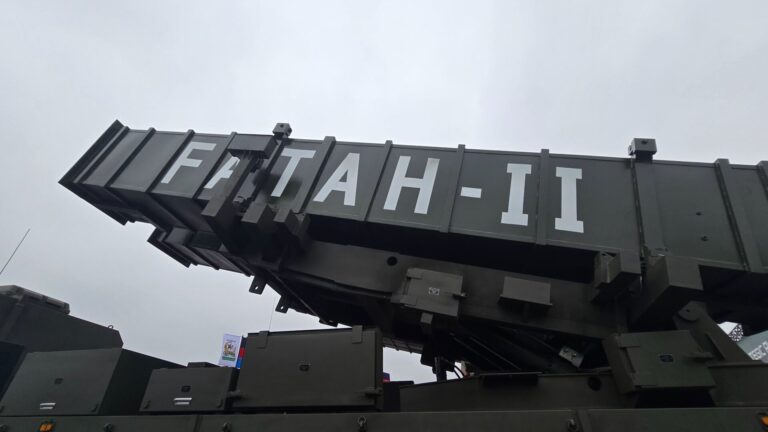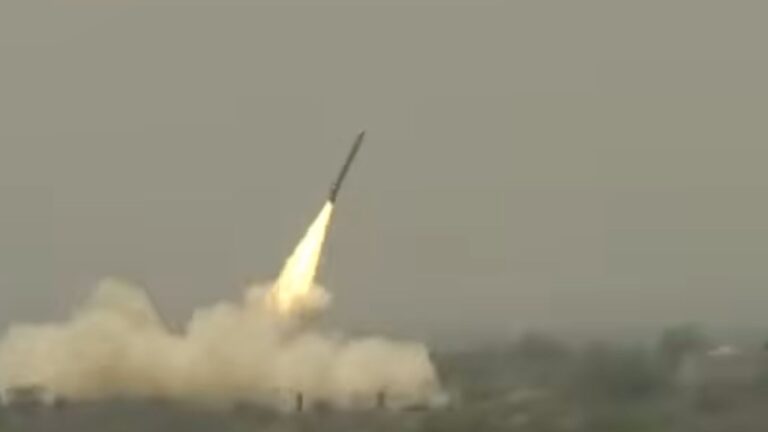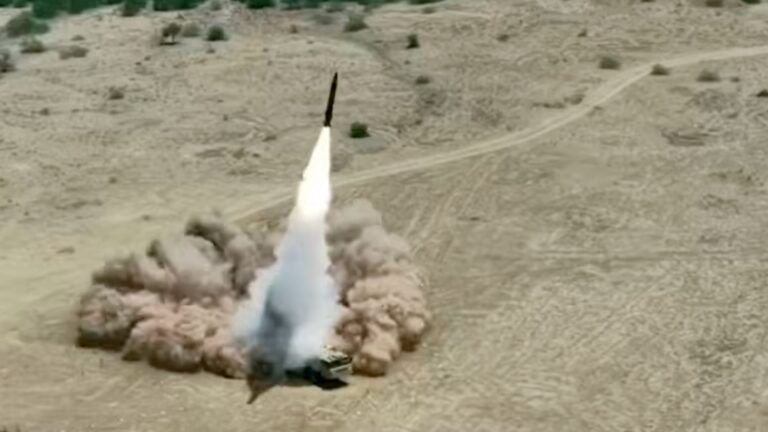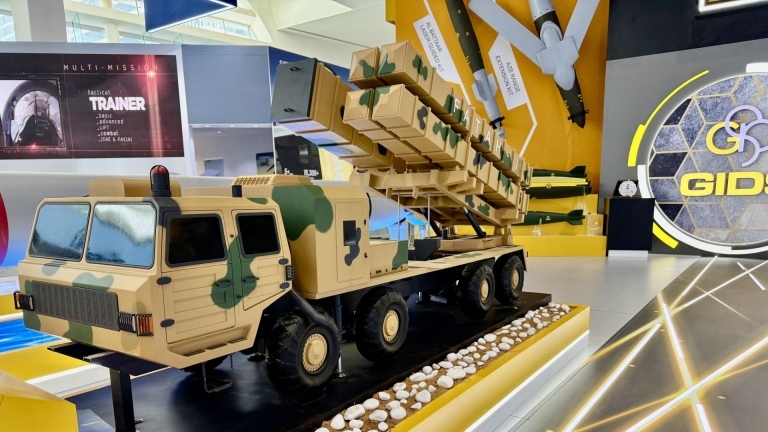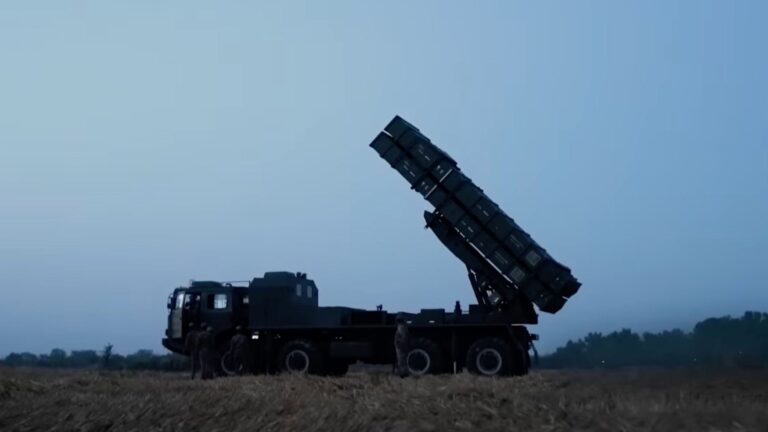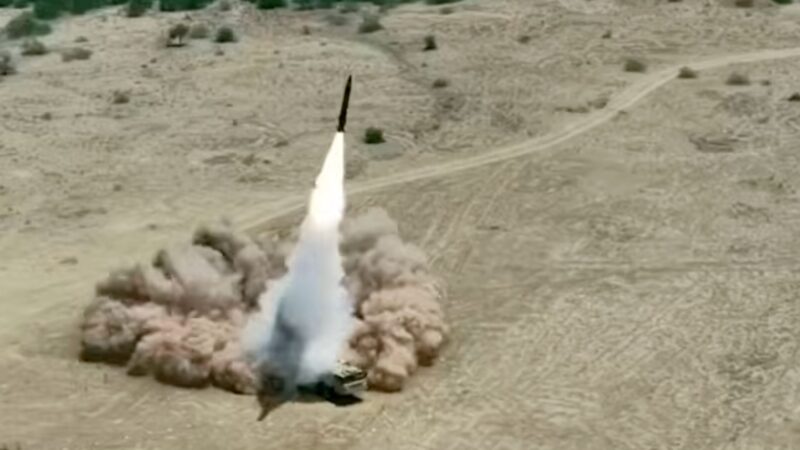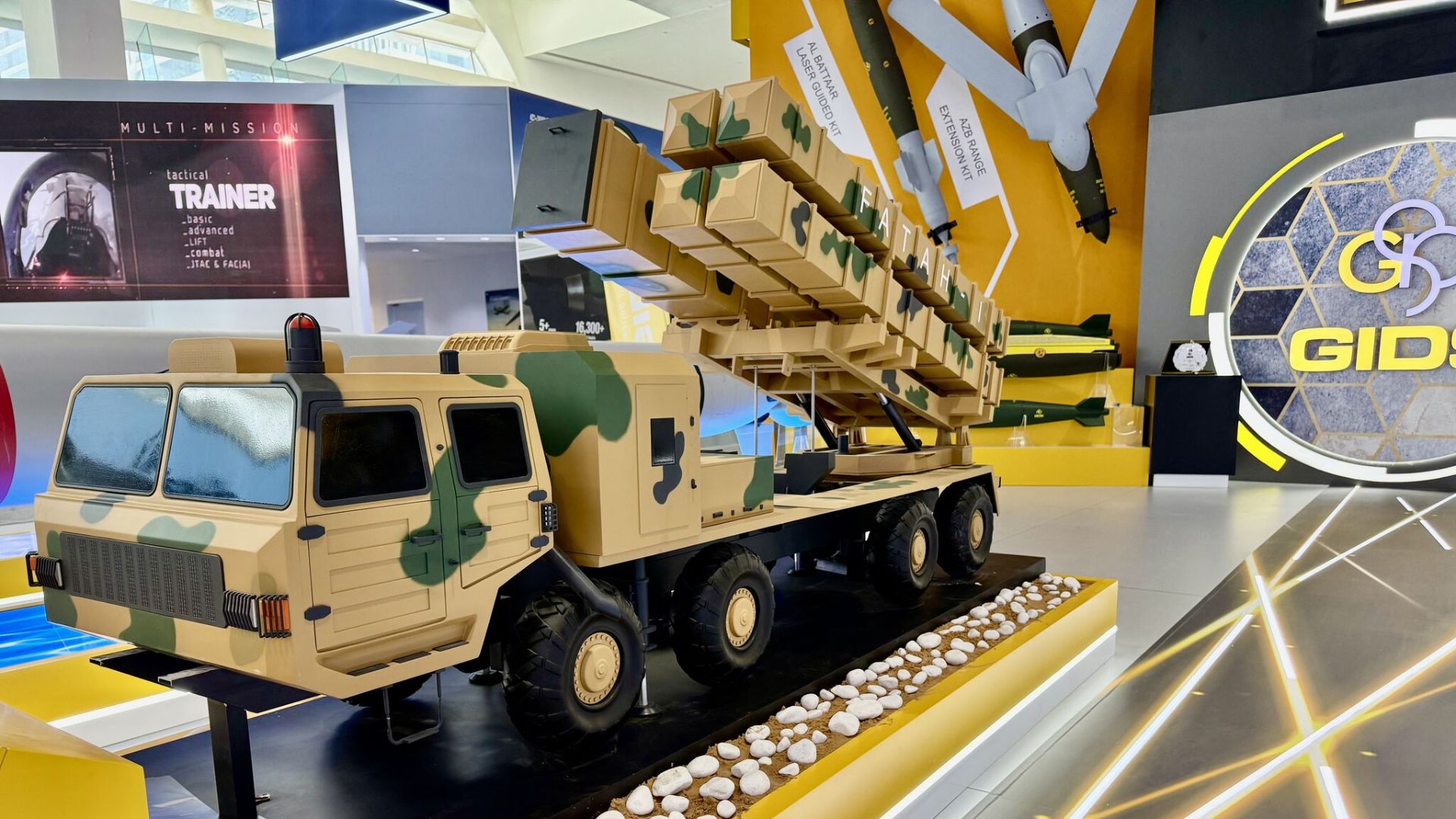

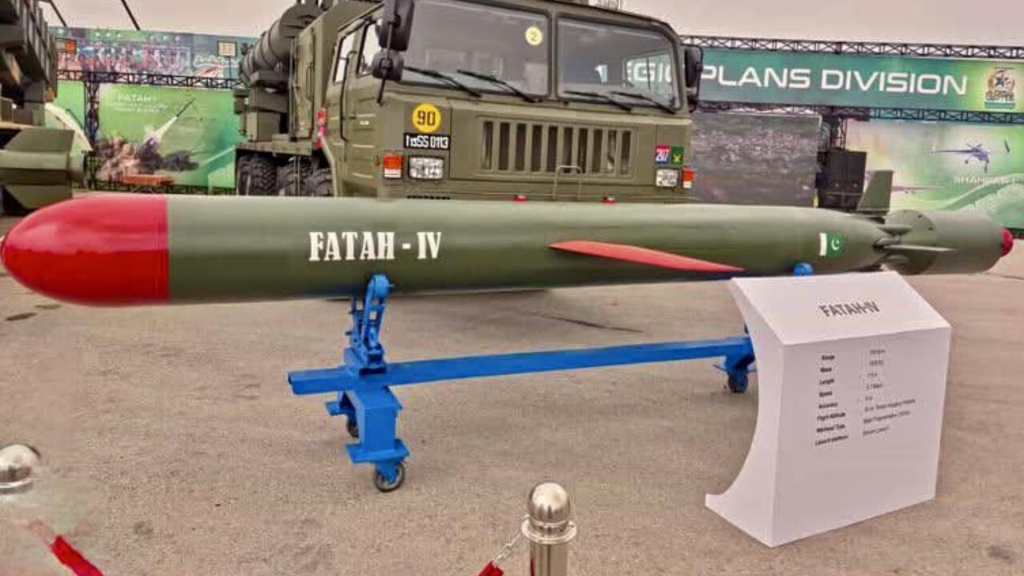
The Fatah-4 is Pakistan’s longest-range conventional cruise missile – a 750 km ground-launched cruise missile (GLCM) derived from the strategic Babur platform and designed for terrain-hugging deep-strike penetration. On 12 August 2025, the Pakistan Army (PA) revealed the Fatah-4 as a land-attack cruise missile with a range of 750 km.
On 14 May 2026, the Army Rocket Force Command (ARFC) conducted a successful training fire of the Fatah-4, confirming that the weapon system has achieved operational readiness. The Fatah-4 is the longest-range member of the Fatah missile family and the deepest-striking asset in the ARFC’s disclosed inventory.
Know What Defence Buyers in Will Need Next
See emerging requirements, likely suppliers, and routes to market across Pakistan, MENA, and fast-moving defence technologies, before demand becomes obvious.
Fatah-4 Specifications
| Parameter | Specification |
|---|---|
| Type | Ground-Launched Cruise Missile (GLCM) / Land-Attack Cruise Missile (LACM) |
| Developer | NESCOM / GIDS |
| Range | 750 km |
| Total Mass | ~1,530 kg |
| Length | ~7.5 m |
| Diameter | ~0.5 m |
| Cruise Speed | Mach 0.7 |
| Minimum Flight Altitude | 50 m (terrain-hugging) |
| Warhead Weight | 330 kg |
| Warhead Type | Blast fragmentation |
| Accuracy (CEP) | 5 m |
| Guidance | GPS/GNSS-aided INS with DSMAC; advanced avionics and navigational aids |
| Propulsion | Miniature turbojet |
| Naval Derivative | Harbah NG ASCM (common Babur-derived platform) |
| Status | Operational — ARFC training fire 14 May 2026 |
Babur Lineage and Conventional Conversion
The Fatah-4 derives from the Babur cruise missile platform – one of Pakistan’s most mature missile programmes. The Babur GLCM has been in development since the early 2000s and has undergone multiple iterations, with the Babur-1 and Babur-2 serving as strategic deterrence assets under the Strategic Plans Division (SPD).
The Fatah-4 represents the conventional adaptation of this platform. By re-designating a Babur derivative under the Fatah family, the PA is signalling that the ARFC now has access to cruise missile technology – previously the exclusive domain of Pakistan’s strategic forces – for conventional battlefield use.
This conversion follows a well-established pattern in missile-armed states. The United States, Russia, and China all maintain conventional variants of strategic cruise missile platforms. The Fatah-4’s 750 km range gives the ARFC the ability to strike deep-rear targets without requiring a nuclear escalation.
DSMAC Guidance and Precision
The Fatah-4 employs a multi-mode guidance suite comprising GPS/GNSS-aided inertial navigation with Digital Scene Matching Area Correlator (DSMAC) for terminal precision. DSMAC works by comparing a real-time image of the terrain below the missile with a pre-loaded digital map database.
This combination yields a claimed CEP of 5 metres – the most precise of any Fatah-series weapon. The 5 m CEP enables the Fatah-4 to engage hardened point targets, including aircraft shelters, buried command bunkers, and reinforced radar installations.
The ISPR’s description of “advanced avionics and state of the art navigational aids” in the 14 May 2026 announcement likely refers to this multi-mode guidance architecture. The DSMAC component provides GPS-independent terminal guidance — if GPS/GNSS signals are jammed or degraded in the target area, the DSMAC system can guide the missile to its aimpoint using terrain-matching alone.
Terrain-Hugging Flight Profile
The Fatah-4 is designed for low-altitude, terrain-following flight at a minimum altitude of 50 m. This flight profile exploits the curvature of the earth and ground clutter to delay detection by ground-based radar systems.
The subsonic cruise speed of Mach 0.7 may appear slow relative to the supersonic Fatah-2 or Fatah-3. However, the Fatah-4’s survivability mechanism is not speed but stealth – it avoids detection rather than outrunning interceptors. The terrain-hugging approach is a proven tactic used by the US Tomahawk, Russian Kalibr, and Chinese CJ-10 cruise missiles.
The miniature turbojet propulsion system provides the sustained thrust needed for a 750 km-range subsonic cruise. Turbojet engines offer favourable fuel efficiency at subsonic cruise speeds and can operate reliably at low altitudes where air density is high.
Complementary Attack Vector
The Fatah-4 offers a qualitatively different attack vector from the other members of the Fatah family. Where the Fatah-1 GMLRS and Fatah-2 SSM attack from above – descending at supersonic terminal velocity – the Fatah-4 approaches at low altitude.
This diversity of attack vectors is operationally significant. An adversary defending against the Fatah family must simultaneously maintain high-altitude BMD coverage, mid-altitude supersonic-cruise intercept capability, and low-altitude cruise missile detection and engagement. No single air defence system architecture can optimise for all three threat axes simultaneously.
Harbah NG: Naval Derivative
The Fatah-4 shares its Babur-derived platform lineage with the Pakistan Navy’s Harbah NG anti-ship cruise missile (ASCM). Both systems use the same core airframe, turbojet propulsion, and navigation architecture.
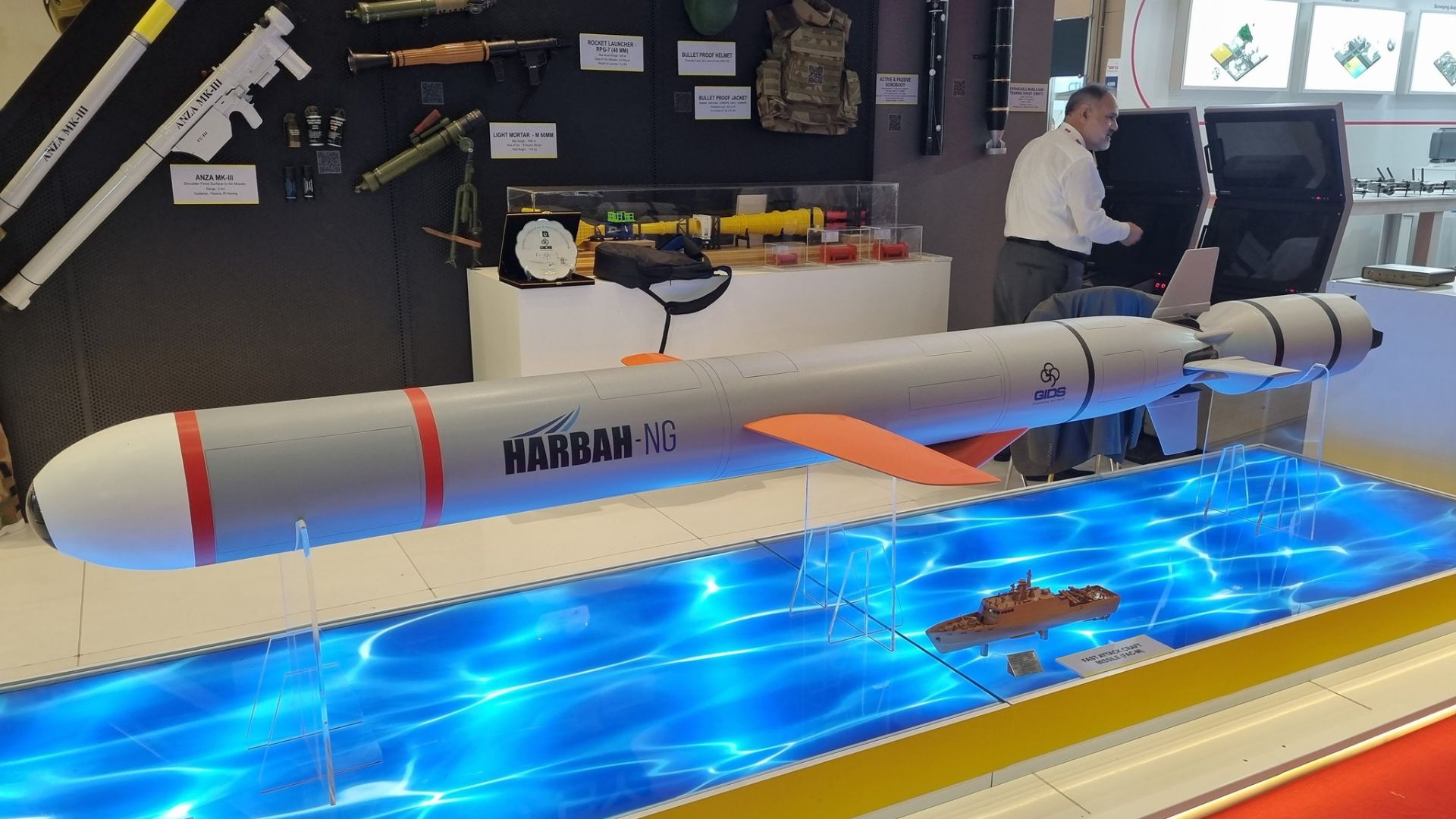
This common-platform relationship mirrors the Fatah-2/SMASH ASBM pairing. By building both land-attack and anti-ship variants from the same baseline, NESCOM can sustain higher production volumes while reducing per-unit costs.
ARFC Operational Timeline
The Fatah-4’s path from reveal to operational readiness has been rapid. The system was first publicly revealed on 12 August 2025 as part of the broader disclosure of the ARFC’s strike portfolio. Less than nine months later, the ARFC conducted an operational training fire — confirming that the underlying Babur cruise missile technology’s maturity enabled accelerated integration into the ARFC’s conventional strike force.
| Date | Milestone |
|---|---|
| August 2025 | Fatah-4 GLCM publicly revealed alongside the ARFC’s full strike portfolio |
| May 2025 | India-Pakistan conflict exposes requirement for conventional deep-strike |
| April 2026 | Fatah-2 ARFC training launch — first publicly confirmed ARFC SSM firing |
| 14 May 2026 | Fatah-4 ARFC training fire — confirms operational readiness of 750 km GLCM |
Doctrinal Role Within the ARFC
The Fatah-4 occupies the deepest-strike tier of the ARFC’s layered strike architecture. Its 750 km range enables the ARFC to hold targets at operational and strategic depth.
The shift from strategic Babur to conventional Fatah-4 also has implications for Pakistan’s nuclear threshold. By giving the PA a conventional 750 km-range cruise missile, the Fatah-4 expands the range of scenarios that can be addressed without crossing the nuclear threshold – consistent with the post-Bunyan-un-Marsoos emphasis on conventional strike depth over nuclear escalation.
Quwa Pro – Defence Market Intelligence
See Where Defence Demand and Technology Are Moving Next
Track procurement priorities across Pakistan, the Gulf and wider MENA, and Central Europe. Follow emerging vendors, drones, AI, C-UAS, and affordable precision weapons, and see how lessons from today’s conflicts are reshaping military requirements and market opportunities.
Featured & Trusted By







Frequently Asked Questions About the Fatah-4
What is the range of the Fatah-4?
The Fatah-4 has a stated range of 750 km, the longest in the Fatah family.
What is the speed of the Fatah-4?
The Fatah-4 cruises at Mach 0.7 – subsonic. Its survivability relies on low-altitude terrain-following flight at 50 m rather than speed.
Is the Fatah-4 the same as the Babur?
It is a conventional derivative of the Babur cruise missile platform. The Babur-1/2 serve nuclear deterrence roles. The Fatah-4 adapts the platform for conventional use under the ARFC.
What guidance does the Fatah-4 use?
GPS/GNSS-aided INS with DSMAC for terminal precision, yielding a claimed CEP of 5 metres. The ISPR described the system as equipped with “advanced avionics and state of the art navigational aids.”
Has the Fatah-4 been test-fired?
On 14 May 2026, the Army Rocket Force Command conducted a successful training fire of the Fatah-4 GLCM. The ISPR confirmed the missile is “capable of engaging long range targets with high precision.” The use of the term ‘training fire’ rather than ‘test fire’ indicates that the ARFC is conducting operational training with the Fatah-4 as a fielded weapon system.
Related Profiles
- GIDS Fatah Missile Family – Overview of the full Fatah-series and ARFC integration.
- Fatah-1 GMLRS – The 140 km-range combat-proven guided rocket system.
- Fatah-2 Surface-to-Surface Missile – The 400 km-range tactical ballistic missile.
- Fatah-3 Supersonic Cruise Missile – The ramjet-powered SSCM revealed in May 2026.
- Harbah NG Anti-Ship Cruise Missile – The PN’s naval derivative sharing the Babur platform.
- Pakistan Reveals Fatah-4 LACM – Quwa’s analysis of the August 2025 reveal.
- Beyond Nuclear: Pakistan’s Shift to Mass-Produced Conventional Strikes – The strategic context for the Babur-to-Fatah-4 conversion.