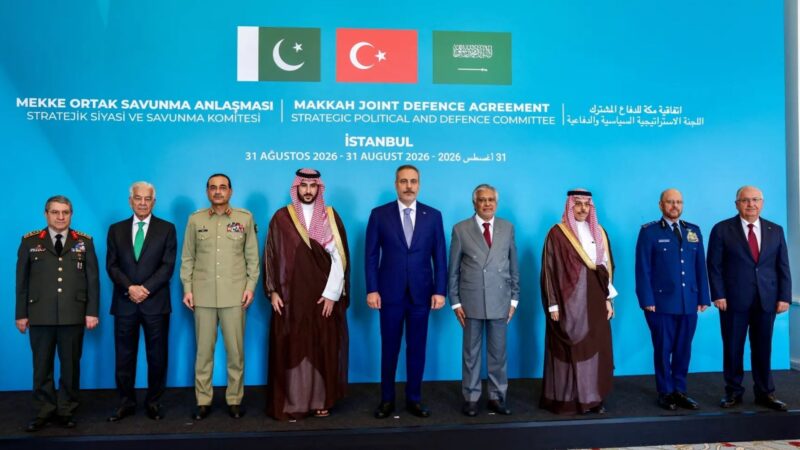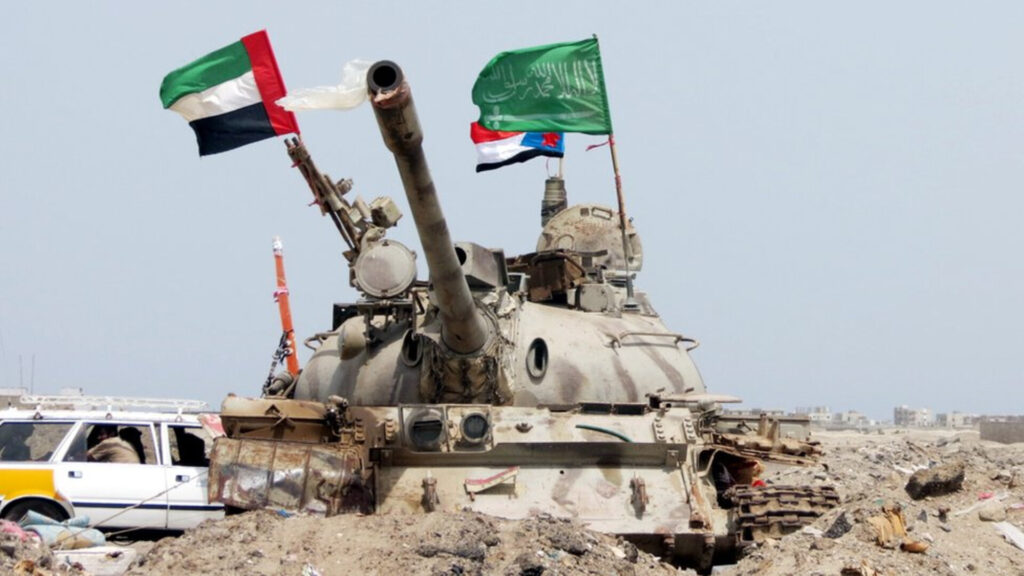
On 05 October, Saudi Arabia, Pakistan, and Türkiye agreed to accelerate military deployments to the kingdom under the Makkah Joint Defence Agreement (MJDA), as fighting intensified between Saudi-backed Yemeni forces and the Houthis. The deployments remain subject to each member’s national legislation.
Signed on 07 August, the agreement treats an armed attack against one member as an attack against all three. Though the latest decision seemingly moves that commitment towards practical implementation, it is currently unclear whether these new shifts will fulfil those aspirations.
Pakistan and Türkiye Define Their Roles
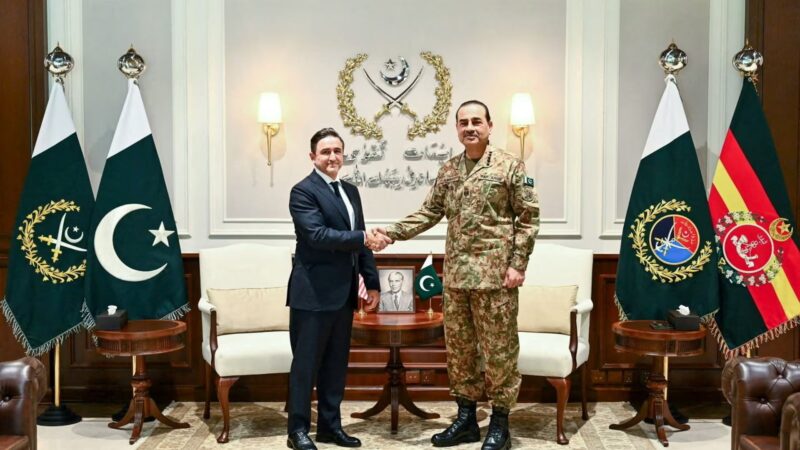
The head of Pakistan’s Inter-Services Public Relations (ISPR), the Pakistani armed forces’ press wing, Lieutenant General Ahmed Sharif Chaudhry, confirmed to CNN on 07 October that Pakistani military personnel were already in Saudi Arabia, but in the context of a preexisting, historical presence. In other words, he did not clarify whether, or to what extent, additional Pakistani personnel were active in relation to the MJDA and, just as importantly, Riyadh’s apparent expectation of allied support from Pakistan.
Reuters reported on 02 October – albeit citing an unnamed Pakistani official – that Pakistan had 30,000 to 40,000 soldiers in Saudi Arabia, mainly for defending Saudi borders and other defensive purposes, such as air defence. However, on 06 October, Pakistan’s Ministry of Information and Broadcasting challenged that reporting, disputing its numbers and details while stating that operational information was confidential. It did not provide an alternative troop figure.
Regarding Türkiye, Reuters reported on 07 October that assistance was mainly technical and defensive, including equipment, intelligence support, drone operators, planning and logistics. Officials said this would largely proceed bilaterally while the new pact awaited parliamentary ratification. Moreover, the ruling AK Party’s spokesperson, Ömer Çelik, said submission to parliament was expected within days.
Middle East Eye’s (MEE) 06 October reporting, summarized by Turkish Minute, described plans for additional equipment, technicians and a command base, with special forces, pilots and aircraft potentially following parliamentary authorization. MEE’s sources also said Turkish technical teams, air defence systems and electronic warfare equipment had been present since last year.
The reported mission would protect Riyadh, Makkah and Madinah, alongside the western section of Saudi Arabia’s East-West oil pipeline, in coordination with Saudi and Pakistani forces. A senior Turkish official said Ankara had no plans to intervene directly in Yemen. Pakistan has also not publicly announced a decision to deploy troops in Yemen in a fighting capacity, with its government emphasizing political engagement.
What is Slowing the Makkah Pact?
There are several friction points between the MJDA and its practical implementation – and, to be frank, its long-term viability and relevance.
The first friction point is that the MJDA was newly constituted. So, there is a gap between what it ought to do and what it can do, particularly given the work still required on institutional systems and joint-force integration. Even if all three founding members were fully – and this is something worth unpacking later – aligned on the purpose of the MJDA, there is a lead time required to build the institution such that it will matter in major conflicts, such as the ongoing US-Iran war and the Yemen crisis.
Quwa Plus
Go Beyond the Headlines on Pakistan’s Defence and Security.
Quwa Plus gives you deeper reporting, briefings, and analysis on Pakistan’s defence programs, foreign policy, national security, and regional strategy. Follow the developments that matter to professionals, analysts, and serious readers tracking Pakistan’s security landscape.
Join ($29.99/Year) Already a subscriber?Sign in