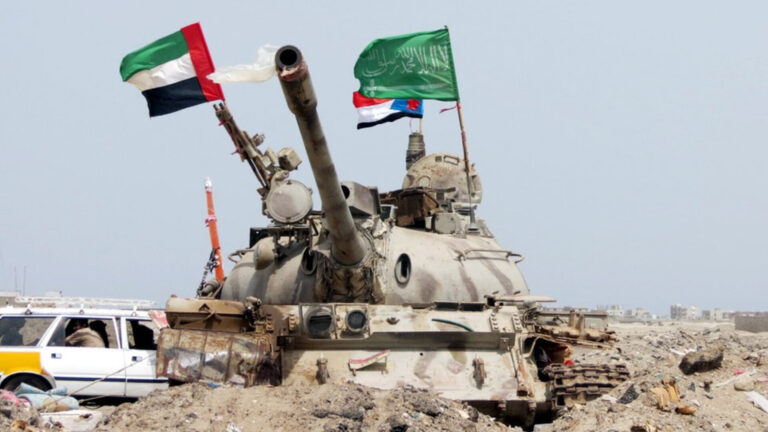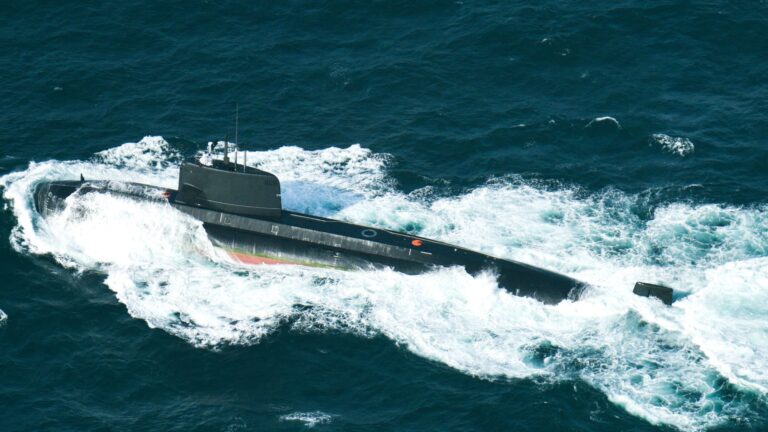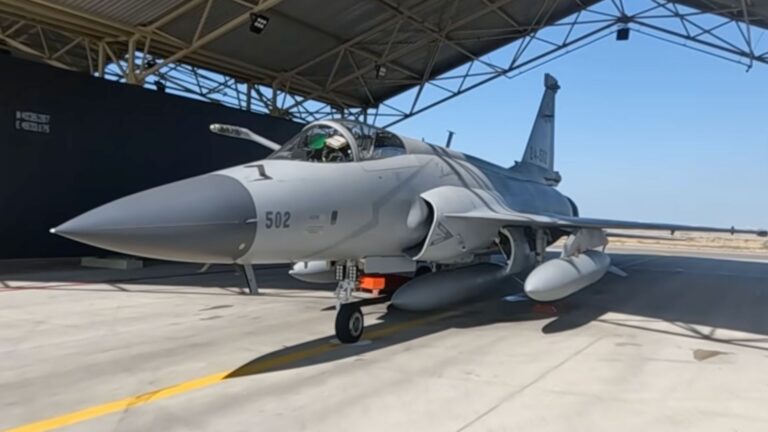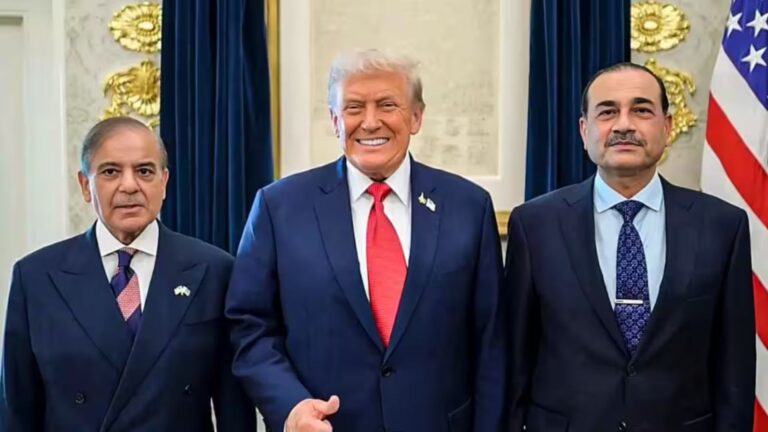

The common thread tying every Pakistani defence procurement program – from imports to domestic production to indigenous, bottom-up research and development (R&D) – is Pakistan’s lack of fiscal capacity.
Of course, in the Pakistani defence discussion sphere, there are allusions to ‘hidden’ funding, but not once have these perceptions overridden the cold, documented trail of Pakistan seeking financing/loans and direct cash assistance for new arms – from the US aid packages, French supplier credits, and Chinese loans to the post-2001 Foreign Military Financing (FMF) and Coalition Support Fund (CSF) transfers.
Pakistan asking for financial assistance to fund arms procurement evidently stems from somewhere, i.e., its inability to source cash upfront. Compared to India, which is clearly a cash-rich buyer, Pakistan’s fiscal constraints are acutely detrimental.
Get the Full Picture on Pakistan’s Defence and National Security
Get dedicated Pakistani defence news, force analysis, procurement tracking, and national security policy insight, backed by more than a decade of documented reporting and depth general news coverage cannot match.
First, the constraints prevent Pakistan from procuring the latest weapons in high enough volumes. Second, India – being the more affluent buyer – leverages its position to restrict Pakistan’s access to such arms. Consequently, Pakistan relies more on China, which (1) obviously has zero desire to pursue India’s market and (2) is willing to offer loans and, in some situations, other concessions that help smooth the procurement process.
The immediate – and correct – answer as to why Pakistan has difficulty financing arms is “the economy.” However, the majority of discourses in the media and discussion circles of Pakistan’s economy rarely delve into the mechanics of why it does not generate the cash Pakistan needs to support not just defence, but other critical areas, like education, health, and human development and security collectively.
Consider Pakistan’s federal budget for fiscal year (FY) 2026-2027, which is costed at USD $67.4 billion. The single biggest item is the interest on debt – i.e., USD $28.91 billion or 42.9% of the budget – followed by the defence budget at $10.77 billion or 16%. The remaining items (i.e., grants and transfers, pensions, and subsidies) constitute the rest of the budget.
While multi-billion-dollar items are worth scrutiny, no amount of auditing and optimizing them will offset the top-line item: interest. Of that interest, 37.2% (or $25.06 billion) goes into domestic debt, while foreign debt interest constitutes 5.7%. Any serious policymaker, regardless of their priority (be it defence or development) ought to investigate that — why is Pakistan paying so much on that debt? Where did that debt come from? And is there a way to escape it?
This particular debt comes from the Government of Pakistan issuing investment bonds, treasury bills, “Islamic” bonds (e.g., Sukuk and Ijara), and other national or state savings schemes. Pakistan generally leans on these instruments to close its fiscal gap because, most of the time, its federal budget’s spending exceeds revenue.
When facing this issue, a common complaint is that the country does not collect enough in tax revenue, and, in a way, this is true. However, past discourses on this matter used to construe the viable tax base as solely the wage earner, labourer, or small business or entrepreneur (e.g., digital freelancers). Targeting – and, essentially, overtaxing this base – does not support Pakistan’s health. Instead, it worsens the situation for those who will need that income the most to support their daily needs. Rather, Pakistan’s actual, viable tax base is much broader, with most big players not contributing their share.
However, before discussing the tax base, it is worth unpacking how damaging Pakistan’s domestic debt-stacking habits are and, more importantly, how these harmful policies can also misdirect or misrepresent general economic health.
First, these domestic debt instruments are largely sold to Pakistani commercial banks – and these banks constitute the largest sector of Pakistan’s Stock Exchange (PSX) (i.e., around 25%). Moreover, these banks hold 78% of all government securities, which now amount to around USD $137 billion. Thus, when the banks post high earnings/yield, this is mostly a result of government debt. In a way, the banks have an incentive to draw upon the federal exchequer. However, where it gets worse is that a major chunk of PSX performance is tied to these banks (i.e., a quarter of the PSX’s capitalization). So, when the government points to strong PSX performance as a positive indicator, that could be a result of the public exchequer bleeding more of its fiscal capacity to debt interest. Stated another way, the government can have an incentive to take on more debt as a way to use PSX “health” as a positive economic indicator.
Second, there is no high-level policy conversation on how to freeze this domestic debt. It is clear that Pakistan cannot keep up with the payments; hence why it keeps borrowing – it is stuck in a debt trap, borrowing to pay the interest on its existing borrowing. Whether it is for defence, development, or even general economic stability, freezing and controlling this debt should be the priority. This is where the Pakistani public ought to expect (or mandate) its leaders to focus on before any other mechanism (including expanding the tax base). Granted, the best solutions might be ‘out of the box’ and unconventional, but considering Pakistan’s current geo-strategic situation, they could be worth pursuing. Pakistan’s total domestic debt is USD $213 billion. It could seek China’s support in freezing and shifting to the Chinese state. Pakistan could request to repay that debt over 20 to 25 years in fixed sums. Of course, China would want more.
However, this is where Pakistan can leverage the freed fiscal capacity to both deliver on Beijing’s interests on one end, and support its strategic needs on the other. For example, over those 20-25 years, Pakistan could award Chinese companies contracts for defence, infrastructure programs, and other concessions. Thus, the Chinese receive $10 billion a year in debt repayments (i.e., their money) and, additionally, lucrative development programs that will amount to billions each year. Doing so would award China roughly a quarter of the federal government’s net revenue, but in this case, Pakistan would see that money support its defence and development in lockstep.
That said, even if Pakistan could control the domestic debt, it would also need to control the fiscal gap (i.e., eliminate it). This is where the discussion about expanding Pakistan’s tax revenue would matter, especially in terms of who carries the burden. Today, around 58% of tax revenue comes from manufacturing and mining, i.e., the two industries that, at this moment, have the highest export potential (i.e., providing Pakistan the ability to build foreign or hard-currency reserves, which is another issue that must be addressed).
Manufacturing and mining constitute about only 13.5% of Pakistan’s total gross domestic product (GDP). What makes up Pakistan’s economy? It is agriculture and wholesale and retail, which make up 24.1% and 19.0% of the GDP, respectively. Moreover, agriculture contributes less than 1% of Pakistan’s total tax revenue, while retailers pay roughly 0.5% of federal tax collections. And this shows in the tax-to-GDP ratio, with federal returns reaching 10.3% (and 1.0% provincially) in FY2025-26. In fact, despite the derision in discussions, salaried workers pay more taxes than retailers – and this is in addition to the sales tax (which disproportionately consumes the bulk of salaried and labour income as they spend a bigger share of their earnings on basics). Moreover, of domestic sales taxes, electricity makes up the highest share at 21.9%.
So, the rent-seeking sectors (which will post strong revenues by having a captive local market for food and essentials) do not pay taxes, while the exporters do. Thus, one can see why wealthy and overseas Pakistanis prefer pouring their money into land (literally, via real estate) rather than building factories. The factory owner must pay tax on goods built and sold and tax on the electricity they will need to power their facilities. However, Pakistan needs large-scale manufacturers as they offer a scalable way to generate jobs and, as a result of those jobs, cascading economic growth in services (to support those workers and their families’ increasing needs).
Yes, the tax net must be overhauled to draw on the biggest economic sectors, and the purpose of doing so is twofold. First, taxing agriculture and wholesale/retail is a way to collect more revenue. Second, it helps disincentivize those industries and, if the development policy involves providing concessions (e.g., tax breaks, subsidies, etc.) to manufacturing, it re-incentivizes domestic investment in manufacturing. In practice, the government would need to reduce (or largely eliminate) taxation on manufacturing and, instead, place the burden on agriculture and retail. However, that does not necessarily remove manufacturing from the tax base; if manufacturing jobs grow, then the workers could be taxed (fairly, not excessively). Overall, the key is to drive more manufacturing exports, which will be key to sustaining the foreign currency stress of repaying China.
Pakistan already possesses the foundations for strong industrial development. So, for example, the nuclear program (for which Pakistan developed the entire fuel cycle) has specific industrial inputs – e.g., heavy fabrication, welding and non-destructive testing, fluorine chemistry, and so on – that can be scaled out horizontally to drive growth and exports, as detailed in Feroz Hassan Khan’s Eating Grass: The Making of the Pakistani Bomb (Stanford University Press, 2012), Mansoor Ahmed’s Pakistan’s Pathway to the Bomb (Georgetown University Press, 2022), and King’s College London’s Project Alpha. Pakistan can enter many industries such as refrigerants, corrosion-resistant materials, gas processing, pharmaceutical ingredients, and so on.
One will notice that this discussion veered heavily into public finance and economics; however, that in itself is the issue. To achieve a stronger defence outlay, Pakistan will need to engage in such ambitious and intricate economic moves. Not only that, but in addition to the economics, certain political steps will also need to be considered, e.g., reviewing the value of the provinces and whether, instead, authority should be shared between empowered local districts anchored to a single national state. Because local authority – and greater local freedom – could be the key to greater stability, equitable distribution of resources, and broader bottom-up empowerment.
It is if (and, hopefully, when) Pakistan engages in productive statescraft, economic and political reforms, and industrially-led nation-building, it will generate the revenue for its defence requirements. Not only that, but the industrial expansion will also lead to R&D growth that can tie into defence, leading to more advanced indigenous solutions.
Thus, the direction to a militarily stronger Pakistan is intrinsically tied to an economically healthier and politically harmonious one. However, the common refrain to this discussion is often that the policymakers at the helm do not care. The issue with that thought is that if one accepts the course of the status quo, they will face a country whose fiscal budget is ever more consumed by interest-ridden debt, compounded further with a generally weak currency (relative to others) and a restive population whose anxieties will cost Pakistan, both in lives and money. Put another way, the current direction points to a future where Pakistan’s capacity to fund its military requirements is more strained, resulting in major trade-offs between priorities.
Quwa Plus · In-Depth Pakistan Coverage
Understand Pakistan’s Defence and National Security in Unmatched Depth
Understand what Pakistan is acquiring, how its armed forces are evolving, and where national security policy is heading through dedicated defence news, force analysis, procurement tracking, Pulse Check briefings, and more than a decade of documented reporting.
Featured & Trusted By