
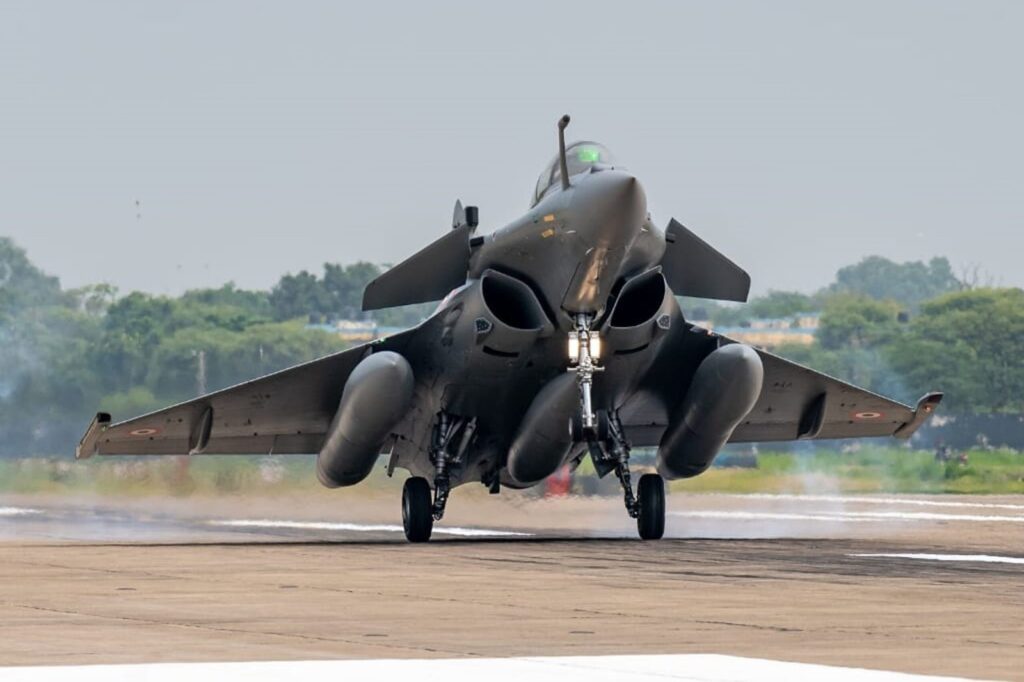
Dassault Aviation has submitted a formal proposal to supply 114 Rafale fighter aircraft to the Indian Air Force (IAF), responding to a Letter of Request (LoR) issued by India in May 2026 under its Multi-Role Fighter Aircraft (MRFA) requirement.
The proposal is now with the Acquisition Wing of India’s Ministry of Defence and the IAF for evaluation. Reports differ on whether it was submitted on 06 or 07 August 2026. Dassault, the French Direction générale de l’armement (DGA) and India’s Ministry of Defence have yet to confirm the filing publicly.
20 Flyaway Aircraft and 94 Built in India
The proposal divides the 114-aircraft order between 20 Rafales delivered in flyaway condition from France and 94 assembled in India. The fleet would comprise a mix of aircraft built to the current F4 standard and the forthcoming F5 configuration.
The value of the proposal has been estimated at approximately Rs 3.25 trillion, or about $34.18 billion. Of this amount, around Rs 1.6 trillion – approximately $16.8 billion – would reportedly flow to Indian industry. A separate figure of $39 billion has also circulated, although this appears to restate the Indian industrial share rather than provide the total value of the contract.
Dassault is bidding alongside MBDA, Safran and Thales, with Tata and Larsen & Toubro identified as the principal Indian industrial partners.
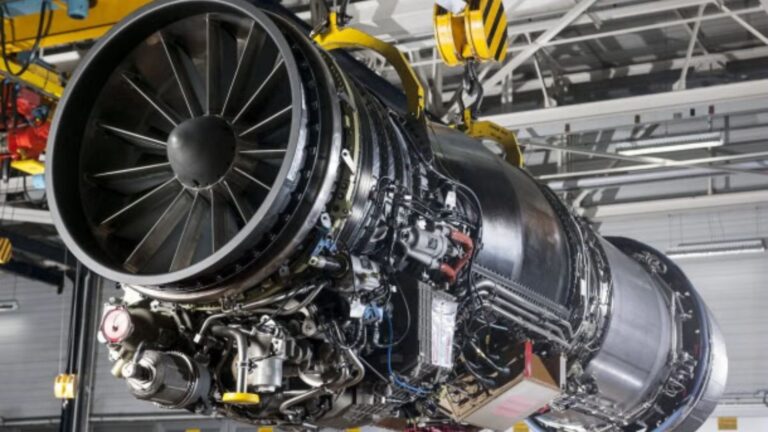
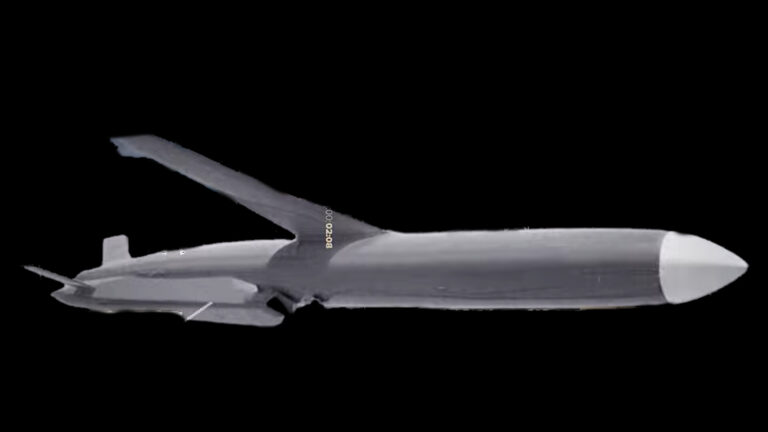
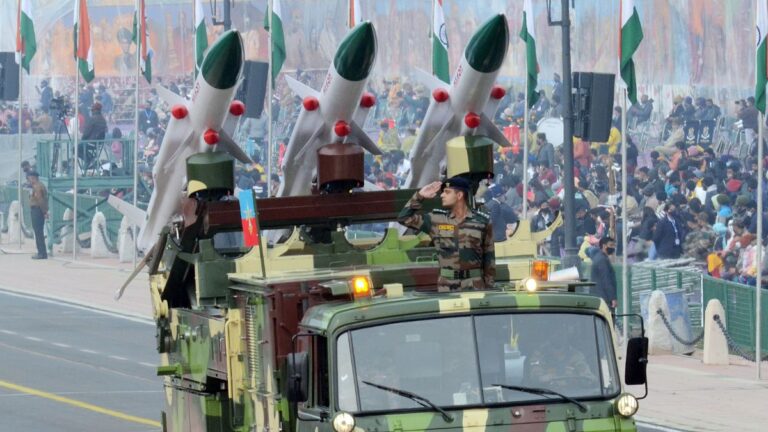
The proposed transfer of technology covers the airframe, engine and avionics, with indigenous content expected to reach 55% to 60% once the production arrangement is fully implemented. India has also stipulated that the aircraft must integrate domestic weapons and secure data links, with variants of the Astra beyond-visual-range air-to-air missile (BVRAAM) specifically identified for integration.
The Software Access India Requested
India has sought access to the Rafale’s software architecture so that it can integrate indigenous weapons, electronic warfare (EW) systems and future upgrades without having to route every modification through the aircraft’s manufacturer.
France has declined to provide access to the systems governing the Thales RBE2 active electronically scanned array (AESA) radar, the Modular Data Processing Unit and the SPECTRA self-protection suite. Paris has cited the protection of intellectual property and the security implications created by India’s continued operation of a large Russian-origin equipment inventory.
The French counterproposal is to provide controlled software interfaces. Under such an arrangement, India could pursue the integration of domestic systems, although Dassault would remain the integrating authority for each new weapon.
France requested additional time, until mid-August 2026, to submit its formal response to the LoR. Pricing negotiations are expected to begin after that filing, with the contract targeted for signature in late 2026 or early 2027.
The End of the MRFA Competition
The MRFA requirement began as an open competition, but the aircraft previously expected to contest it were not evaluated against the Rafale during this round.
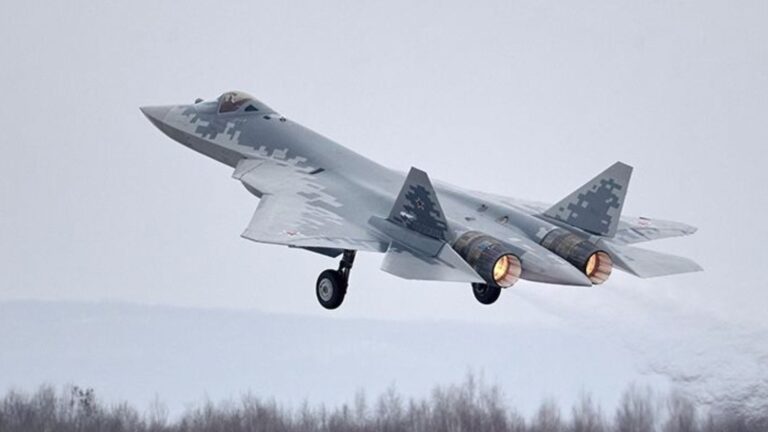
The Boeing F-15EX, Saab Gripen E/F, Lockheed Martin F-21 and Eurofighter Typhoon had all been considered prospective contenders. Russia’s Sukhoi Su-57 remains the subject of a separate offer. India ruled out the F-35A amid trade friction with Washington and rejected the Korea Aerospace Industries KF-21 Boramae.
The IAF currently operates approximately 31 fighter squadrons against a sanctioned strength of 42.5, with the last of its MiG-21s retiring. Indian reporting has cited Operation Sindoor in May 2025 as having reinforced the case for a direct government-to-government acquisition instead of another open competition.
India already operates 36 Rafales and has established the corresponding basing and support infrastructure at Ambala and Hasimara. Ambala can accommodate two additional Rafale squadrons without requiring new construction.
A Known Aircraft Against Competing Objectives
The MRFA outcome follows the IAF’s established preference for modernizing around aircraft types already in service. Choosing the Rafale would give the service access to trained aircrew, established maintenance lines and two equipped operating bases, removing much of the induction risk associated with bringing an entirely new fighter into service while the IAF remains well below its sanctioned squadron strength.
However, the acquisition must now satisfy two additional objectives that were not central to the aircraft’s original selection.
The first concerns industrial policy. The proposed work share for Tata and Larsen & Toubro, combined with an indigenous-content target of 55% to 60%, is intended to channel a significant portion of the programme into India’s domestic industrial base.
The second concerns control over weapons and future upgrades. India’s requirement to integrate Astra missiles, secure data links and other indigenous systems reflects a broader demand for weapons sovereignty. This is the objective most directly affected by the disagreement over access to the Rafale’s software architecture, since controlled interfaces would still leave Dassault with authority over the integration process.
India’s relationship with Russia runs through both questions. The IAF’s inventory remains substantially Russian in origin, which France has cited when resisting Indian requests for software access. At the same time, the Su-57 offer remains active alongside the MRFA process, preserving Russia’s place in India’s fighter-acquisition debate.
New Delhi is therefore balancing three pressures: the IAF’s need to rebuild squadron strength quickly, the government’s demand for a substantial domestic industrial return and a long-standing Russian supplier relationship that remains relevant to future fighter procurement.
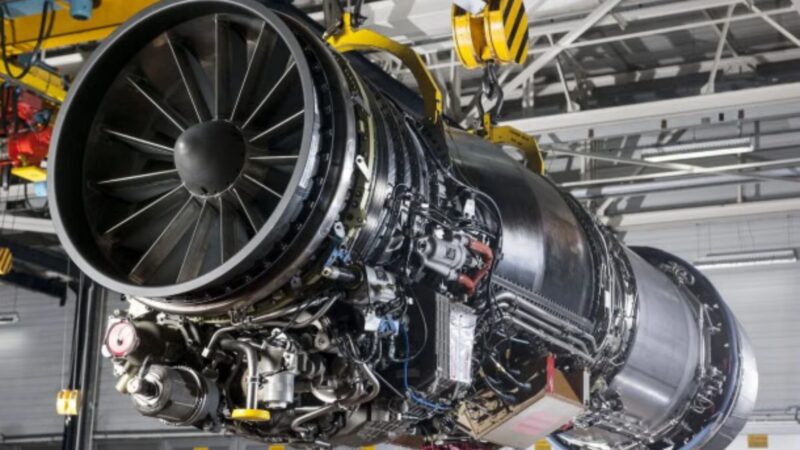
Quwa has followed these issues separately through its coverage of India’s Letter of Request for 114 Rafales, the political pressures drawing the Su-57 into India’s fighter debate, and the Safran–GTRE fighter-engine joint venture reaching India’s Cabinet Committee on Security.
Taken together, these developments show an acquisition system attempting to reconcile an air force short of fighter squadrons, an industrial policy demanding domestic content and a legacy supplier base that remains in play. Dassault’s Rafale proposal is the point at which those three considerations now converge.
Quwa Pro – Defence Market Intelligence
See Where Defence Demand and Technology Are Moving Next
Track procurement priorities across Pakistan, the Gulf and wider MENA, and Central Europe. Follow emerging vendors, drones, AI, C-UAS, and affordable precision weapons, and see how lessons from today’s conflicts are reshaping military requirements and market opportunities.
Featured & Trusted By