
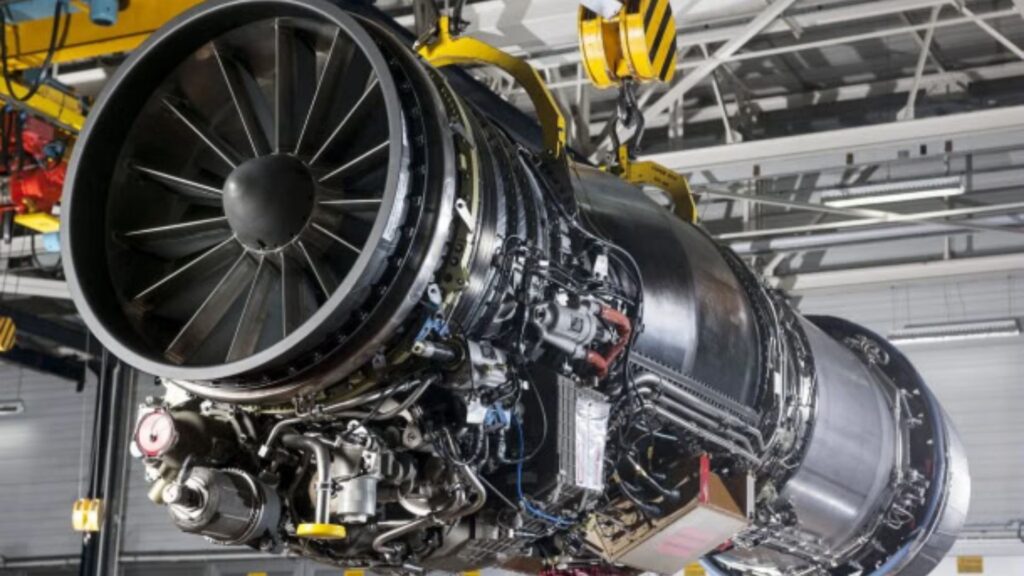
The Safran and Gas Turbine Research Establishment fighter engine joint venture has become a proposal before India’s Cabinet Committee on Security, according to Hindustan Times, which reported on 3 August that the program is expected to be cleared before 15 August 2026.
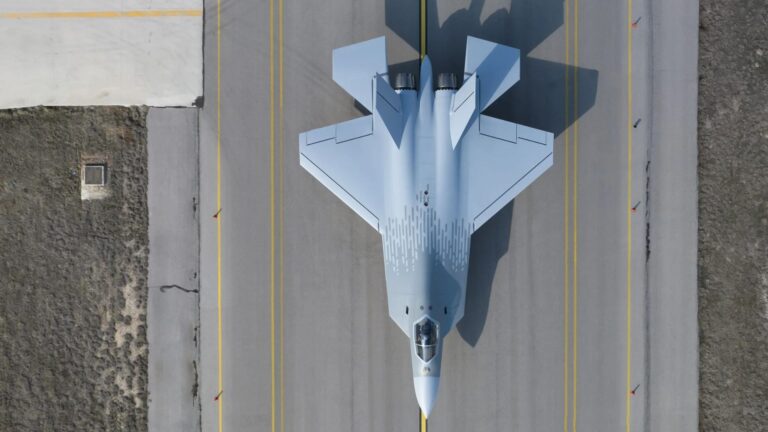
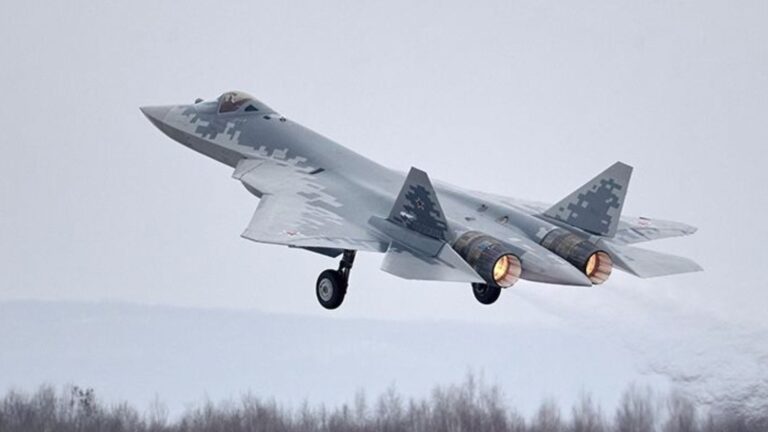
Hindustan Times describes an engine planned at 120 kN of thrust in its initial form, followed by an uprated 140 kN version, with nine prototypes to be built and certified. The outlet states that India will hold 100% of the intellectual property on the powerplant, which it frames against a history of Russian and French engines whose hot section, crystal blade technology and source codes were never shared even under transfer-of-technology arrangements. It names the Advanced Medium Combat Aircraft and the twin-engine deck-based fighter as the applications, and gives no contract value and no equity structure.
Track The Market Forces Driving India’s Defence Priorities
Follow how militaries, state buyers, and industry are responding to shifting operational requirements, regional competition, and pressure to localize production.
The Cabinet Committee on Security is chaired by the Prime Minister and functions as the final financial approval body for high-value defence programs, with procurements exceeding ₹3,000 crore requiring CCS sanction before a deal is formally signed. Its members typically include the Defence, Home, External Affairs and Finance Ministers.
The route this file has taken is not the standard acquisition route, and that distinction matters for reading its progress. A Defence Acquisition Procedure case moves from Request for Information through Services Qualitative Requirements to an Acceptance of Necessity issued by the Defence Acquisition Council, then a Request for Proposal, technical evaluation, field trials, commercial bid opening and Ministry of Finance clearance before reaching the CCS.
The Safran-GTRE engine is a Defence Research and Development Organisation development sanction rather than a capital acquisition, so there is no Acceptance of Necessity and no Request for Proposal in its chain. Reporting has instead described a path running from the Ministry of Defence through the National Security Council and the Finance Ministry to the CCS, with the National Security Council Secretariat providing a strategic-fit clearance. The AMCA airframe followed the same pattern, with the CCS approving the AMCA project in March 2024 at an estimated budget of ₹15,000 crore before the Defence Minister approved the execution model in May 2025.
Rajnath Singh gave the first official confirmation of the partner in August 2025, saying India was about to start engine-manufacturing work with the French company Safran. Safran chief executive Olivier Andriès put the commitment on the record three months later, describing a joint development with the DRDO involving complete transfer of technologies for the fighter engine, including the critical hot section, at approximately ₹610 billion over a decade and more, in the 120 to 140 kN class.
Reported values diverge sharply and no government figure exists. Circulating estimates run from over ₹20,000 crore through ₹30,000 crore to ₹61,000 crore, and the largest of those may not describe this contract at all: in a Times of India assessment, Air Vice Marshal Vikas Dwivedi (Retd) refers to ₹61,000 crore as the sustained funding envelope of a National Aero Engine Mission that Kaveri never had rather than as the price of the Safran deal.
The selection itself is not settled in all reporting. ThePrint reported on 23 June 2026 that Rolls-Royce had made a final pitch offering a core test in 2030, first flight in 2034 and production in 2036, with 100% transfer of technology and intellectual property staying in India and a contract signature required by end-2026, and described the contest as narrowed to two firms without confirming either. Times of India reported on 1 July that both Rolls-Royce and Safran had submitted final financial proposals.
India’s stated precondition goes beyond technology transfer. Sourced reporting in March 2026 indicated New Delhi requires that full intellectual property rights reside exclusively with India, with Safran retaining no right to reuse or repurpose the jointly developed architecture in its global product line, alongside design authority, configuration control and lifecycle ownership.
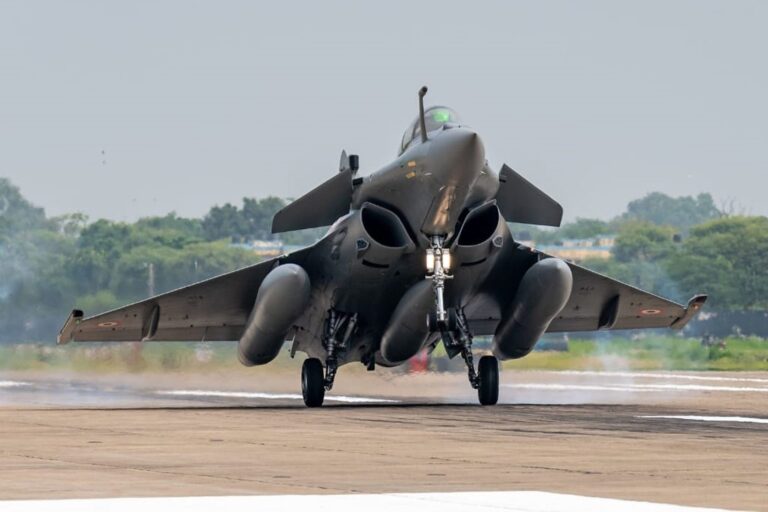
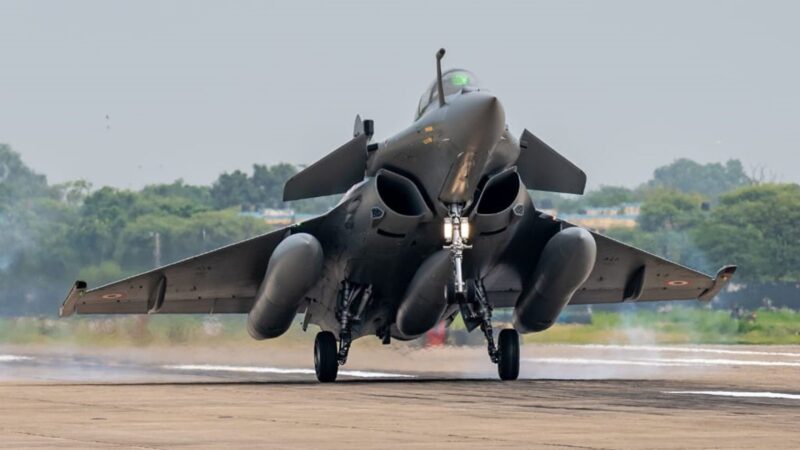
That demand tracks a pattern Quwa has documented in its Indian Defence Market Intelligence work, which identified source code access, Interface Control Document terms, indigenization schedules, offsets and pricing as the items India and France must settle at the Contract Negotiation Committee stage of the 114-aircraft Rafale file. The engine negotiation applies the same set of tests to the same supplier country.
GTRE does not enter the partnership without assets. The laboratory runs a 64-acre campus in Bengaluru with 240 scientists and 400 technicians. The Kaveri program it has run since the 1980s produced nine full prototype engines designated K1 to K9, four Kabini cores, and 3,217 completed tests.
The GTX-35VS Kaveri reached roughly 70.4 kN of wet thrust against a required 81 kN. It was delinked from the Tejas program in 2008 after failing to meet performance thresholds. It has also flown, beginning with a maiden flight test on an Il-76 testbed at the Gromov Flight Research Institute near Moscow in November 2010.
The hot-section supply chain has since begun to form domestically. PTC Industries received a GTRE purchase order in October 2025 for post-cast operations on single-crystal ready-to-fit turbine blades, the first time an Indian company has been entrusted with that work, covering machining, brazing, vacuum heat treatment and thermal barrier coating. GTRE is also building a 130 kN twin-cell engine test bed at Rajanukunte near Bengaluru sized for both the dry Kaveri and the 120 kN AMCA engine.
Two gaps remain funded but unbuilt. India still has no high-altitude engine test facility and continues to send engines to Russia for high-altitude validation, with GTRE planning a test complex near the Nagarjuna Sagar dam in Telangana for the 110 to 130 kN class and awaiting funding, and no domestic flying testbed exists, though GTRE plans to convert two Su-30MKI airframes for the role.
Franco-Indian engine talks have failed before on precisely the technology now being promised. Earlier discussions stalled over Safran’s reluctance to share the hot-engine core and single-crystal blade manufacturing, the two items Andriès publicly committed to in November 2025.
The interim powerplant position is unresolved in parallel. The GE F414 transfer-of-technology contract for the AMCA Mk1 and Tejas Mk2 remains unsigned, with talks stalled after GE raised its per-engine estimate from an initially discussed ₹70 to ₹80 crore to over ₹200 crore. F404 deliveries for the Tejas Mk1A have separately slipped past a March 2026 deadline, leaving completed airframes waiting on engines.
Indian Market Intelligence
Track Where India’s Defence Market Is Moving
Understand how Indian military priorities, supplier positioning, and regional competition are influencing procurement decisions across aerospace, land systems, naval programs, and munitions.
Featured & Trusted By