DRDO Tests Project Kusha’s Interceptor for the First Time
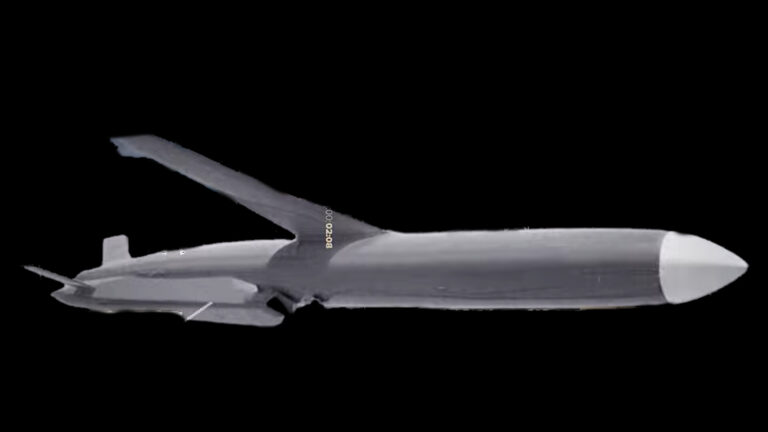
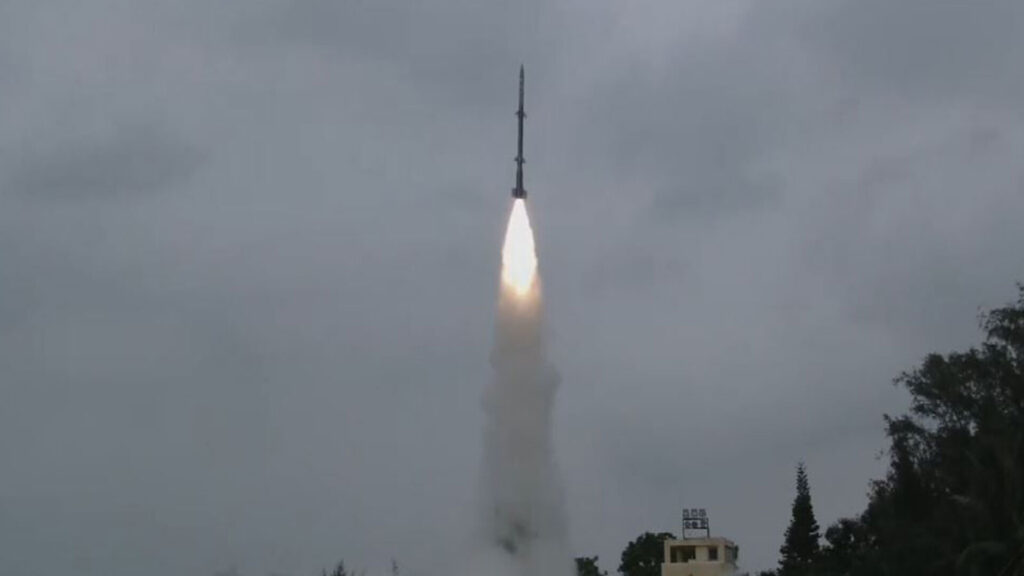
India’s Defence Research and Development Organisation (DRDO) conducted the maiden flight test of Project Kusha on 23 July 2026 at the Integrated Test Range on Dr. APJ Abdul Kalam Island, off the Odisha coast, successfully intercepting a simulated aerial target.
Defence Minister Rajnath Singh called the test “an important milestone in Indian defence R&D,” adding that the capability to develop a long-range surface-to-air missile system “is possessed only by a handful of nations.”
Defence Secretary and DRDO Chairman Rajesh Kumar Singh monitored the launch from the test range, and the Ministry of Defence confirmed the trial validated integration between the missile, its radar, launcher, and command-and-control systems as a single functioning unit.
Singh separately described Kusha as capable of “neutralising a wide variety of aerial threats including fighter jets, missiles, UAVs and large enemy aircrafts within a wide range and altitude envelope.”
Know What Defence Buyers in Will Need Next
See emerging requirements, likely suppliers, and routes to market across Pakistan, MENA, and fast-moving defence technologies, before demand becomes obvious.
Kusha Is Built as a Three-Tier Interceptor Family
Project Kusha, also referred to internally as the Extended Range Air Defence System, is structured around three interceptor variants sharing a common design: the M1, with a range of roughly 150 kilometres; the M2, extending to about 250 kilometres; and the M3, reaching 350 to 400 kilometres.
The 23 July trial is understood to have tested the shortest-range M1 variant, with M2 and M3 flight trials planned for 2027 and 2028 respectively ahead of a targeted operational induction window between 2028 and 2030.
The Cabinet Committee on Security approved the program in May 2022, and the Ministry of Defence issued an Acceptance of Necessity in September 2023 for five Indian Air Force squadrons at a sanctioned cost of US$2.26 billion (₹21,700 crore).
Bharat Electronics Limited is expected to serve as the primary systems integrator, with reporting suggesting a potential follow-on order approaching US$4.16 billion (₹40,000 crore), while Bharat Dynamics Limited is positioned for missile production.
Beyond the initial five squadrons, DRDO has outlined ambitions for up to ten IAF squadrons and a future naval variant of the system.
Kusha Is Designed to Complement, Not Replace, India’s S-400 Squadrons
DRDO and Ministry of Defence framing has consistently described Kusha as filling the capability gap between India’s medium-range Akash and Barak-8 systems, which cover roughly 7 to 80 kilometres, and the Russian-supplied S-400 Triumf, which reaches out to 400 kilometres and already equips the Indian Air Force.
Rather than replacing the S-400, Kusha is intended to reduce India’s reliance on a single foreign-supplied long-range system by building a domestically produced tier with comparable reach, integrated through the Integrated Air Command and Control System alongside Akash, Barak-8, and the existing S-400 squadrons.
The test comes roughly fourteen months after Operation Sindoor, the May 2025 conflict with Pakistan in which India’s layered air defence network, including its S-400 squadrons, saw combat use, and Indian defence commentary has since tied Kusha’s development to lessons drawn from that engagement.
Officials have framed the program within India’s broader Atmanirbhar Bharat indigenization push, positioning an operational Kusha family as a step toward reducing dependence on imported long-range air defence systems whose supply chains sit outside India’s direct control.
Quwa Pro – Defence Market Intelligence
See Where Defence Demand and Technology Are Moving Next
Track procurement priorities across Pakistan, the Gulf and wider MENA, and Central Europe. Follow emerging vendors, drones, AI, C-UAS, and affordable precision weapons, and see how lessons from today’s conflicts are reshaping military requirements and market opportunities.
Featured & Trusted By