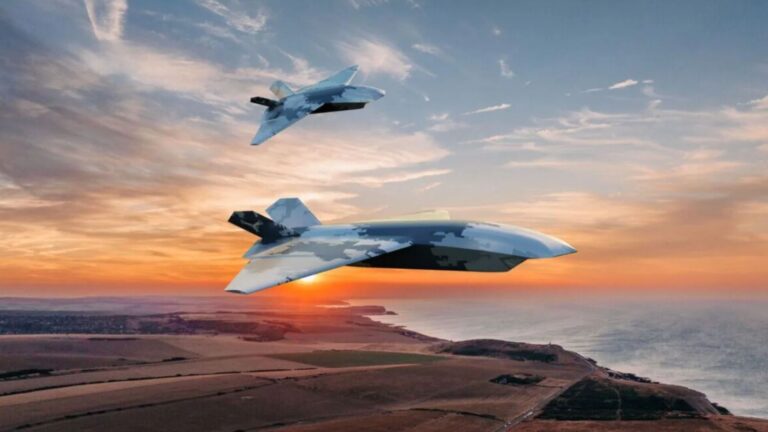

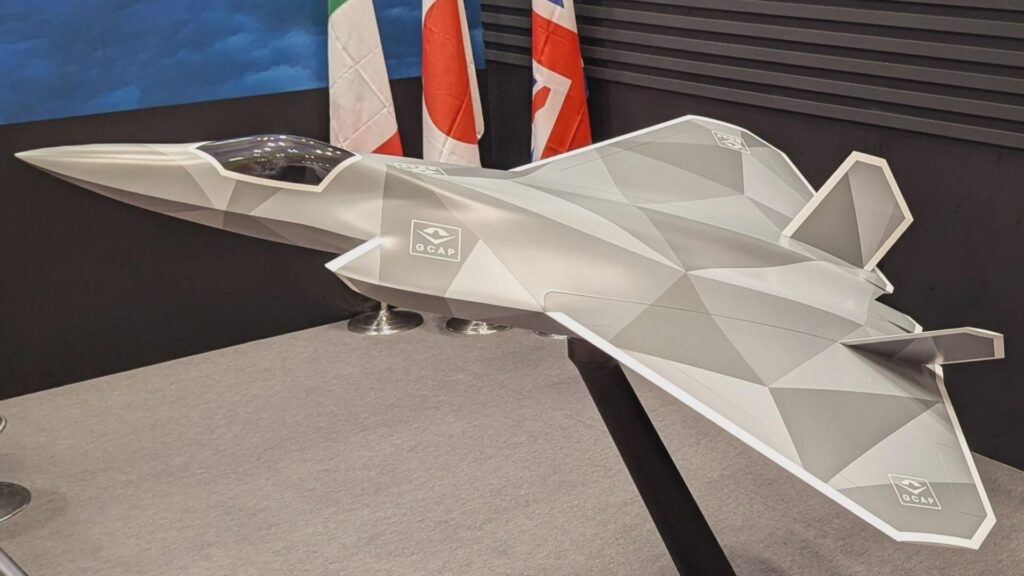
Leonardo Chief Executive Officer Lorenzo Mariani told the company’s half-year earnings call on 31 July 2026 that there is a strong push to bring forward the first entry into service of the Global Combat Air Programme, by roughly two years against the standing 2035 target.
He attributed the pressure to ministers and said it was motivated by the urgency of having such multi-domain system available sooner.
The mechanism matters more than the date, with Mariani describing the acceleration as achievable by making entry into service even more gradual than it was originally supposed to be.
The call transcript records him pairing that with modulating the requirements for the initial versions, so that an earlier date would deliver a first tranche at a reduced standard, with the full requirement met through later increments.
The United Kingdom, Italy and Japan launched GCAP in December 2022 by merging the British Tempest and Japanese F-X efforts, and all three governments continue to state 2035 as the in-service target.
Britain has committed £8.6 billion to the program over four years under its Defence Investment Plan, supporting some 4,500 jobs across the country.
Mariani’s remarks came a day after BAE Systems Chief Executive Officer Charles Woodburn addressed the separate question of adding partner nations at his own results call, saying the window is closing and was probably just about still open.
Woodburn set the condition plainly, saying any expansion must not slow the schedule down, while stressing that the decision itself rests with the three governments.
Mariani endorsed that position the following day, though he also raised the opposite trade – whether it is worth losing some time now to reach a more stable consortium if doing so accelerates later development phases.
The candidate under discussion is Germany rather than Saudi Arabia, with Berlin reported to be exploring participation around a requirement of some 150 aircraft and Airbus insisting on a significant portion of the work and the leadership that goes with it.
Canada is already inside the tent, announced as first observer nation on 21 July 2026, gaining structured engagement on capability development and industrial collaboration without decision-making authority.
Delivery runs through Edgewing, the joint venture formed by BAE Systems, Leonardo and Japan Aircraft Industrial Enhancement Company, each holding a third and led by former Leonardo Aircraft Division managing director Marco Zoff.
Edgewing has now been contracted twice by the GCAP International Government Organisation, taking £686 million on 2 April to fund design and engineering work.
That was followed by £4.6 billion on 3 July, covering completion of the advanced concept and assessment phase along with further joint detailed design and development.
BAE recorded those awards in its half-year results as contracts exceeding £5 billion, reported alongside group sales of £15,772 million and a record order backlog of £84.0 billion.
The hardware sits some way behind the contracting, with BAE’s crewed flying demonstrator having more than 75 per cent of its parts by volume produced as of late June and a target of being flight-ready before the end of 2027.
The program’s political weight has grown for reasons external to it, with Germany ending the crewed fighter component of the Future Combat Air System in June and both successor efforts now expected to field aircraft in the early 2040s.
Against that, the political direction on GCAP has run the other way, with British and Japanese leaders agreeing in London on 14 June to accelerate the program, which Prime Minister Sanae Takaichi called the cornerstone of bilateral security cooperation.