
Hensoldt reported half-year results on 31 July 2026 showing order intake doubling to €2.81 billion and an order backlog of €10.36 billion, the first time the German sensor house has carried more than €10 billion of work.
Revenue rose 23.6 per cent to €1.17 billion and adjusted earnings before interest, taxes, depreciation and amortization reached €137 million, lifting the margin to 11.8 per cent from 11.3 per cent as book-to-bill climbed to 2.4 times.
The Optronics division accounts for most of the swing, its order intake rising from €164 million to €971 million on Puma and Schakal infantry fighting vehicle optronics work worth roughly €350 million and €450 million respectively.
Sensors took €1.98 billion in orders, up 57.6 per cent, with a second PEGASUS batch accounting for about €900 million and Eurofighter Mk1 radar extensions – covering Spain’s Halcón program and Eurofighter Türkiye – for about €580 million.
Chief Executive Officer Oliver Dörre tied the intake directly to politics, saying higher defence spending decisions are now reflected in the order book and that it now falls to industrial execution to turn that into capability.
Chief Financial Officer Christian Ladurner made the same point from the delivery side, saying the decisive question is how reliably and profitably the order book converts into revenue and earnings.
On geography, Hensoldt discloses revenue by region, and the half-year report gives Europe €1,045 million of the €1,167 million total, of which Germany alone accounts for €711 million.
The Middle East line stands at €25 million, or 2.1 per cent of half-year revenue, up from €15 million a year earlier, while the separately reported Africa line rose from €20 million to €31 million.
Those are recoveries from a low base, with Middle East revenue falling for three consecutive full years – from €116 million in 2023 to €83 million in 2024 and €59 million in 2025 – roughly halving while group revenue grew by a third.
The Africa line reflects a substantial domestic South African business, since Hensoldt’s staff outside Germany sit mainly in France, South Africa and the UK, with 726 people employed in South Africa at the end of 2025.
The regional business that does exist runs through subsidiaries and joint ventures, including a wholly owned company in Riyadh, a 49 per cent stake in Abu Dhabi’s Atlas Advanced Optoelectronics & Security, and a 49 per cent Algerian venture at Sidi Bel Abbès carrying €35.2 million of equity.
The most consequential recent regional award came through the South African arm, which in September 2025 signed a multi-year contract with Saudi Arabian Military Industries Advanced Electronics Company for communications intelligence and command and control capability. Its value was not disclosed.
Elsewhere in the region the work sits at an earlier stage. A February 2025 memorandum with Abu Dhabi Ship Building covers Quadome and TRS-4D naval radars, integrated navigation and maritime electronic warfare.
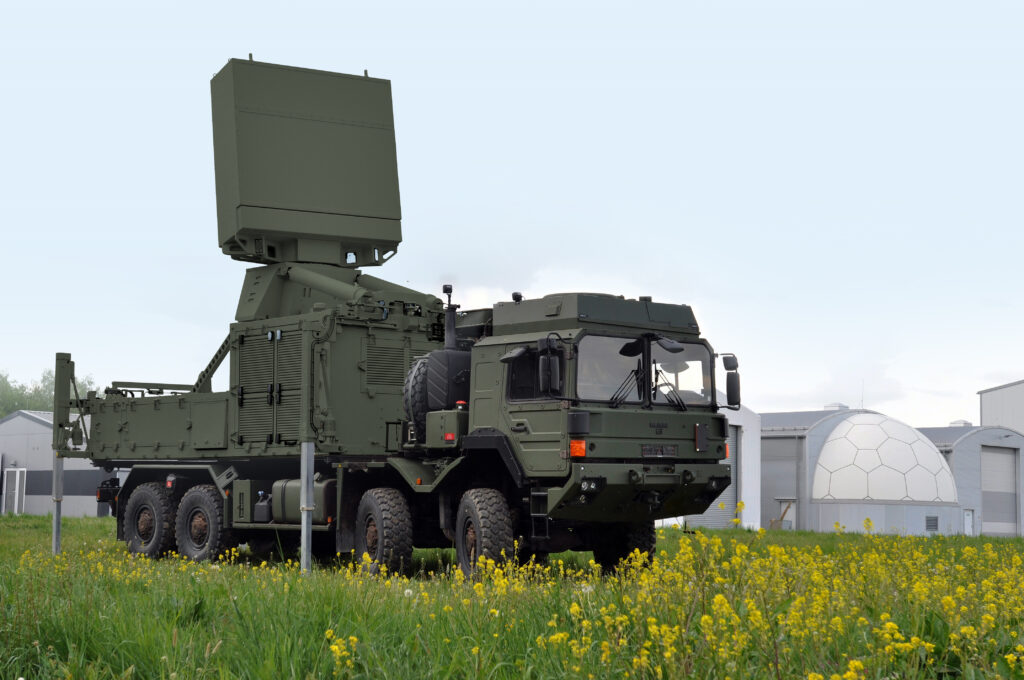
Egypt has entered a new round of discussions over the TRML-4D radar, tied to its IRIS-T SLM air defence family.
Guidance was confirmed rather than raised, at roughly €2.75 billion of revenue and an adjusted EBITDA margin of 18.5 to 19 per cent, with the free cash flow conversion target of about 50 per cent already lifted on 1 June on higher customer advance payments.
The market was unimpressed, with shares closing 5.03 per cent lower at €79.76 on the day of the results, having opened firm.
Part of that sits outside the print. Germany terminated the F126 frigate program on 30 June, on which Hensoldt held contracts worth more than €200 million with over a third already recognized as revenue.
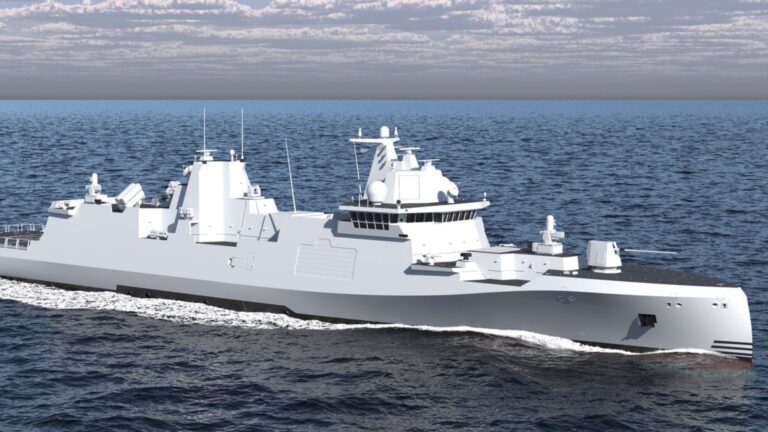
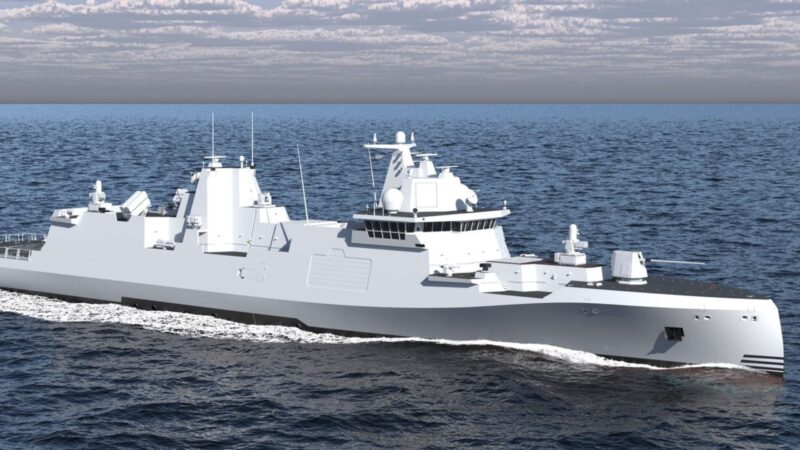
On 16 July, Saab rather than Hensoldt was selected to supply combat systems and sensors for the replacement MEKO A-200 frigates, closing off the German Navy’s next surface combatant as a route for the TRS-4D.