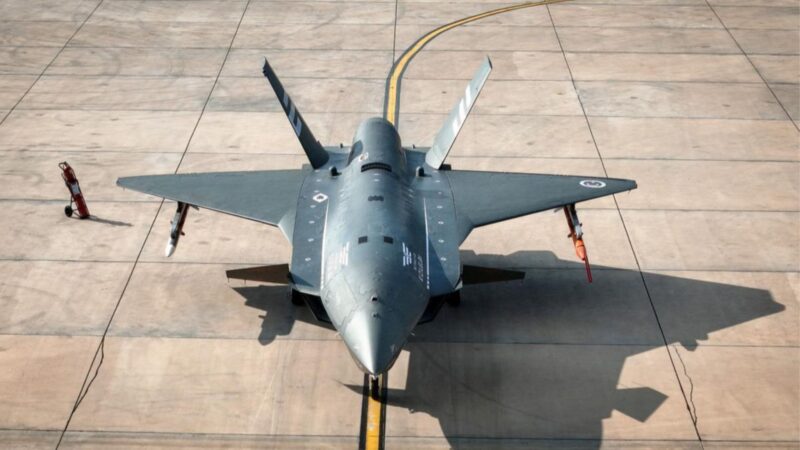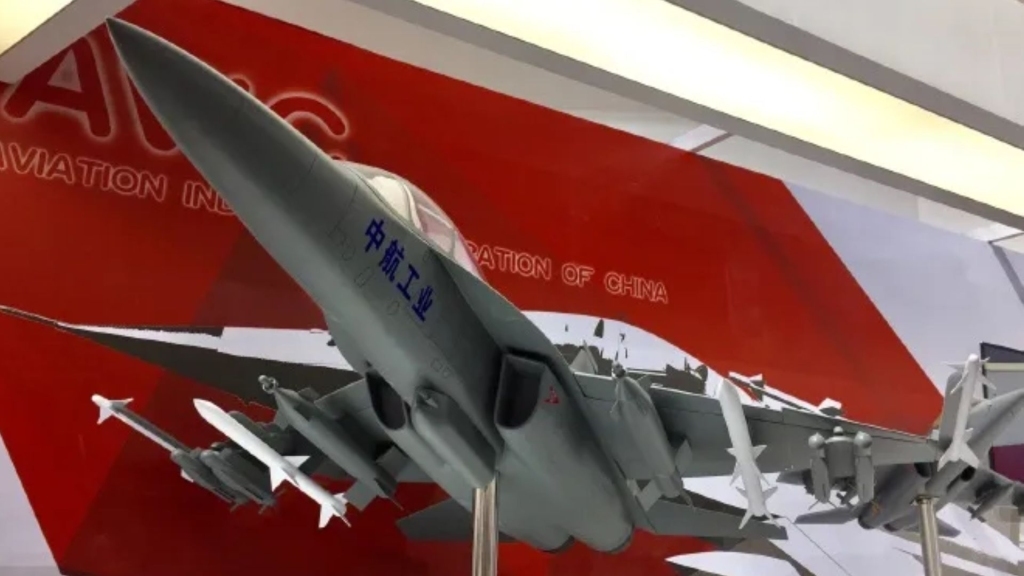
Recently, Hongdu Aircraft Industry Group (HAIG) test flew a new lead-in fighter-trainer (LIFT), a twin-tail, twin-engine configuration with swept-back wings and reinforced landing gear, designed for carrier landings and intended for the People’s Liberation Army Navy Air Force (PLANAF). This would be HAIG’s third trainer program, following the L-15 and K-8, the latter of which is in service with the Pakistan Air Force (PAF).
However, as of 2023, the PAF was also planning to procure the L-15B to meet its own LIFT requirements. Granted, the PAF’s perspective of dedicated LIFT aircraft swung in different directions at different points.
In the early to mid-2010s, the PAF leadership viewed LIFTs as relatively expensive for the training role and believed that it could leverage the twin-seat JF-17B instead. However, in 2018, PAF planners changed their minds, signalling that they not only wanted a dedicated LIFT but preferred one with a multi-mode radar, a tactical data-link (TDL) system, and afterburning engines.
By late 2023, the HAIG L-15B had arrived in Pakistan for testing, and since then, no reports have been made about a deal being signed. Did the PAF change its mind (again)? While a possibility, other priorities (e.g., growing the air defence system) were earmarked over the LIFT. However, this author contends that the PAF will pursue LIFT aircraft; the evolving nature of air warfare demands it now more than ever. Moreover, the emergence of new threats (e.g., drones and loitering munitions) and issues (e.g., persistent low-intensity threat landscapes on the Afghan border) may merit one.
Get access to this article and all other Quwa content today.
Click Here
Quwa Plus
Go Beyond the Headlines on Pakistan’s Defence and Security.
Quwa Plus gives you deeper reporting, briefings, and analysis on Pakistan’s defence programs, foreign policy, national security, and regional strategy. Follow the developments that matter to professionals, analysts, and serious readers tracking Pakistan’s security landscape.
Join ($29.99/Year) Already a subscriber?Sign in