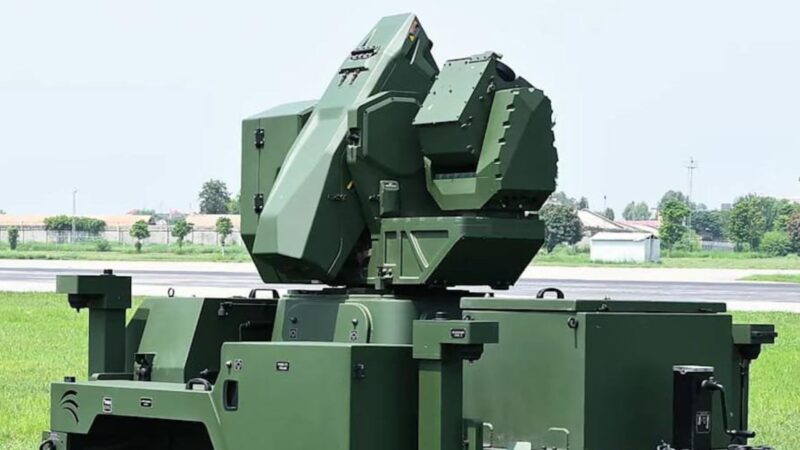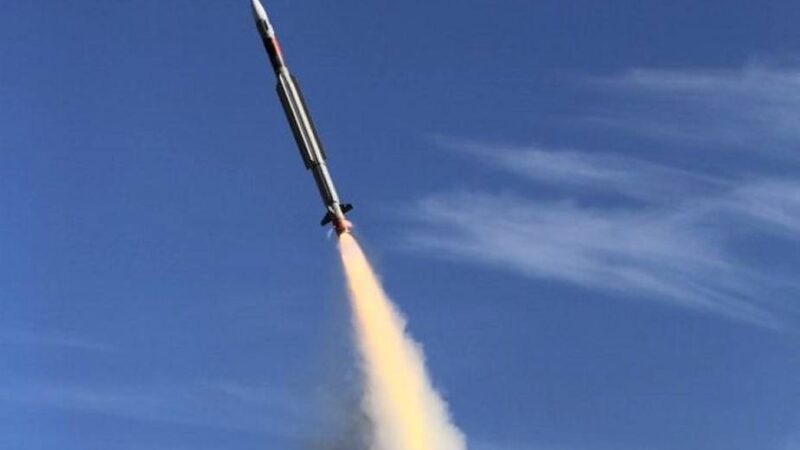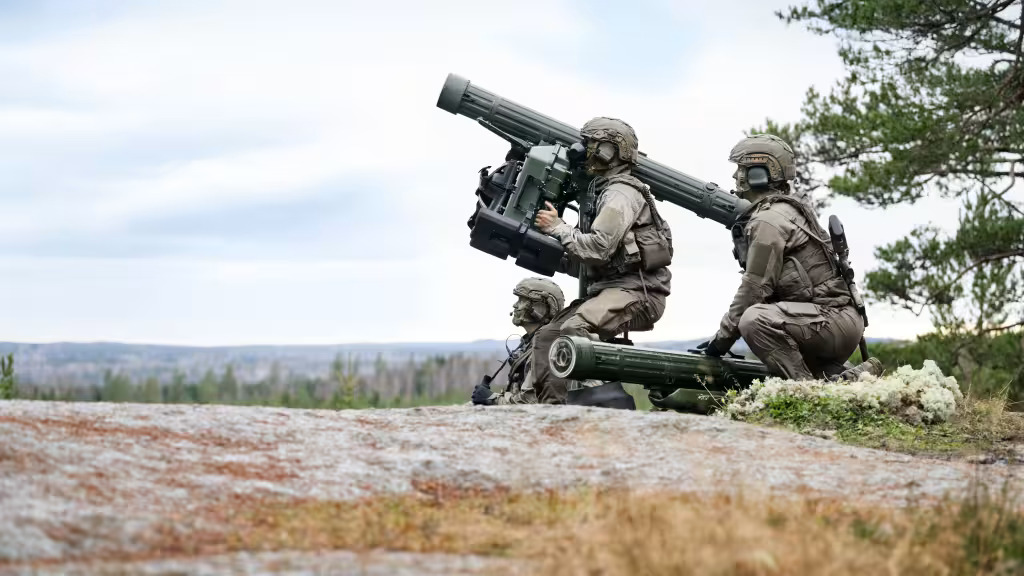
The RBS 70 (Robotsystem 70) is a Swedish man-portable short-range air defence system manufactured by Saab Bofors Dynamics. In service since 1977 across more than 20 countries, the RBS 70 uses laser beam-riding guidance — a method that is virtually immune to the infrared countermeasures (flares) that defeat heat-seeking MANPADS. The system has been proven in combat during the Iran-Iraq War, the 1992 Venezuelan coup attempt, and extensively during the Russo-Ukrainian War.
The Pakistan Army operates approximately 200 RBS 70 systems as its VSHORAD (Very Short-Range Air Defence) platform, deployed at the unit level to provide low-altitude air defence for manoeuvring ground forces. It sits at the lowest layer of Pakistan’s integrated air defence system (IADS), below the FM-90 (15 km) and alongside the indigenous Anza MANPADS family.
Know What Defence Buyers in Will Need Next
See emerging requirements, likely suppliers, and routes to market across Pakistan, MENA, and fast-moving defence technologies, before demand becomes obvious.
RBS 70 Specifications
| Parameter | RBS 70 Mk 1/2 | RBS 70 NG (Bolide) |
|---|---|---|
| Type | MANPADS / VSHORAD | VSHORAD (upgraded) |
| Manufacturer | Saab Bofors Dynamics (Sweden) | Saab Bofors Dynamics |
| Missile weight (system) | 87 kg (stand + sight + missile) | ~87 kg |
| Missile length | 1.32 m | 1.32 m |
| Missile diameter | 106 mm | 106 mm |
| Range | 250 m – 6 km | 250 m – 9 km |
| Altitude | 3,000 m | 5,000 m |
| Missile speed | Mach 1.6 | Mach 2 (Bolide) |
| Guidance | Laser beam riding (SACLOS) | Laser beam riding (auto-tracking) |
| Warhead | 1.1 kg (tungsten spheres + shaped charge) | 1.1 kg (tungsten spheres + shaped charge) |
| Fuze | Adaptive proximity (3 modes) | Adaptive proximity (3 modes) |
| Launch platform | Tripod / vehicle mount | Tripod / vehicle / MSHORAD |
| Pakistan variant | Mk II (tripod + Mouz vehicle) | — |
| In service | 1977–present | 2011–present |
Development Heritage
Development of the RBS 70 began in 1969 when Sweden’s Bofors AB was contracted to provide the Swedish armed forces with a low-cost, effective short-range SAM. Bofors chose a novel laser beam-riding guidance system — a significant departure from the infrared-homing approach used by most contemporary MANPADS. The system entered service in 1977 and has been progressively upgraded through four missile generations: Mk 0/1 (original), Mk 2 (improved), Bolide (Mach 2, extended range), and the Bolide 2 (launched May 2026).
The RBS 70 was the first missile system to use fully computer-simulated firing during development, with approximately 10,000 simulated shots taken before production. This simulation-driven design approach contributed to the system’s high reliability across extreme environments — arctic, desert, and tropical.
Missile Variant Tree
| Variant | Speed | Range | Altitude | Introduction |
|---|---|---|---|---|
| Mk 0 (original) | Mach 1.6 | ~5 km | 3,000 m | 1977 |
| Mk 1 | Mach 1.6 | ~5–6 km | 3,000 m | 1982 |
| Mk 2 | Mach 1.6 | ~6 km | 3,000 m | 1990 |
| Bolide | Mach 2 | 8 km | 5,000 m | 2003 |
| Bolide 2 | TBC | TBC | TBC | 2026 |
Key Technical Characteristics
Laser Beam-Riding Guidance (SACLOS)
The RBS 70’s defining feature is its laser beam-riding guidance. The operator tracks the target through the sight unit and fires; the missile rides a coded laser beam projected from the sight to the target. This is fundamentally different from infrared-homing MANPADS (like the Anza, Stinger, or Igla), which use passive IR seekers that lock onto the target’s heat signature.
The tactical advantage is profound: laser beam-riding is virtually immune to the standard infrared countermeasures (flares, DIRCM) that modern aircraft deploy against IR-seeking MANPADS. The missile has no seeker that can be spoofed — it simply follows the laser beam wherever the operator points it. The trade-off is that the operator must maintain the laser on target throughout the missile’s flight (SACLOS), which keeps the operator exposed and limits salvo rate.
Adaptive Proximity Fuze
The RBS 70’s warhead uses an adaptive proximity fuze with three selectable modes: Off (contact only), Normal, and Small Target. The ‘Small Target’ mode optimizes the detonation pattern for UAVs and cruise missiles. The warhead itself combines 3,000 tungsten spheres with a shaped charge, providing both fragmentation and armour-piercing effects against diverse target types.
RBS 70 NG and Auto-Tracking
The RBS 70 NG (New Generation), introduced in 2011, added an integrated thermal imager and automatic target tracking to the sight unit. Auto-tracking reduces operator workload by automatically maintaining the laser on the target after initial acquisition — significantly improving hit probability against fast-moving or manoeuvring targets, particularly at longer ranges.
RBS 70 in the Pakistan Army Service
Procurement and Scale
The Pakistan Army operates approximately 200 RBS 70 systems, making it one of the larger RBS 70 fleets globally. The PA uses the RBS 70 Mk II variant, paired with Ericsson/Saab Giraffe surveillance radars for target acquisition and cueing. The combination of laser-guided missiles and radar-cued detection gives PA air defence units a more capable VSHORAD solution than standalone MANPADS.
The Mouz Vehicle: M113-Mounted RBS 70
In March 1988, Bofors tested a vehicle-mounted RBS 70 on the M113 armoured personnel carrier — specifically designed to meet a Pakistan Army requirement for a mobile SAM system to protect mechanised units in the field. This configuration, designated ‘Mouz’ in Pakistani service, mounts the RBS 70 on a modified M113 (locally designated ‘Talha’ APC). The missile system is transported in a folded-down position to present the M113 as a standard APC, concealing its air defence role from overhead observation. Once assigned a fire mission, the system is raised to its operating position.
The Mouz configuration was ready for production in Pakistan by 2002. Pakistan also manufactures some components of the RBS 70 missile under licence — one of the few examples of Western missile component production in Pakistan’s defence industrial base. The Mouz deploys with PA armoured formations, providing organic VSHORAD coverage to mechanised brigades and strike corps elements.
Deployment Doctrine
The PA deploys the RBS 70 within its Comprehensive Layered Integrated Air Defence (CLIAD) framework at the VSHORAD tier. The system provides low-altitude air defence for manoeuvre units — protecting armoured formations against attack helicopters, low-flying strike aircraft, and tactical UAVs in the tactical zone. The RBS 70’s laser beam-riding guidance gives it a critical advantage over the Anza MANPADS in scenarios where adversary aircraft deploy infrared countermeasures. PA doctrine positions the RBS 70 alongside the Anza: Anza for distributed VSHORAD across infantry and mechanised units, RBS 70 for countermeasure-resistant engagements at critical points and with armoured formations.
Quwa Assessment: RBS 70 in Pakistan’s Threat Environment
The VSHORAD Layer in Modern Warfare
As Quwa has analysed, the Russo-Ukrainian War has validated the importance of layered air defence down to the VSHORAD tier. Ukraine has used the RBS 70 to shoot down Russian Ka-52 attack helicopters, Su-24 and Su-25 strike aircraft, and various UAVs — demonstrating that even at the shortest ranges, a capable VSHORAD system can impose costs on attacking air forces.
Countermeasure Resistance vs Modern Threats
The RBS 70’s laser beam-riding guidance is its strongest tactical differentiator. Indian Air Force aircraft and helicopters are equipped with IR countermeasure suites (flares, DIRCM) that degrade the effectiveness of IR-seeking MANPADS. The RBS 70 bypasses these countermeasures entirely. However, the system is vulnerable to the operator being suppressed by enemy fires — a laser-guided missile requires an exposed operator, unlike a fire-and-forget system.
Upgrade Path: RBS 70 NG, MSHORAD, and Bolide 2
Pakistan’s RBS 70 fleet could be upgraded to NG standard with the addition of thermal imaging and auto-tracking capabilities. Saab’s MSHORAD variant — integrating the RBS 70 NG with the Giraffe 1X radar on armoured vehicles — would transform the system from a manually operated MANPADS into a networked, sensor-cued air defence platform. Sweden, Lithuania, and the Czech Republic have ordered MSHORAD systems. The Bolide 2 missile, launched in May 2026, is designed specifically to counter evolving threats including drones and cruise missiles. Whether Pakistan pursues these upgrade paths or invests in indigenous alternatives like the FAAZ-SL is an open strategic question.
The C-UAS Cost Exchange
The RBS 70’s adaptive proximity fuze with ‘Small Target’ mode makes it one of the more effective MANPADS-class systems against UAVs. However, using a system costing €3.3 million per unit (2023 pricing) against low-cost drones presents an unfavourable cost exchange ratio that all missile-based VSHORAD systems face.
Combat Record
The RBS 70 has seen combat in three conflicts. Iran used it during the Iran-Iraq War against Iraqi aircraft. A Venezuelan Army RBS 70 shot down a rebel OV-10 Bronco during the November 1992 coup attempt. Most significantly, Ukraine has used the RBS 70 extensively since 2023, shooting down Russian Ka-52 attack helicopters, Su-24 and Su-25 strike aircraft, Mi-8 helicopters, and various UAVs — validating the laser beam-riding concept against modern threats equipped with countermeasures.
RBS 70 vs Anza MANPADS
Pakistan operates both the Swedish RBS 70 and the indigenous Anza MANPADS family. The two serve complementary roles. The Anza (Mk-I, Mk-II, Mk-III) uses infrared homing — lighter, simpler, shoulder-fired. The RBS 70 uses laser beam riding — heavier, requiring a tripod, but immune to IR countermeasures. Ideally, Pakistan deploys both: Anza for distributed VSHORAD across all infantry and mechanised formations, RBS 70 for countermeasure-resistant engagements at critical nodes and with armoured strike corps.
MSHORAD: The Vehicle-Mounted Future
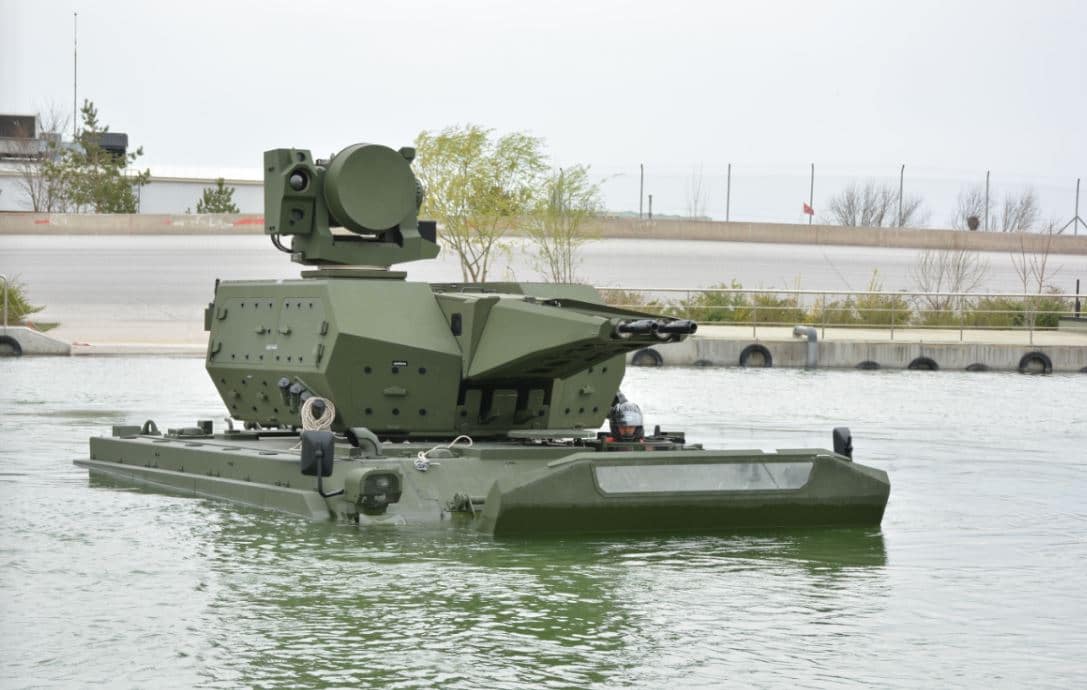
Saab’s MSHORAD (Mobile Short-Range Air Defence) variant integrates the RBS 70 NG with the Giraffe 1X radar and a command-and-control system on armoured vehicles. Sweden and Lithuania ordered MSHORAD in 2024, and the Czech Republic placed a €170 million order for 24 MSHORAD vehicles in 2025. The MSHORAD transforms the RBS 70 from a manually aimed MANPADS into a semi-autonomous air defence system with 360-degree radar surveillance — the same evolution trajectory that Pakistan could pursue for its Mouz M113-mounted fleet.
Quwa Pro – Defence Market Intelligence
See Where Defence Demand and Technology Are Moving Next
Track procurement priorities across Pakistan, the Gulf and wider MENA, and Central Europe. Follow emerging vendors, drones, AI, C-UAS, and affordable precision weapons, and see how lessons from today’s conflicts are reshaping military requirements and market opportunities.
Featured & Trusted By







Frequently Asked Questions About the RBS 70
What is the range of the RBS 70?
The RBS 70 NG with the Bolide missile has a range of 250 m to 9 km and an altitude ceiling of 5,000 m. Earlier Mk 1/2 variants had a range of approximately 5–6 km.
Does Pakistan have the RBS 70?
The Pakistan Army operates approximately 200 RBS 70 Mk II systems, deployed both on tripods and on M113-based ‘Mouz’ vehicles with armoured formations. Pakistan manufactures some RBS 70 components under licence.
What is the Mouz vehicle?
The Mouz is a Pakistan Army designation for a modified M113 APC (locally called ‘Talha’) fitted with the RBS 70. Designed to meet a PA requirement for mobile SAM protection of mechanised units, the Mouz conceals the launcher in a folded-down position during movement and raises it for engagement.
How does the RBS 70 guidance work?
The RBS 70 uses laser beam-riding guidance (SACLOS). The operator tracks the target and fires; the missile rides a coded laser beam to the target. This makes it immune to infrared countermeasures, unlike heat-seeking MANPADS.
Has the RBS 70 been used in combat?
The RBS 70 has seen combat in the Iran-Iraq War, the 1992 Venezuelan coup, and extensively in the Russo-Ukrainian War, where Ukrainian forces have shot down Russian Ka-52 helicopters, Su-24 and Su-25 aircraft, and various UAVs.
What is the RBS 70 NG?
The RBS 70 NG (New Generation) adds an integrated thermal imager and automatic target tracking. It fires the Bolide missile (Mach 2, 9 km range). The NG upgrade significantly improves hit probability against fast or manoeuvring targets.
Related Profiles and Analysis
- Pakistan Air Defence System — Overview of Pakistan’s layered IADS architecture.
- HQ-9 Long-Range Air Defence System — Pakistan’s HIMADS tier.
- LY-80 / HQ-16 Medium-Range Air Defence System — Pakistan’s medium-range tier.
- HQ-7 / FM-90 Short-Range Air Defence System — Pakistan’s ESHORAD tier.
- MBDA Spada 2000-Plus Air Defence System — PAF point-defence.
- MBDA CAMM-ER / Albatros-NG Air Defence System — PN’s next-generation SAM.
- GIDS FAAZ-SL (E-SHORADS) Air Defence System — Indigenous SHORAD complement.
- GIDS LoMADS Air Defence System — Indigenous MRAD programme.
- Reaction, Not Range: How Pakistan’s Air Defence Must Evolve — Quwa’s flagship IADS analysis.