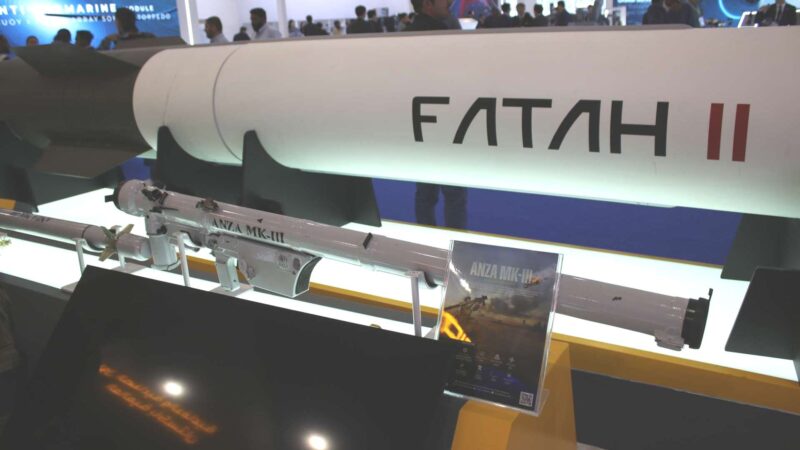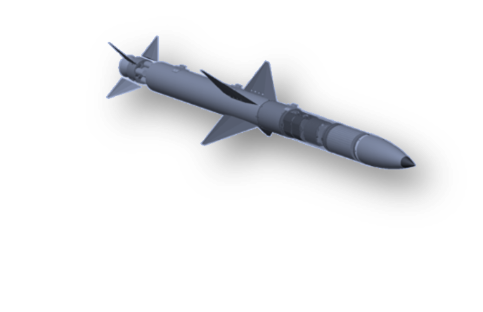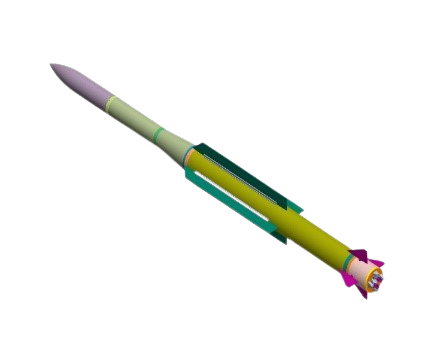
The LoMADS (Low-to-Medium Altitude Air Defence System) is Pakistan’s most ambitious indigenous air defence programme. Under development by state-owned enterprises within NESCOM and marketed by Global Industrial and Defence Solutions (GIDS), the LoMADS is designed to provide medium-to-long-range area air defence with a stated range of 7–100 km, a 20 km altitude ceiling, and the capacity to engage 12 targets simultaneously.
If realised as specified, the LoMADS would give Pakistan an indigenous capability to fill the critical gap between the short-range FAAZ-SL (20–25 km) and the imported Chinese HQ-9 (260–280 km). It would sit within Pakistan’s integrated air defence system (IADS) as a domestically produced medium-tier SAM — potentially replacing the role currently filled by the imported LY-80/HQ-16 and Spada 2000-Plus.
Know What Defence Buyers in Will Need Next
See emerging requirements, likely suppliers, and routes to market across Pakistan, MENA, and fast-moving defence technologies, before demand becomes obvious.
LoMADS Specifications
| Parameter | LoMADS |
|---|---|
| Type | Medium-to-long-range ground-based SAM |
| Developer | NESCOM / AWC (marketed by GIDS) |
| Range | 7–100 km |
| Engagement altitude | 30 m – 20 km |
| Missile speed | Mach 5 |
| Target speed | Mach 0.1 – Mach 3 |
| Simultaneous engagements | 12 targets |
| Guidance | Likely active radar homing (ARH) |
| Battery composition | 1 multi-function radar + 6 TELs (4 missiles each) |
| Total missiles per battery | 24 |
| Launch platform | Self-propelled / truck-mounted TEL |
| Targets | Aircraft, cruise missiles, UAVs, helicopters |
| Status | Under development |
Program Background
GIDS revealed the LoMADS as part of its future product roadmap in 2023–2024. The system was displayed alongside the FAAZ-SL (E-SHORADS), the MFADR radar, and other indigenous programmes — collectively signalling Pakistan’s intent to develop a domestically produced, layered air defence architecture. GIDS stated that the products in its future roadmap were “under development” and would “soon” join its portfolio, though no specific availability timeline was disclosed.
While GIDS serves as the commercial arm, the LoMADS programme is driven by operational requirements defined by the Pakistan Air Force, Pakistan Army, and Pakistan Navy. As Quwa has reported, the reveal of these programmes to the public — and to potential overseas buyers — suggests that the institutes behind them are “relatively confident about completing these projects.” However, the gap between marketing material and fielded capability is significant for a programme of this complexity.
The ‘LoMADS’ Naming Ambiguity
The term ‘LoMADS’ has been used in two distinct contexts within Pakistan’s military. The Pakistan Army uses LoMADS (or LOMAD) as a category label within its Comprehensive Layered Integrated Air Defence (CLIAD) framework — referring to the low-to-medium altitude tier currently filled by the LY-80/HQ-16. GIDS uses ‘LoMADS’ as a product designation for its indigenous SAM programme.
This dual usage creates analytical ambiguity. When the Pakistan Army conducts CLIAD drills involving “LOMADS” assets, it is referencing the existing LY-80/HQ-16 systems. The GIDS LoMADS programme, by contrast, is a future indigenous system that may eventually succeed or supplement the LY-80/HQ-16 in the same tier — but it is not the same system.
Technical Characteristics
100 km Range: Redefining ‘Medium-Range’
The LoMADS’ stated 100 km range is noteworthy. Traditionally, Pakistan has classified ‘medium-range’ SAMs in the 25–60 km bracket — the territory of the LY-80 (40–70 km) and Spada 2000-Plus (25 km). A 100 km range pushes the LoMADS into territory that overlaps with the lower end of the HQ-9/P’s envelope (125+ km). This could indicate that Pakistan is redefining its SAM tier classifications, with ‘long-range’ now reserved for systems exceeding 200+ km. It also suggests that the PAF and PA want an indigenous system capable of area-wide air defence, not merely point-defence.
Battery Architecture
GIDS has described the LoMADS battery as comprising one multi-function radar and six transporter erector launchers (TEL), each carrying four missile canisters — for a total of 24 ready-to-fire missiles per battery. This architecture broadly resembles modern medium-range SAM systems like the NASAMS (AMRAAM-based) or the Turkish HISAR-O+, with distributed launchers coordinated by a central fire-control/surveillance radar.
Mach 5 Missile Speed
A Mach 5 maximum missile speed is consistent with medium-to-long-range SAMs in this class. For comparison, the HQ-16’s missile reaches approximately Mach 4, while the HQ-9’s reaches Mach 4.2. A Mach 5 interceptor with a 100 km range suggests a missile with an advanced solid-fuel rocket motor — possibly a dual-pulse design similar to those being developed for the FAAZ AAM family.
12-Target Simultaneous Engagement
The capacity to engage 12 targets simultaneously is a defining specification. If the LoMADS uses active radar-homing guidance — as GIDS has implied but not confirmed — this figure becomes achievable because ARH missiles guide themselves in the terminal phase, freeing the fire-control system to manage multiple engagements concurrently. A 12-target capacity would make the LoMADS significantly more capable against saturation attacks than SARH-guided systems like the LY-80, which are limited by the number of illumination channels.
MFADR and GRAD Radar Integration
GIDS has separately revealed two indigenous radar programmes: the X-band Multi-Function Air Defence Radar (MFADR) and the S-band GRAD low-to-medium altitude surveillance radar (100 km detection range against 1 m² RCS targets). The MFADR is likely being developed specifically to pair with the LoMADS — providing target acquisition, tracking, and fire-control functions. Whether these radars use AESA (active electronically scanned array) technology is not confirmed, but the use of modern TRM (transmit/receive module) architecture has been suggested.
Quwa Assessment: LoMADS in Pakistan’s Air Defence Strategy
As Quwa has analyzed extensively, the May 2025 conflict exposed a fundamental gap in Pakistan’s air defence architecture: the inability to defend against coordinated, large-scale cruise missile salvos. The LoMADS programme is Pakistan’s indigenous answer to this challenge — but the path from concept to fielded capability is long and uncertain.
The Strategic Case for Indigenous Production
Pakistan’s current IADS relies almost entirely on imported systems — Chinese HQ-9, HQ-16, and FM-90 systems, and Italian Spada 2000-Plus batteries. Each of these has a foreign-controlled supply chain, meaning Pakistan’s ability to replenish missile stocks during a sustained conflict depends on external supplier willingness and capacity. An indigenous LoMADS would give Pakistan sovereign control over a critical air defence tier — the ability to produce, maintain, and replenish without relying on any single foreign partner.
The Technology Challenge
Developing a 100 km-range SAM with ARH guidance and a multi-function radar from scratch is one of the most demanding engineering challenges in missile technology. It requires advanced solid-fuel rocket motor development (likely dual-pulse), an active radar seeker with sufficient processing power for terminal homing, a modern fire-control radar capable of tracking dozens of targets simultaneously, and a command-and-control architecture that integrates with the national IADS. Pakistan has made progress in some of these areas through its experience with the FAAZ AAM programme, but the LoMADS represents a significant step up in complexity.
LoMADS vs CAMM-ER: Competition or Coexistence?
The MBDA CAMM-ER, already in Pakistan Navy service, offers 45+ km range with proven ARH guidance and immediate availability. A ground-launched CAMM-ER (via the iLauncher) could address Pakistan’s medium-range gap faster than the LoMADS can reach production. The question is whether the LoMADS and CAMM-ER compete for the same requirement or coexist in different roles.
As Quwa has argued in its air defence blueprint, the optimal strategy may be to acquire CAMM-ER for near-term MRAD requirements while developing the LoMADS as a longer-term, higher-volume indigenous solution. The CAMM-ER addresses the immediate gap; the LoMADS builds the industrial foundation for long-term self-reliance. The two programmes are complementary if managed as sequential rather than competing priorities.
Development Timeline Realism
A programme of the LoMADS’ ambition — 100 km range, ARH guidance, indigenous radar, 12-target capacity — will take years to move from concept to tested prototype to fielded system. Turkey’s HISAR-O+ took approximately a decade from programme start to operational capability. India’s Akash medium-range SAM programme spanned over two decades. Pakistan should plan for a similar timeline, which means the LoMADS is unlikely to contribute to the IADS before the early-to-mid 2030s.
LoMADS and FAAZ-SL: The Two-Tier Indigenous Architecture
The LoMADS and FAAZ-SL together form the outline of a two-tier indigenous air defence architecture. The FAAZ-SL (20–25 km) provides SHORAD coverage for manoeuvre units, air base perimeters, and point-defence. The LoMADS (7–100 km) provides area-wide medium-range coverage for critical installations, urban centres, and strategic sites. If both programmes share subsystem technology — rocket motor design, seeker architecture, radar components — the production economics improve significantly, as each programme amortises development overhead across a larger production base.
Quwa Pro – Defence Market Intelligence
See Where Defence Demand and Technology Are Moving Next
Track procurement priorities across Pakistan, the Gulf and wider MENA, and Central Europe. Follow emerging vendors, drones, AI, C-UAS, and affordable precision weapons, and see how lessons from today’s conflicts are reshaping military requirements and market opportunities.
Featured & Trusted By







Frequently Asked Questions About LoMADS
What is the range of the LoMADS?
The LoMADS has a stated range of 7–100 km with an engagement altitude of 30 m to 20 km. It can engage targets flying at speeds from Mach 0.1 to Mach 3.
What does LoMADS stand for?
LoMADS stands for Low-to-Medium Altitude Air Defence System. It is also sometimes written as LOMADS or LOMAD. The Pakistan Army uses the same acronym as a category term for its medium-altitude air defence tier within the CLIAD framework.
Who is developing the LoMADS?
The LoMADS is being developed by Pakistan’s state-owned enterprises, likely the Air Weapons Complex (AWC) and other NESCOM bureaux. GIDS markets the system commercially. GIDS itself does not develop or manufacture the system — it serves as the commercial arm of the conglomerate.
Is the LoMADS in service?
The LoMADS is under development. GIDS revealed the programme as part of its future product roadmap in 2023–2024. No publicly confirmed test firings or delivery timelines have been disclosed.
How does the LoMADS differ from the FAAZ-SL?
The LoMADS is a medium-to-long-range area defence system (7–100 km) with a full battery of 6 TELs and a multi-function radar. The FAAZ-SL is a short-range point-defence system (20–25 km) that repurposes the FAAZ AAM airframe. The two are complementary — LoMADS covers area defence, FAAZ-SL covers SHORAD.
How does the LoMADS compare to the LY-80/HQ-16?
The LY-80/HQ-16 is Pakistan’s current medium-range SAM with ~40–70 km range and SARH guidance. The LoMADS targets 100 km range with likely ARH guidance and 12-target simultaneous engagement capacity — a significant capability upgrade. However, the LY-80 is in service today; the LoMADS is still in development.