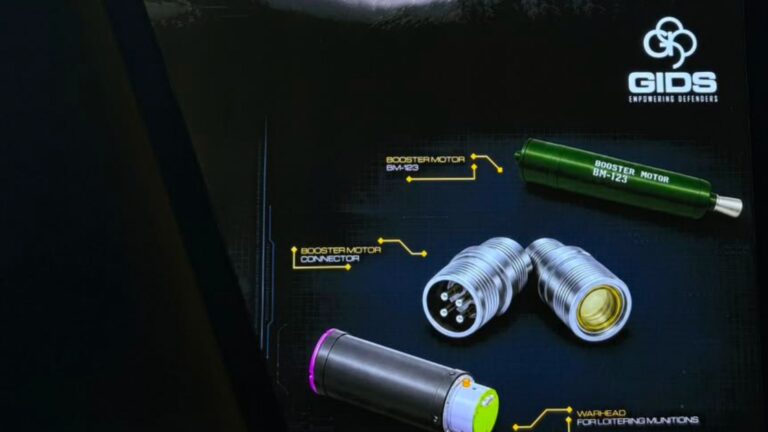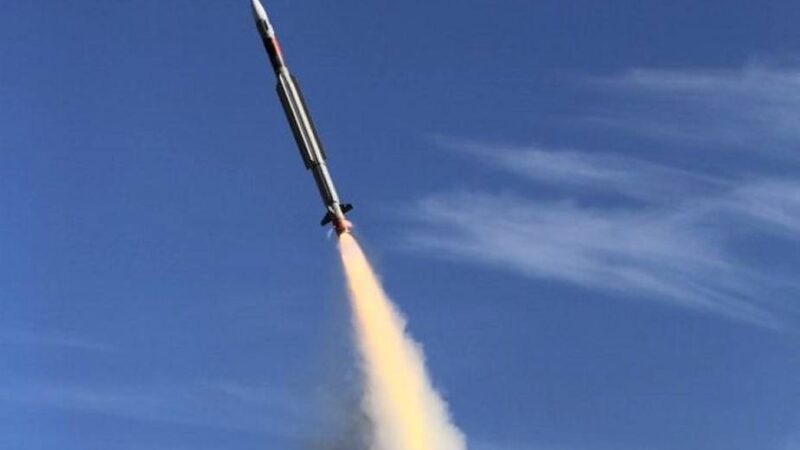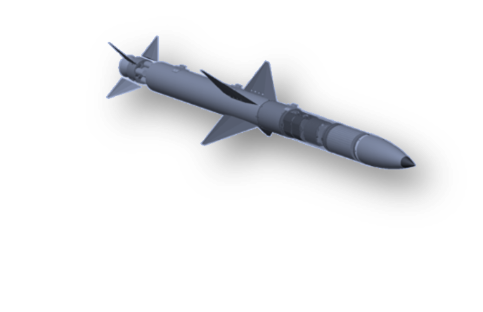
The FAAZ-SL (FAAZ Surface Launched), also designated E-SHORADS (Enhanced Short-Range Air Defence System), is an indigenous short-range air defence missile system under development by Pakistan’s state-owned enterprises. Global Industrial and Defence Solutions (GIDS), the commercial arm of Pakistan’s defence conglomerate including the Air Weapons Complex (AWC) and NESCOM, is marketing the system.
The FAAZ-SL repurposes the FAAZ beyond-visual-range air-to-air missile (BVRAAM) airframe as a ground-launched surface-to-air missile. With a stated range of 20–25 km and dual-seeker options — active radar-homing (RF) and imaging infrared (IIR) — the FAAZ-SL is designed to fill Pakistan’s SHORAD gap alongside imported systems. It sits within Pakistan’s integrated air defence system (IADS) as a mobile, indigenous point-defence solution below the LY-80/HQ-16 medium-range tier.
Know What Defence Buyers in Will Need Next
See emerging requirements, likely suppliers, and routes to market across Pakistan, MENA, and fast-moving defence technologies, before demand becomes obvious.
FAAZ-SL (E-SHORADS) Specifications
| Parameter | FAAZ-SL (E-SHORADS) |
|---|---|
| Type | Short-range ground-based SAM |
| Also known as | E-SHORADS |
| Developer | AWC / NESCOM (marketed by GIDS) |
| Missile basis | FAAZ BVRAAM airframe |
| Range | 20–25 km |
| Engagement altitude | 6–8 km |
| Missile speed | Up to Mach 3.5 |
| Guidance (RF variant) | Active radar homing (ARH) |
| Guidance (IIR variant) | Imaging infrared |
| Warhead | High-explosive fragmentation |
| Fuze | Proximity / contact |
| Launch platform | Truck or armoured vehicle-mounted |
| Targets | Aircraft, helicopters, UAVs, cruise missiles |
| Status | Under development |
Development Context: From AAM to SAM
The FAAZ missile family was first revealed at the IDEF 2023 defence exhibition in Istanbul. GIDS displayed prototypes of both the air-launched and surface-launched variants. The air-launched FAAZ-1 and FAAZ-2 BVRAAMs are the primary variants, designed to support the Pakistan Air Force’s long-term indigenous air-to-air munition requirements. The FAAZ-SL is a derivative programme that repurposes the FAAZ-1 airframe for ground-based air defence.
The FAAZ design may draw on Pakistan’s experience with the Chinese SD-10 (PL-12) missile, which AWC licence-produces for the JF-17 Thunder fleet. GIDS maintains intellectual property rights over the FAAZ family. By developing a surface-launched variant from the same airframe, Pakistan can spread the research, development, and production overhead of the FAAZ programme across both air-to-air and surface-to-air applications — reducing unit costs through production volume.
FAAZ Family Overview (AAM Context Only)
| Variant | Type | Range | Seeker |
|---|---|---|---|
| FAAZ-1 (RF) | BVRAAM | ~100 km | Active radar homing |
| FAAZ-1 (IIR) | BVRAAM | ~100 km | Imaging infrared |
| FAAZ-2 | Extended-range BVRAAM | ~180 km | RF / IIR variants |
| FAAZ-SL | Ground-launched SAM | 20–25 km | ARH / IIR |
For detailed coverage of the FAAZ-1 and FAAZ-2 air-to-air variants, see Quwa’s FAAZ and FAAZ-2 BVRAAM profile.
The E-SHORADS Concept
GIDS markets the FAAZ-SL under the E-SHORADS (Enhanced Short-Range Air Defence System) designation. The ‘enhanced’ prefix distinguishes it from conventional SHORAD systems by emphasising its dual-seeker architecture and beyond-visual-range heritage. Unlike traditional SHORAD missiles that rely solely on infrared homing, the FAAZ-SL offers an active radar-homing variant — giving it the ability to engage targets in adverse weather, at night, and through countermeasures that defeat IR seekers.
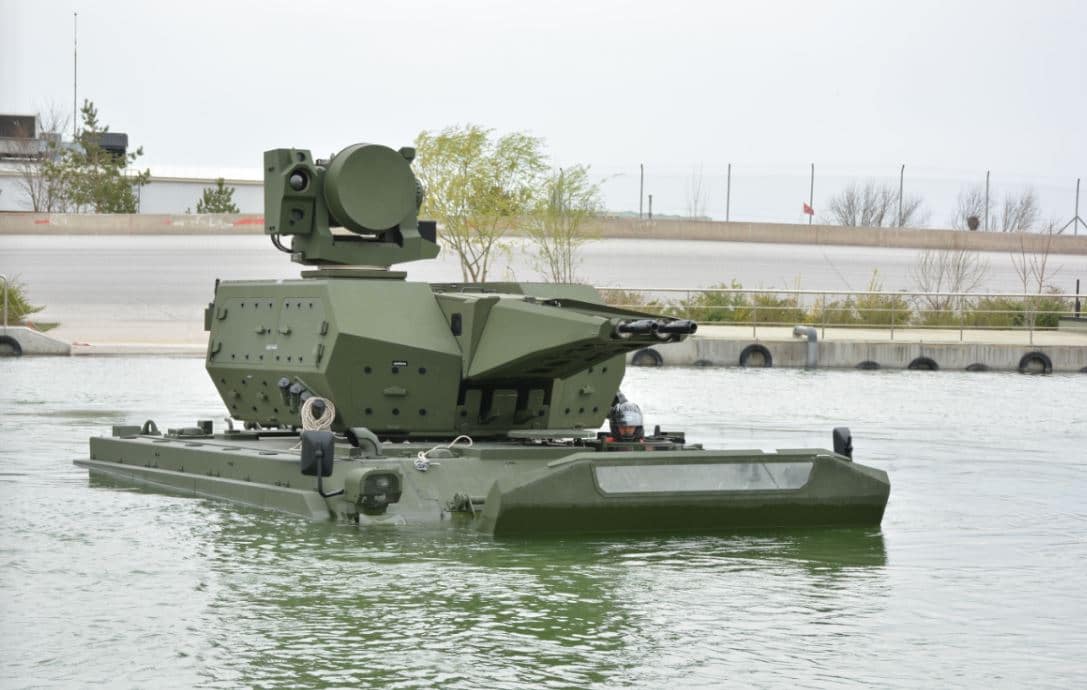
The system is designed for truck or armoured vehicle mounting, providing high mobility and rapid deployment to critical locations. This mobile architecture is essential for survivability in a modern battlespace where static air defence positions are vulnerable to SEAD/DEAD (suppression/destruction of enemy air defences) operations.
Technical Characteristics
Dual-Seeker Architecture
The FAAZ-SL inherits the FAAZ AAM’s dual-seeker options. The RF (radio frequency) variant uses an active radar-homing seeker, reportedly with a 25 km detection range, that provides fire-and-forget capability against targets in all weather and lighting conditions. The IIR (imaging infrared) variant uses a passive infrared seeker with a 40 km detection range, optimised for targets with strong thermal signatures — aircraft engines, helicopter exhausts, and powered UAVs. Having both seeker types available within the same family gives operational commanders flexibility to match the engagement to the threat and countermeasure environment.
Speed and Engagement Envelope
With a maximum speed of Mach 3.5 and a range of 20–25 km, the FAAZ-SL occupies a performance tier above Pakistan’s legacy FM-90 (15 km, Mach 3) and significantly above MANPADS-class systems. The 6–8 km engagement altitude gives the FAAZ-SL the ability to engage targets across the low-to-medium altitude band — the critical zone for cruise missiles, attack helicopters, tactical UAVs, and low-flying strike aircraft.
Mobile Launch Platform
The FAAZ-SL is designed for vehicle-mounted operation, with GIDS referencing both truck and jeep-class platforms. This mobility is critical for a SHORAD system intended to accompany manoeuvring ground forces — the system must be able to displace, reposition, and re-engage rapidly to avoid counter-battery targeting. A vehicle-mounted launcher also enables rapid deployment to forward operating areas and air base perimeters.
Quwa Assessment: FAAZ-SL in Pakistan’s SHORAD Gap
As Quwa has analysed in its IADS assessment, Pakistan’s short-range air defence layer is the weakest link in its integrated air defence system. The FM-90 is ageing, MANPADS have inherent limitations against fast or countermeasure-equipped targets, and neither offers the fire-and-forget capability that modern saturation attacks demand. The FAAZ-SL is positioned to address this gap — but several factors will determine its operational value.
The AAM-to-SAM Conversion Logic
Repurposing an air-to-air missile as a SAM has clear precedent. Israel’s Iron Dome uses derivatives of air-to-air missile technology. Italy’s Aspide SAM was adapted from its air-to-air role. The US AIM-9X has been tested in surface-launched configurations. The logic is sound: the FAAZ AAM already has the seeker, guidance, warhead, and rocket motor validated for air-to-air intercepts; a surface-launched variant requires a launch platform, fire-control integration, and modifications to the flight profile — not a ground-up missile design.
The principal advantage is production commonality. If Pakistan builds FAAZ AAMs for the PAF at scale, producing FAAZ-SL SAMs from the same production line becomes significantly cheaper per unit — a critical consideration for a country that needs SHORAD coverage in volume, not just prestige demonstrators.
The ARH Advantage
The FAAZ-SL’s active radar-homing variant is its most significant differentiator. Pakistan’s current operational SHORAD and ESHORAD systems — the FM-90 (SARH) and MANPADS (IR) — both have engagement constraints that limit their effectiveness against modern targets. An ARH seeker provides fire-and-forget capability, freeing the launcher to engage the next target immediately after launch. This dramatically increases the salvo rate and simultaneous engagement capacity — exactly the capability Pakistan needs to counter saturation attacks.
Development Timeline Uncertainty
The FAAZ-SL remains under development. GIDS first displayed prototypes in 2023, but no publicly confirmed test firings of the surface-launched variant have been reported. The gap between prototype display and operational fielding is typically measured in years for complex guided missile systems. Pakistan’s SHORAD gap is immediate; the FAAZ-SL’s contribution will depend on how quickly it completes development, testing, and initial production.
The Fire-Control and Radar Question
A SAM is only as effective as the fire-control system that directs it. GIDS has separately revealed two indigenous radar programmes — the X-band MFADR (Multi-Function Air Defence Radar) and S-band GRAD low-to-medium altitude surveillance radar. Whether these radars will be mature enough to pair with the FAAZ-SL when it reaches production readiness is an open question. An effective E-SHORADS system requires not just a missile but a complete kill chain — surveillance, tracking, fire-control, engagement, and battle damage assessment.
FAAZ-SL’s Role Alongside Imported SAMs
The FAAZ-SL is not a replacement for Pakistan’s imported SAM systems. The HQ-9 provides HIMADS coverage, the LY-80/HQ-16 covers the medium tier, and the CAMM-ER provides modern ARH capability at the 45+ km tier. The FAAZ-SL’s role is to fill the 20–25 km SHORAD band with an indigenous, scalable, affordable solution that can be produced in volume and deployed across all three services — army manoeuvre units, air base perimeters, naval installations, and strategic site point-defence.
GIDS Indigenous Radar Programmes
GIDS has revealed two indigenous radar programmes that may eventually pair with the FAAZ-SL and other homegrown SAM systems. The X-band Multi-Function Air Defence Radar (MFADR) is likely an AESA-based system designed to accompany medium-range SAM programmes. The S-band GRAD (low-to-medium altitude surveillance radar) offers a 100 km detection range against 1 m² RCS targets — sufficient to detect small UAVs and cruise missiles. Both radars represent Pakistan’s ambition to develop a complete, indigenous kill chain for ground-based air defence.
Turkey-Pakistan GÖKTUĞ Merger
In 2024, reports emerged that Pakistan and Turkey were exploring a merger between the FAAZ and Turkish GÖKTUĞ BVR missile programmes. If realized, this partnership could accelerate both the air-to-air and surface-launched variants by pooling development resources, testing infrastructure, and production investment. Turkey’s TÜBİTAK SAGE has extensive experience in guided missile development, and a joint programme could give the FAAZ-SL access to advanced Turkish subsystem technology — particularly in seekers and dual-pulse rocket motors.
Industrial and Strategic Significance
The FAAZ-SL’s significance extends beyond its immediate tactical role. It represents Pakistan’s first attempt to develop an indigenous SHORAD-class SAM with fire-and-forget capability. Even if early versions have modest performance compared to systems like the CAMM-ER, the programme builds competency in dual-pulse rocket motors, solid-fuel composition, active radar seekers, imaging infrared guidance, and missile design and testing — skills that compound over successive generations. As Quwa has argued in its air defence blueprint, this industrial foundation is a prerequisite for Pakistan’s long-term defence self-reliance.
Quwa Pro – Defence Market Intelligence
See Where Defence Demand and Technology Are Moving Next
Track procurement priorities across Pakistan, the Gulf and wider MENA, and Central Europe. Follow emerging vendors, drones, AI, C-UAS, and affordable precision weapons, and see how lessons from today’s conflicts are reshaping military requirements and market opportunities.
Featured & Trusted By







Frequently Asked Questions About the FAAZ-SL
What is the range of the FAAZ-SL?
The FAAZ-SL has a stated range of 20–25 km with an engagement altitude of 6–8 km. Its maximum speed is Mach 3.5.
What does FAAZ-SL stand for?
FAAZ-SL stands for FAAZ Surface Launched. GIDS also designates the system as E-SHORADS (Enhanced Short-Range Air Defence System). FAAZ (فاز) means ‘victorious’ in Urdu.
Who makes the FAAZ-SL?
The FAAZ-SL is developed by Pakistan’s Air Weapons Complex (AWC), a bureau of NESCOM. GIDS markets and sells the system commercially. GIDS maintains intellectual property rights over the FAAZ family.
Is the FAAZ-SL in service?
The FAAZ-SL is under development. GIDS first displayed prototypes at IDEF 2023 in Istanbul. No publicly confirmed test firings of the surface-launched variant have been reported as of this writing.
How does the FAAZ-SL differ from the FAAZ AAM?
The FAAZ-SL repurposes the FAAZ-1 BVRAAM airframe for ground-based launch. The AAM variants (FAAZ-1 at ~100 km, FAAZ-2 at ~180 km) are designed for aircraft launch. The FAAZ-SL has a shorter effective range (20–25 km) reflecting the energy constraints of ground launch versus air launch at altitude and speed.
What is the difference between the FAAZ-SL and LoMADS?
The FAAZ-SL is a SHORAD system with a range of 20–25 km, repurposing the FAAZ AAM airframe. LoMADS (Low-to-Medium Altitude Air Defence System) is a separate GIDS/NESCOM programme targeting a ~100 km range — a much larger, more complex system designed for area-wide air defence. The two programmes are complementary: LoMADS covers the medium tier, FAAZ-SL covers the short-range tier.
Related Profiles and Analysis
- Pakistan Air Defence System — Overview of Pakistan’s layered IADS architecture.
- GIDS FAAZ and FAAZ-2 Air-to-Air Missiles — The AAM variants from which FAAZ-SL is derived.
- HQ-9 Long-Range Air Defence System — Pakistan’s HIMADS tier.
- LY-80 / HQ-16 Medium-Range Air Defence System — Pakistan’s medium-range tier.
- HQ-7 / FM-90 Short-Range Air Defence System — The FM-90 ESHORAD that FAAZ-SL supplements.
- MBDA Spada 2000-Plus Air Defence System — PAF point-defence.
- MBDA CAMM-ER / Albatros-NG Air Defence System — The Western ARH SAM benchmark.
- Reaction, Not Range: How Pakistan’s Air Defence Must Evolve — Quwa’s flagship IADS analysis.
- The Blueprint for Pakistan’s Future-Proof Air Defence System — Post-conflict IADS modernization roadmap.