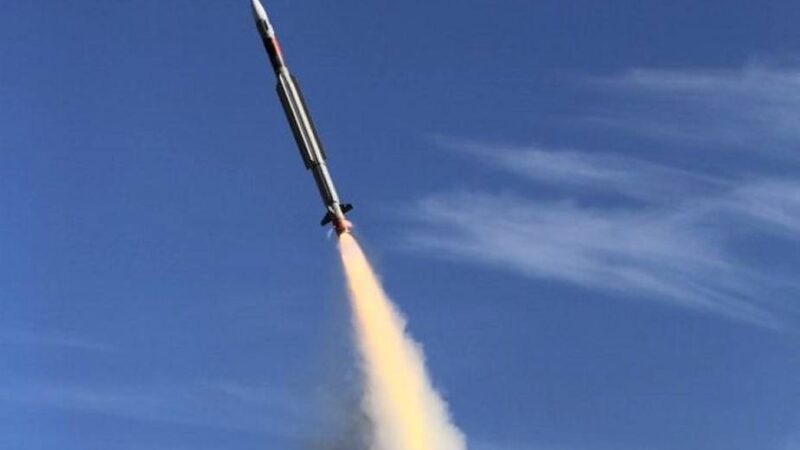
The Anza (عنزہ, ‘Lance’) is Pakistan’s indigenous family of man-portable air defence systems (MANPADS), developed by Kahuta Research Laboratories (KRL) and marketed by Global Industrial and Defence Solutions (GIDS). Guided by infrared-homing seekers, the Anza provides short-range, shoulder-fired air defence against low-flying aircraft, helicopters, and UAVs. The programme was initiated to eliminate Pakistan’s dependence on imported MANPADS — principally the American FIM-92 Stinger and French Mistral.
Three variants are in service: the Mk-I (1990), Mk-II (1994), and Mk-III (2006+). The Anza Mk-II was combat-proven during the 1999 Kargil conflict, where Pakistan Army air defence forces shot down Indian aircraft. The Anza sits at the VSHORAD/SHORAD tier of Pakistan’s integrated air defence system (IADS), alongside the laser beam-riding RBS 70. Malaysia is the only confirmed export customer.
Know What Defence Buyers in Will Need Next
See emerging requirements, likely suppliers, and routes to market across Pakistan, MENA, and fast-moving defence technologies, before demand becomes obvious.
Anza Family Specifications
| Parameter | Anza Mk-I | Anza Mk-II | Anza Mk-III |
|---|---|---|---|
| Basis | Chinese HN-5B (SA-7 lineage) | Chinese QW-1 | Chinese QW-2 |
| Range | ~4 km | ~5 km | ~6 km |
| Altitude | ~3,000 m | ~4,000 m | 10 m – 3,500 m |
| Speed | ~500 m/s | ~600 m/s | 600+ m/s |
| Guidance | IR homing (tail-chase) | Dual-band cross-scan IR (all-aspect) | Dual-band IR + laser proximity fuze |
| Seeker | Single-band uncooled | Dual-band cooled (counter-flare) | Dual-band cooled (improved ECCM) |
| Missile weight | ~10 kg | ~10.68 kg | ~11.32 kg |
| System weight | ~15 kg | ~16.5 kg | ~18 kg |
| Missile length | ~1.44 m | ~1.48 m | ~1.42 m |
| Diameter | 72 mm | 72 mm | 72 mm |
| Warhead | HE frag | HE frag (~1.42 kg) | HE frag (~0.57 kg) + laser prox fuze |
| Reaction time | ~5 sec | ~3.5 sec | ~3.5 sec |
| Launch mode | Shoulder-fired | Shoulder-fired | Shoulder-fired + vehicle-mounted |
| Entered service | January 1990 | September 1994 | 2006+ (serial production) |
| Produced | ~1,000 (1989–1998) | ~1,650–2,650 (1994–2012) | In production |
| Developer | KRL / GIDS | KRL / GIDS | KRL / GIDS |
Development Heritage
Pakistan’s MANPADS requirement emerged from the Afghan War era of the 1980s, when the Pakistan Army gained extensive operational experience with the American FIM-92 Stinger, Soviet-origin SA-7/Strela-2 (via captured stocks), and the Chinese HN-5. This experience demonstrated both the tactical value of MANPADS and the vulnerability of depending on foreign-supplied systems — the US arms embargo imposed in 1990 cut off Stinger resupply, leaving Pakistan reliant on systems it could not replenish.
KRL — best known as the centre of Pakistan’s nuclear weapons programme under Dr. A.Q. Khan — was tasked with developing an indigenous MANPADS. The resulting Anza programme leveraged Chinese technical cooperation at each generation, progressively moving from first-generation (HN-5B-derived Mk-I) through second-generation (QW-1-derived Mk-II) to third-generation (QW-2-derived Mk-III) technology. Each variant incorporated Pakistan-specific modifications to the seeker, firing unit, and training systems.
Variant Profiles
Anza Mk-I
The Anza Mk-I was Pakistan’s first domestically produced MANPADS, entering service in January 1990. Based on the Chinese HN-5B (itself derived from the Soviet SA-7 Strela-2), the Mk-I uses a single-band uncooled infrared seeker with tail-chase engagement only — the operator must fire from behind the target as the seeker tracks the engine exhaust. Approximately 1,000 Mk-I missiles were produced between 1989 and 1998. While now largely in storage or retired from frontline service, the Mk-I established Pakistan’s domestic MANPADS production capability and trained the first generation of PA air defence operators on indigenous systems.
Anza Mk-II
The Anza Mk-II, entering service in September 1994, represented a generational leap. Based on the Chinese QW-1 and incorporating technical elements from both American and Soviet MANPADS design traditions, the Mk-II introduced a dual-band, cross-scan infrared seeker designed to counter decoy flares — a critical improvement over the Mk-I’s single-band seeker. The system provides all-aspect engagement capability, meaning the operator can fire from any angle relative to the target, not just from behind.
Approximately 1,650 to 2,650 Anza Mk-II missiles were produced between 1994 and 2012, making it the most widely produced variant. The Mk-II includes the ATS-II Training Simulator — a comprehensive training package with four training missiles, four firing units, and a PC-based scoring system. Pakistan also developed the HISAT-DK high-speed aerial target drone specifically for Anza training.
Anza Mk-III
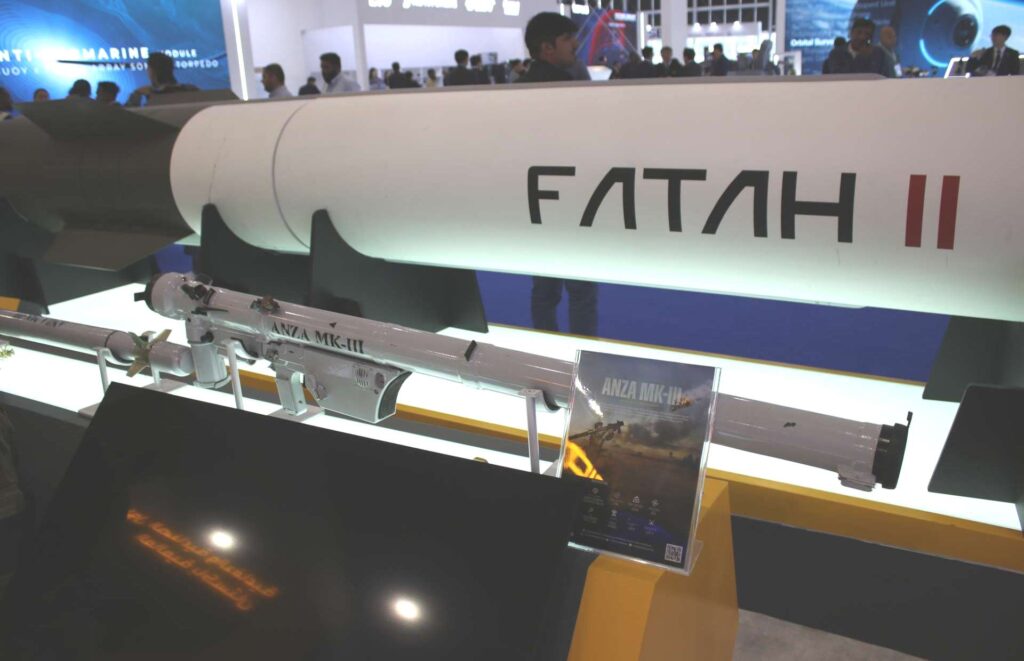
The Anza Mk-III, with serial production announced in 2006, is the current-generation variant. Based on the Chinese QW-2, the Mk-III incorporates a firing unit design similar to the Russian 9K38 Igla MANPADS, all-aspect attack capability, improved ECCM, a laser proximity fuze, and updated digital electronics. The laser proximity fuze improves kill probability by detonating the warhead in proximity to the target rather than requiring a direct hit — particularly important against small, fast-moving targets.
The Mk-III’s minimum engagement altitude of 10 m gives it the ability to engage very low-flying helicopters and cruise missiles. A vehicle-mounted launcher variant is also available, enabling mobile air defence for convoy protection or rapid repositioning. GIDS displayed the Anza Mk-III at the World Defense Show in Riyadh in February 2026, signalling continued export marketing efforts.
Anza in Pakistan Army Service
Production and Scale
The Pakistan Army operates large numbers of all three Anza variants. Total production across the programme likely exceeds 4,000 missiles — making the Anza one of Pakistan’s highest-volume indigenous munitions programmes. KRL handled initial development and early production; GIDS now manages manufacture and export marketing. The MoDP Year Book 2017–2018 confirmed continued orders for MANPADS, indicating sustained production well into the late 2010s.
Combat Record: The 1999 Kargil Conflict
On 27 May 1999, Pakistan Army Air Defence forces used the Anza Mk-II during the Kargil conflict to shoot down an Indian MiG-21 and an Mi-17 helicopter. This remains the most significant confirmed combat engagement by Pakistani air defence forces using indigenous weapons — validating both the Anza programme and the PA’s ability to employ MANPADS effectively against modern adversary aircraft. The engagement also demonstrated the value of MANPADS in mountainous terrain where radar coverage is degraded and larger SAM systems cannot be easily deployed.
CLIAD Integration
Within the Pakistan Army’s Comprehensive Layered Integrated Air Defence (CLIAD) framework, the Anza fills the SHORAD/VSHORAD tier alongside the RBS 70. The Anza is distributed at the lowest tactical level — infantry companies, artillery batteries, and logistics convoys — providing organic air defence that does not depend on external radar or fire-control systems. The RBS 70, by contrast, is concentrated at brigade and formation level with radar cueing. Together, they provide layered VSHORAD coverage: Anza for distributed, fire-and-forget engagements; RBS 70 for countermeasure-resistant, laser-guided engagements at critical points.
Anza vs RBS 70: Complementary Roles
The Anza and RBS 70 serve fundamentally different functions despite both operating in the VSHORAD tier. The Anza is lighter (18 kg vs 87 kg), simpler, shoulder-fired, and fire-and-forget — ideal for distributed deployment across all combat units. The RBS 70 is heavier, tripod-mounted, requires continuous operator tracking, but is immune to IR countermeasures. Against adversaries equipped with modern flare dispensers and DIRCM, the RBS 70 provides the reliability that IR-homing MANPADS cannot guarantee. The PA’s doctrine deploys both: Anza for volume coverage, RBS 70 for high-confidence engagements.
Export History
Malaysia is the Anza’s primary export customer, having received 100 Anza Mk-I systems in 2002 and subsequently 500 Anza Mk-II systems as part of a RM446 million arms deal — used to equip the Malaysian Army’s 10th Paratrooper Brigade. Anza systems have also been reported in Libya (Mk-I, used from 2011) and Syria (Mk-II, captured from rebel groups). Reports in 2023–2024 indicated that Pakistan may supply Anza Mk-II systems to Ukraine, though this has not been officially confirmed. Saudi Arabia explored joint production of the Anza in 2004 talks with Pakistan’s Defence Minister.
Quwa Assessment: Anza in Pakistan’s Threat Environment
The IR Countermeasure Vulnerability
The Anza’s fundamental limitation is shared by all IR-homing MANPADS: vulnerability to infrared countermeasures. Modern IAF aircraft — including the Su-30MKI, Rafale, and Apache AH-64E — are equipped with flare dispensers and, increasingly, directed infrared countermeasure (DIRCM) systems that can defeat or degrade IR seekers. The Anza Mk-III’s improved ECCM and dual-band seeker provide some resistance to basic flare countermeasures, but dedicated DIRCM systems remain a significant challenge.
The C-UAS Role
The Anza Mk-III’s 10 m minimum engagement altitude and laser proximity fuze give it theoretical capability against low-flying UAVs. However, the cost of an Anza missile relative to a commercial drone creates an unfavourable exchange ratio. MANPADS are best reserved for higher-value aerial targets — attack helicopters, strike aircraft, and large MALE/HALE UAVs — while dedicated C-UAS systems (electronic warfare, directed energy, gun-based CIWS) handle the small drone threat.
Industrial Significance
The Anza programme’s greatest value may be industrial rather than tactical. It established Pakistan’s domestic capability to design, produce, and sustain guided munitions at scale — a foundation that directly enabled the FAAZ BVRAAM and FAAZ-SL (E-SHORADS) programmes. The seeker technology, solid-fuel rocket motor expertise, and guided-missile production lines built for Anza are the same capabilities being leveraged for Pakistan’s next-generation indigenous air defence systems, including the LoMADS.
Quwa Pro – Defence Market Intelligence
See Where Defence Demand and Technology Are Moving Next
Track procurement priorities across Pakistan, the Gulf and wider MENA, and Central Europe. Follow emerging vendors, drones, AI, C-UAS, and affordable precision weapons, and see how lessons from today’s conflicts are reshaping military requirements and market opportunities.
Featured & Trusted By







Frequently Asked Questions About the Anza
What is the range of the Anza?
The Anza Mk-I has a range of approximately 4 km. The Mk-II extends to 5 km, and the Mk-III reaches approximately 6 km with an altitude ceiling of 3,500 m.
Who makes the Anza?
The Anza was developed by Kahuta Research Laboratories (KRL) and is now manufactured and marketed by GIDS. Development drew on Chinese technical cooperation across all three variants.
Has the Anza been used in combat?
The Anza Mk-II was used by Pakistan Army Air Defence forces during the 1999 Kargil conflict to shoot down Indian aircraft. Anza systems have also been reported in use in Libya (2011) and Syria.
What countries use the Anza?
Pakistan is the primary operator. Malaysia received 100 Mk-I and 500 Mk-II systems. Anza missiles have also been reported in Libya and Syria.
What is the difference between the Anza Mk-II and Mk-III?
The Mk-III (QW-2-based) adds improved ECCM, a laser proximity fuze, digital electronics, a vehicle-mounted launcher option, and all-aspect engagement capability with lower minimum altitude (10 m vs higher for Mk-II).
How does the Anza compare to the Stinger?
The FIM-92 Stinger has a comparable range (~5–8 km depending on variant) and a more advanced seeker in its latest versions. The Anza’s advantage for Pakistan is sovereign production — no dependency on US supply chains, which were cut off by the 1990 arms embargo.
Related Profiles and Analysis
- Pakistan Air Defence System — Overview of Pakistan’s layered IADS architecture.
- RBS 70 VSHORAD Air Defence System — The complementary laser-guided VSHORAD.
- HQ-7 / FM-90 Short-Range Air Defence System — The tier above Anza in CLIAD.
- GIDS FAAZ-SL (E-SHORADS) Air Defence System — Indigenous SHORAD successor leveraging Anza-era industrial base.
- GIDS FAAZ and FAAZ-2 Air-to-Air Missiles — The BVRAAM that shares industrial DNA with Anza.
- GIDS LoMADS Air Defence System — Indigenous MRAD programme.
- MBDA CAMM-ER / Albatros-NG Air Defence System — Next-generation SAM benchmark.
- Reaction, Not Range: How Pakistan’s Air Defence Must Evolve — Quwa’s flagship IADS analysis.