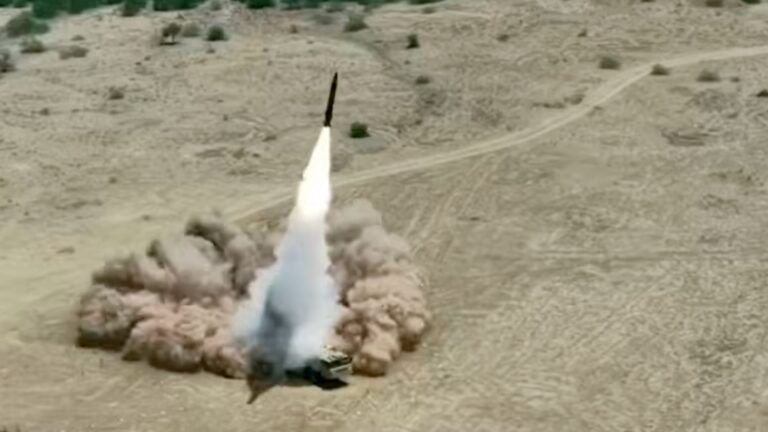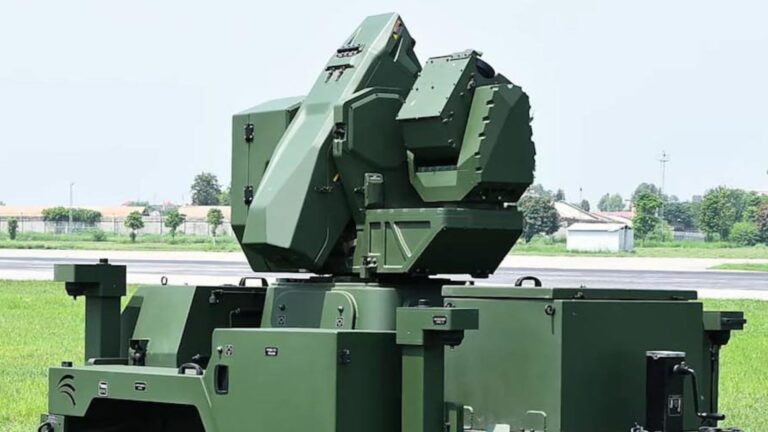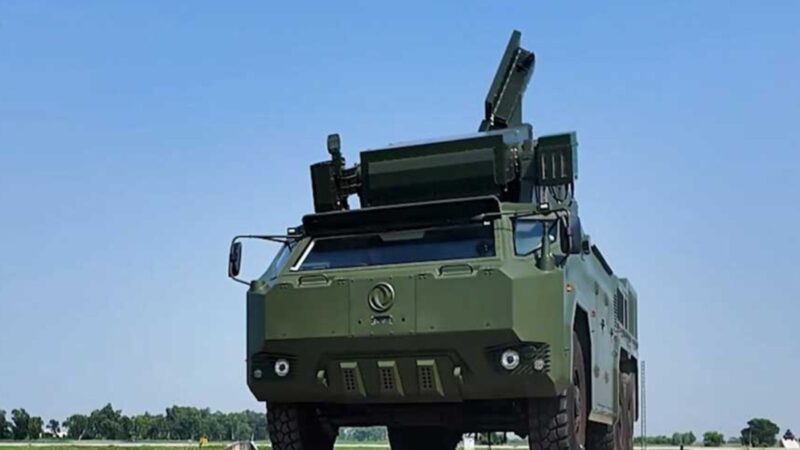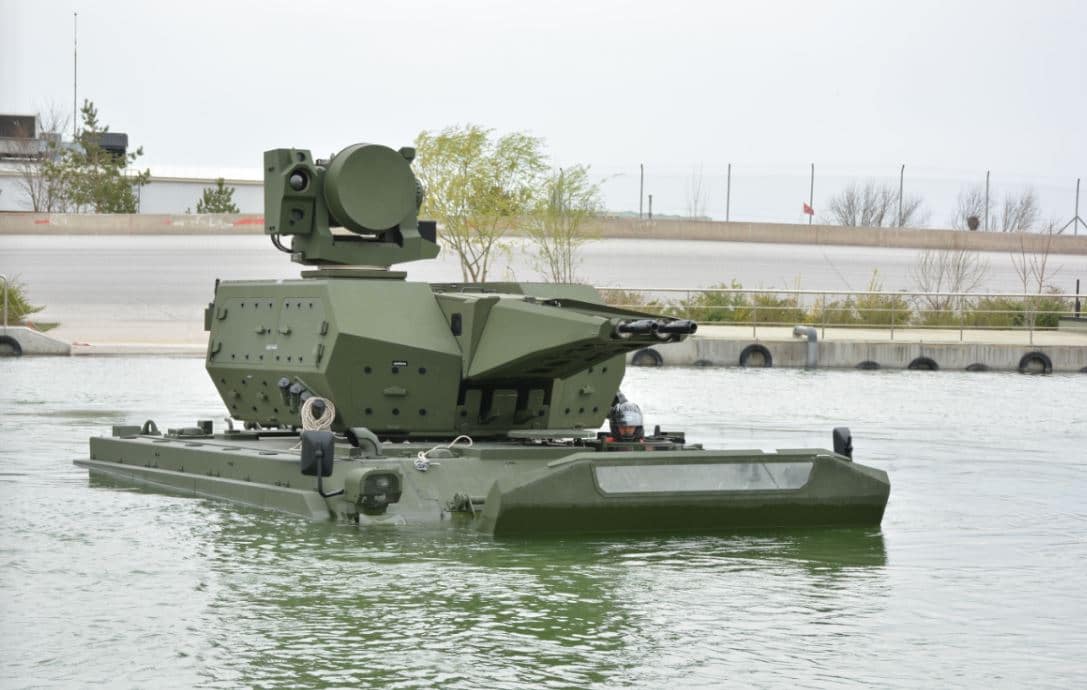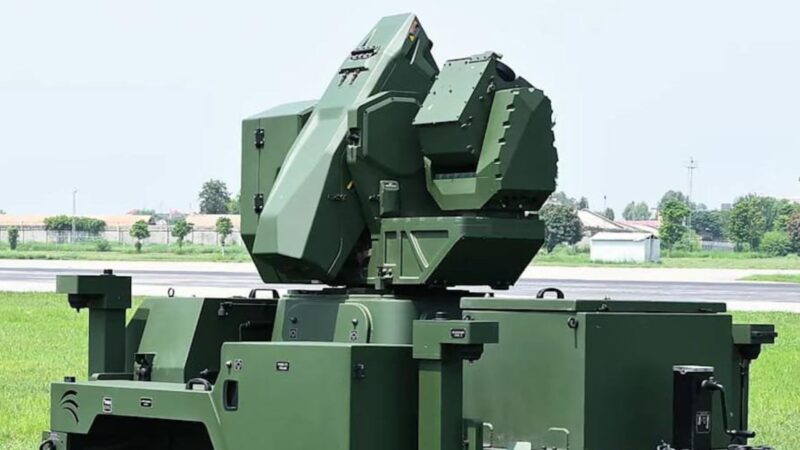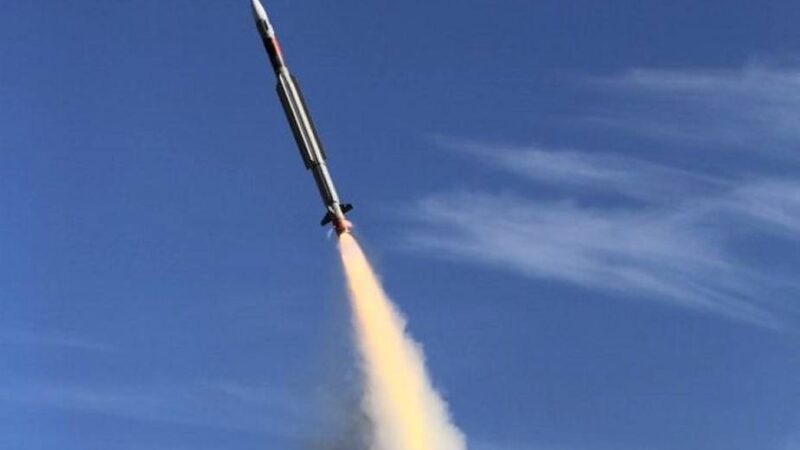


The LY-80 is the export designation of the Chinese HQ-16 medium-range surface-to-air missile (SAM) system, developed by the Shanghai Academy of Spaceflight Technology (SAST) under the China Aerospace Science and Technology Corporation (CASC). Derived from earlier versions of the Russian Buk missile system, the HQ-16/LY-80 fills the low-to-medium altitude air defence layer — sitting between short-range point-defence systems and long-range platforms like the HQ-9.
Pakistan is the largest export operator of the HQ-16 family. The Pakistan Army inducted nine LY-80 batteries in a US$600 million programme beginning in 2013–2014, the Pakistan Navy operates the LY-80N aboard its Type 054A/P frigates, and the Pakistan Air Force has acquired the extended-range HQ-16FE (160 km). The Pakistan Army has also displayed units designated ‘LY-80EV’, which may correspond to an extended-range variant with a 70 km reach.
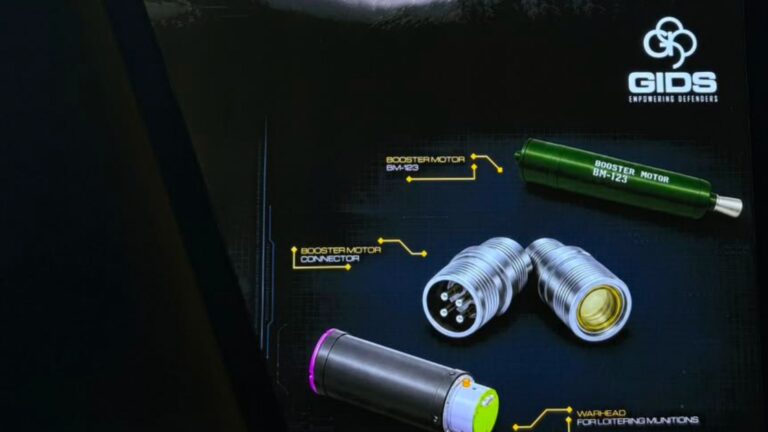
The LY-80 is a distinct system from the indigenous LoMADS programme being developed by Pakistan’s GIDS/NESCOM. While the LY-80 currently fills the medium-range layer of Pakistan’s IADS, the LoMADS programme aims to develop a domestically produced successor for tri-service standardization.
Know What Defence Buyers in Will Need Next
See emerging requirements, likely suppliers, and routes to market across Pakistan, MENA, and fast-moving defence technologies, before demand becomes obvious.
LY-80 / HQ-16 Specifications
| Parameter | LY-80 / HQ-16A (baseline) | LY-80EV / HQ-16B | LY-80N (naval) | HQ-16FE (PAF) |
|---|---|---|---|---|
| Type | Medium-range SAM | Extended medium-range SAM | Naval medium-range SAM | Extended-range SAM |
| Developer | SAST / CASC | SAST / CASC | SAST / CASC | SAST / CASC |
| Range | 40 km | ~70 km | 40 km | 160 km |
| Altitude | 15 m – 18 km | TBC | 15 m – 18 km | 15 m – 27 km |
| Guidance | SARH | SARH (likely ARH terminal) | SARH | SARH + ARH |
| Launcher | 6-round TEL | 6-round TEL | VLS (32-cell) | 6-round TEL |
| Missiles per battery | 24–36 (4–6 TELs) | 24–36 | 32 (per frigate) | TBC |
| Operator | Pakistan Army | Pakistan Army | Pakistan Navy | Pakistan Air Force |
| Pakistan procurement cost | $226M (initial 3 systems) → $600M total (9 batteries) | TBC | Included in Type 054A/P contract | TBC |
| Status | Operational (March 2017) | Operational | Operational (2022+) | Ordered |
Development Heritage
The HQ-16 programme began in 2005, with reported assistance from Russia’s Almaz-Antey Corporation. It was initially developed as a naval system — the HHQ-16 — for the PLA Navy’s Type 054A frigate. In late 2011, China reported that the “co-development between Russia and China” of the missile was complete. Western analysts generally assess the HQ-16 as derived from earlier versions of the Russian Buk missile system, with the US Department of the Army’s 2021 assessment confirming this lineage.
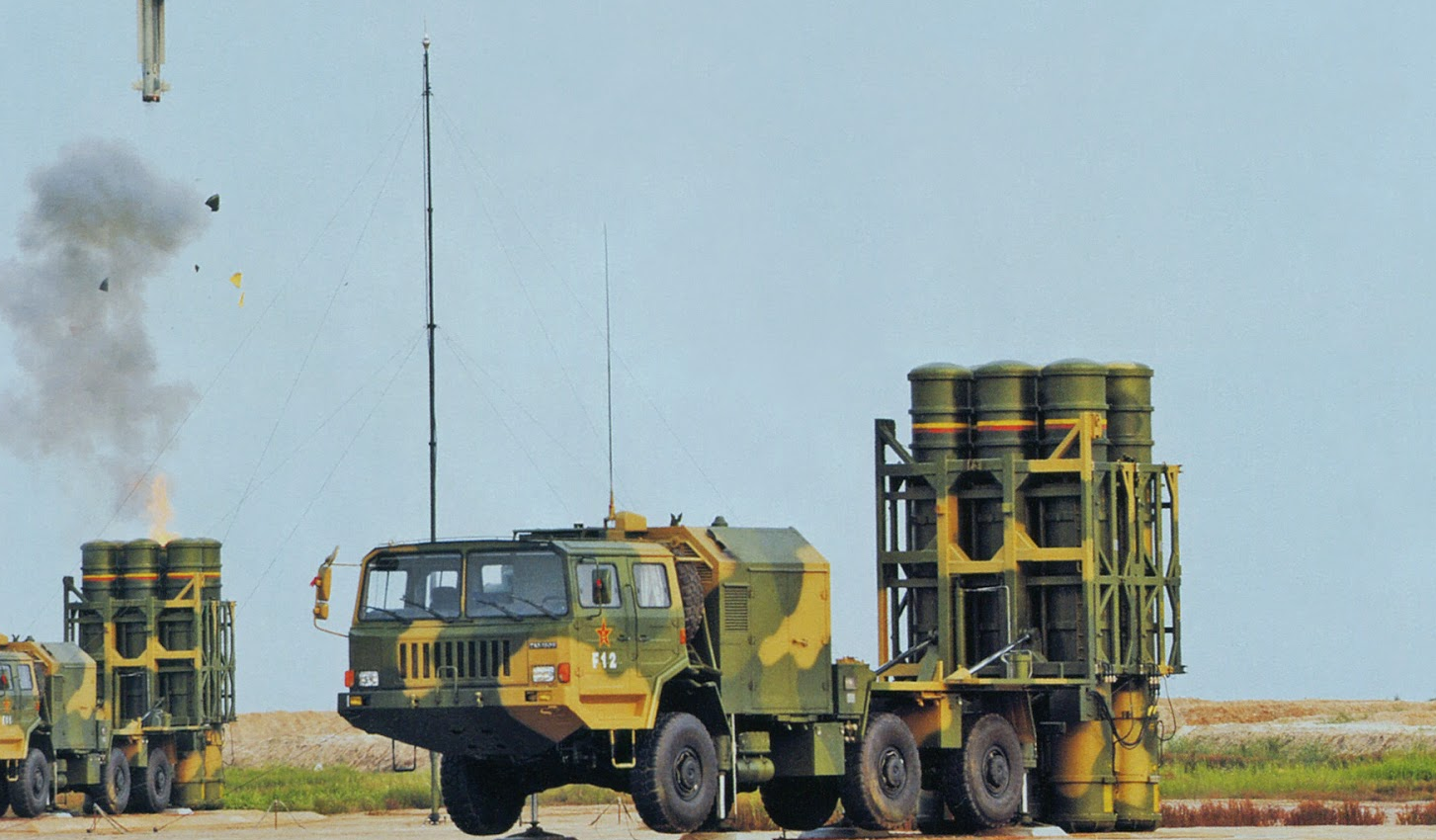
A typical ground battery consists of a command post, two multifunction radars, and four to six transporter-erector-launchers (TELs), each carrying six missiles. This gives a single battery 24–36 ready rounds — a significant density advantage over the HQ-9’s four-round TELs. The Stockholm International Peace Research Institute (SIPRI) has tracked the system’s proliferation through its arms transfer database.
HQ-16 / LY-80 Variant Tree
| Variant | Type | Key Feature | Range | Operators |
|---|---|---|---|---|
| HQ-16A | Original land-based | Baseline PLA variant | 40 km | PLA Ground Force |
| HHQ-16 | Naval | VLS on Type 054A frigates | 40 km | PLA Navy |
| HQ-16B | Improved | Extended range | 70 km | PLA Ground Force |
| HQ-16C | Improved | Further enhanced, 70+ km | 70+ km | PLA |
| HHQ-16C | Naval improved | Extended-range naval | 70+ km | PLA Navy |
| LY-80 | Export land-based | Pakistan Army baseline | 40 km | Pakistan Army |
| LY-80EV | Export extended | Extended-range (HQ-16B-class) | ~70 km | Pakistan Army |
| LY-80N | Export naval | VLS on Type 054A/P frigates | 40 km | Pakistan Navy |
| HQ-16FE | Enhanced export | 160 km range, ARH seeker, 27 km altitude | 160 km | Pakistan Air Force |
LY-80 in Pakistan Army Service
Procurement and Contract
The Pakistan Army’s LY-80 procurement was a phased programme. The initial order, placed in 2013–2014, covered three HQ-16 SAM systems valued at US$226 million, along with eight IBIS-150 3D search radars procured separately for approximately US$40 million. This first tranche established the operational foundation and confirmed Pakistan’s selection of the HQ-16 family as its medium-range SAM standard.
Subsequent follow-on orders expanded the programme to a total of nine LY-80 batteries at an overall cost of approximately US$600 million — making it one of the largest single Chinese SAM export contracts. Each battery comprises a command post, multifunction radar, tracking/guidance radar, and four to six six-cell vertical launch TELs. At nine batteries, the PA acquired between 216 and 324 ready-to-fire missiles across the fleet.
Induction and Operational Status
The LY-80 was formally inducted into Pakistan Army service in March 2017. Chief of Army Staff General Qamar Javed Bajwa was the chief guest at the induction ceremony held at Army Auditorium, stating that the “LY-80 LOMADS increases our response capability to current and emerging air defence threats.” The LY-80’s integration marked the first time the Pakistan Army operated a medium-range SAM system — a transformative step from its previous reliance on SHORAD systems like the RBS-70 and Anza MANPADS.
CLIAD Integration
The LY-80 is integrated into the Pakistan Army’s Comprehensive Layered Integrated Air Defence (CLIAD) system, where it provides the medium-range coverage tier — designated ‘LOMADS’ in Army taxonomy — between the FM-90 ESHORAD (15 km) and the HQ-9/P HIMADS (125 km). The system was operationally deployed during Pakistan’s CLIAD activation in the May 2025 India-Pakistan conflict.
The SARH Constraint
The LY-80 uses semi-active radar-homing (SARH) guidance, meaning each missile requires continuous illumination from the battery’s fire-control radar throughout its flight. This creates a fundamental constraint: the number of simultaneous engagements is limited by the number of illumination channels, not just the number of missiles. As Quwa has analysed, this SARH dependency is a key limitation in a high-tempo, multi-axis threat environment where cruise missile saturation attacks can overwhelm illumination channels faster than missiles can be fired.

LY-80EV: The Extended-Range Variant
The Pakistan Army has displayed units designated ‘LY-80EV’ at military exercises. The ‘EV’ suffix likely denotes an extended-range variant, potentially corresponding to the HQ-16B class with a range of approximately 70 km — nearly doubling the baseline LY-80’s reach.
The LY-80EV may bridge an important capability gap in the Pakistan Army’s CLIAD architecture: the jump from the LY-80’s 40 km envelope to the HQ-9/P’s 125 km creates a coverage seam that a 70 km system can address. Whether the LY-80EV uses an improved seeker configuration — potentially incorporating active radar-homing (ARH) for the terminal phase — has not been publicly confirmed.
LY-80N: Pakistan Navy’s Naval Variant
The LY-80N is the naval variant operated aboard the Pakistan Navy’s Tughril-class (Type 054A/P) frigates, which entered service from 2022. Each frigate carries a 32-cell vertical launch system (VLS) for the LY-80N, providing area air defence for naval task groups.
The LY-80N represented a significant upgrade for the Pakistan Navy, which had previously operated only short-range naval SAMs (LY-60 on the Type 21 frigates, and Mistral/AK-630 CIWS). With the LY-80N, the Pakistan Navy for the first time acquired medium-range anti-air warfare (AAW) capability comparable to the RIM-66 Standard that it had briefly operated on leased Brooke-class frigates in the 1980s.
As the Pakistan Navy transitions to the MBDA CAMM-ER on the Babur-class corvette programme, the LY-80N will remain the backbone of the PN’s frigate-based AAW for the Tughril-class fleet through the 2030s and beyond.
HQ-16FE: Pakistan Air Force’s Extended-Range Variant
The HQ-16FE is the most advanced variant in Pakistan’s inventory, operated by the Pakistan Air Force with a stated range of 160 km and an altitude ceiling of 27 km. This quadruples the baseline LY-80’s range and places the HQ-16FE in competition with medium-to-long-range systems rather than the medium-range category the original HQ-16 occupied.
First revealed at the 2022 Zhuhai Airshow, the HQ-16FE reportedly incorporates an improved seeker — likely combining SARH mid-course guidance with an ARH terminal seeker — and a larger, longer-burning rocket motor. The 27 km altitude ceiling suggests the HQ-16FE can engage high-flying targets that the baseline LY-80 (18 km altitude) cannot reach.
The PAF’s acquisition of the HQ-16FE complements its HQ-9BE (260–280 km), creating a layered PAF-specific IADS architecture: HQ-9BE for strategic, long-range area defence; HQ-16FE for medium-range gap coverage; and the legacy Spada 2000-Plus for point defence.
Quwa Assessment: The LY-80 in Pakistan’s Threat Environment
The LY-80 was the right system at the right time. When the Pakistan Army inducted it in 2017, it represented a step-change from a force that had no medium-range SAM capability to one with a credible 40 km engagement envelope. However, as Quwa has analysed, the system carries inherent limitations that the May 2025 conflict brought into sharper focus.
The Missing Middle — and What Comes Next
As Quwa has detailed in its market brief on Pakistan’s “Missing Middle” SAM requirement, the coverage layer between the PA’s HQ-9/P (125 km) and FM-90 (15 km) represents a significant capability gap. The LY-80EV partially addresses this at 70 km, but the entire medium-range layer still lacks a quick-reaction, ARH-based interceptor optimised for cruise missile defence — the exact gap that the CAMM-ER and indigenous LoMADS programmes are intended to fill.
Supply Chain and Sustainment
The nine PA batteries plus the PN’s frigate-based LY-80N represent a substantial installed base requiring continuous missile replenishment, spare parts, and periodic upgrade cycles from China. The $600 million initial procurement represents only the acquisition cost — lifecycle sustainment over 25+ years of service will likely exceed the original purchase price. China’s concessional terms and Pakistan’s deep bilateral defence relationship mitigate supply-chain risk, but the concentration of Pakistan’s entire medium-range SAM layer on a single foreign-sourced platform underscores the strategic rationale for the LoMADS indigenous programme.
Radar and Fire-Control Architecture
The LY-80 battery uses a multifunction phased-array radar for target acquisition and tracking, paired with a separate fire-control/illumination radar for SARH guidance. The IBIS-150 3D search radar — a solid-state S-band passive electronically-scanned array (PESA) — provides a detection range of up to 150 km. Pakistan procured eight IBIS-150 radars in the initial $40 million radar contract (2013–2014), providing each battery and spare units with dedicated surveillance coverage. Each L-band tracking radar has a range of 85 km and can detect up to six targets while tracking four simultaneously.
For the LY-80N aboard the Type 054A/P frigates, the fire-control function is integrated into the ship’s combat management system, with the frigate’s own surveillance and fire-control radars providing target data and illumination.
Global Operators and Export Context
Pakistan remains the only confirmed export operator of the HQ-16/LY-80 family. The PLA Ground Force operates approximately 250 HQ-16A and HQ-16B systems, while the PLA Navy’s HHQ-16 is deployed across its substantial Type 054A frigate fleet. The HQ-16’s relative lack of export success — compared to the HQ-9’s growing customer base — reflects the highly competitive medium-range SAM market, where the system faces competition from the Russian Buk-M3, the European SAMP/T, and MBDA’s CAMM-ER.
Quwa Pro – Defence Market Intelligence
See Where Defence Demand and Technology Are Moving Next
Track procurement priorities across Pakistan, the Gulf and wider MENA, and Central Europe. Follow emerging vendors, drones, AI, C-UAS, and affordable precision weapons, and see how lessons from today’s conflicts are reshaping military requirements and market opportunities.
Featured & Trusted By







Frequently Asked Questions About the LY-80 / HQ-16
What is the range of the LY-80?
The baseline LY-80 (HQ-16A) has a range of 40 km. The LY-80EV extends this to approximately 70 km. The HQ-16FE, operated by the Pakistan Air Force, has a range of 160 km.
How much did Pakistan pay for the LY-80?
Pakistan’s LY-80 procurement totalled approximately US$600 million for nine batteries. The initial order (2013–2014) covered three HQ-16 systems for US$226 million, plus eight IBIS-150 3D search radars for approximately US$40 million. Follow-on orders expanded the fleet to nine batteries.
Does Pakistan have the HQ-16?
Pakistan operates multiple variants across all three services: the Pakistan Army’s LY-80 and LY-80EV (land-based), the Pakistan Navy’s LY-80N (aboard Type 054A/P frigates), and the Pakistan Air Force’s HQ-16FE (extended range, 160 km).
What is the difference between LY-80 and LoMADS?
The LY-80 is a Chinese-made medium-range SAM imported by Pakistan. LoMADS is an indigenous programme being developed by Pakistan’s GIDS/NESCOM, expected to provide up to 100 km range with significant local content. They are entirely different systems — the LY-80 fills the medium-range layer now, while LoMADS is the planned long-term indigenous successor.
How many LY-80 batteries does Pakistan have?
The Pakistan Army procured nine LY-80 batteries in a phased programme valued at approximately US$600 million total. The initial 2013–2014 order covered three systems; follow-on orders brought the total to nine.
Was the LY-80 used in the May 2025 conflict?
The LY-80 was part of the Pakistan Army’s activated CLIAD system during the May 2025 India-Pakistan conflict. Specific engagement details for the LY-80 have not been publicly confirmed, though the system was operationally deployed alongside the HQ-9/P.
What is the HQ-16FE range?
The HQ-16FE has a stated range of 160 km and an altitude ceiling of 27 km. It was first revealed at the 2022 Zhuhai Airshow and is operated by the Pakistan Air Force.
Related Profiles and Analysis
- Pakistan Air Defence System — Overview of Pakistan’s layered IADS architecture.
- HQ-9 Long-Range Air Defence System — Pakistan’s HIMADS tier.
- HQ-7 / FM-90 Short-Range Air Defence System — Pakistan’s ESHORAD tier.
- MBDA CAMM-ER / Albatros-NG Air Defence System — The Western MRAD benchmark.
- GIDS LoMADS Air Defence System — Indigenous MRAD programme and potential LY-80 successor.
- GIDS FAAZ-SL (E-SHORADS) Air Defence System — Indigenous SHORAD complement.
- RBS 70 VSHORAD Air Defence System — Pakistan’s VSHORAD tier.
- Pakistan Navy Type 054A/P Frigate — The LY-80N’s primary platform.
- Reaction, Not Range: How Pakistan’s Air Defence Must Evolve — Quwa’s flagship IADS analysis.