
Director of National Intelligence (DNI) Tulsi Gabbard told Congress on March 19 that Pakistan’s long-range ballistic missile development “potentially could include intercontinental ballistic missiles (ICBMs) with the range capable of striking the Homeland.” The statement, delivered as part of the Intelligence Community’s (IC) 2026 Annual Threat Assessment to the House Permanent Select Committee on Intelligence (HPSCI), placed Pakistan in the same sentence as Russia, China, North Korea, and Iran – four states with either active ICBM programs or demonstrated hostile postures toward the United States. Pakistan’s longest-range tested missile, the Shaheen-III, has an estimated range of 2,750 km – less than a third of what would be needed to reach the continental United States. In other words, the gap between the stated concern and the available evidence is substantial, and the IC’s actual concern appears to lie elsewhere: in where Pakistan’s nuclear fuel cycle might go next, and who might be in the market for it.
The Testimony and Its Predicate
Gabbard’s written testimony to HPSCI – she also appeared before the Senate Select Committee on Intelligence (SSCI) on March 18 – contained two direct references to Pakistan’s missile program. The first, on page 4, stated that “the IC assesses that Russia, China, North Korea, Iran and Pakistan have been researching and developing an array of novel, advanced, or traditional missile delivery systems with nuclear and conventional payloads, that put our Homeland within range.” The second, on page 5, was more specific: “Pakistan’s long-range ballistic missile development potentially could include ICBMs with the range capable of striking the Homeland.” Gabbard opened her remarks by noting that “what I’m briefing here today does not represent my personal views or opinions. I am conveying the Intelligence Community’s assessments.”
The language of the testimony warrants closer examination. “Potentially could include” is a double hedge – the word ‘potentially’ signals possibility, and ‘could’ layers a second conditional on top of it. In intelligence drafting, every word carries calibrated weight; an assessment framed as “the IC judges” or “the IC assesses with high confidence” reflects a firm analytical conclusion backed by corroborating evidence. “Potentially could include” conveys something closer to a theoretical capability pathway – not a program under active observation, but a trajectory the IC considers plausible if present trends continue. The Congressional Research Service (CRS), in a report prepared for Congress around the same period, assessed Pakistan’s long-range missile capability as “several years to a decade away,” reinforcing the distance between what the IC flags as possible and what it can demonstrate is imminent.
Importantly, the testimony did not arrive in a vacuum. On December 18, 2024, the US State Department sanctioned Pakistan’s National Development Complex (NDC) – the PAEC subsidiary responsible for the solid-fuel Shaheen missile series – along with three Karachi-based procurement entities: Akhtar and Sons Private Limited, Affiliates International, and Rockside Enterprise. Principal Deputy National Security Adviser Jonathan Finer stated at the time that Pakistan was developing capabilities “to strike targets well beyond South Asia, including in the United States.” A Center for Strategic and International Studies (CSIS) analysis published in January 2025 identified the technical kernel of the concern: “significantly large-diameter solid rocket motors” being manufactured at NDC. As Quwa reported at the time, in US Targets Pakistan’s Ballistic Missile Program, these sanctions marked a continuation of the decades-long US effort to constrain Pakistan’s delivery systems – an effort dating back to the Pressler Amendment in 1985 and extending through multiple rounds of export controls, aid cutoffs, and diplomatic pressure.
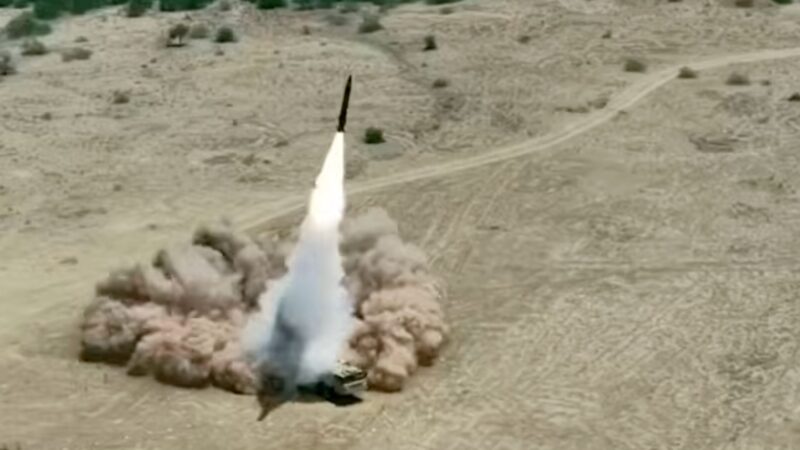
Large-diameter solid rocket motors are dual-use: they can power longer-range ballistic missiles, but they can also propel space launch vehicles (SLVs). Pakistan has no declared SLV program, but the motors themselves are agnostic about their intended application. The NDC sanctions established the technical claim; Gabbard’s testimony three months later broadcast it to the world. Pakistan’s Ministry of Foreign Affairs responded that its missile program was “defensive in nature” and “not at all directed against the United States,” calling it “modest” and incapable of threatening a superpower.
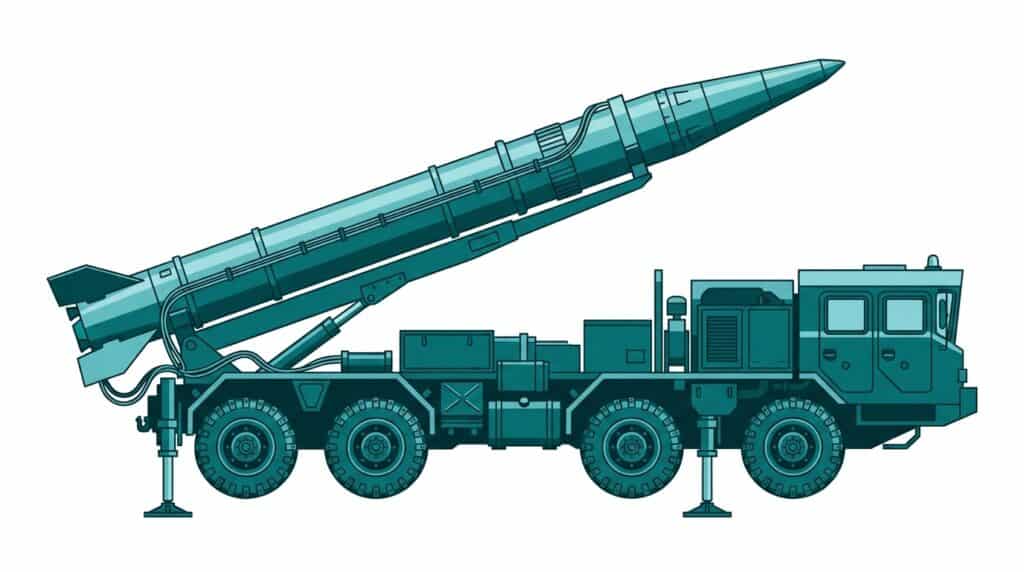
However, the factual gap is substantial. Pakistan’s Shaheen-III – the longest-range system in its tested inventory – was designed to reach approximately 2,750 km, enough to cover the Andaman and Nicobar Islands, India’s easternmost territory and a forward staging area for Indian naval power projection. The standard threshold for an ICBM begins at 5,500 km; reaching the continental United States from Pakistani territory requires roughly 10,000 to 13,000 km, depending on the trajectory and re-entry profile. Lt Gen (Retd) Khalid Kidwai, the architect of Pakistan’s nuclear command and control infrastructure and the former head of the Strategic Plans Division (SPD), articulated four red-line thresholds for nuclear use – all of them India-specific: loss of large territory, destruction of Pakistan’s military forces, economic strangulation, and political destabilization. Speaking at an IISS-CISS workshop in London in February 2020, Kidwai framed Pakistan’s posture as ‘quid pro quo plus’ – proportional response with escalation dominance, but entirely within the India dyad.
Writing in Eating Grass: The Making of the Pakistani Bomb, retired Brigadier Feroz Hassan Khan – a former director of arms control and disarmament affairs at the SPD – put it plainly: “The Pakistanis see no role for nuclear weapons other than to deter India from waging a conventional war.”1 In the same volume, Khan added: “To the author’s best knowledge, there has been no plan to provide extended deterrence to any other country or to sell nuclear technology.”2 That was written in 2012, before the events of 2025 changed the regional calculus. The India-centric character of Pakistan’s nuclear posture is something Quwa has tracked since 2018. As this publication assessed at the time, “the cause is the substantiated belief among Pakistan’s decision-makers that nuclear weapons are the only guarantor of Pakistan’s sovereignty and territorial integrity” – a belief forged in the 1965 and 1971 wars, when Pakistan concluded that “international institutions” were “capricious and alliances unreliable.” Simply put, every missile in Pakistan’s inventory exists to service that belief, and none was designed to threaten the United States. The question, then, is what the IC is actually worried about.
A Program Born of Proliferation
The answer begins with the origins of Pakistan’s nuclear program – and, more critically, with what it produced that no sanctions regime has been able to contain.
Pakistan’s nuclear fuel cycle was conceived in 1972, in the aftermath of the loss of East Pakistan in the December 1971 war. Prime Minister Zulfikar Ali Bhutto convened the country’s leading scientists at Multan in January 1972 and directed them to deliver a weapon. By May, Munir Ahmad Khan – the chairman of PAEC – had assembled a comprehensive blueprint encompassing every stage of the nuclear fuel cycle: uranium production, heavy water production, fuel fabrication, spent-fuel reprocessing, and nuclear materials research and development.3 As Mansoor Ahmed documented in Pakistan’s Pathway to the Bomb: Ambitions, Politics, and Rivalries, Khan secured a budget of US$450 million for the enrichment route alone4 – a substantial sum for 1970s Pakistan, and a deliberate bet that the window for procurement would narrow as Western export controls tightened after India’s 1974 ‘Smiling Buddha’ nuclear test. The Pakistan Institute of Nuclear Science and Technology (PINSTECH) served as the R&D hub, developing what Ahmed describes as a ‘jugaardh’ philosophy – improvisational problem-solving under resource constraints that would become the defining feature of Pakistan’s nuclear enterprise.
Quwa Pro
See Where Emerging Defence Markets are Moving
Quwa Pro goes beyond tracking programs and equipment by explaining the policies, incentives, industry dynamics, and competitive pressures shaping South Asia's defence markets.
Subscribe Already a subscriber?Sign in