Pakistan Air Force News

Beyond Block-3: Why the JF-17 Thunder Remains Crucial for the PAF’s Future Plus Pro

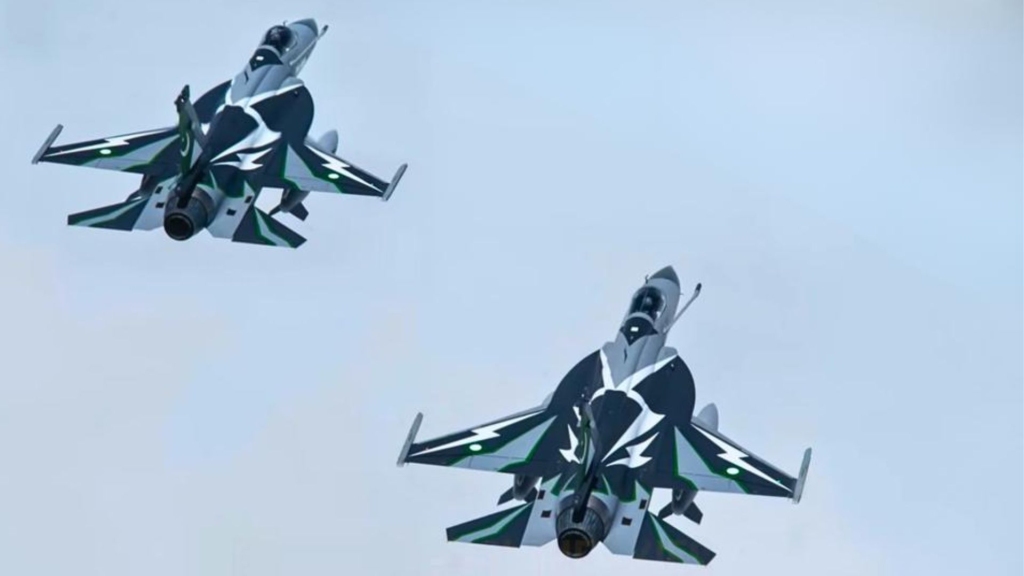
The high-profile debut of the JF-17C Block-3 at the 2025 Royal International Air Tattoo (RIAT) served as a key signal of Pakistan’s continued commitment to its flagship fighter program.


Youtube


X-twitter


Linkedin


Spotify


Rss

The high-profile debut of the JF-17C Block-3 at the 2025 Royal International Air Tattoo (RIAT) served as a key signal of Pakistan’s continued commitment to its flagship fighter program.

While the Pakistan Air Force (PAF) accredited all of its aerial victories against the Indian Air Force in the May 2025 conflict to its J-10CE fleet, its interest in promoting the JF-17 Thunder on the international stage remains undiminished. This commitment is not merely a matter of national pride; it is a strategic imperative rooted in industrial capacity, long-term fleet planning, and an evolving concept of air warfare.

The Thunder program recently received critical momentum from a multi-billion-dollar order for 40 units from the Azerbaijan Air Force. This deal is significant on two fronts. Firstly, it is Pakistan’s single-largest defence export order to-date, providing a substantial financial and reputational boost.

Secondly, and perhaps more importantly, it is a probable catalyst for supporting the JF-17’s continued development. Pakistan possesses a growing portfolio of original and sophisticated subsystem projects, including active electronically scanned array (AESA) radars, guided munitions, and other core inputs.

There is a strong domestic incentive to integrate these indigenous systems into the Thunder, especially since Pakistan Aeronautical Complex (PAC) has already invested heavily in the infrastructure required for such complex work. The revenue from the Azeri order could prove instrumental in funding this next phase of development, particularly as the PAF itself appears to be recalibrating its own procurement priorities.

With an eye on expanding its air defence footprint and bolstering its offensive air warfare capabilities, the PAF had trimmed its domestic JF-17C order from an originally planned 50 aircraft to just 30.

Export success, therefore, offers a vital alternative funding stream to keep the program’s evolution on track. The first glimpse of this future has already emerged: Project PFX Alpha, which appears to be the first designated post-Block-3 upgrade path for the JF-17. It is a program that could, despite the PAF’s shifting focus, merit a place in its future fleet.

Get access to this article and all other Quwa content today.
Click Here

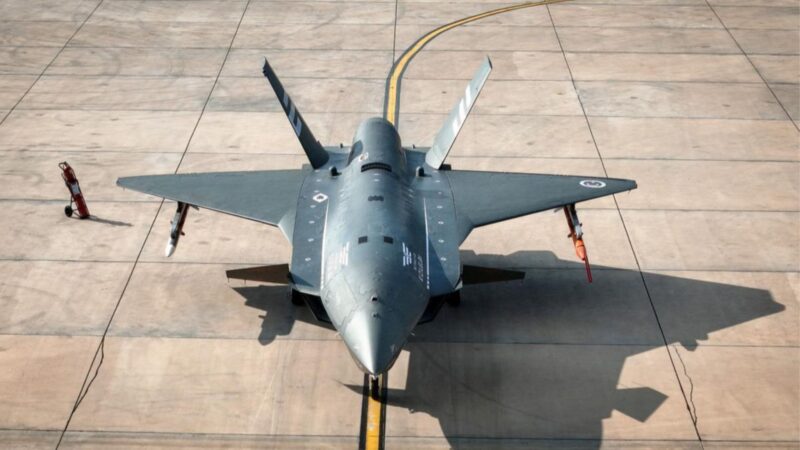
This philosophical evolution explains why, as discussed on the Defence Uncut podcast, the PAF could prioritize the development of an unmanned combat aerial vehicle (UCAV). This was an area of interest before the 2025 conflict, but it has likely gained urgency due to the emerging realities of South Asia’s air warfare dynamics. Both sides of the border now feature dense air defence networks and advanced fighter coverages. In a controlled conflict scenario, the strategic and morale impact of losing crewed aircraft and their pilots is a significant consideration, further strengthening the case for capable, attritable UCAVs.

However, a future variant of the JF-17 could also fit smoothly into this system-of-systems architecture. In a direct, platform-versus-platform discussion, such as a JF-17 versus a Tejas, one will generally – and rightly – conclude that the Tejas leverages a more maneuverable and complex design, making it a more capable platform as a whole. But this misses the point of the PAF’s new doctrine.

By leveraging an AESA radar, a helmet-mounted display and sight (HMD/S) system, integrated electronic warfare (EW) and electronic countermeasures (ECM) suites, and a diverse arsenal of long-range air-to-air and air-to-surface munitions, the JF-17 would still be a perfect fit for the PAF’s system, and at a likelier much lower acquisition and operational cost than the Tejas.

In this context, the JF-17 could continue its role as a scalable air warfare asset deployed from within the relative safety of Pakistani territory, while UCAVs are tasked with penetrating contested airspace across the border. Its purpose would be to help build the wider ‘kill-chain’ in various capacities.

It could function as a situational awareness sensor node, feeding data into the network. It could serve as a standoff munitions deployer, launching air-to-air or air-to-surface weapons. It can also work as a munitions guidance sensor for weapons launched by other assets. The JF-17 could even help densify EW or ECM coverage in a specific area to support a larger strike package.

Quwa Plus

Finish the Story. Get the Full Picture.

Unlock independent journalism and deeper analysis that help you make sense of Pakistan’s key defence and policy developments without relying on shallow or foreign-framed coverage.

Join ($29.99/Year)