Youtube
X-twitter
Linkedin
Spotify
Rss
Get access to this article and all other Quwa content today.
Click Here
Due to the opaque nature of military deals in general, it is difficult to get verified pricing figures of other aircraft competing in the market, particularly the lightweight fighter segment.
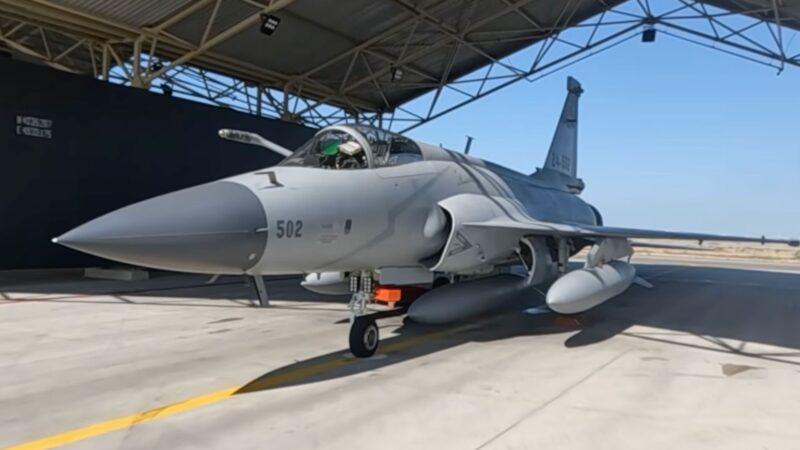
In a loose sense, the JF-17’s primary market competitors could include the Saab JAS-39E/F Gripen, Korea Aerospace Industries (KAI) F/A-50 Golden Eagle, and the Hindustan Aeronautics Limited (HAL) Tejas.
The JAS-39E/F’s last export order was from Brazil, which was valued at USD $5.44 billion for 36 aircraft in 2014. The assumed ‘all-in’ price was, at that time, USD $154 million per unit, but also included offsets and transfer-of-technology for local production.
If adjusted for inflation between 2014 and 2025, the price would be much higher, potentially (albeit with basic calculations) as high as $294 million USD per unit. However, the Brazilian contract also involved an offset package that was 160% of the value of the deal. In other words, from a foreign or hard currency standpoint, the Brazilians should not have seen an outflow but, rather, a net-positive inflow. This inflow, in turn, went to the country’s domestic aerospace industry.
Quwa Plus
Go Beyond the Headlines on Pakistan’s Defence and Security.
Quwa Plus gives you deeper reporting, briefings, and analysis on Pakistan’s defence programs, foreign policy, national security, and regional strategy. Follow the developments that matter to professionals, analysts, and serious readers tracking Pakistan’s security landscape.