
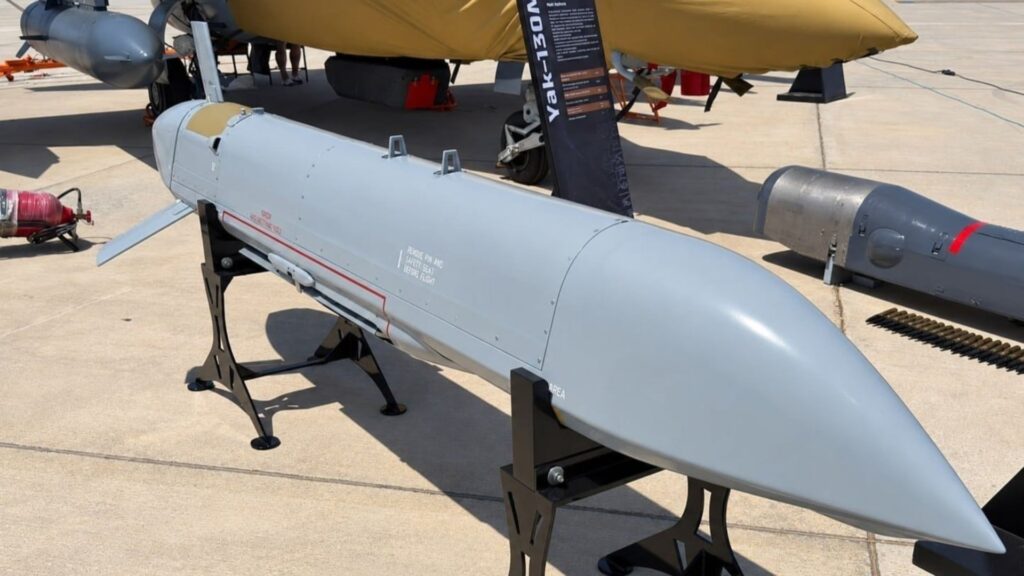
This week, the 34th International Defence Industry Exhibition (MSPO) and the 2nd El Alamein International Airshow both took place, and in reviewing the two, it is apparent that the European and Middle Eastern defence industries are homing in on three key domains: piston- and electrically-powered loitering munitions, low-cost subsonic cruise missiles (LCCMs), and scalable kinetic air defence solutions. It is unclear to what extent major platforms (e.g., combat aircraft) are taking a back seat, but what is clear is that leading militaries and vendors alike want to control the ‘cost of attack’ and ‘price of defence.’
A long-range munition must cost less than $1M per unit, but be available to inflict tens or hundreds of millions in damage (e.g., by neutralizing a high-cost combat aircraft on the ground). Likewise, the sub-$1M surface-to-air missile (SAM) or airburst round must be there to defend that multi-million-dollar asset. In effect, the world’s major militaries and industries expect the munition to return many multiples of its cost in value. To achieve this goal, the launch platform (e.g., aircraft, ship, etc.) is increasingly factored out, whereby the munition can operate as a standalone asset. However, at the same time, more of the original platform’s capabilities (e.g., sensors) are being diffused across off-board systems, such as satellites or cheaper platforms (e.g., drones).
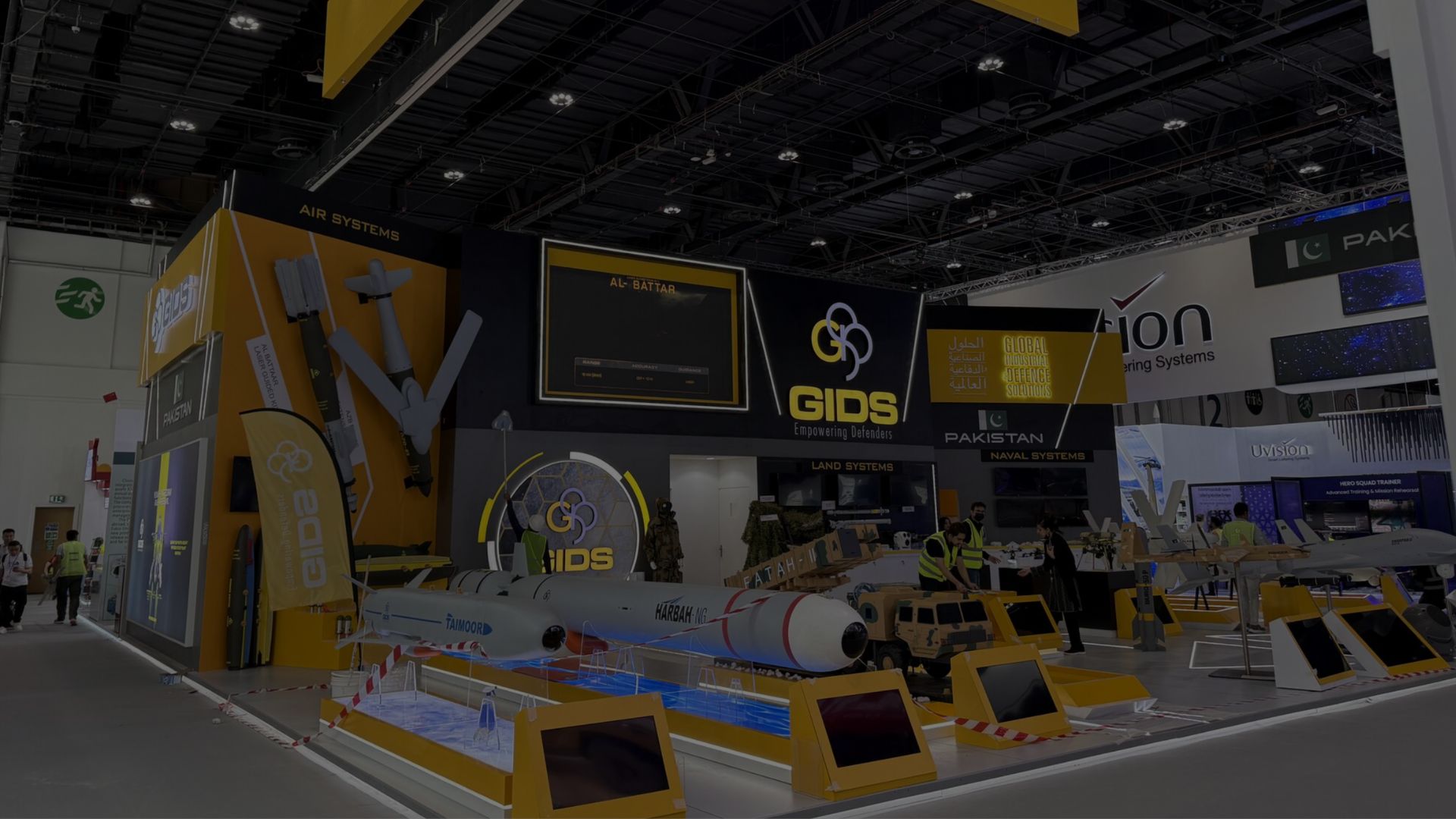
So, within that broad framework, one can see Pakistan’s defence industry developing solutions on both fronts. Between radars, passive electronic support measures (ESM), imaging satellites (albeit currently from China, but with the goal of indigenizing over the long term), and data-link programs, Pakistan is aiming for networked ISTAR (intelligence, surveillance, target acquisition, and reconnaissance). Likewise, there are many loitering munitions and LCCM programs in the works by both state-owned enterprises (SOEs) and private sector companies. However, one will notice that the work up to this point has largely been tilted toward the offensive end. Relatively speaking, Pakistan’s defensive side is weak, and that must be corrected for both operational and export purposes.
It was clear from MSPO 2026 and the El Alamein Airshow that the EMEA (Europe, Middle East, and Africa) space values the offensive side, but there was significant work happening on the defensive front as well, especially in kinetic effectors. MBDA and Poland’s Military Institute of Armament Technology (WITU), for example, provided a clear look at what a scalable kinetic defensive solution could be via the Counter Mass Interceptor (CMI), a supersonic effector aimed at one-way drones, ISR drones, helicopters, and cruise missiles at ranges beyond 6 km. Likewise, Poland is moving to domestically manufacture a 35 mm programmable airburst munition (ABM) to arm its growing anti-air gun (AAG) arsenal. But when reviewing Pakistan’s defence industry portfolio as a whole, it seems that defensive scalable solutions are not receiving as much attention at the moment as offensive ones.
Low-Cost Strike
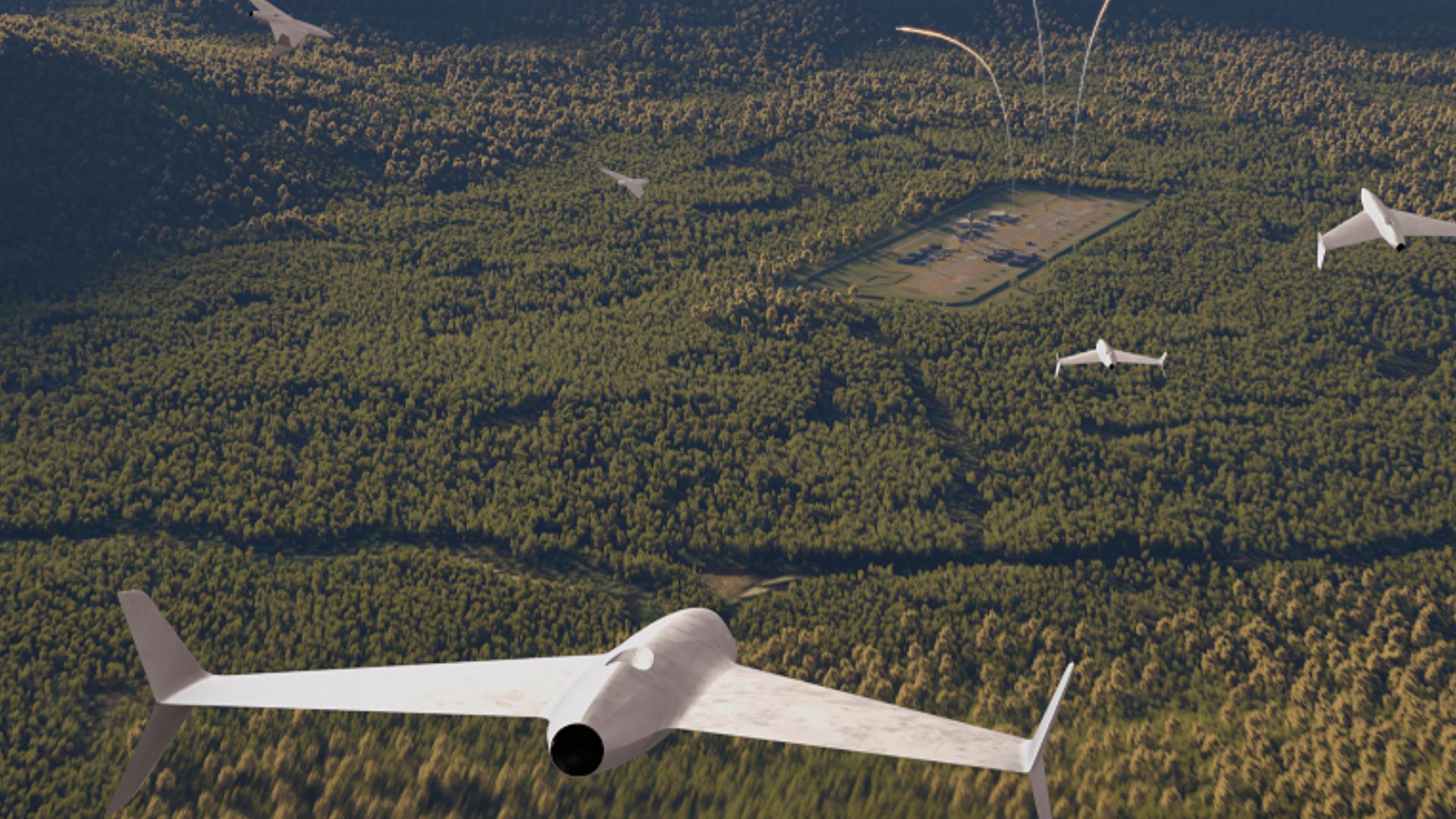
Poland’s WB Group Gladius 2 (aka Warmate 30), MBDA’s Deluge and Crossbow, and Russia’s S-71M and S-71K all show that the likes of the National Engineering and Scientific Commission (NESCOM), Woot-Tech, the National Aerospace and Science Technology Park (NASTP), and others are on the right track in terms of their respective LCCM programs.
Arguably, LCCMs have been one of those areas where Pakistan’s defence planners had moved relatively early on, as the mainstay programs (e.g., Sarfarosh and KaGeM V3) date back to 2024, i.e., before the conflict with India in 2025. Pakistan has numerous programs of this nature, and one can expect solutions that are analogous in idea and concept to the newer solutions shown at MSPO 2026 and the El Alamein Airshow.
Quwa Plus
Go Beyond the Headlines on Pakistan’s Defence and Security.
Quwa Plus gives you deeper reporting, briefings, and analysis on Pakistan’s defence programs, foreign policy, national security, and regional strategy. Follow the developments that matter to professionals, analysts, and serious readers tracking Pakistan’s security landscape.