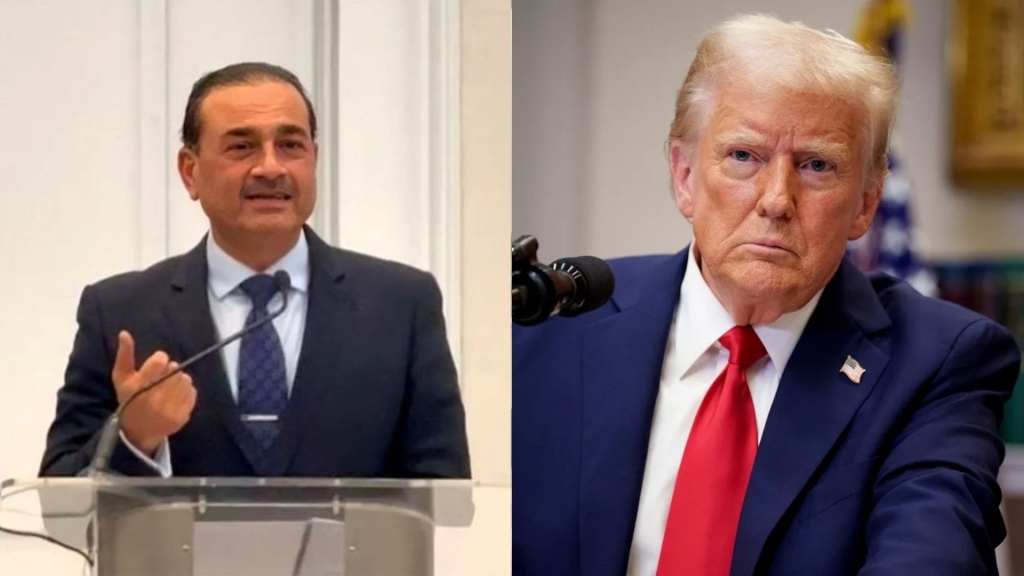
In his official visit to Washington, Pakistan’s Chief of Army Staff (COAS), Field Marshal Asim Munir, was invited to a private luncheon directly with U.S. President Donald Trump in the White House.
The meeting is a significant swing in optics, from the disparaging Tweet President Trump posted in 2017 to disavow Pakistan and cut its military aid, to now viewing a key head of its security establishment as an important figure and stakeholder.
However, while Pakistan has looked to reframe its identity as more than a regional security partner, the meeting between Pakistan’s top military figure and the President of the U.S. arguably maintains more of the same core historical pattern.
Get the Full Picture on Pakistan’s Defence and National Security
Get dedicated Pakistani defence news, force analysis, procurement tracking, and national security policy insight, backed by more than a decade of documented reporting and depth general news coverage cannot match.
However, the U.S.’s vision for Pakistan could potentially involve more than solely Iran and, potentially, be a call to Rawalpindi to ‘look West’ in both its immediate security concerns and its long-term direction.
In other words, Washington likely wants Pakistan to focus its energies on Afghanistan and Iran so as to ensure both countries remain stable and favourable to U.S. interests. Moreover – and more importantly – the U.S. wants Pakistan and India to normalize their ties, potentially by formalizing the Line of Control as the international border between the two countries.
A ‘look West’ doctrine would require normalization with India and, consequently, a gradual shift towards managing security and stability on the western front.
However, the challenge with that call to action is that Pakistan just emerged from an intense conflict with India last month. Moreover, India was the instigator of that conflict; thus, there is no objective reason for Pakistan’s national security leadership to accept this shift short of a landmark guarantee or fundamental change in the underlying equation.
Washington may perceive that the ‘change in the underlying equation’ could involve normalization (i.e., forcing India to the negotiating table along with Pakistan), guaranteeing Pakistan’s water interests, and, potentially, better integrating the Pakistani economy into world markets.
However, guarantees did not dissuade Pakistan from pursuing the Kashmir question in 1965 and, in turn, accepting the consequences of U.S. sanctions as a result. Likewise, guarantees did not prevent Pakistan from losing its eastern half (i.e., Bangladesh) in 1971. Finally, guarantees did not assuage Pakistan from its alarm regarding India’s Smiling Buddha nuclear tests in 1974.
Generally, in Pakistan’s experience, ‘guarantees’ mean little in the face of recurring real-world dynamics, and the leading issue of concern to Rawalpindi today is India.
The Nuclear Tension Point
Rawalpindi and Islamabad will also be wary of Washington’s intentions for Pakistan’s nuclear program. In fact, just in April, President Trump said:
‘‘It’s not a complicated formula. Iran cannot have a nuclear weapon. Right now we have countries that have nuclear power that shouldn’t have it. But I’m sure we’ll be able to negotiate out of that too as part of this later on down the line’’.
Pakistan will likely perceive that statement as a thinly veiled reference to its own nuclear program, which the U.S. has worked to curb since the 1970s. In fact, Washington has still not given up on addressing it, as indicated in its refusal to permit Pakistan into the Nuclear Suppliers Group (NSG), for example. There is an apparent desire to not just contain Pakistan’s nuclear program but reverse it.
Whether Trump acts upon his statement from April is another question, but at the minimum, there lies a structural gap between what the U.S wants and what Pakistan can (or cannot) offer. In one sense, India’s decision to attack Pakistan in May 2025 could not have come at a worse time, as it galvanized Pakistan’s public and its leadership around the fact that they have a nuclear weapon. The strikes on Iran reinforced this sentiment, thus, basically, anchoring Pakistan’s nuclear program even deeper.
The Security Partner is Back Again
Ultimately, the nuclear tension point and the renewed focus on India will leave a structural gap between Rawalpindi and Washington. Therefore, Trump’s meeting with Munir is likely to be more along the lines of the U.S. needing Pakistan to take up a currently unknown regional security role.
Just as it had before in the 1960s, 1980s, and 2000s, Pakistan will likely try to leverage its new role as a way of securing resources that it can draw on to close the conventional military gap with India. While that may not involve the release of American-built weapon systems, economic support via more favourable or concessionary trade deals, better access to third-party financing, and permits for ITAR-bound subsystems or inputs in Turkish or European equipment could be sought instead.
However, this security-centric cycle can evolve into a more robust engagement due to the broader geopolitical shifts at play, such as the nuclear gap and Washington’s push to limit China. Whether this would favour Pakistan’s national security interests remains to be seen.
Quwa Plus · In-Depth Pakistan Coverage
Understand Pakistan’s Defence and National Security in Unmatched Depth
Understand what Pakistan is acquiring, how its armed forces are evolving, and where national security policy is heading through dedicated defence news, force analysis, procurement tracking, Pulse Check briefings, and more than a decade of documented reporting.
Featured & Trusted By