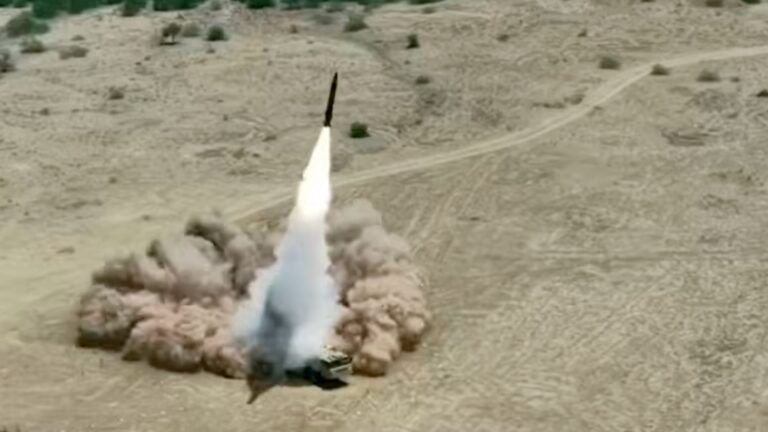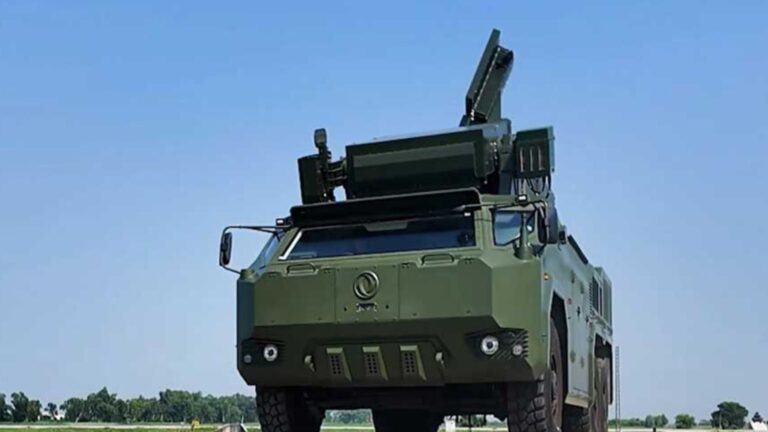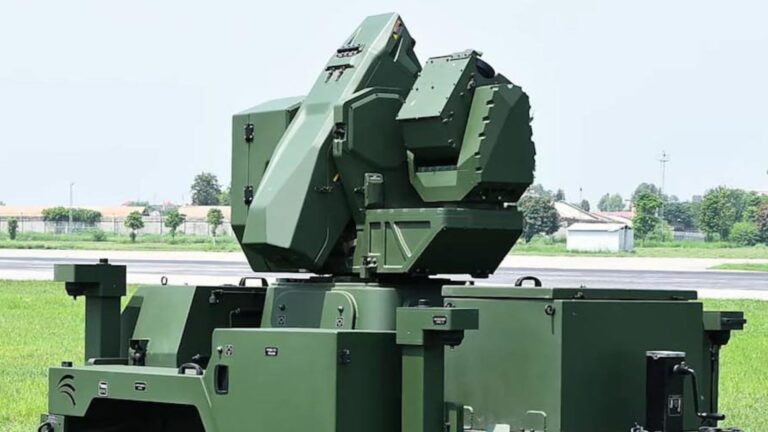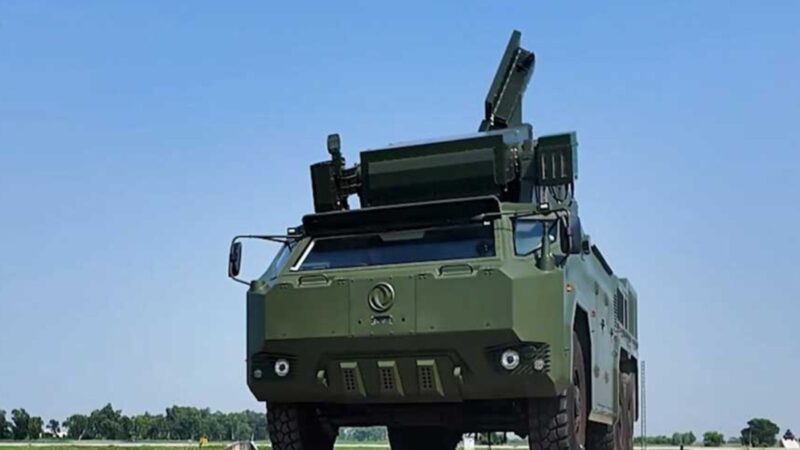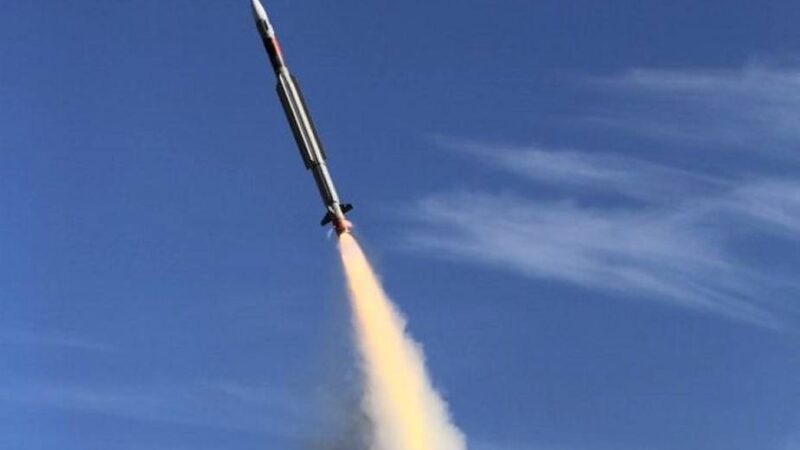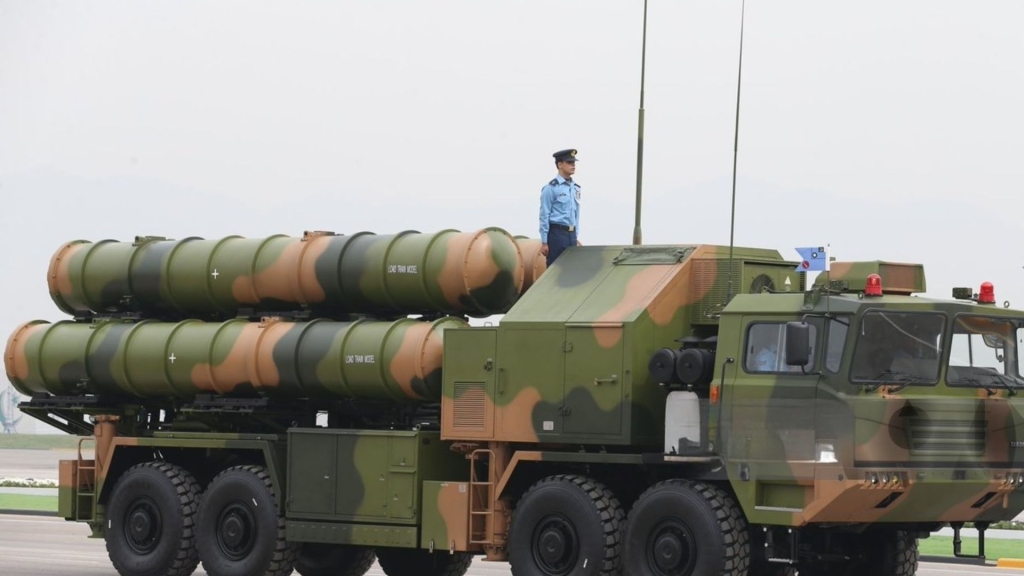
The HQ-9 (红旗-9, ‘Red Flag-9’) is a Chinese long-range surface-to-air missile (SAM) system developed by the China Aerospace Science and Industry Corporation (CASIC). Pakistan operates two variants: the Pakistan Army’s HQ-9/P and the Pakistan Air Force’s HQ-9BE — making the HQ-9 family Pakistan’s only strategic-tier ground-based air defence system.
The HQ-9/P entered service on 14 October 2021 and was combat-proven during the May 2025 India-Pakistan conflict — the first confirmed operational use of any HQ-9 variant. Export variants marketed by CASIC include the FD-2000 (baseline export) and FD-2000B (enhanced export, 250 km range).
The HQ-9 sits at the top of Pakistan’s layered air defence architecture, providing a high-to-medium-altitude air defence (HIMAD) umbrella under which shorter-range systems — including the LY-80/HQ-16, FM-90, and Spada 2000-Plus — operate.
Know What Defence Buyers in Will Need Next
See emerging requirements, likely suppliers, and routes to market across Pakistan, MENA, and fast-moving defence technologies, before demand becomes obvious.
HQ-9 / FD-2000 Specifications
| Parameter | HQ-9 (PLA baseline) | HQ-9/P (Pakistan Army) | HQ-9BE (Pakistan Air Force) | FD-2000 (export) |
|---|---|---|---|---|
| Type | Long-range SAM / ABM | Long-range SAM | Extended-range SAM | Export SAM |
| Developer | CASIC | CASIC (Pakistan-specific) | CASIC (enhanced export) | CASIC |
| Range (aircraft) | 120 km | ~125 km | 260–280 km | 125 km |
| Range (cruise missiles) | — | ~25 km | TBC | ~25 km |
| Altitude | 27 km; 50 km (HQ-9B) | TBC | Up to 50 km | 27 km |
| Missile Speed | Mach 4.2 | Mach 4+ | Mach 4+ | Mach 4.2 |
| Reaction time | ~12–15 sec | TBC | TBC | ~12–15 sec |
| Missile Length | 6.8 m | 6.8 m | 6.8 m | 6.8 m |
| Missile Diameter | 700 mm (1st) / 560 mm (2nd) | Similar | Similar | Similar |
| Missile Weight | ~2,000 kg | ~2,000 kg | ~2,000 kg | ~2,000 kg |
| Warhead | 180 kg | 180 kg | 180 kg | 180 kg |
| Guidance | TVM (inertial + uplink + terminal active radar) | TVM / SARH | ARH | TVM |
| Launcher | 4-round TEL | 4-round TEL | 4-round TEL | 4-round TEL |
| Operator | PLA Air Force / Navy | Pakistan Army | Pakistan Air Force | Turkmenistan; Uzbekistan; Morocco; Azerbaijan |
| Status | Operational since 2001 | Operational Oct 2021; combat-proven May 2025 | Operational (post-2021) | Operational |
Development Heritage
The HQ-9 programme began in the 1970s, with full-scale development commencing in the late 1980s. Western analysts generally assess the HQ-9 as a hybrid design. Justin Bronk of the Royal United Services Institute (RUSI) has described it as a hybrid based on the Russian SA-20 but with radar, seeker, and C2 elements heavily influenced by American and Israeli technology. China began importing the Russian S-300 system in 1993, and the HQ-9’s track-via-missile (TVM) guidance — combining inertial mid-course guidance, mid-course uplink, and terminal active radar — may have been developed from US MIM-104 Patriot technology reportedly acquired through third-party transfers. The Stockholm International Peace Research Institute (SIPRI) has tracked Chinese SAM imports and technology transfers extensively in its arms transfer database.
HQ-9 Variant Tree
| Variant | Type | Key Upgrade | Range | Operators |
|---|---|---|---|---|
| HQ-9 | Original ground-launched | Baseline | 120 km | PLA Air Force |
| HHQ-9 | Naval surface-launched | Ship integration (Type 052C) | 120 km | PLA Navy |
| HQ-9A | Improved | Service entry 2001 | ~125 km | PLA Air Force |
| HQ-9B | Enhanced | 260 km range; passive IR seeker added | 260 km | PLA; Egypt |
| HHQ-9B | Naval HQ-9B | Ship-based | 260 km | PLA Navy |
| HQ-9C | BMD-capable | Terminal-phase BMD; slimmer missile, 8 per TEL | TBC | PLA |
| HQ-9/P | Pakistan Army custom | Pakistan-specific variant | ~125 km (aircraft); ~25 km (cruise missiles) | Pakistan Army |
| HQ-9BE | Pakistan Air Force extended | Extended-range, ARH seeker | 260–280 km | Pakistan Air Force |
| FD-2000 | Export baseline | Export designation | 125 km | Turkmenistan; Uzbekistan |
| FD-2000B | Enhanced export | Extended range | 250 km | Morocco; Azerbaijan |
HQ-9/P: Pakistan Army’s Variant
Pakistan’s negotiations for the HQ-9 began in early 2015, alongside discussions for the HQ-16 medium-range system. The HQ-9/P officially entered Pakistan Army service on 14 October 2021, making Pakistan the first country outside China to operationally deploy the system.
The HQ-9/P is configured for Pakistan’s specific threat environment. Its stated capabilities include interception of aircraft at approximately 125 km range and cruise missiles at approximately 25 km. The ‘P’ suffix denotes Pakistan-specific adaptations — though the precise nature of these modifications has not been publicly disclosed.
The HQ-9/P was employed during the May 2025 India-Pakistan conflict — the first confirmed combat use of any HQ-9 variant. The operational deployment confirmed that the system had achieved full operational capability and was integrated into Pakistan’s real-time air defence command-and-control architecture.
HQ-9BE: Pakistan Air Force’s Extended-Range Variant
The Pakistan Air Force operates the HQ-9BE — an extended-range variant with a stated range of 260–280 km. As Quwa has noted in its analysis of Pakistan’s air defence posture, the PAF’s HQ-9BE and the PA’s HQ-9/P together form Pakistan’s long-range SAM backbone.
The HQ-9BE leverages active radar-homing (ARH) for terminal guidance — a more modern architecture than the semi-active radar-homing (SARH) used by some earlier HQ-9 variants. The ARH seeker allows the missile to autonomously acquire and track the target in its terminal phase, reducing the fire-control radar’s exposure time and enabling simultaneous engagement of multiple targets.
The PAF’s procurement of the HQ-9BE appears to have been driven by the need for strategic air defence of air bases, population centres, and other high-value assets. Its 260–280 km range enables the PAF to engage high-flying aircraft, standoff jammers, and ISR platforms at considerable distances from defended sites.
FD-2000 and FD-2000B: Export Designations
The FD-2000 (防盾-2000, ‘Defence Shield-2000’) is the standard export designation for the HQ-9 system. The FD-2000 has a range of 125 km, a reaction time of approximately 12–15 seconds from target detection to missile launch, and uses the HT-233 target-acquisition radar, Type 120 low-altitude search radar, and Type 305A AESA search radar. An optional YLC-20 passive radar can be fitted for detection of stealth aircraft. The FD-2000B is the enhanced export variant with a range of 250 km. Morocco, Azerbaijan, and potentially other buyers have received or ordered the FD-2000B.
It is important to note that Pakistan’s HQ-9/P is not simply an FD-2000. The ‘P’ suffix indicates a Pakistan-specific configuration that may differ in radar integration, command-and-control architecture, or seeker configuration. Similarly, the PAF’s HQ-9BE is a distinct enhanced variant, not a rebadged FD-2000B.
Quwa Assessment: The HQ-9 in Pakistan’s Threat Environment
As Quwa has analyzed in detail, Pakistan’s HQ-9/P and HQ-9BE were procured for deterrence — but not for active, high-intensity warfighting. They were designed to stop isolated incursions, not absorb or defeat large-scale, multi-axis missile salvos combining BrahMos, SCALP, Nirbhay, loitering munitions, and rocket-powered surface-to-surface missiles.
Range Was the Wrong Priority
Pakistan chose the HQ-9/P (125 km) and HQ-9BE (260–280 km) for their range, establishing air defence reach across its territorial footprint. However, as Quwa has argued, Pakistan’s problem is not range; it is reaction time. Pakistan’s critical political, economic, and military centres — Lahore, Sialkot, Rawalpindi, Karachi — all lie within 200–250 km of the international border, well within the reach of BrahMos, Nirbhay, and SCALP.
The Anti-Cruise-Missile Limitation
The HQ-9/P’s stated specifications are revealing: 125 km range against aircraft, but only approximately 25 km against cruise missiles. This disparity confirms that the S-300-derived architecture — optimized for high-altitude, high-flying threats — is not well-suited to engaging low-flying, manoeuvrable cruise missiles that exploit terrain masking and the radar horizon.
The Inventory Depth Problem
Each HQ-9 TEL carries four missiles. Against a salvo of 20–30 cruise missiles on a single axis — a realistic scenario based on India’s demonstrated doctrine — the mathematics of engagement rapidly become unfavourable. Reload cycles, fire-control radar saturation, and the kinematic limits of a single battery all constrain the system’s ability to absorb successive waves.
What Should Pakistan Do About Its HQ-9 Fleet?
The HQ-9/P and HQ-9BE are sunk costs — they will remain in service for decades. As Quwa has outlined in its air defence blueprint analysis, the priority is to maximize the existing investment while transitioning toward an architecture better suited to the cruise missile threat — exemplified by the CAMM-ER already in Pakistan Navy service and indigenous programmes like the LoMADS.
HQ-9 vs S-400: Why Pakistan Chose the HQ-9
The S-400, developed by Russia’s Almaz-Antey, is generally assessed as the superior system in raw performance — particularly in range (up to 400 km with the 40N6 missile). However, Russia’s relationship with India — which has purchased five S-400 regiments — creates a fundamental strategic problem. The HQ-9, by contrast, comes from China — Pakistan’s most reliable defence partner. The supply chain is secure, spare parts are guaranteed, and financial terms are favourable.
Radar and Fire-Control Architecture
The HQ-9 system employs a multi-radar architecture. The FD-2000 export variant uses the HT-233 target-acquisition radar alongside the Type 120 low-altitude search radar and the Type 305A AESA search radar. An optional YLC-20 passive radar may be fitted for stealth aircraft detection. A typical battery consists of a search radar, fire-control/tracking radar, command vehicle, and multiple four-round TELs.
Global Operators and the Iran War Context
The HQ-9 family is now the most widely exported Chinese long-range SAM. Beyond Pakistan, Uzbekistan and Turkmenistan operate the FD-2000. Morocco and Azerbaijan have received the FD-2000B. Egypt reportedly acquired the HQ-9B in 2025. Pakistan’s combat use of the HQ-9/P in May 2025, combined with Egyptian and Azerbaijani procurement, has made the HQ-9 the most combat-relevant Chinese SAM system worldwide.
Quwa Pro – Defence Market Intelligence
See Where Defence Demand and Technology Are Moving Next
Track procurement priorities across Pakistan, the Gulf and wider MENA, and Central Europe. Follow emerging vendors, drones, AI, C-UAS, and affordable precision weapons, and see how lessons from today’s conflicts are reshaping military requirements and market opportunities.
Featured & Trusted By







Frequently Asked Questions About the HQ-9
What is the range of the HQ-9?
The baseline HQ-9 has a range of 120 km against aircraft. The HQ-9B extends this to 260 km. Pakistan’s HQ-9/P has a range of approximately 125 km against aircraft and 25 km against cruise missiles. The PAF’s HQ-9BE has a range of 260–280 km.
How many HQ-9 systems does Pakistan have?
Pakistan has not publicly disclosed the exact number of HQ-9 batteries in service. Both the Pakistan Army (HQ-9/P) and Pakistan Air Force (HQ-9BE) operate the system. Based on publicly available information, Pakistan likely operates a small number of batteries concentrated at strategic sites — sufficient for deterrence but not for territorial-wide coverage. The exact regiment and battery count remains classified.
Can the HQ-9 intercept BrahMos?
The HQ-9/P has a stated anti-cruise missile engagement range of approximately 25 km. The BrahMos is a supersonic cruise missile (Mach 2.8–3.0) that typically flies a sea-skimming or terrain-following profile at low altitude. Against a low-flying BrahMos, the HQ-9/P’s engagement window would be extremely narrow — limited by radar horizon constraints and the reaction time required to detect, track, and engage a Mach 3 target. The HQ-9BE, with its ARH seeker and higher altitude capability, may offer better performance against BrahMos at higher altitudes. However, as Quwa has argued, dedicated anti-cruise missile systems like the CAMM-ER are better suited to the low-altitude cruise missile threat.
What is the FD-2000 reaction time?
The FD-2000 has a reaction time of approximately 12–15 seconds from target detection to missile launch. This includes radar acquisition, threat classification, fire-control solution computation, and launch command. In practice, reaction time depends on the battery’s operational readiness state — a battery on high alert with radars active will respond faster than one transitioning from march order.
Does Pakistan have the HQ-9?
Pakistan operates two variants: the Pakistan Army’s HQ-9/P (entered service in October 2021) and the Pakistan Air Force’s HQ-9BE (extended-range). Both were employed during the May 2025 conflict.
How does the HQ-9 compare to the S-400?
The S-400 has a superior range (up to 400 km) and altitude ceiling. Pakistan chose the HQ-9 for strategic supply-chain reasons — China is Pakistan’s most reliable defence partner, while Russia supplies India’s S-400 fleet.
Has the HQ-9 been used in combat?
The HQ-9/P was used by Pakistan during the May 2025 India-Pakistan conflict — the first confirmed combat employment of any HQ-9 variant.
What is the difference between HQ-9 and FD-2000?
The FD-2000 is the standard export designation (125 km range). The FD-2000B is the enhanced export (250 km). Pakistan’s HQ-9/P is a separate Pakistan-specific variant, not a rebadged FD-2000.
Related Profiles and Analysis
- Pakistan Air Defence System — Overview of Pakistan’s layered IADS architecture.
- LY-80 / HQ-16 Medium-Range Air Defence System — Pakistan’s medium-range tier.
- HQ-7 / FM-90 Short-Range Air Defence System — Pakistan’s ESHORAD tier.
- MBDA CAMM-ER / Albatros-NG Air Defence System — The anti-cruise-missile benchmark.
- GIDS LoMADS Air Defence System — Indigenous MRAD programme.
- GIDS FAAZ-SL (E-SHORADS) Air Defence System — Indigenous SHORAD.
- RBS 70 VSHORAD Air Defence System — Pakistan’s VSHORAD tier.
- Reaction, Not Range: How Pakistan’s Air Defence Must Evolve — Quwa’s flagship IADS analysis.
- The Blueprint for Pakistan’s Future-Proof Air Defence System — Post-conflict IADS modernization roadmap.