The recent induction of the Changhe Aircraft Industries Corporation (CAIC) Z-10ME-2 attack helicopter into the Pakistan Army Aviation Corps (PAA) is more than just another big-ticket defence acquisition. It is a watershed moment, a symbolic capstone on a decade-long pivot in Pakistan’s arms procurement strategy that has reordered South Asia’s geopolitical landscape.
This event marks the definitive end of the gatekeeper era, a long-standing paradigm where Western, particularly American, strategic leverage was wielded through the conditional and carefully controlled provision of advanced military technology. That leverage has not merely been challenged; it has been decisively broken, not by a political schism, but by the arrival of a credible, willing, and in some ways superior, alternative supplier in China.
The Z-10ME is not a minimally-viable substitute for a blocked Western purchase; it represents a doctrinal evolution for the PAA. It facilitates a critical transition from a force centered on the Vietnam-era, direct-fire philosophy of the Bell AH-1 Cobra to a modern concept of stand-off strike in a contested, high-threat environment. With capabilities like an optional mast-mounted millimeter wave (mmW) radar and a suite of stand-off weapons (SOW) with ranges of 25-70 km – such as the CM-502KG and CM-501X – it provides the PAA with an offensive potential it could not realistically expect to receive from the United States, even with the AH-1Z Viper.
This new reality presents a fundamental question with implications for Western foreign policy and its defence industry: What incentive does Pakistan have left to navigate the high costs, complex political conditionality, and restrictive end-user monitoring regimes of U.S. hardware when a peer competitor offers tailored, top-tier systems without such constraints?
The Z-10ME-02, as inducted, is arguably the most advanced variant of the CAIC Z-10 family, surpassing even those in service with China’s own People’s Liberation Army (PLA).
It features a comprehensive defensive aids suite (DAS) – including radar and laser warners, a missile approach warning system (MAWS), and a directional infrared countermeasures (DIRCM) suite – complemented by a full electronic countermeasures (ECM) package.
This is a platform designed for survival in a sophisticated integrated air defense system (IADS). Crucially, this helicopter was not just sold to Pakistan; it was built for it. The design incorporates specific PAA feedback from initial 2015-2016 trials, including reportedly uprated engines, enhanced centrifugal sand filters for desert operations, and reinforced ceramic armour – clear indicators of a responsive supplier tailoring a product to a key client’s needs.
Get access to this article and all other Quwa content today.
Click Here
The Cost of a Lost Market: Beyond the Balance Sheet
The direct financial loss for Western industry is significant and quantifiable. For example, SIPRI data identifies Pakistan as the world’s fifth-largest arms importer from 2020 to 2024, constituting a market worth an estimated $12-15 billion USD in that period alone.
Procurement spurts of this magnitude will continue, representing a potential revenue pool of tens of billions of dollars that Western OEMs are now largely excluded from.
However, the true strategic cost extends far beyond the initial platform sale. Losing a “crown jewel” platform contract – e.g., the fighter, the helicopter, the frigate, the SAM system – means losing the entire high-margin ecosystem that accompanies it for the next 20+ years, including the provision of spare parts, munitions, upgrades, and training support.
This entire value chain, once the preserve of companies like Lockheed Martin, Bell-Textron, and Raytheon, is now being captured by their Chinese state-owned counterparts like AVIC and its key subsidiaries, like CATIC, CAIC, HAIG, etc.
The common Western strategic gamble – effectively trading market certainty in Pakistan for the mere possibility of greater access in India – has been exposed as flawed. While the Indian market is larger, it remains fiercely competitive and dominated by its own select partners (primarily Russia, France, and Israel), with Western firms often struggling to secure the foundational platform sales they once took for granted in Pakistan. And once those vendors drop out of Pakistan, they quickly risk losing it to the Chinese, thus left with neither South Asian power.
Pakistan is a Prelude to a New Competitive Landscape
The strategic dynamics culminating in Pakistan’s pivot should not be viewed as an isolated incident. Rather, Pakistan serves as a harbinger – a blueprint for how a new era of great power competition will play out in the global arms market.
Nations across the Middle East, North Africa (MENA), Central Asia, and beyond are also watching closely. For countries with significant security needs but contentious relationships with Washington, what transpired in Pakistan could inspire other decision-makers to break the mould.
States like Egypt, Algeria, and Iraq, which have historically faced suspensions or intense scrutiny over Western arms sales due to political or human rights concerns, are prime candidates to follow a similar trajectory. China offers them advanced technology – from armed drones to naval vessels – divorced from lectures on internal policy. For major Gulf powers, while deeply invested in Western hardware, the appeal of a reliable secondary supplier or partner that is immune to shifts in Western public opinion or congressional holds is undeniable.
The strategy required to re-engage with the Pakistani market – i.e., creative financing, genuine industrial partnership, and political reliability – is therefore not just about one country. Rather, it is the blueprint for regrowing market share in a world where the West is no longer the only high-end supplier.
Turkey and South Korea: Western-Aligned Disruptors
The competitive challenge, however, is not a simple binary between the West and China. A third wing has emerged as a major disruptor: Turkey and South Korea. This complicates the landscape for traditional Western OEMs, as they are now being squeezed from two directions.
South Korea presents a unique and formidable value proposition. It offers near-peer Western technology, often incorporating premier Western subsystems like engines and avionics, but packaged without the direct political baggage of a sale from Washington, Paris, or Berlin.
Its defense industry has demonstrated a development velocity and production scalability that can rival China’s, as shown by its ability to rapidly fulfill massive orders for Poland.
Most importantly, South Korea has mastered the modern business model of defense exports. It has proven exceptionally agile and aggressive, offering meaningful technology transfer, extensive local production and industrial partnerships, and attractive state-backed financing. Its success is not at all theoretical. Rather, it has secured major breakthroughs in markets that were once the exclusive domain of legacy suppliers:
- India: The K9 Vajra self-propelled howitzer has been a major success, co-produced in India by Larsen & Toubro.
- The Middle East: It has signed significant deals for missile defense systems (KM-SAM) with the UAE and Saudi Arabia, and its K2 tank is a serious contender for future armor requirements.
- Southeast Asia: The FA-50 light combat aircraft has been selected by Malaysia and the Philippines, demonstrating its appeal as a cost-effective, high-performance platform.
South Korea acts as a bridge for many nations. It provides a “safer,” Western-aligned alternative to Chinese or Russian equipment, but with a business model and responsiveness that legacy many suppliers have struggled to match. For a country weighing its options, Seoul offers a compelling off-ramp from dependency on either the US or China.
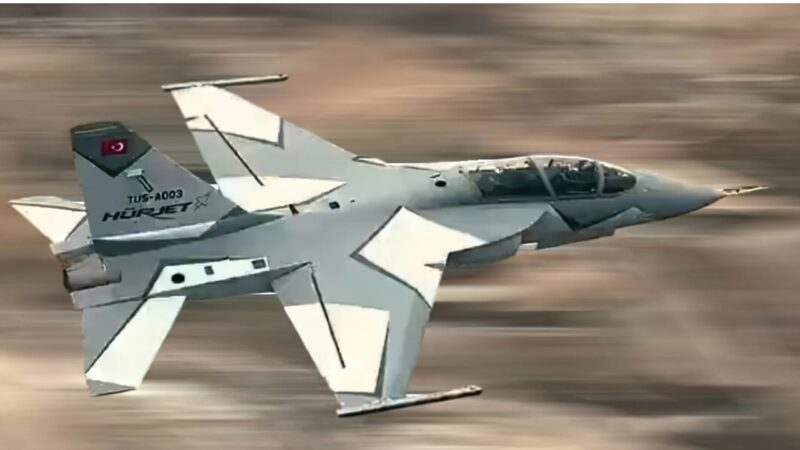
While unable to match the sheer industrial scale of China or South Korea, Turkey competes with a unique strategy where the partnership itself is the main product. From the onset of its negotiations, Ankara leads with offers of co-production, deep supply chain integration, or even joint development of future systems. This model appeals to nations that are prioritizing building their own sovereign industrial capacity over simply acquiring off-the-shelf hardware.
The success of this approach is evident in landmark deals like the PN-MILGEM program with Pakistan – where two of the four corvettes are built with ToT in Karachi and a new class of 3,000+ ton frigates will be designed – and the co-developed Harimau medium tank with Indonesia. For buyers, a Turkish bid is often an invitation to an industrial alliance, a proposition legacy Western OEMs, with their traditionally transactional sales models, have found difficult to counter.
Can the West Recapture Market Share? A Narrow, Difficult Path
The short answer is ‘yes,’ but it requires a radical shift in strategy, mindset, and business models. The era of selling complete, self-contained Western platforms for Pakistan’s core needs is over. The only viable path forward for Western OEMs lies in a more nuanced and focused approach that can be conceptualized in tiers, from simple integration to deep co-development.
Tier 1: Filling Gaps with Proven Niche Capabilities
This foundational tier involves forensically identifying specific capability gaps within the expanding Chinese ecosystem and offering best-in-class, niche solutions to fill them. Vendors must move beyond generic sales pitches and analyze where they possess a distinct and demonstrable technological or combat-proven advantage. Key opportunities include:
- Counter-SAM/Cruise Missile Systems: The threat of supersonic cruise missiles like the BrahMos is a primary driver for Pakistani air defense modernization. While China’s long-range SAMs are credible, its export-oriented SHORAD and counter-cruise missile capabilities are less proven than Western systems like Germany’s IRIS-T SLM or the Kongsberg/Raytheon NASAMS. A vendor could pitch a system not as a replacement for the HQ-9/P, but as a vital, combat-proven lower-tier layer to protect those high-value assets.
- Anti-Submarine & Mine Warfare (ASW/MW): As the Indian Navy expands its submarine fleet, ASW is a top priority for the Pakistan Navy. This is a domain where Western sensor technology, sonar systems (both hull-mounted and towed array), acoustic processing, and multi-static techniques from firms like Thales or Atlas Elektronik maintain a significant lead over current Chinese export offerings.
Tier 2: Becoming the Essential Integrator
A more embedded strategy lies in addressing the interoperability challenges created by Pakistan’s diversifying fleet.
- Specialized Networking & Data-links: As Pakistan operates a mixed fleet of new Chinese and legacy Western platforms (F-16s, P-3Cs, Type 21 frigates), a critical need will arise for “gateway” systems that can translate between different data-link standards.
A Western firm specializing in multi-link integration could become essential for enabling older assets to integrate into the new, predominantly Chinese C4ISR architecture, ensuring the entire force can fight cohesively.
Tier 3: Co-Development of Sovereign Next-Generation Technology
The ultimate, most resilient strategy for Western re-engagement moves beyond selling products or services to becoming a core partner in developing Pakistan’s own future sovereign technologies. This approach directly addresses the desire for strategic autonomy and offers something that even China may be hesitant to provide: a partnership that cultivates a client’s own innovation ecosystem.
- Architecting a Sovereign Data-Link: Rather than simply providing a gateway for legacy systems, a forward-thinking Western partner could propose a joint venture to co-develop Pakistan’s next-generation national data-link architecture. This would involve providing expertise in advanced waveform design, AI-driven network management, and robust LPI/LPD (Low Probability of Intercept/Detect) characteristics.
For Pakistan, this offers the chance to build a truly secure, proprietary C4ISR backbone, free from dependence on either US (Link-16) or Chinese standards. For the Western partner, it represents the ultimate strategic lock-in; they become embedded at the very heart of Pakistan’s future command-and-control apparatus, making them the default choice for ensuring compatibility with any new platform, indigenous or imported.
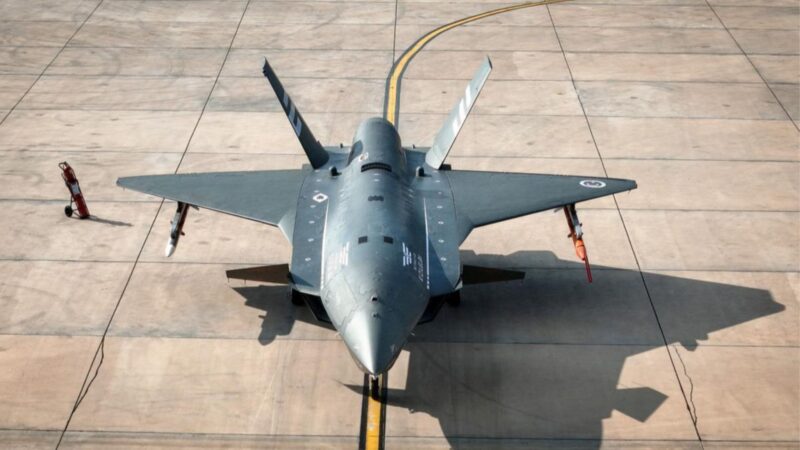
- Driving Next-Generation UCAV Subsystems: Pakistan has clear ambitions to develop an indigenous Unmanned Combat Aerial Vehicle (UCAV), as seen in efforts like Project AZM.
While China or Turkey can supply the airframe and basic flight controls, the West maintains a commanding lead in the critical, high-technology subsystems that differentiate a rudimentary drone from a truly survivable and effective 6th-generation combat asset.
A Western firm could become the key technology partner in Pakistan’s UCAV program by offering to co-develop and integrate: - AI-powered mission computers for autonomous operations and collaborative combat (swarming).
- Advanced sensor-fusion engines that combine multi-spectral data into a single, actionable intelligence picture.
- Cutting-edge electronic warfare (EW) and signals intelligence (SIGINT) payloads for self-protection and suppression of enemy air defenses (SEAD).
- Secure, high-bandwidth satellite communication links and advanced antennas for true beyond-visual-range command and control.
This model – contributing critical subsystems to a sovereign Pakistani platform – respects national ambition while providing indispensable technology. It is a paradigm shift from being a vendor of products to a partner in innovation, a role that offers far greater strategic longevity and influence than any single platform sale ever could.
Tier 4: Enabling Perceived Disruption
Finally, Western suppliers could simply engage Pakistan on the latter’s needs that were previously left unaddressed. For example, the PAF had always wanted an inflight-refueling tanker capable of both hose-and-drogue and boom-type refueling methods, enabling it to support its full fighter fleet, from the JF-17s to the J-10s to the F-16s and so on.
The legacy IL-78 is the sole tanker option, but it is relatively inefficient and is an ageing platform; thus, a solution like the Airbus A330 MRTT will be of interest to the PAF. Even if long-term F-16 operations wind down, with older Block-15 airframes being gradually replaced after 2030, these fighters would still form part of the PAF’s mainstay fighter fleet for well over a decade. Moreover, the A330, for example, would be far more efficient in flying and cheaper in maintenance than the IL-78s anyways, thus readily supporting the PAF’s long-term needs and future fighters.
However, a platform like this has traditionally been framed as a strategic asset and, at least as per retired PAF officials whom this author has spoken to, been denied to the PAF at the supplier-level. Whether its Airbus that takes the initiative or, potentially, another vendor that opts to offer a unique custom configuration, it will be received positively by the PAF.
The evidence for this is the Sea Sultan long-range maritime patrol aircraft (LRMPA). There was no readily available next-generation maritime aircraft platform to replace the Pakistan Navy’s (PN P-3s – but vendors like Paramount Group and Leonardo brought an original proposal to the PN.
The Prerequisite for Re-Entry: A Business Model Revolution
Even the most superior niche product will fail if offered through the old, inflexible business model. To compete with the Chinese package, Western firms must adjust their approach:
Creative Financing: They cannot expect Pakistan to self-fund multi-billion dollar programs. They must come to the table with pre-approved, competitive financing packages, likely backed by their national export-import banks, to rival the attractive credit lines offered by Beijing.
Genuine Industrial Partnership: The era of “black box” sales is over. The new baseline for success, set by Turkey’s MILGEM program, is deep industrial partnership. This means moving beyond licensed assembly to offer joint R&D, co-ownership of intellectual property, and third-party export rights – treating Pakistan’s industry as a partner, not just a customer.
Political Decoupling and Reliability: This is the most difficult but most crucial element. European vendors, in particular, must provide credible, government-backed assurances that sales contracts and a decades-long support chain will not be held hostage by a future US political veto. Rebuilding this fundamental trust is the prerequisite for any significant deal.
The door to Pakistan’s defense market is not entirely closed to the West, but the key has changed. It is a smaller door that leads not to grand halls of platform sales, but to the intricate engine rooms of capability integration. It requires humility, creativity, and a willingness to build genuine partnerships. For those vendors unwilling or unable to adapt to this new, multipolar reality, the market is, for all intents and purposes, lost for good.