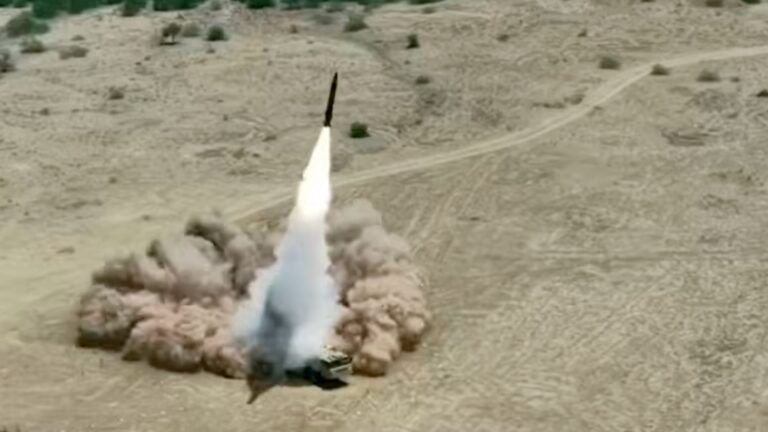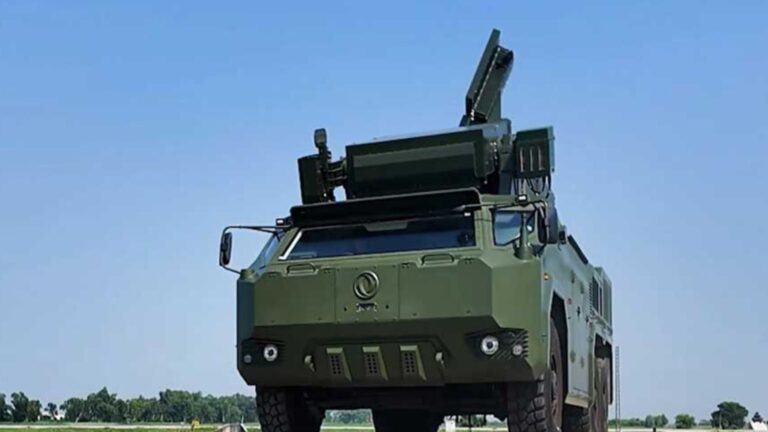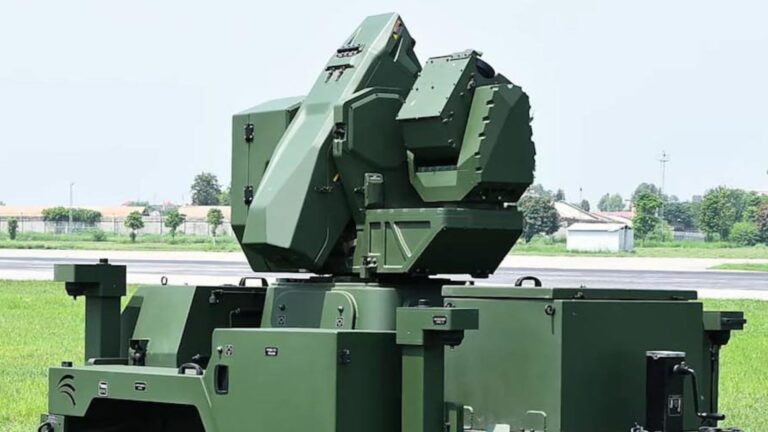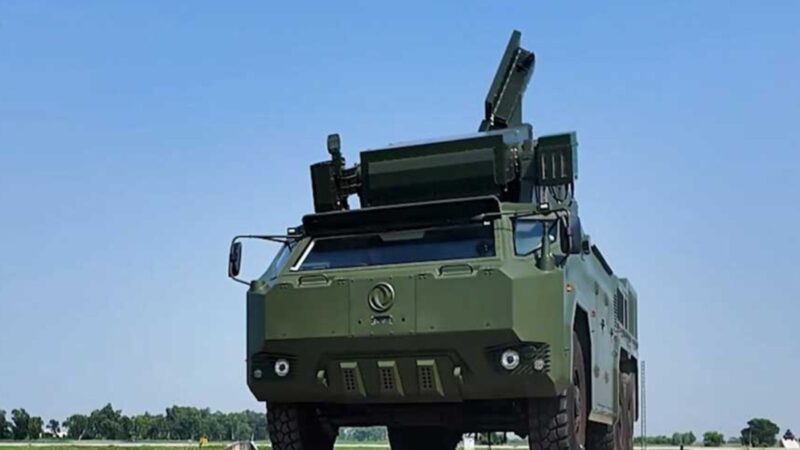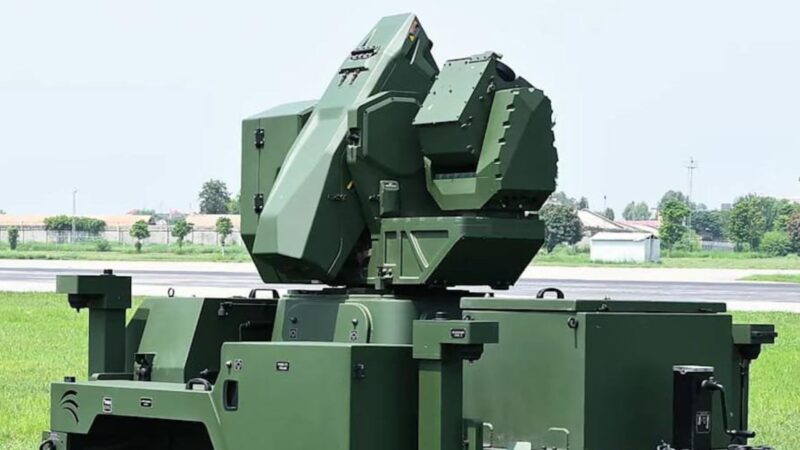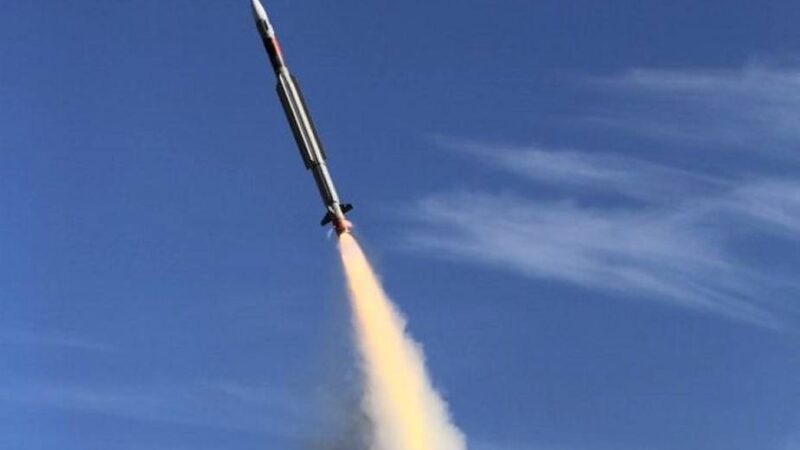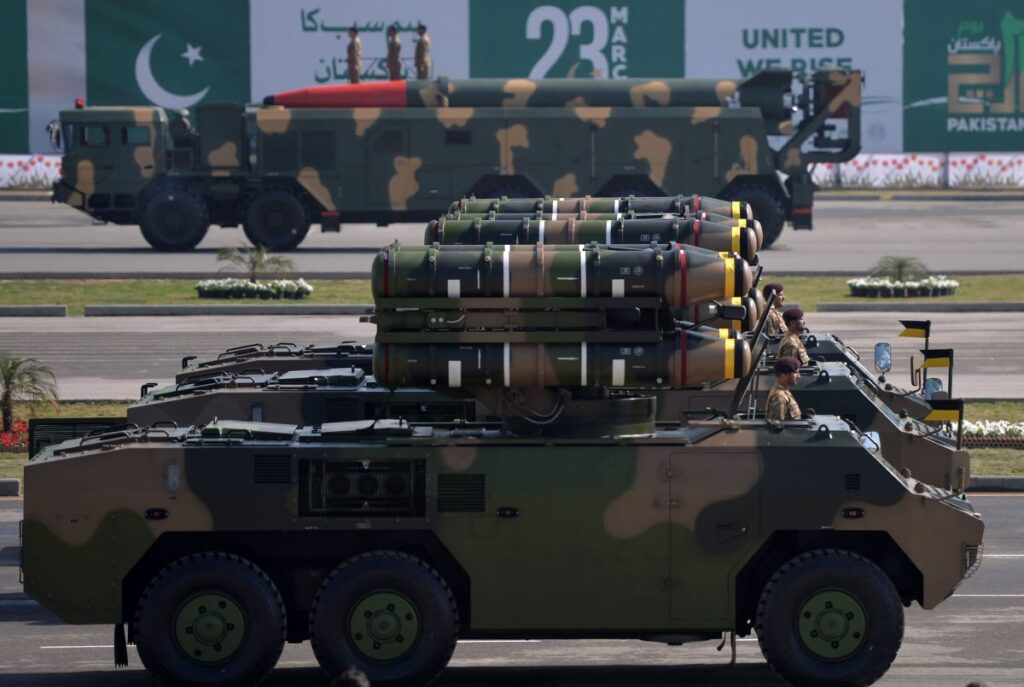
The HQ-7 (红旗-7, ‘Red Banner-7’) is a Chinese short-range surface-to-air missile (SAM) system reverse-engineered from the French Thomson-CSF R-440 Crotale by the Changfeng Electromechanical Technology Design Institute. The FM-90 is the export designation of the improved HQ-7B variant. Pakistan operates the FM-90 as its primary Enhanced Short-Range Air Defence (ESHORAD) system within the Pakistan Army’s Comprehensive Layered Integrated Air Defence (CLIAD) architecture.
The FM-90 sits at the bottom of Pakistan’s layered SAM hierarchy — above the Anza MANPADS family (~5 km) and below the LY-80 medium-range SAM (40 km). It provides point-defence coverage for Pakistan Army formations, high-value installations, and command nodes within Pakistan’s integrated air defence system (IADS).
HQ-7 / FM-90 Specifications
| Parameter | HQ-7A (PLA baseline) | FM-90 (Pakistan Army) | FM-90N (naval) |
|---|---|---|---|
| Type | Short-range SAM / ESHORAD | Short-range SAM / ESHORAD | Naval point-defence SAM |
| Developer | Changfeng Electromechanical / CASIC | Changfeng / CASIC | Changfeng / CASIC |
| Range (fast target) | 8 km | ~15 km | ~15 km |
| Range (slow target) | 15 km | ~15 km | ~15 km |
| Altitude | ~6,000 m | ~6,000 m | ~6,000 m |
| Missile Speed | Mach 2.3 | Mach 2.3+ | Mach 2.3+ |
| Missile Length | 3.0 m | 3.0 m | 3.0 m |
| Missile Diameter | 156 mm | 156 mm | 156 mm |
| Missile Weight | 84.5 kg | 84.5 kg | 84.5 kg |
| Guidance | Command-guided | IR homing + command guidance | IR homing + command guidance |
| Launcher | 4 or 8-round TEL | 4 or 8-round TEL | 8-round deck launcher |
| Missiles per battery | 12–24 (3 TELs) | 12–24 | 8 (per ship) |
| Operator | PLA Ground Force / Navy | Pakistan Army | Pakistan Navy (retired) |
| Inducted | 1980s | June 2015 | Retired with Type 21 frigates |
Development Heritage
The HQ-7 programme began when China acquired French Crotale SAMs in the 1970s. The Changfeng Electromechanical Technology Design Institute reverse-engineered the system, producing the HQ-7A command-guided variant that entered PLA service in the early 1980s. The HQ-7 is one of the oldest operational Chinese SAM designs, pre-dating the HQ-9 and HQ-16 by over a decade.
The improved HQ-7B introduced infrared (IR) homing in addition to the original command guidance — giving the operator a dual-mode engagement option. This IR capability provides a degree of fire-and-forget functionality that the command-guided original lacked. The FM-90, the export version of the HQ-7B, incorporates these improvements. The Stockholm International Peace Research Institute (SIPRI) has documented the Crotale-to-HQ-7 technology transfer in its comprehensive arms trade database.
A ground battery consists of a short-range search/tracking radar and three transporter-erector-launchers (TELs), each carrying four or eight missiles. This gives a single battery 12–24 ready rounds — a modest inventory for sustained engagements.
HQ-7 / FM-90 Variant Tree
| Variant | Type | Key Feature | Range | Operators |
|---|---|---|---|---|
| HQ-7A | Original land-based | Command-guided, Crotale derivative | 8–15 km | PLA Ground Force |
| HHQ-7 | Naval | 8-round shipborne launcher | 8–15 km | PLA Navy |
| HQ-7B | Improved | Added IR homing seeker | ~15 km | PLA |
| FM-80 | Export of HQ-7A | Command-guided export | 8–15 km | Iran |
| FM-90 | Export of HQ-7B | IR homing + command guidance | ~15 km | Pakistan Army; Algeria; Bangladesh; Turkmenistan |
| FM-90N | Naval export | Shipborne FM-90 | ~15 km | Pakistan Navy (retired); Bangladesh Navy |
FM-90 in Pakistan Army Service
Induction and Timeline
The Pakistan Army formally inducted the FM-90 in June 2015, as announced by the Pakistan Army’s official magazine Hilal under the headline “Induction of Multi-System Air Defence Missile FM-90.” This made the FM-90 the first new SAM system in the PA’s air defence modernisation drive — predating the LY-80 medium-range SAM by two years (March 2017) and the HQ-9/P long-range SAM by six years (October 2021).
The FM-90 procurement was part of the broader PA decision — driven by lessons from the 2019 Balakot exchange and the Russo-Ukrainian War — to build its own organic air defence capability rather than relying exclusively on the PAF for aerial protection of ground formations.
Operational Role in CLIAD
Together with the HQ-9/P and LY-80, the FM-90 completes the Pakistan Army’s three-tier Chinese SAM architecture: HQ-9/P (125 km), LY-80 (40 km), and FM-90 (15 km). The FM-90 provides the ESHORAD layer — point-defence for field formations, forward air bases, artillery positions, and command-and-control nodes.
Its mobility — mounted on a wheeled TEL — allows it to relocate with mechanised formations, providing organic air defence to manoeuvre units during offensive or defensive operations. The FM-90’s dual-mode guidance — infrared homing plus command guidance — gives PA air defence operators flexibility: command-guided mode for radar-tracked targets, IR homing for passive fire-and-forget engagements without continuous radar illumination.
FM-90N: The Naval Variant
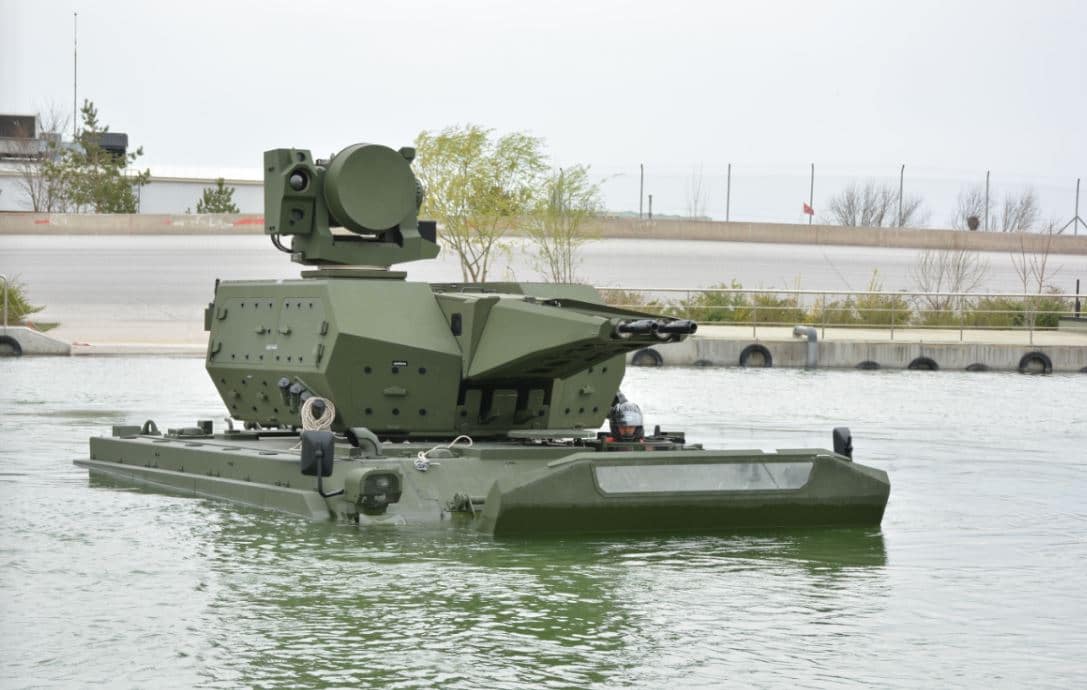
The Pakistan Navy operated the FM-90N aboard its legacy fleet, though the system has been effectively retired as the Type 21 frigates and older vessels left service. The FM-90N used an eight-round deck launcher and provided close-in air defence for surface combatants.
The Pakistan Navy has since transitioned to the LY-80N aboard the Type 054A/P frigates for medium-range AAW and the MBDA CAMM-ER on the Babur-class corvettes for the next-generation naval air defence tier. The FM-90N’s retirement marks the end of the Crotale-derived lineage in Pakistan Navy service.
Quwa Assessment: The FM-90 in Pakistan’s Threat Environment
The FM-90 filled a critical gap when it entered Pakistan Army service in 2015. Before its acquisition, Pakistan’s SHORAD layer was almost entirely dependent on towed and man-portable systems — principally the Anza MANPADS and the ageing Oerlikon GDF-005 35 mm anti-aircraft guns. The FM-90 introduced a mobile, radar-guided, missile-based SHORAD capability that Pakistan had previously lacked.
However, as Quwa has analysed, the FM-90 carries significant limitations in the post-2025 threat environment.
The Range Problem
At 15 km against slow targets and 8 km against fast targets, the FM-90’s engagement envelope is extremely tight. Against modern cruise missiles — which approach at Mach 0.7–0.9 and employ terrain-following flight profiles — the FM-90’s effective engagement window may be measured in seconds.
The Guidance Limitation
While the FM-90’s dual-mode guidance was an improvement over the command-only HQ-7A, it does not compare to the active radar-homing (ARH) seekers found on modern short-range SAMs like the MBDA CAMM-ER. Command guidance limits simultaneous engagements; IR homing is vulnerable to infrared countermeasures.
What Should Replace the FM-90?
As Quwa has argued, Pakistan needs a modern SHORAD system with 25–40 km range, ARH guidance, and multi-target engagement capability. Indigenous programmes such as the GIDS FAAZ-SL (20–25 km range) represent potential successors. A ground-launched CAMM-ER via the iLauncher would also address this gap with proven, in-service technology.
Radar and Fire-Control Architecture
The FM-90 battery radar is a short-range acquisition and tracking system derived from the Crotale’s original Thomson-CSF radar architecture. It provides target detection, tracking, and missile guidance within the battery’s 15 km engagement envelope. The radar can track multiple targets simultaneously but can only guide missiles to one or two at a time — a key constraint in a multi-threat environment.
Global Operators and Export Context
The HQ-7/FM-90 family has seen broader export success than the HQ-16, with operators including Algeria, Bangladesh (Army, Air Force, and Navy), Iran (FM-80), Pakistan, and Turkmenistan. Iran acquired the earlier FM-80 and subsequently reverse-engineered it into the Ya Zahra / Herz-9 system — illustrating that the Crotale lineage has been reverse-engineered twice (France → China → Iran).
Quwa Pro – Defence Market Intelligence
See Where Defence Demand and Technology Are Moving Next
Track procurement priorities across Pakistan, the Gulf and wider MENA, and Central Europe. Follow emerging vendors, drones, AI, C-UAS, and affordable precision weapons, and see how lessons from today’s conflicts are reshaping military requirements and market opportunities.
Featured & Trusted By







Frequently Asked Questions About the HQ-7 / FM-90
What is the range of the FM-90?
The FM-90 has a range of approximately 15 km against slow targets and 8 km against fast targets. Its altitude ceiling is approximately 6,000 m.
When did Pakistan induct the FM-90?
The Pakistan Army formally inducted the FM-90 in June 2015, as announced by the PA’s official magazine Hilal. It was the first new SAM system in the PA’s CLIAD modernisation drive.
Does Pakistan have the HQ-7?
Pakistan operates the FM-90, which is the export variant of the Chinese HQ-7B. The FM-90 serves as the Pakistan Army’s primary ESHORAD system.
Is the FM-90 based on the French Crotale?
Yes. The HQ-7 was reverse-engineered from the French Thomson-CSF R-440 Crotale that China acquired in the 1970s.
What will replace the FM-90 in Pakistan?
Pakistan’s indigenous FAAZ-SL (E-SHORADS) programme and the potential adoption of a ground-launched CAMM-ER may serve as successors. Both offer ARH guidance and significantly greater range.
Can the FM-90 shoot down drones?
The FM-90 can theoretically engage larger UAS within its engagement envelope, but it was not designed for the counter-drone mission. Its 84.5 kg missile is oversized for small commercial UAS, and the cost-per-engagement ratio is unfavourable.
Related Profiles and Analysis
- Pakistan Air Defence System — Overview of Pakistan’s layered IADS architecture.
- HQ-9 Long-Range Air Defence System — Pakistan’s HIMADS tier.
- LY-80 / HQ-16 Medium-Range Air Defence System — The tier above FM-90 in CLIAD.
- MBDA Spada 2000-Plus Air Defence System — PAF SHORAD.
- MBDA CAMM-ER / Albatros-NG Air Defence System — Potential FM-90 successor technology.
- GIDS FAAZ-SL (E-SHORADS) Air Defence System — Indigenous SHORAD programme.
- GIDS LoMADS Air Defence System — Indigenous MRAD programme.
- RBS 70 VSHORAD Air Defence System — Pakistan’s VSHORAD tier.
- Reaction, Not Range: How Pakistan’s Air Defence Must Evolve — Quwa’s flagship IADS analysis.