
Overview
Which Air Defence Systems Does Pakistan Have?
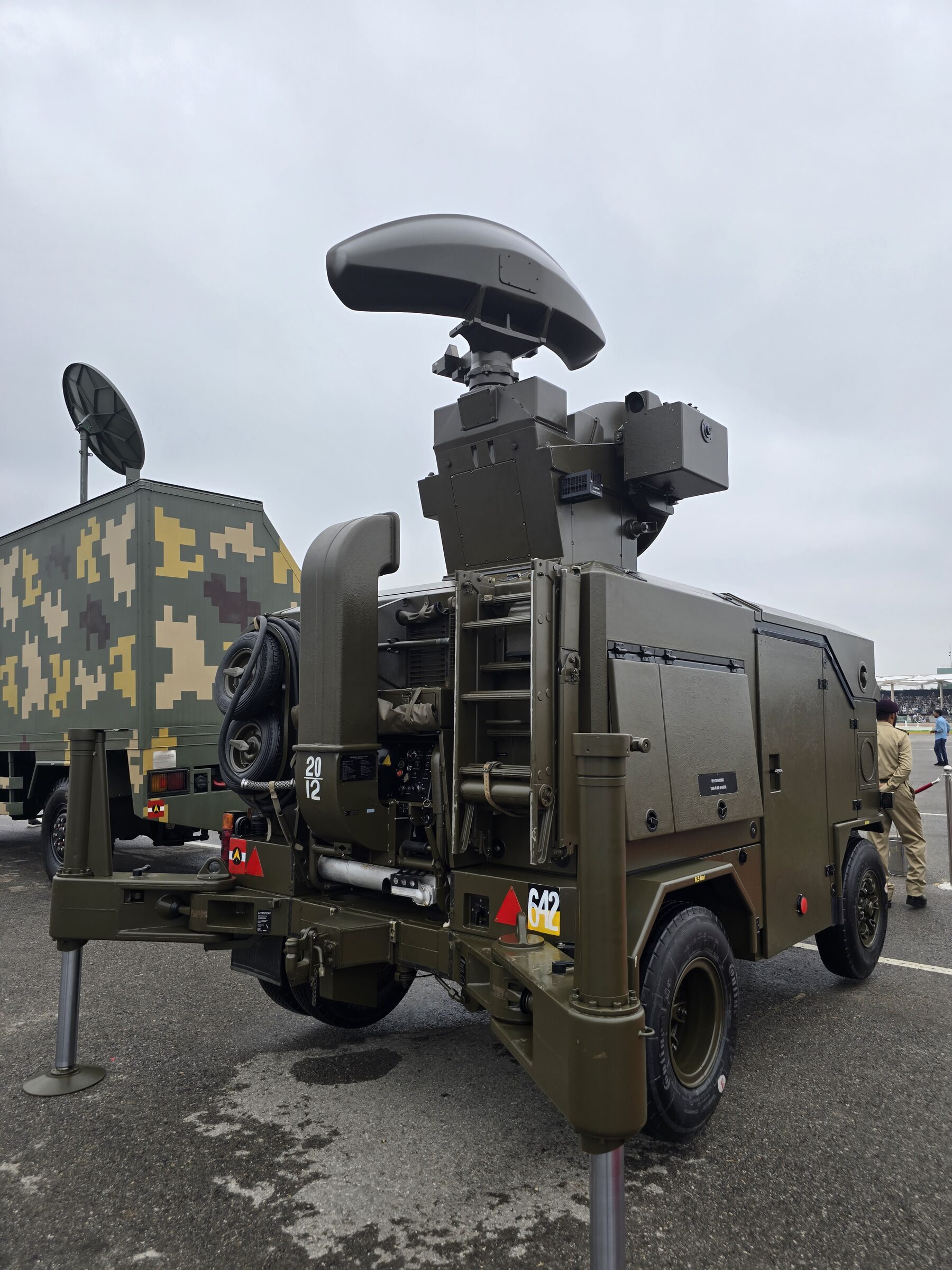
Pakistan operates several air defence systems rather than a single national weapon. The Army’s CLIAD includes HQ-9/P, LY-80 and shorter-range missiles; the PAF’s reported inventory includes HQ-9BE, HQ-16FE and Spada; naval systems equip surface combatants. The system list below distinguishes these from September 2026 additions and indigenous development programmes.
Pakistan air defence, also spelled air defense, spans equipment with different service roles and stages of development. For the newest additions, jump to HQ-17AE, Korkut and ŞAHİN (Sahin).
System reference
Pakistan Air Defence System List: Missiles, Guns and Counter-Drone Systems
This Pakistan air defence system list covers the main missile, gun and counter-drone families discussed in public sources. It separates service history, reported additions and domestic programmes. It is not an official count of batteries, launchers or missiles.
How to read the ranges: maximum missile range, effective gun range and radar detection range measure different things. Published figures depend on the target and configuration; they do not show continuous national coverage or prove interception performance.
Scroll horizontally to see every table column.
| System | Service / programme | Role | Published range context | Public status |
|---|---|---|---|---|
| HQ-9/P | Pakistan Army | Long-range SAM | Over 100 km officially stated; 125 km in Quwa’s profile | Inducted in 2021 |
| HQ-9BE | Pakistan Air Force | Long-range SAM | Up to 260 km against aircraft, as reported by Quwa | Reported in PAF service |
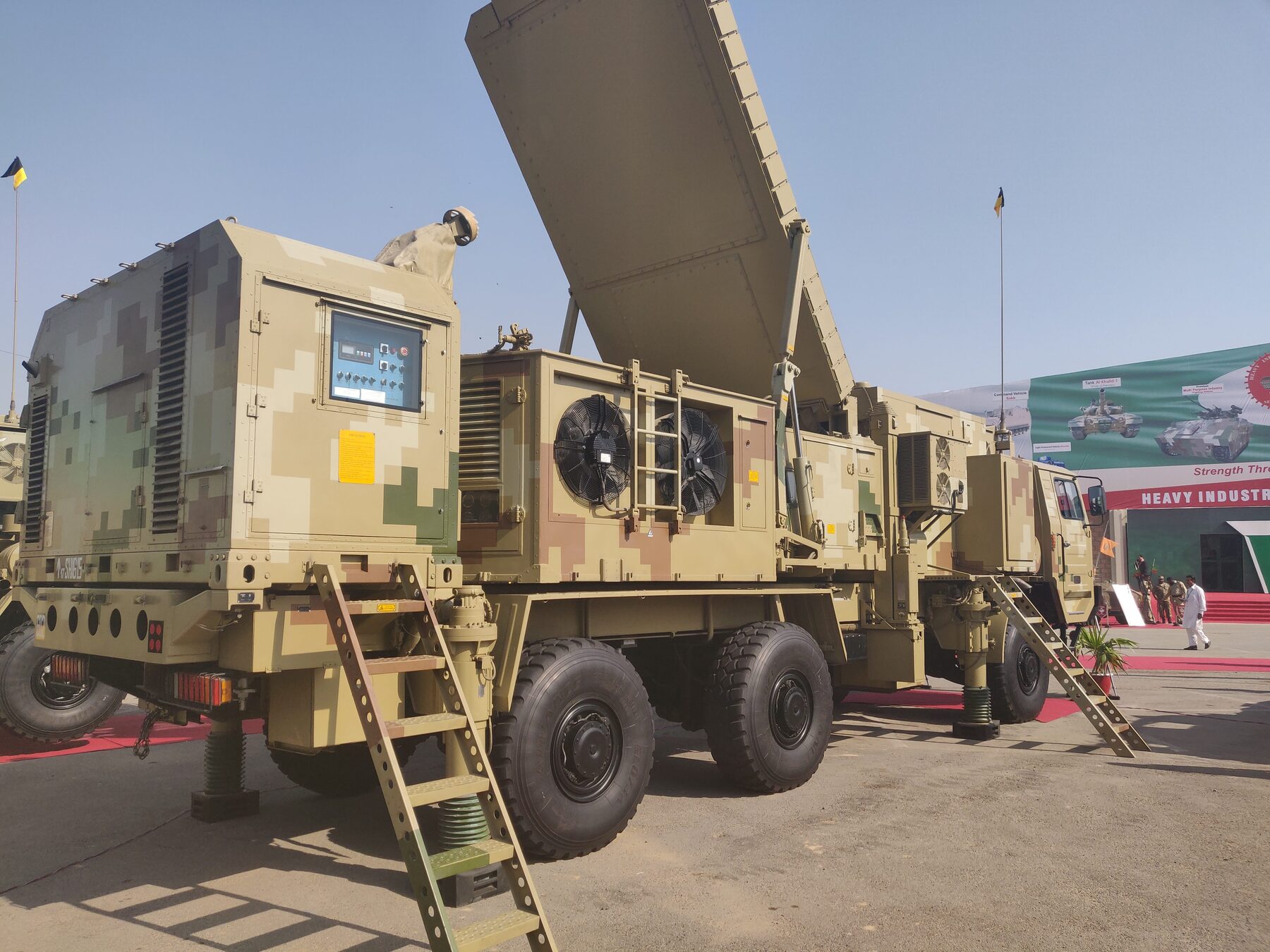
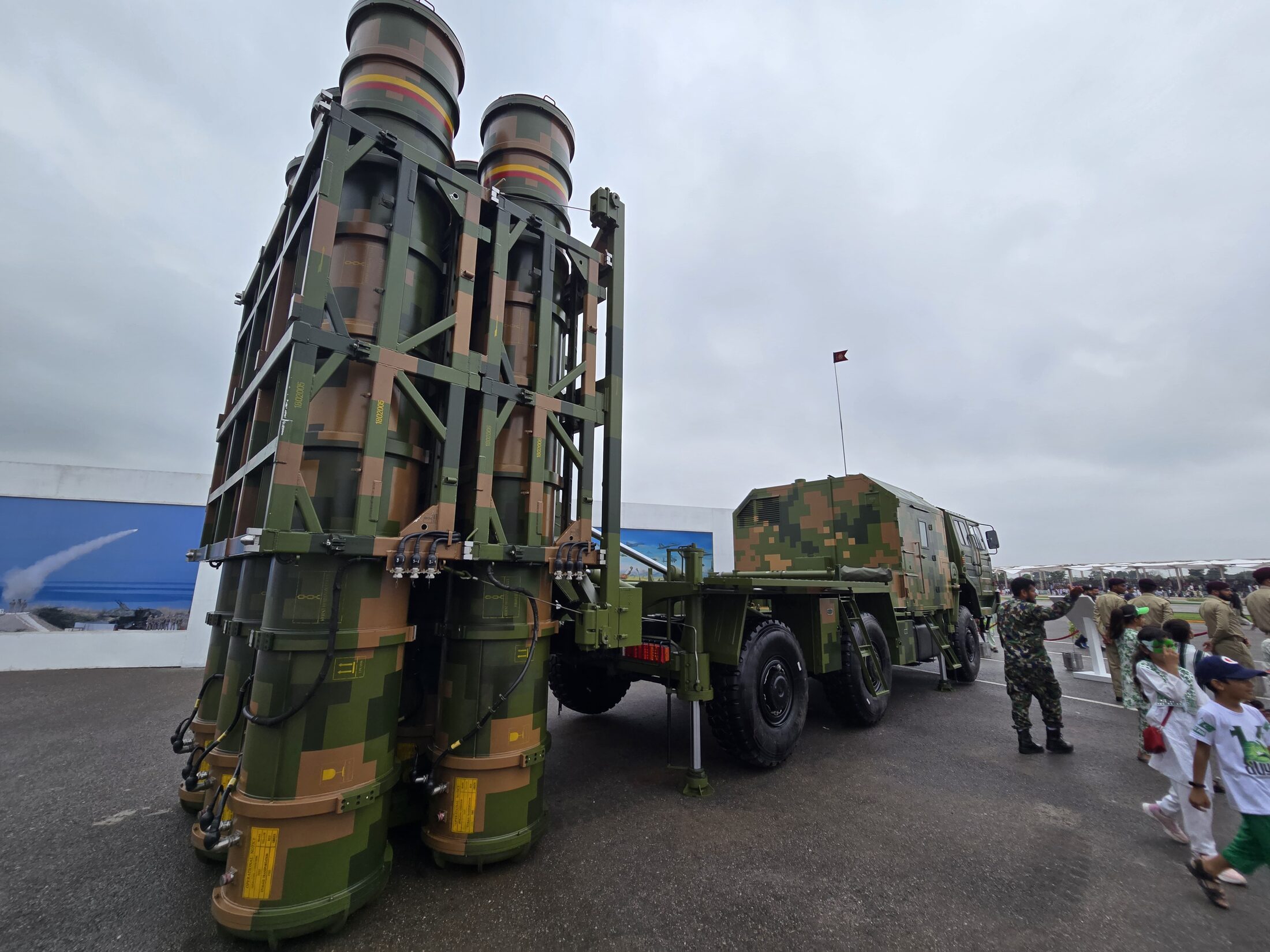
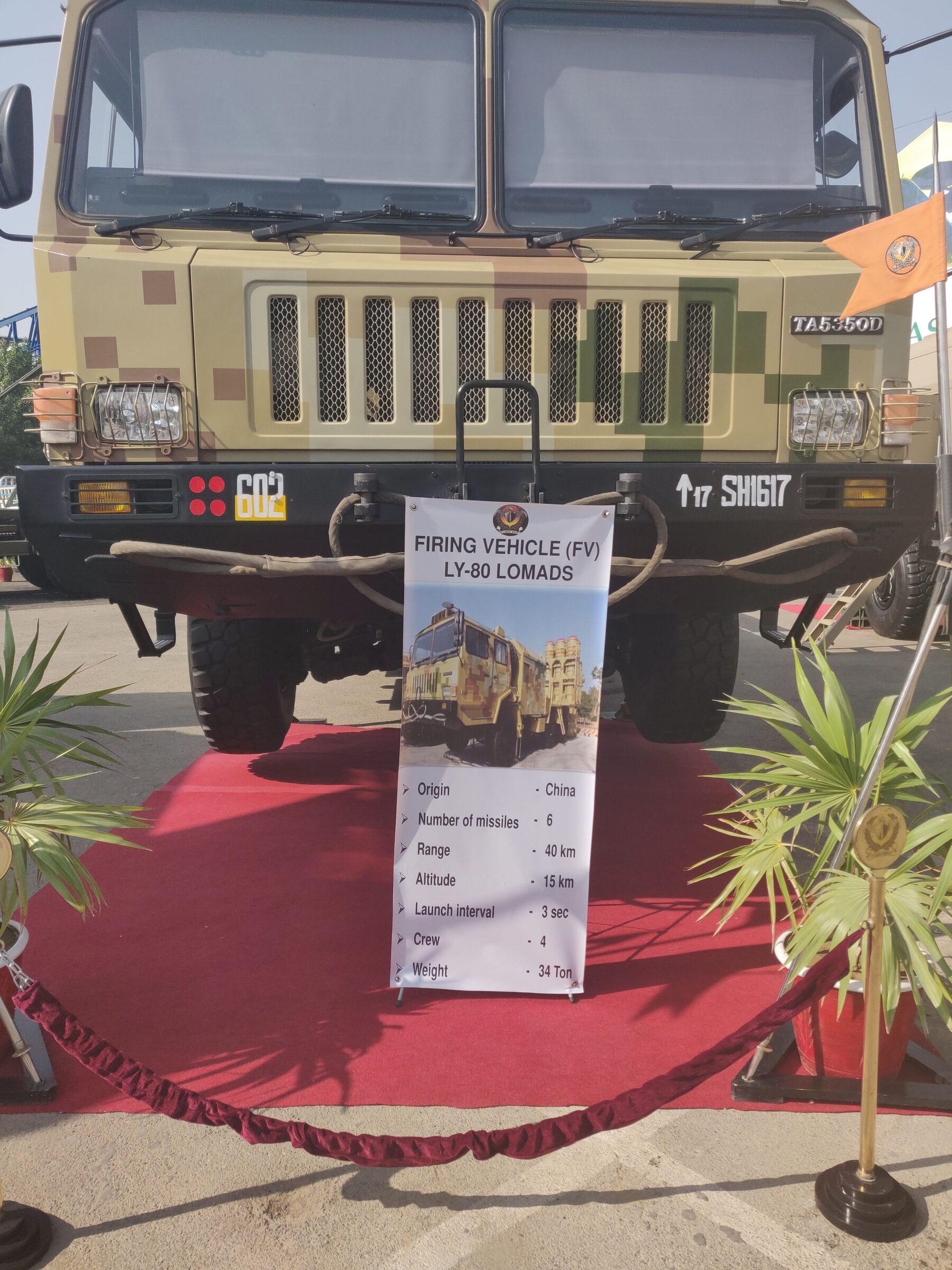
| LY-80 / HQ-16 family | Pakistan Army | Medium-range SAM | About 40 km for baseline LY-80; variants differ | LY-80 inducted in 2017 |
| HQ-16FE | Pakistan Air Force | Medium-to-long-range SAM | Up to 160 km reported for the variant | Reported PAF variant |
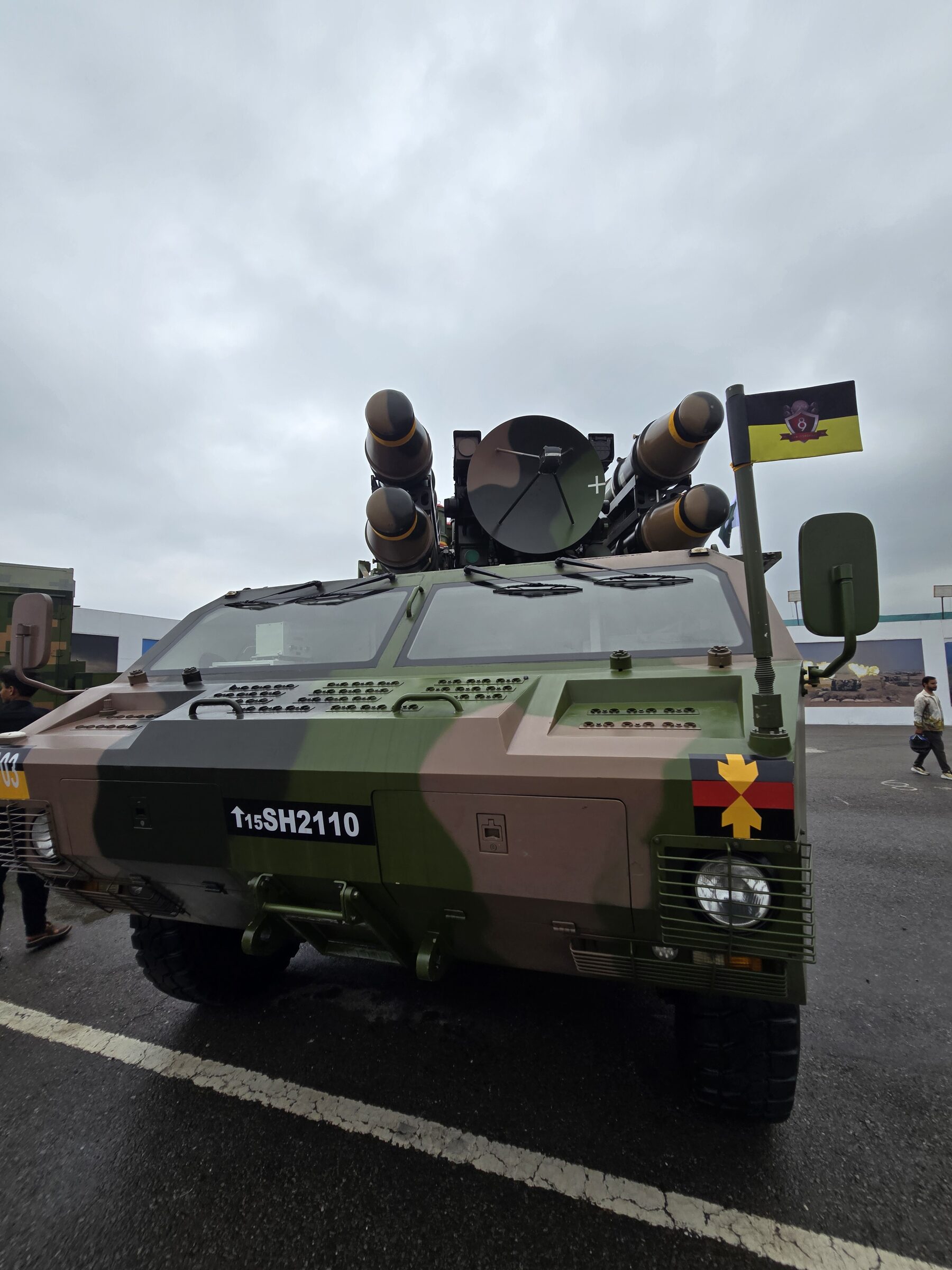
| FM-90 / HQ-7 family | Pakistan Army | Short-range SAM | About 15 km for FM-90 | Army system; naval variants are distinct |
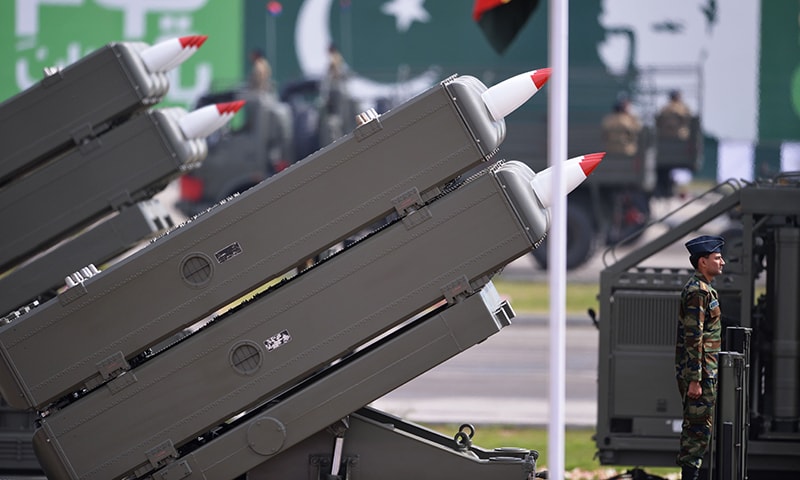
| Spada 2000-Plus | Pakistan Air Force | Short-range SAM | About 20 km system intercept coverage in MBDA material | Established PAF system |
| HQ-17AE | Pakistan Air Force | Point-defence SAM | 15–20 km against fighter aircraft, according to designer statements in Chinese state media | Revealed September 2026 |
| ASELSAN Korkut | Pakistan Air Force | 35 mm gun-based air defence | 4 km effective range in ASELSAN product sheets | Revealed in September 2026; exact variant unresolved |
| ASELSAN ŞAHİN (Sahin) | Pakistan Air Force | 40 mm counter-drone system | 700 m effective range in ASELSAN’s product sheet | Revealed September 2026 |
| LD-76 | Pakistan Air Force | Gun-based air defence | Primary specification not verified | Identified by Quwa in September 2026 footage |
| Anza, RBS-70, FN-6 / FN-16 | Pakistan Army | Very-short-range missiles | Varies by model and missile | Reported Army inventory |
| LY-80N / HHQ-16 family | Pakistan Navy | Shipborne SAM | Naval configuration; distinct from land-based LY-80 | Associated with Type 054A/P frigates |
| CAMM-ER / Albatros NG | Pakistan Navy | Shipborne SAM | More than 40 km in MBDA material | Babur-class fit reported by Quwa |
| GIDS LoMADS / FAAZ-SL | Domestic programmes | Proposed medium- and short-range SAMs | Published programme targets, not verified operational envelopes | Development and marketing coverage |
The linked sections below explain the sources and qualifications behind each entry. Radar systems are covered separately in the radar and sensor section.
Architecture
How Pakistan’s Air Defence System Is Organized
Pakistan’s air defence combines the Pakistan Army’s ground-based systems, the Pakistan Air Force’s fighters, ground-based air defence and airborne surveillance, and the Pakistan Navy’s shipborne defences. GBADS means ground-based air defence system; IADS means integrated air defence system. Neither term refers to a single missile model.
The Army describes its structure as Comprehensive Layered Integrated Air Defence (CLIAD). The PAF operates its own SAM and sensor assets, while naval systems protect ships and formations at sea. Quwa’s reporting on the Recognized Air and Maritime Picture (RAMP) describes shared sensor information. The complete command arrangements and integration of individual systems are not publicly detailed.
Pakistan Army
Pakistan Army Air Defence: CLIAD and Its Missile Layers
Quwa’s review of Army air defence programmes describes CLIAD through four categories: high-to-medium-altitude air defence (HIMADS), low-to-medium-altitude air defence (LOMADS), extended short-range air defence (E-SHORAD), and short-range air defence (SHORAD). Together, these categories describe the Army’s layered air defence structure.
HQ-9/P: the Army’s Long-Range SAM
The Army commissioned the HQ-9/P in October 2021. The ISPR announcement described interception at more than 100 km; Quwa’s HQ-9 guide discusses the commonly cited 125 km figure and distinguishes the Army’s HQ-9/P from the PAF’s HQ-9BE. The two HQ-9 variants serve different branches and have different published specifications.
LY-80 and the HQ-16 Family
The Army inducted the Chinese LY-80 in March 2017, adding a medium-range SAM layer. Quwa’s LY-80 / HQ-16 profile describes the baseline system at approximately 40 km and discusses reported improved variants. LY-80EV is a reported improved variant; its exact configuration and status require separate evidence from baseline LY-80 and PAF HQ-16FE reporting.
FM-90: Short-Range Air Defence
The FM-90, part of the HQ-7 family, provides shorter-range missile coverage. Quwa’s profile cites approximately 15 km for the FM-90. It complements longer-range systems rather than replacing them. The FM-90N is the separate naval variant.
Anza, RBS-70 and Other Very-Short-Range Systems
The Army’s shorter-range inventory includes the Anza MANPADS family, RBS-70, and Chinese FN-6/FN-16 systems in Quwa’s reporting. The Defence Export Promotion Organisation lists GIDS as the supplier of Anza Mk-II. MANPADS means man-portable air defence system. RBS-70 uses laser beam-riding guidance. The range and capability of each family depend on the particular missile and equipment version.
Pakistan Air Force
Pakistan Air Force Air Defence: HQ-9BE, HQ-16FE and Spada
The PAF’s ground-based air defence combines established short-range systems with more recently reported Chinese SAMs. Its September 2026 reveal adds the HQ-17AE, Korkut and ŞAHİN to the equipment covered in this guide. The new systems are explained in the point-defence section.
HQ-9BE: the PAF’s Long-Range SAM
Quwa identifies the HQ-9BE as the PAF’s long-range HQ-9 variant and reports an advertised range of up to 260 km against aircraft. That figure is not a universal engagement radius against every drone or missile, and does not independently demonstrate a national ballistic-missile shield.
HQ-16FE: a Separate HQ-16 Variant
Quwa’s November 2024 air defence report identifies the HQ-16FE, with a reported maximum range of 160 km. This is a later variant than the Army’s baseline LY-80; publicly disclosed battery quantities remain limited.
Spada 2000-Plus and the Spada CIWS Upgrade
The MBDA Spada 2000-Plus remains an established part of PAF air defence. MBDA describes system intercept coverage of about a 20 km radius. Quwa’s November 2024 report also discusses a Spada CIWS upgrade that could pair the existing missile system with 35 mm guns. The proposed upgrade is separate from ASELSAN’s Korkut.
September 2026 update
Pakistan’s New Point-Defence Systems: HQ-17AE, Korkut and ŞAHİN
Quwa reported in September 2026 that PAF footage revealed four additions: the Chinese HQ-17AE and LD-76, and Türkiye’s ASELSAN Korkut and ŞAHİN. The missile and gun systems broaden the PAF’s publicly documented point-defence and counter-unmanned aerial system (C-UAS) equipment.
Public status: the reporting establishes a September reveal. Quantities, contract values, delivery schedules and a common fire-control arrangement were not disclosed in the sources reviewed.
HQ-17AE: Short-Range Point-Defence Missiles
The HQ-17AE is the export version of China’s wheeled HQ-17A. CASIC’s manufacturer-origin description presents it as a highly integrated short-range air defence system. Chinese state-media reporting on Pakistan’s reveal describes eight launch tubes and quotes the designers at 15–20 km against fighter aircraft. That target-specific statement should not be read as a verified range against every cruise missile or drone.
The HQ-17AE adds a short-range missile option alongside Pakistan’s longer-range HQ-9 and HQ-16 families. Korkut and ŞAHİN provide gun-based alternatives for closer engagements, with different ammunition and sensor arrangements.
ASELSAN Korkut: 35 mm Gun-Based Air Defence
Korkut is a Turkish air defence gun system using twin 35 mm cannon and ATOM programmable airburst ammunition. ASELSAN’s KORKUT 150/35 product sheet gives an effective range of 4 km and describes radar and electro-optical tracking. The airburst ammunition is designed to release fragments near the target rather than relying only on a direct hit.
ASELSAN also markets the KORKUT 140/35 configuration. Pakistan’s exact Korkut variant remains unresolved in the reviewed material. ASELSAN’s standard 150/35 platoon comprises three gun systems and one command-and-control system; the PAF’s unit composition has not been disclosed.
ASELSAN ŞAHİN (Sahin): 40 mm Counter-Drone System
The ŞAHİN 130/40GL is ASELSAN’s 40 mm counter-drone system, also romanised as Sahin or SAHIN. It uses ATOM 40 mm airburst ammunition against mini and micro unmanned aircraft. The manufacturer gives an effective range of 700 m.
ŞAHİN has electro-optical detection and tracking, and can turn automatically towards positions supplied by radar. These onboard sensors and external cueing are complementary features. Its 40 mm ammunition and counter-mini/micro-UAS role distinguish it from the 35 mm Korkut.
LD-76: a Further Reported Gun System
Quwa’s September report also identifies a NORINCO LD-76 gun system. Public documentation for this designation is less complete than the ASELSAN product sheets cited above. Its range, ammunition and supplied configuration remain less clearly documented in primary sources.
What the New Systems Add
The September reveal adds a missile system and Turkish airburst guns to the PAF’s publicly documented equipment. Their significance depends on factors still incompletely disclosed, including fleet size, ammunition supply and links to the wider sensor network. Read Quwa’s September analysis for the broader procurement and industrial implications.
Sensors
Pakistan Air Defence Radars and Early Warning
Radars detect and track airborne objects; command systems build and share an air picture; missiles and guns provide interception. A radar’s published detection range is not the engagement range of the weapon it supports.
PAF Radar Network: TPS-77, MPDR and Erieye
The PAF’s publicly documented sensor families include Lockheed Martin TPS-77 radars, Mobile Pulse Doppler Radars (MPDR), and Saab Erieye airborne early warning and control (AEW&C) aircraft. Lockheed Martin announced Pakistan’s original six-radar TPS-77 contract in 2005. Quwa later covered TPS-77 MRR radome procurement; the original radar and MRR are related configurations, not interchangeable labels. Quwa’s coverage of the PAF’s air defence and sensor programmes places these alongside the service’s SAM acquisitions.
Quwa’s November 2024 air defence report also covers Hensoldt upgrade kits for the PAF’s MPDR fleet. The Air Defence Ground Environment System (ADGES) describes the wider ground-based surveillance and control environment. Erieye provides airborne surveillance and control, while RAC-3D and other battery-level radars support particular SAM systems. Each contributes a different part of the surveillance, tracking and engagement process.
Army and Naval Radars
The Army’s LY-80 system includes the IBIS-150 surveillance radar and associated fire-control equipment. Naval air-search and fire-control radars form part of each ship’s combat system. Publicly available product specifications and equipment photographs do not disclose every connection between Army, Air Force and Navy sensors.
Quwa Premium
Track Pakistan's air defence programs before the public cycle catches up.
Quwa Premium gives readers deeper analysis of Pakistan defence, procurement signals, and the strategic context behind air defence modernization. Advertising and sponsorships put industry messages in front of the same decision-focused audience.
Read By Defence Professionals







Industry
Pakistan’s Indigenous Air Defence Programmes: LoMADS and FAAZ-SL
Pakistan’s domestic air defence work includes established short-range missile families and newer SAM development programmes. A marketed system, displayed concept, test event and operational induction are different milestones; this guide does not count every proposed system as fielded equipment.
GIDS LoMADS
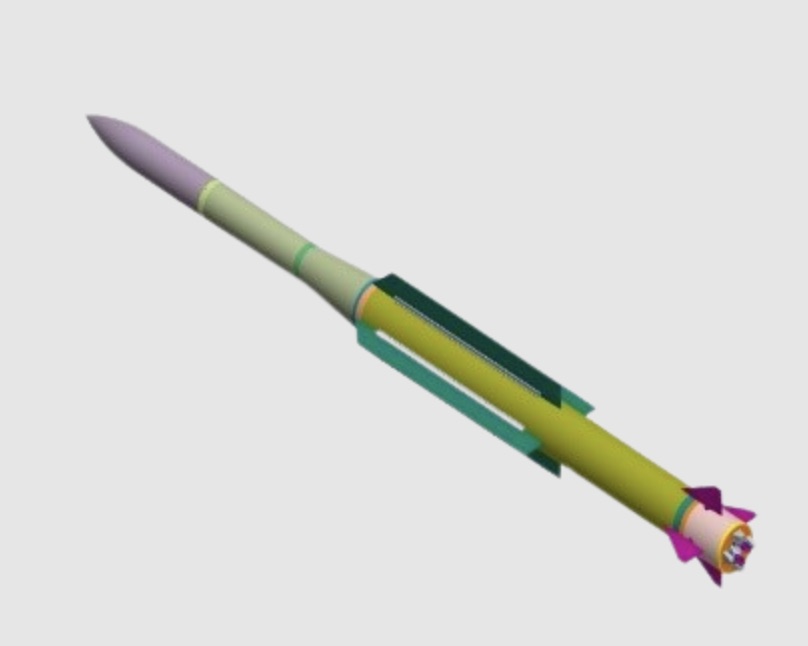
GIDS LoMADS is a domestic low-to-medium-altitude SAM programme. Quwa’s profile discusses a marketed maximum range of 100 km. That is a programme specification, not a verified service envelope or delivery announcement. The name also resembles the Army’s LOMADS layer, which already includes the imported LY-80: the layer and the indigenous project are not the same thing.
FAAZ-SL and E-SHORADS
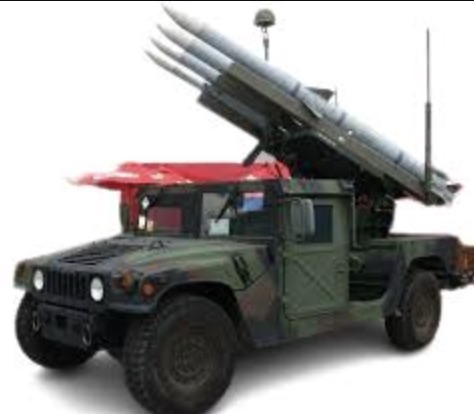
FAAZ-SL refers to a proposed surface-launched application of Pakistan’s FAAZ missile work. Quwa discusses it alongside the FAAZ air-to-air missile family. The reviewed sources do not establish a production quantity or a completed PAF induction.
Modernisation
Future Pakistan Air Defence: Missile Defence and Counter-UAS
HQ-19 and Ballistic-Missile Defence
Quwa reported HQ-19 in a proposed Chinese arms package in June 2025. That article records an offer described in a subsequently deleted government social-media post; it does not establish a completed contract or delivery. The reviewed material does not establish a Pakistani operational HQ-19 capability. Air defence against aircraft and cruise missiles also differs from interception of ballistic missiles; a long advertised SAM range alone does not demonstrate the latter.
Counter-Drone Systems and Directed Energy
The HQ-17AE, Korkut and ŞAHİN additions sit alongside Pakistan’s wider interest in electronic warfare, high-power microwave and laser systems. Quwa has examined high-power microwave counter-UAS and PAF high-energy laser requirements. These reports discuss requirements and possible development paths; they do not establish a completed nationwide directed-energy network.
What Does Quwa Mean by the “Missing Middle”?
Quwa’s short-to-medium-range air defence argument concerns the depth and scale of coverage. It should not be read as a literally empty 10–100 km band: Spada and LY-80 already occupy parts of that category. Public range specifications do not reveal how many systems are available, how they are connected or how much ammunition is held.
Quwa’s analysis considers additional imports and domestic programmes as possible paths. No confirmed PAF shortlist or selection is established by the material cited here.
Domestic Ammunition and Sustainment
Quwa assessment: the new equipment makes ammunition supply, maintenance and replenishment relevant industrial questions. The reviewed sources do not establish a Pakistani production agreement for ASELSAN’s ATOM 35 mm or 40 mm ammunition. Local manufacture, licensing and new domestic effectors remain possibilities to investigate, not announced programmes with a confirmed schedule.
Context
Pakistan Air Defence After the May 2025 Conflict
Quwa’s post-conflict reporting has examined reaction time, sensor coordination and sustained air defence. These are editorial assessments of the capability questions raised by missile and drone attacks, rather than a complete official account of every engagement.
The September 2026 reveal adds a new procurement development to that discussion. Its timing alone does not establish that the May 2025 conflict caused each purchase, and a complete public engagement record remains unavailable.
Comparison
Pakistan and India Air Defence: What Can Be Compared?
Pakistan’s long-range SAM coverage centres on Chinese HQ-9-family systems, while India operates the Russian S-400 and its own Akash family among other systems. Both were named in official Indian remarks in May 2025. Pakistan does not have a publicly confirmed S-400 acquisition in the sources reviewed here.
A useful comparison separates the missile variant, target type, sensor network, number of systems, operational status and source date. Comparing two maximum range figures is insufficient to rank entire national air defences. Public sources also do not support a universal price advantage or a reliable national interception-success percentage.
Pakistan Air Defence System Guides
Explore Quwa's system guides, including HQ-17AE, Korkut and ŞAHİN, for more detail on Pakistan's air defence equipment and programmes.
HQ-9 Long-Range Air Defence System
Long-range SAM coverage for strategic airspace denial.
 LY-80 / HQ-16 Medium-Range Air Defence System
The core medium-range SAM layer in Pakistan service.
LY-80 / HQ-16 Medium-Range Air Defence System
The core medium-range SAM layer in Pakistan service.
 HQ-7 / FM-90 Short-Range Air Defence System
Short-range point defence against aircraft, drones, and low-altitude threats.
HQ-7 / FM-90 Short-Range Air Defence System
Short-range point defence against aircraft, drones, and low-altitude threats.
 MBDA Spada 2000-Plus Air Defence System
Legacy PAF short-range SAM coverage and CIWS upgrade path.
MBDA Spada 2000-Plus Air Defence System
Legacy PAF short-range SAM coverage and CIWS upgrade path.
 GIDS LOMADS Air Defence System
Pakistan’s indigenous low-to-medium altitude SAM program.
GIDS LOMADS Air Defence System
Pakistan’s indigenous low-to-medium altitude SAM program.
 GIDS FAAZ-SL E-SHORADS Air Defence System
A surface-launched FAAZ missile concept for short-range air defence.
GIDS FAAZ-SL E-SHORADS Air Defence System
A surface-launched FAAZ missile concept for short-range air defence.
 Anza MANPADS Family
Pakistan’s man-portable short-range air defence missile family.
Anza MANPADS Family
Pakistan’s man-portable short-range air defence missile family.
 RBS-70 VSHORAD Air Defence System
Laser beam-riding very-short-range air defence coverage.
RBS-70 VSHORAD Air Defence System
Laser beam-riding very-short-range air defence coverage.
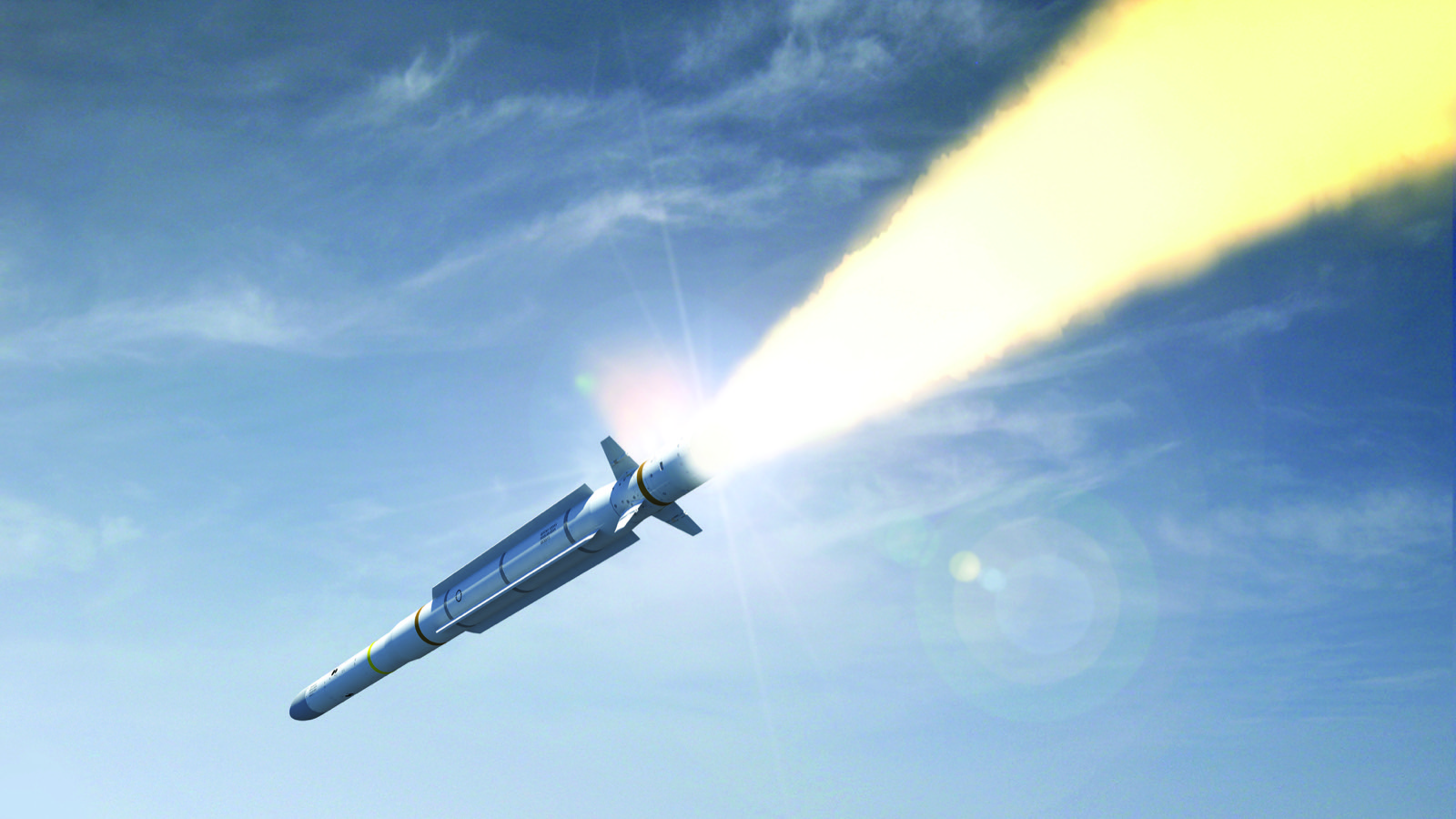 MBDA CAMM-ER / Albatros NG Naval Air Defence System
CAMM-ER and the Babur-class naval air defence programme.
HQ-17AE Point-Defence Missile System
The PAF’s September 2026 reveal and target-specific range reporting.
ASELSAN Korkut 35 mm Air Defence System
Manufacturer specifications, Pakistan reporting and variant uncertainty.
ASELSAN ŞAHİN / Sahin Counter-Drone System
40 mm airburst ammunition, electro-optical tracking and radar cueing.
MBDA CAMM-ER / Albatros NG Naval Air Defence System
CAMM-ER and the Babur-class naval air defence programme.
HQ-17AE Point-Defence Missile System
The PAF’s September 2026 reveal and target-specific range reporting.
ASELSAN Korkut 35 mm Air Defence System
Manufacturer specifications, Pakistan reporting and variant uncertainty.
ASELSAN ŞAHİN / Sahin Counter-Drone System
40 mm airburst ammunition, electro-optical tracking and radar cueing.
Frequently Asked Questions
Frequently Asked Questions
Does Pakistan have an air defence system?
Yes. Pakistan operates air defence assets across its Army, Air Force and Navy, including HQ-9-family and LY-80/HQ-16-family SAMs, FM-90, Spada, shorter-range missiles and shipborne systems. The PAF publicly revealed HQ-17AE, Korkut and ŞAHİN in September 2026, as reported by Quwa.
How many air defence systems does Pakistan have?
There is no complete, consistently defined public total of Pakistani batteries, launchers or missiles in the sources reviewed. A count of named equipment families is not a count of deployed units. The reference table separates established systems, newly revealed equipment and domestic development programmes.
What is Pakistan’s longest-range air defence system?
Quwa identifies the PAF’s HQ-9BE as its longest-range publicly reported operational SAM variant, with an advertised range up to 260 km against aircraft. The Army’s HQ-9/P is a different variant. Advertised maximum range is not assured coverage against every target.
What new air defence systems did Pakistan reveal in 2026?
Quwa’s September 2026 reporting identifies HQ-17AE, LD-76, ASELSAN Korkut and ASELSAN ŞAHİN in PAF material. The reviewed sources do not disclose the number of systems, contract values or a delivery timetable.
Does Pakistan have the HQ-17AE?
The HQ-17AE appeared in PAF material reported by Quwa and Chinese state media in September 2026. It is a wheeled short-range point-defence missile system. Chinese reporting quotes a designer-stated range of 15–20 km against fighter aircraft; this is not a verified envelope against every target type.
What air defence systems did Pakistan acquire from Türkiye?
The PAF’s September 2026 reveal included ASELSAN Korkut and ŞAHİN, according to Quwa. Korkut is a 35 mm gun-based system with a manufacturer-stated 4 km effective range. ŞAHİN is a 40 mm counter-drone system with a manufacturer-stated 700 m effective range. Pakistan’s exact Korkut variant remains unresolved in the sources reviewed.
Is ŞAHİN the same system as Korkut?
No. ŞAHİN, also written Sahin or SAHIN, uses 40 mm airburst ammunition against mini and micro drones. Korkut uses twin 35 mm cannon and has a different air defence role. Both are ASELSAN systems, but they are separate products.
Which radars support Pakistan’s air defence?
Publicly documented families include the PAF’s TPS-77 and MPDR radars, Saab Erieye airborne early warning and control, the Army’s IBIS-150 associated with LY-80, and fire-control radars supplied with individual SAM systems. Radar detection range and missile engagement range are different measurements.
Does Pakistan have the S-400 or HQ-19?
The sources reviewed do not establish a Pakistani S-400 acquisition or an operational HQ-19 deployment. Quwa has reported interest in HQ-19. Pakistan’s publicly reported long-range SAM inventory includes HQ-9-family systems; reported interest should not be counted as delivered capability.
What is Pakistan’s CLIAD system?
CLIAD means Comprehensive Layered Integrated Air Defence, the Pakistan Army’s layered air defence structure. Quwa describes its HIMADS, LOMADS, E-SHORAD and SHORAD categories. It is an architecture containing several systems, not the name of one missile.
Is Pakistan developing indigenous air defence systems?
Quwa covers GIDS LoMADS and FAAZ-SL as domestic SAM programmes. Their advertised ranges are programme specifications, and do not establish operational induction or production quantities. The LoMADS project is distinct from the Army’s LOMADS category, which includes imported systems.
This page is maintained and updated by the Quwa editorial team as new developments emerge. For in-depth analysis of Pakistan's air defence programs, including procurement signals, vendor positioning, and doctrinal assessments, see Quwa Premium.
About the evidence: official announcements establish dated events; manufacturer sheets describe product specifications; Quwa’s reporting and assessments are identified in the text. Equipment counts, advertised ranges and proposed programmes should not be treated as a complete operational inventory.
Last Updated:
Go Deeper With Quwa
Follow Pakistan air defence at the level serious readers need.
Quwa Premium brings together Pakistan defence analysis, foreign policy context, and market intelligence. Advertising and sponsorships give industry players direct visibility with readers in the armed forces, government, intelligentsia, and defence market.
Read By Defence Professionals