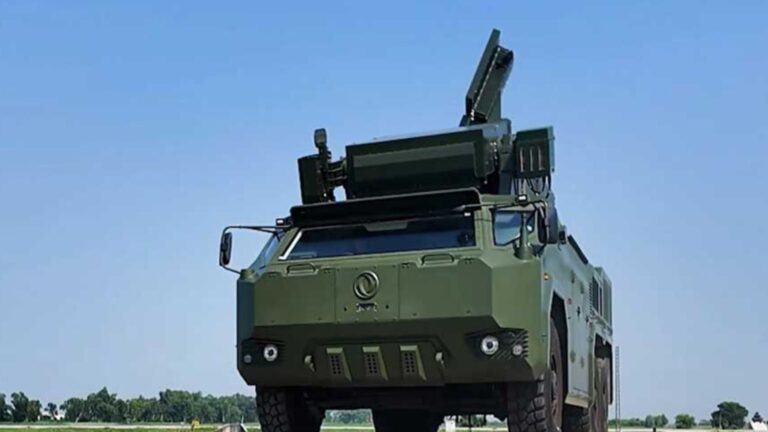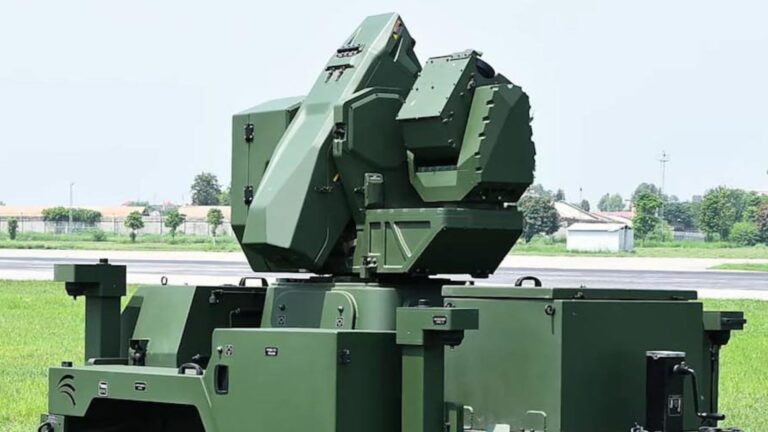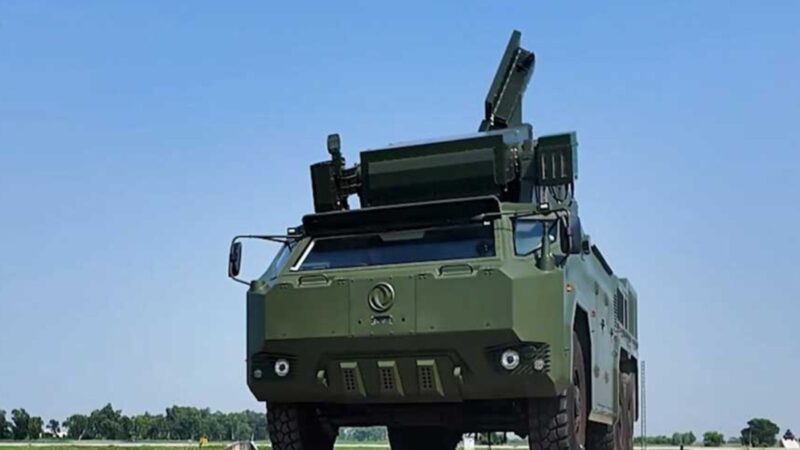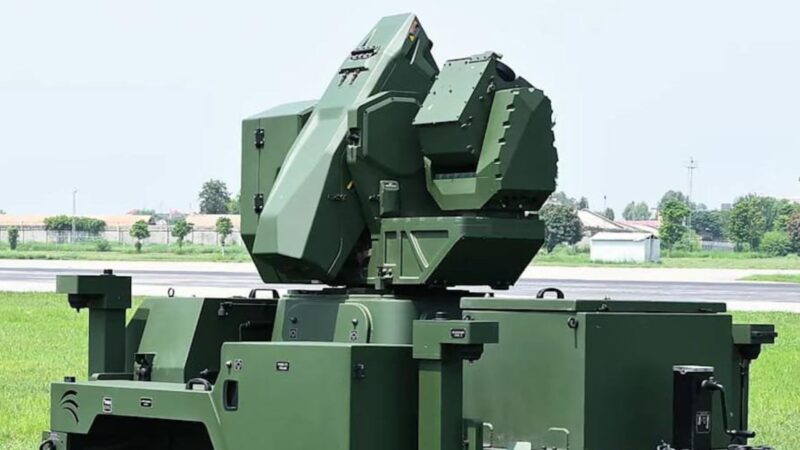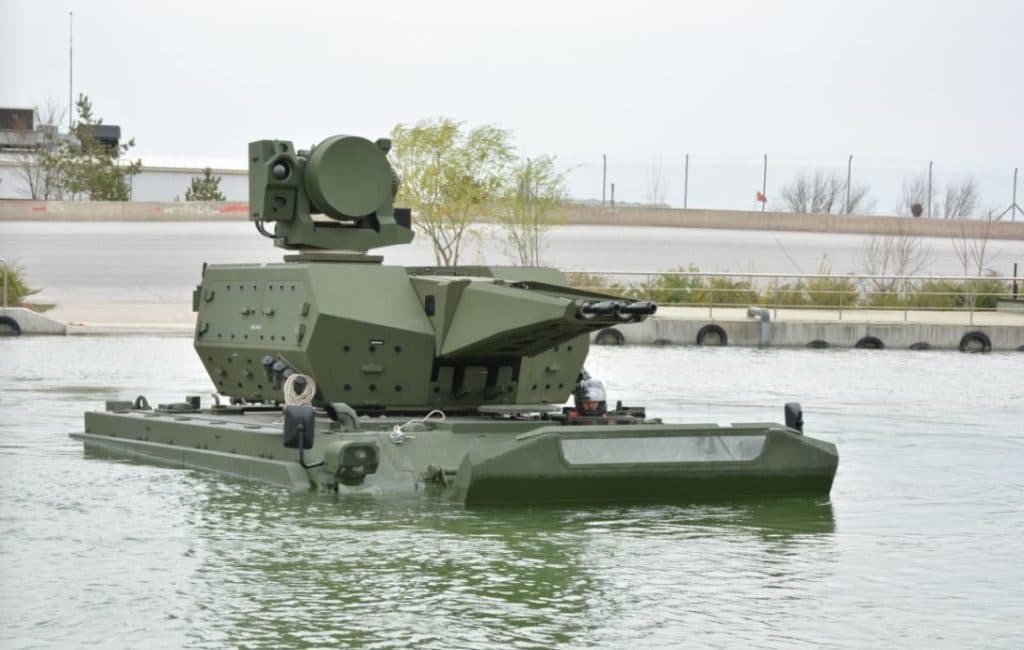
ASELSAN Korkut is a Turkish gun-based air defence system that combines twin 35 mm cannon with programmable airburst ammunition. ASELSAN markets it for protection of stationary and mobile units, including mechanised formations. It fires cannon rounds rather than surface-to-air missiles. ASELSAN Korkut overview
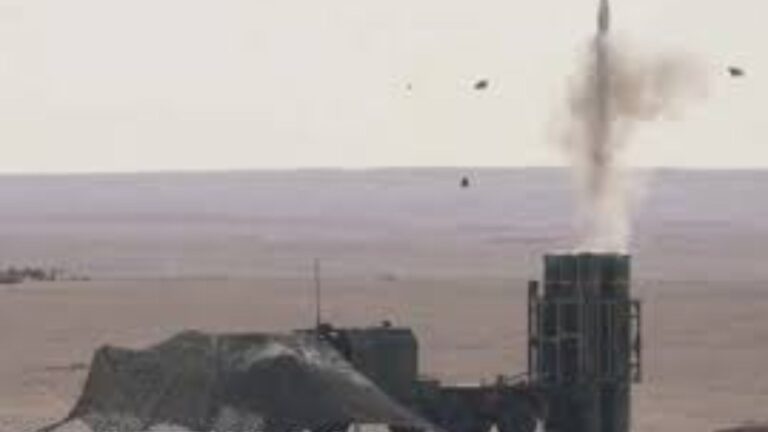
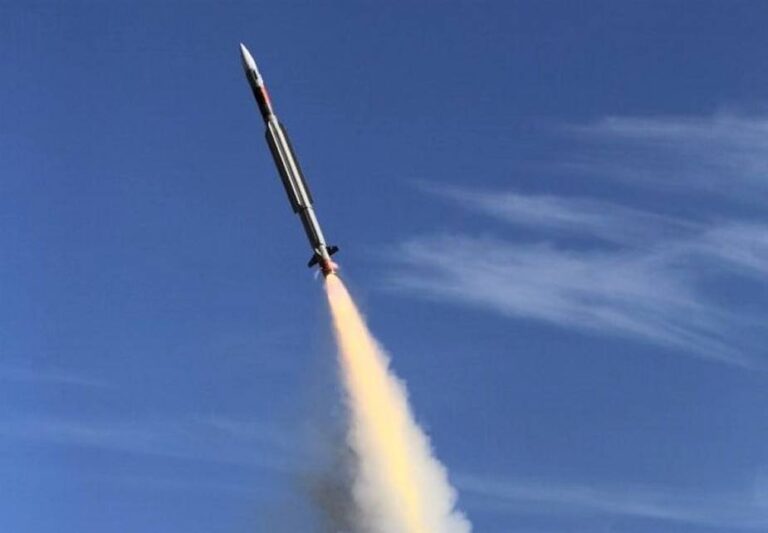
Quwa identified Korkut in the Pakistan Air Force’s September 2026 public reveal alongside HQ-17AE, LD-76 and ŞAHİN. Public reporting does not yet identify the precise Korkut variant supplied to Pakistan.
Know What Defence Buyers in Will Need Next
See emerging requirements, likely suppliers, and routes to market across Pakistan, MENA, and fast-moving defence technologies, before demand becomes obvious.
Korkut 150/35 and 140/35 specifications
ASELSAN publishes the following specifications for its twin-35 mm 150/35 and 140/35 configurations. Pakistan’s supplied configuration remains unconfirmed.
| Characteristic | Published specification |
|---|---|
| System developer | ASELSAN, Türkiye |
| Main armament | Twin 35 mm cannon |
| Airburst ammunition | ASELSAN ATOM 35 ABM |
| Effective range | 4 km, according to ASELSAN |
| Combined firing rate | 1,100 rounds per minute across both guns |
| Gun-system tracking | Fire-control radar and electro-optical sensors |
| Command element | Separate command-and-control system with a 3D search radar |
Sources: ASELSAN’s March 2026 KORKUT 150/35 and KORKUT 140/35 brochures.
What does the Korkut air defence system do?
Korkut provides a gun-based interception option at the short end of an air-defence network. ASELSAN identifies aircraft, helicopters, unmanned aerial vehicles and certain missile threats among its intended targets. Its programmable ammunition is designed to burst near a target, making the ammunition and fire-control system central to the product’s role. The manufacturer’s Eurosatory 2024 announcement describes this combination of guns, ATOM ammunition and tracking equipment.
The FNSS programme description separates two sensor functions. A command vehicle searches for and tracks targets to build a local air picture, while each gun vehicle uses fire-control equipment to follow its assigned target. This describes the standard architecture; it does not reveal the connections implemented in a particular customer’s network.
The 4 km figure is an effective gun range. It should not be confused with the distance at which a radar can first detect or track an aircraft. Similarly, a published firing rate is a mechanical specification, not a measure of successful interceptions.
Tracked and wheeled Korkut variants
KORKUT 150/35 and the ACV-30 tracked platform
The tracked Korkut is commonly described as a self-propelled anti-aircraft gun, or SPAAG. FNSS identifies ASELSAN as the prime contractor and itself as the supplier of the ACV-30 tracked platforms used for the gun and command vehicles. Its programme history records a tracked-platform development agreement in June 2011 and a serial-production subcontract in December 2016.
That division of work explains references to both “ASELSAN Korkut” and “FNSS Korkut”: one names the air-defence system developer, while the other concerns the documented vehicle supplier. ASELSAN’s 2025 annual report identifies the tracked 150/35 and records its first overseas delivery, without naming the customer in that passage.
KORKUT 140/35: the 8×8 wheeled configuration
ASELSAN presented an 8×8 Korkut at Eurosatory in June 2024, alongside its already established tracked design. Its 2024 annual report, page 83, identifies the wheeled version as KORKUT 140/35. The same report separately names KORKUT 141/35 in connection with an integration involving Calidus; the two designations should not be used interchangeably.
ASELSAN markets the 140/35 for stationary and mobile units, including mechanised troops. Its wheeled layout is one of the differences readers should check when identifying a particular Korkut configuration.
Korkut in Pakistan’s air defence
Korkut provides a gun-based point-defence role alongside the missile systems discussed in Quwa’s coverage. The Pakistan Air Defence guide explains the broader service structure and the different missile, gun and radar families.
The public reveal establishes a dated reference point for the equipment’s identification. It does not establish when negotiations started or when a particular unit became operational. Nor does the appearance of several systems in the same reporting establish that they share one fire-control network.
Quwa’s September analysis considers the additions after the May 2025 conflict. Pakistan’s selection rationale remains a question for analysis rather than a disclosed procurement explanation.
Quwa Pro – Defence Market Intelligence
See Where Defence Demand and Technology Are Moving Next
Track procurement priorities across Pakistan, the Gulf and wider MENA, and Central Europe. Follow emerging vendors, drones, AI, C-UAS, and affordable precision weapons, and see how lessons from today’s conflicts are reshaping military requirements and market opportunities.
Featured & Trusted By







Frequently asked questions
How many Korkut systems does Pakistan have?
The reviewed Pakistan reporting does not establish a quantity. ASELSAN’s standard 150/35 grouping contains three gun systems and one command system, but that catalogue arrangement cannot be used to calculate the PAF’s holdings.
What is the price of Pakistan’s Korkut purchase?
No contract value was established in the reviewed sources. A useful price comparison would also need to identify the vehicles, sensors, ammunition, training and support included; an unsupported unit-price estimate would obscure those differences.
Is Korkut a naval air defence system?
The tracked and wheeled systems covered here are land-based. ASELSAN separately identifies Gökdeniz as its naval close-in air defence system in its 2024 annual report. References to naval Korkut derivatives should not be read as the same installation used by the PAF.
Is Korkut the same as ŞAHİN?
No. Korkut’s twin 35 mm guns differ from the 40 mm counter-drone system described in ASELSAN’s ŞAHİN brochure. See the parent guide’s ŞAHİN explanation and HQ-17AE missile-system section for their different roles.
Can Korkut fire while moving?
ASELSAN advertises a stabilised turret with firing-on-the-move capability in its Eurosatory announcement. This describes the product capability, not a separately verified PAF test result.
Is Korkut a ballistic-missile defence system?
The reviewed material does not establish that capability. ASELSAN’s current 150/35 brochure includes cruise missiles in its target descriptions; cruise-missile and ballistic-missile defence are different claims. An advertised target category also does not establish performance against a specific weapon.