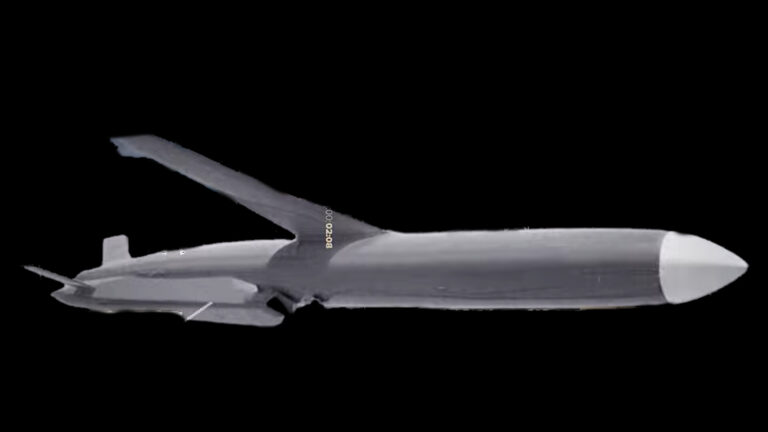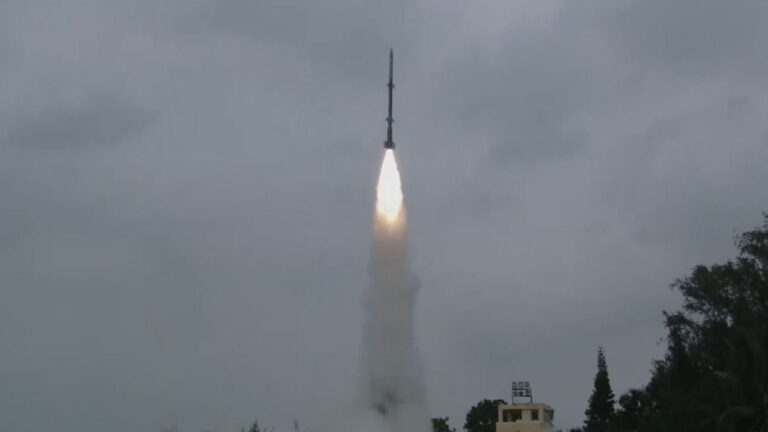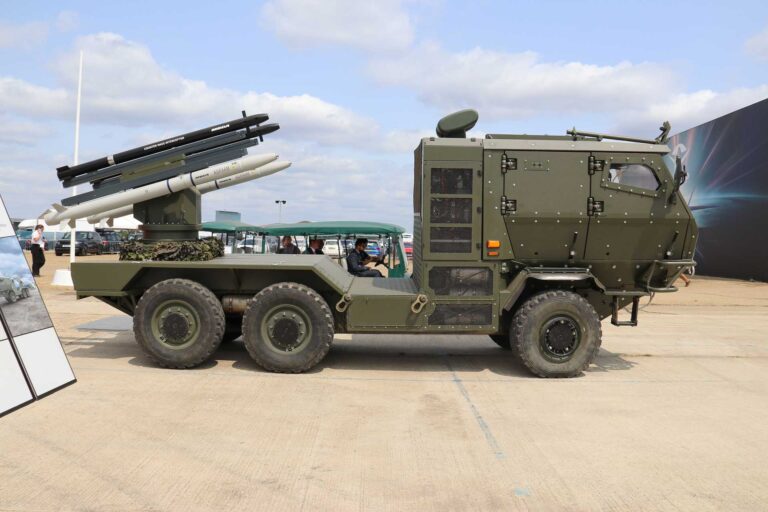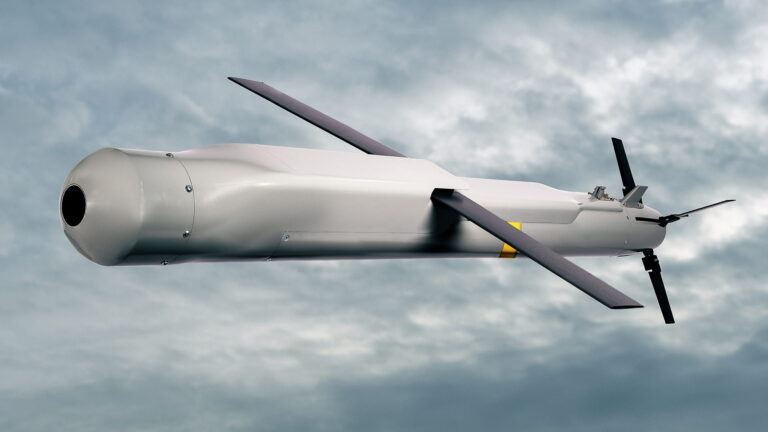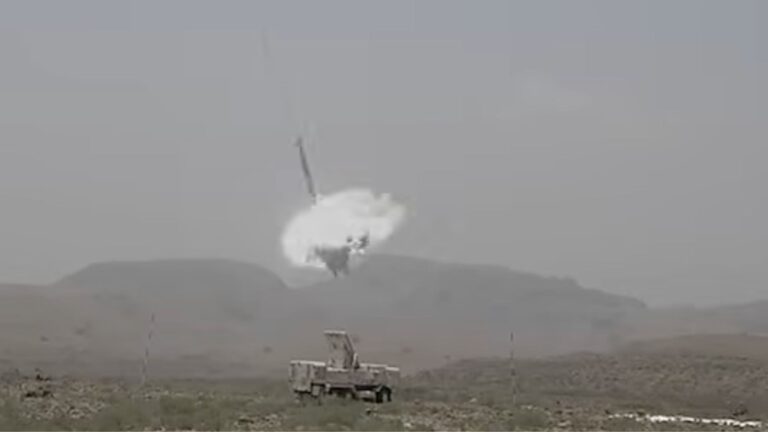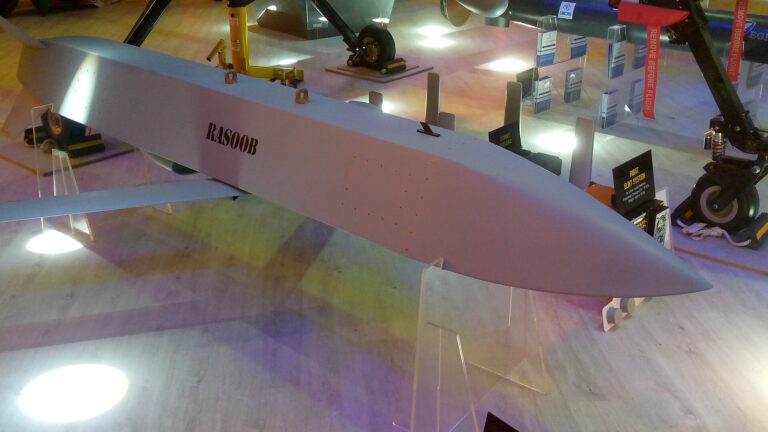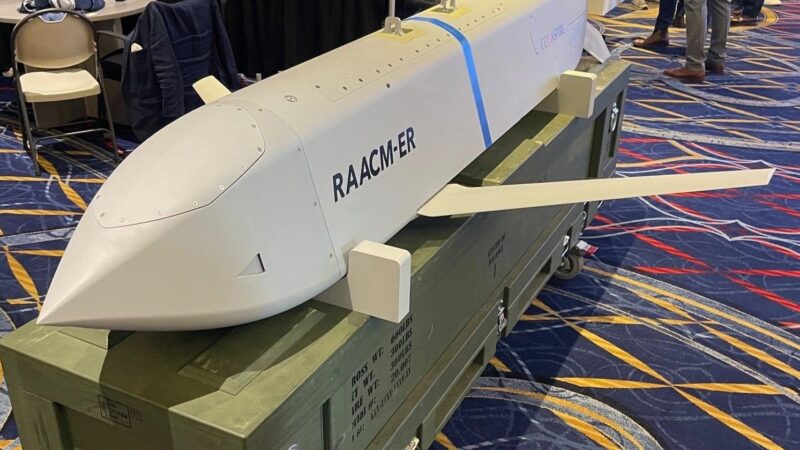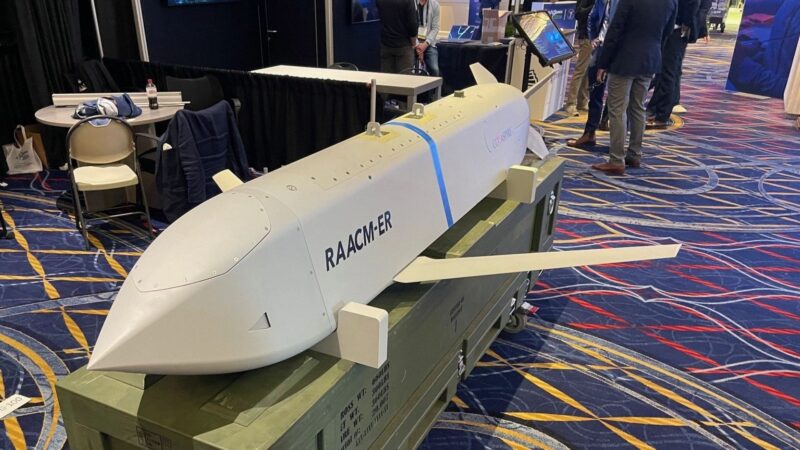

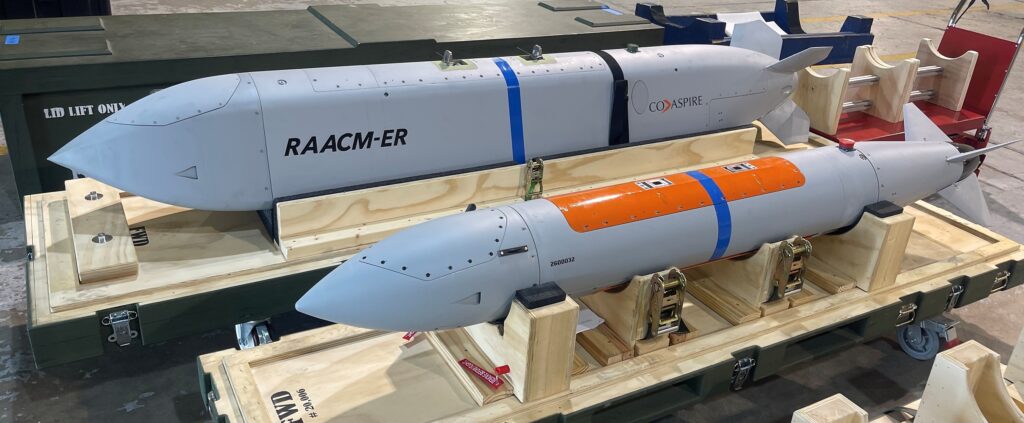
The United States Navy has selected CoAspire’s Rapidly Adaptable Affordable Cruise Missile-Extended Range (RAACM-ER) in its ground-launched configuration for the Coalition Heterogenous Affordable Offensive Strike (CHAOS) program, under a $70 million prototype agreement announced at the Farnborough International Airshow on 22 July 2026.
The award runs through CMG Networks on behalf of the Naval Aviation Systems Consortium, with CoAspire to design, build, test and deliver to the Program Acquisition Executive for Munitions and its program office.
CHAOS is aimed squarely at export, intended to equip allies and coalition partners via Foreign Military Sales with a cost-effective weapon able to engage both land-based and moving maritime targets.
Doug Denneny, CoAspire’s chief executive officer, owner and founder, framed the award around volume, saying the most important thing is affordable mass so that the United States and its allies can purchase at scale.
The effort descends from the Navy’s Coalition Affordable Maritime Strike requirement, which sought a $1.5 million missile able to strike maritime targets at least 140 nautical miles away with a warhead under 500 lb.
That requirement was written against a specific problem, namely that many coalition partners are reaching diminishing returns on the cost of modernizing and sustaining their mid-range maritime strike weapons.
RAACM itself emerged from the US Air Force’s Extended Range Attack Munition competition, where CoAspire was awarded alongside Zone 5 Technologies in October 2024, and the company says it flew the missile within four months of contract award.
The weapon was sized deliberately, with Denneny noting it was built to the size of a GBU-38 – the 500 lb Joint Direct Attack Munition – which is what allows it to hang from existing fighter hardpoints.
RAACM-ER is a subsonic, turbojet-powered design with a trapezoidal body cross-section, and for surface launch it adds a rocket booster behind the turbojet to get the round clear of its canister.
Terminal guidance rests on a long-wave infrared seeker rather than a radar, and because that seeker is passive the missile is immune to radiofrequency countermeasures such as jammers or decoys while emitting nothing detectable itself.
On range the company’s stated position is that it does not discuss the range of its products, while manufacturer-attributed figures of more than 1,000 nautical miles have circulated alongside derived estimates of roughly half that.
The production method is the company’s central claim, with additive manufacture said to permit new variants in months rather than the years needed by other missile manufacturing methods, while cutting tooling and touch labour.
Denneny has pushed that argument toward forward manufacture, saying the parts can be printed and assembled close to a frontline.
The cost comparison is what gives CHAOS its rationale, with current-generation Harpoon variants running between $1.4 million and $2.25 million and the Naval Strike Missile roughly $2 million, against a Maritime Strike Tomahawk at $3.64 million.
CoAspire is a Virginia small business founded in 2013 and, per the company, owned entirely by its two founders with no outside investors, drawing on 56 first-tier suppliers.
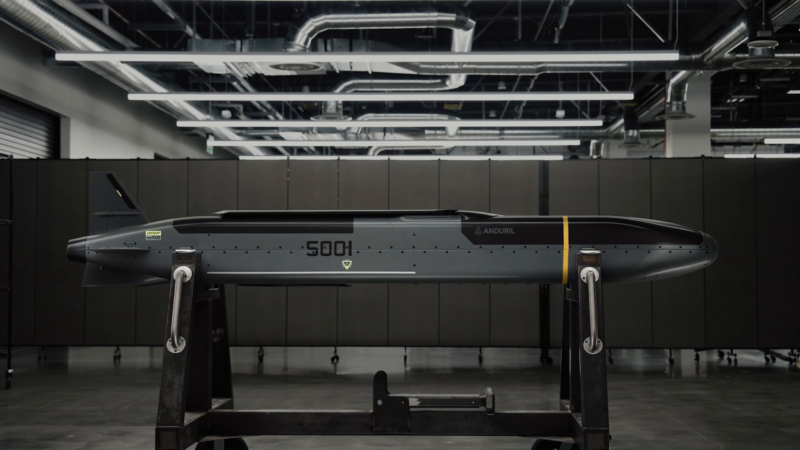
The CHAOS award follows the firm’s inclusion, on 15 July 2026, in the Department of War’s Family of Affordable Mass Missiles framework agreements alongside Anduril and Zone 5, a seven-year arrangement covering validation and production subject to congressional approval.
The Air Force target under that effort is roughly $218,000 per missile, against more than $1.3 million for the Joint Air-to-Surface Standoff Missile, which is the cost line CHAOS partners would ultimately be buying against.
The backlog the program is pitched against is a real one, with Taiwan and Japan both having seen orders of Cold War-derived Harpoon and Tomahawk missiles delayed.